Sympathy, sacrifice in support worker’s journey
Advertisement
Read this article for free:
or
Already have an account? Log in here »
To continue reading, please subscribe:

Digital Subscription
One year of digital access for only $205*
- Enjoy unlimited reading on winnipegfreepress.com
- Read the E-Edition, our digital replica newspaper
- Access News Break, our award-winning app
- Play interactive puzzles
*First annual payment billed as $205.00 + GST for one year. This annual subscription will automatically renew at $233.00 + GST every 52 weeks (10% off the regular annual price of $259.35). Offer available to new and qualified returning subscribers only. Cancel any time.
To continue reading, please subscribe:
Add Free Press access to your Brandon Sun subscription for only an additional
$1 for the first 4 weeks*
- Enjoy unlimited reading on winnipegfreepress.com
- Read the E-Edition, our digital replica newspaper
- Access News Break, our award-winning app
- Play interactive puzzles
*Your next Brandon Sun subscription payment will increase by $1.00 and you will be charged $17.95 plus GST for four weeks. After four weeks, your payment will increase to $24.95 plus GST every four weeks.
Read unlimited articles for free today:
or
Already have an account? Log in here »
Hey there, time traveller!
This article was published 25/03/2023 (1256 days ago), so information in it may no longer be current.
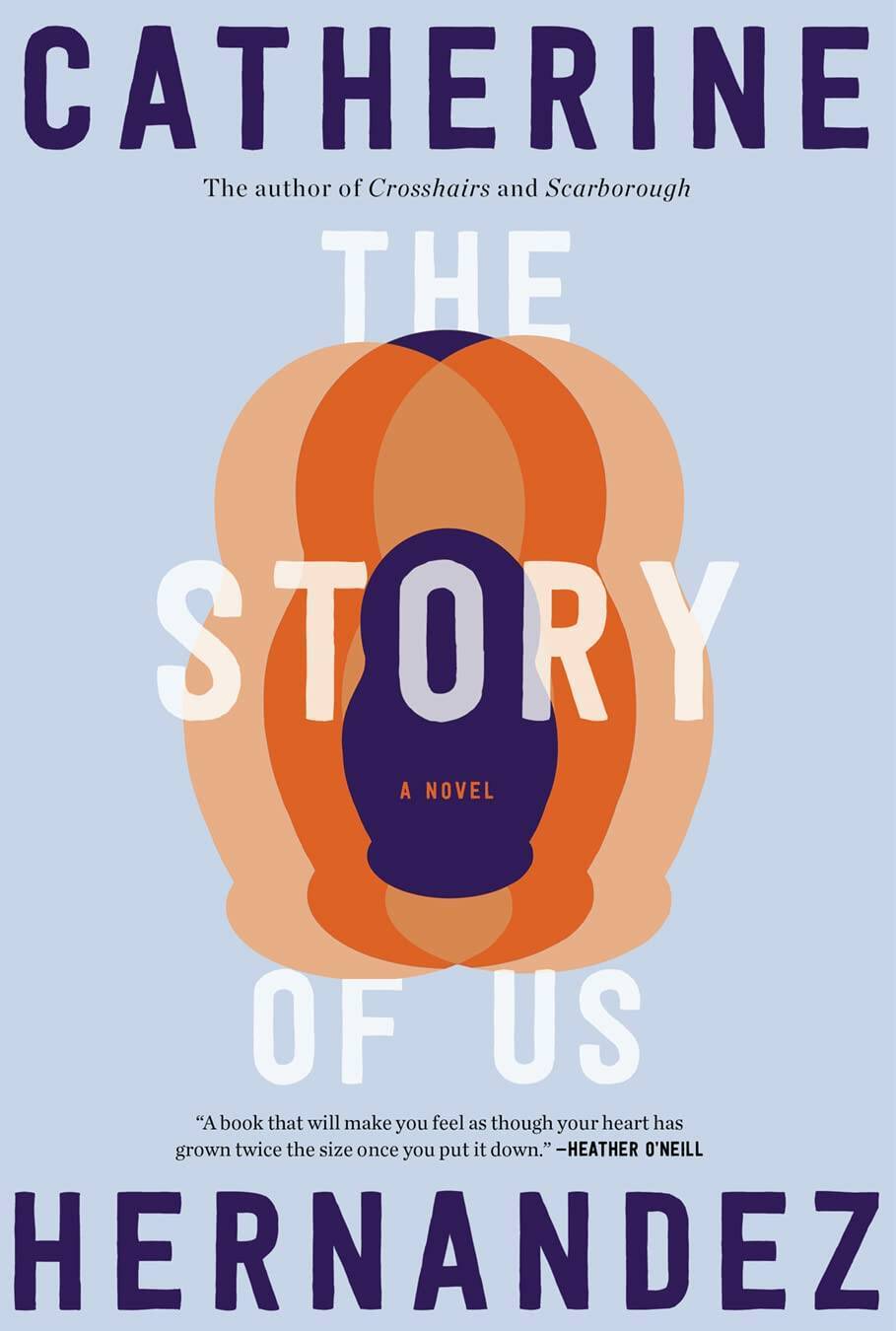
Canadian author and playwright Catherine Hernandez has written a unique, intriguing and beautiful novel, The Story of Us.
This is Hernandez’s third novel. Her debut novel, Scarborough, was a shortlisted finalist for the 2017 Toronto Book Awards and won the 2018 Edmund White Award. It was selected for the 2022 edition of CBC’s annual Canada Reads competition.
One of the novel’s most interesting aspects arises from the narrator being the protagonist Mary Grace (MG) Concepcion’s unborn baby Dina, one of the many potential embryos — Maybe Babies — within her mother’s body.

Noor Khan photo
Catherine Hernandez
Dina recounts the history of MG’s family, beginning with MG’s birth in the Philippines. When she is 19, MG and her mother must flee their home in San Marcelino after their community is covered with ash from Mount Pinatubo’s eruption. At age 22, she joins many other Filipina and applies to become an Overseas Foreign Worker (OFW) with a choice of working as a nanny or personal support worker.
MG marries Ale, a young man from her village, and the two make their home with Ale’s widowed sister and her young son and daughter. The living conditions are crowded and primitive. MG knows if she’s able to work overseas, the money she sends back will greatly help her husband and sister-in-law.
Her first job is working as a nanny for the Tsangs, a wealthy family in Hong Kong. She is responsible for the care of two-year-old Jia (John). At a toddler music class, MG meets her childhood friend, Rhea, who’s also working as a nanny. The two women enjoy getting together on their one day off each week and spend time eating Philippine food and chatting at a park where many other OFWs congregate. MG feels like this is the only time she can truly be herself. She is homesick and misses Ale. However, when she’s reunited with Ale, she discovers their intimacy seems awkward.
Rhea moves to Canada and finds an employer in Toronto willing to sponsor MG working as a nanny for two years until she can apply for permanent residency. Helen, her new employer, is a pregnant Canadian-born Filipina who has married a Francophone. MG is forced to find another nanny job quickly when the family moves to the West Coast. She must remain employed in order to qualify to become a permanent resident in Canada, and then be able to sponsor Ale to join her.
MG ultimately finds a job as a personal support worker for Liz, a transgender woman with dementia. Liz’s son Justin has housed Liz in a rundown converted cottage next to the Rouge River in Scarborough. MG is initially dismayed by the house’s dirtiness and is also a bit afraid of Liz, who has good and bad days, but she’s determined to hold onto her job.
Liz believes that MG is her good friend Jane, who died years earlier. The two establish a routine, yet MG feels very isolated. Justin frequently pops in unannounced and MG doesn’t trust his “friendly” hugs. When her sister-in-law is killed in a traffic accident, Justin gives her money so she can fly back for the funeral. During that visit home she becomes pregnant, a discovery she makes after she returns to Canada.
The Story of Us
Throughout The Story of Us, Hernandez reveals the joys and sorrows experienced by many women who left, and are still leaving, the Philippines for higher-paying jobs in foreign countries. They say goodbye to parents, husbands and children so they can help their families financially. They suffer loneliness and isolation in situations where their culture isn’t part of everyday life. These sacrifices are still being made, especially in the health care sector.
Andrea Geary is a freelance writer in Winnipeg.