FoRbidden love

Fictional account of real-life boarding school pair a heartfelt, memorable read

Advertisement

Advertise with us

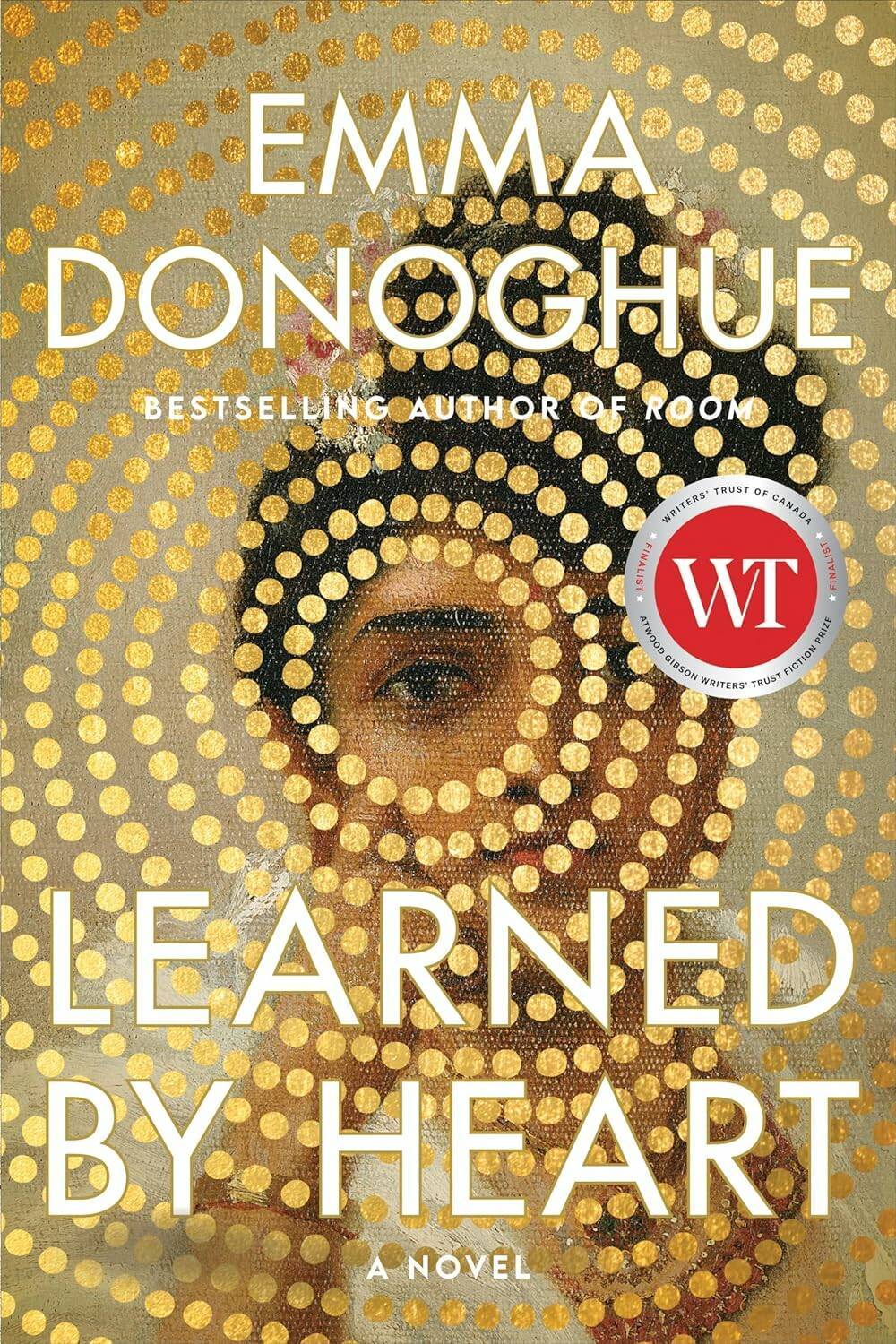
Emma Donoghue, Irish-Canadian author of the hugely popular bestselling novel Room (and many more), has produced a beautiful and engaging new novel that takes place in York, England, in the early 1800s. What is remarkable is how readable and “unputdownable” it is, despite its being based on a lot of research.

Read this article for free:


or

Already have an account? Log in here »

To continue reading, please subscribe:

Subscribe and receive a limited-edition Free Press branded hat or tote.

Digital Subscription

One year of digital access for only $205*

  • Enjoy unlimited reading on winnipegfreepress.com
  • Read the E-Edition, our digital replica newspaper
  • Access News Break, our award-winning app
  • Play interactive puzzles

*First annual payment billed as $205.00 + GST for one year. This annual subscription will automatically renew at $233.00 + GST every 52 weeks (10% off the regular annual price of $259.35). Offer available to new and qualified returning subscribers only. Cancel any time.

To continue reading, please subscribe:

Add Free Press access to your Brandon Sun subscription for only an additional

$1 for the first 4 weeks*

  • Enjoy unlimited reading on winnipegfreepress.com
  • Read the E-Edition, our digital replica newspaper
  • Access News Break, our award-winning app
  • Play interactive puzzles
Start now

*Your next Brandon Sun subscription payment will increase by $1.00 and you will be charged $17.95 plus GST for four weeks. After four weeks, your payment will increase to $24.95 plus GST every four weeks.

Hey there, time traveller!
This article was published 14/10/2023 (1071 days ago), so information in it may no longer be current.

Emma Donoghue, Irish-Canadian author of the hugely popular bestselling novel Room (and many more), has produced a beautiful and engaging new novel that takes place in York, England, in the early 1800s. What is remarkable is how readable and “unputdownable” it is, despite its being based on a lot of research.

Learned by Heart is written entirely from the point of view of the real-life Eliza Raine, born in India to Dr. William Raine, an Englishman, and “his woman,” a native of India. The doctor sent Eliza and her older sister Jane to England to be educated, but he died a couple of years later, leaving them to live with his York friends, the Duffins.

When the novel begins, the year is 1805; Eliza is 14 and enrolled in the Manor boarding school “for young ladies.” The 40 students are divided into Seniors, Middles and Juniors; Eliza is a Middle. One of the strengths of the book is the dialogue — the many scenes in which a group of students chat among themselves and the scenes that take place in class. The teachers seem approachable enough, but are quick to impose demerits and punishment of many kinds.

Una Roulston photo
                                Emma Donoghue did extensive research about the lives of Eliza Raine and Anne Lister, the lovestruck duo at the core of her new novel.

Una Roulston photo

Emma Donoghue did extensive research about the lives of Eliza Raine and Anne Lister, the lovestruck duo at the core of her new novel.

Eliza is given an attic room in the north wing of the school, set off from where most of the girls are. Another girl is assigned there — Anne Lister, who wants to be called by her last name. She is rather boyish in looks, reads a lot of books and soon becomes the most outspoken student — “erudition just rises off Lister like smoke,” Raine observes. Some of the girls are offended by her remarks, but Eliza believes Lister has no intention to offend. “[T]he flow of her thought is as urgent and unstoppable as a spring of water,” Donoghue writes.

“Lister may not be good at everything — her drawing’s too fast to be correct, her flute fingering clumsy — but she’s interested in everything. Some of the Seniors (only half mockingly) refer to her as Lexicon Lister, or the school Solomon.”

As Eliza and Lister become good friends, Eliza quickly becomes “Raine.” “She’s amused to see that Lister’s disguised several of her books to avoid detection by the proprietors; a French novel called Julie wears the cover of The Universal Preceptor,” Donoghue writes.

They enjoy being together and one evening it seems inevitable that their friendship is going to be something more: “Suddenly Lister’s head turns and she’s kissing Eliza, claiming her mouth like a low-hanging fruit.”

Their relationship only becomes more physical, especially after they see a production of Shakespeare’s As You Like It. The intensity of their lovemaking over the next weeks is beautifully presented by Donoghue, while the threat of being caught by one of the proprietors hangs over them.

Interspersed among these chapters are brief segments that jump forward to 1815, when Raine is in an asylum, desperately wanting to make contact — any contact — with Lister.

While the Raine-Lister relationship makes for a completely satisfying novel, there are observations that ring true and are in themselves memorable: “Left alone in the courtyard, Eliza finds herself thinking again that school is not a rehearsal for life’s play… It’s the first act of the piece, performed once only.”
Learned By Heart

Learned By Heart

At the end of the book, Donoghue offers a lengthy “Author’s Note” that gives details of how she researched “the history of Eliza Raine (1791-1869)” and how information about Anne Lister has changed Donoghue’s own life.

Dave Williamson is a Winnipeg writer whose latest work, a short story called Reading on an Airplane, appeared in the Fall 2022 issue of Prairie Fire magazine.

Emma Donoghue launches Learned By Heart at McNally Robinson Booksellers’ Grant Park location on Monday at 7 p.m. as part of Thin Air 2023: Winnipeg International Writers Festival, where she’ll be joined in conversation by Angela Torgerson.


Report Error Submit a Tip

More Stories

Family account spiced with magic realism, geopolitical intrigue and a ghost story

Reviewed by Zilla Jones 4 minute read Preview

Family account spiced with magic realism, geopolitical intrigue and a ghost story

Reviewed by Zilla Jones 4 minute read 2:01 AM CDT

Tom Lin’s second novel Babylon, South Dakota moves beyond a historical account of an immigrant family’s struggle, delightfully blending and bending genres.

Lin is a Chinese-born novelist whose family emigrated to the U.S. when he was four years old. His debut novel, The Thousand Crimes of Ming Tsu, won the 2022 Andrew Carnegie Medal for Excellence in Fiction, making him the youngest ever recipient of that award. He earned a PhD in English from the University of California Davis and is currently an assistant professor of English and creative writing at the University of Iowa.

Babylon, South Dakota takes place in an unspecified time period that can be understood to be during the Mao era — likely the 1950s or ’60s. A young Chinese couple, the Hsuis, immigrate to the rural community that gives the book its title. They take the names Saul and Mei and settle on a 160-acre homestead left to them by a distant relative.

Saul’s dream is to breed and sell chrysanthemums from seeds he brought from China, while Mei wants to raise livestock. They speak no English, know nothing of life in the United States, are unprepared for the harshness of winter and the isolation of the farm and bring nothing with them except some gold, which Mei hides around the house for emergencies. Their only link to the outside world is a discarded and marginally functioning TV set, which Saul rescues and rigs up.

Read
2:01 AM CDT

Near-future U.S. the setting for surreal dual-world storyline

Reviewed by Morley Walker 4 minute read Preview

Near-future U.S. the setting for surreal dual-world storyline

Reviewed by Morley Walker 4 minute read 2:01 AM CDT

It’s not every day you encounter a seriously intended literary novel that attempts to dramatize a mind-bending physics theory like quantum entanglement.

But then the B.C.-born-and-raised Emily St. John Mandel is not your everyday Canadian literary writer.

In her late 40s, she has lived in the U.S. for her entire writing career. She is best known for her 2014 dystopian novel Station Eleven, about a Shakespearean acting troupe navigating a pandemic-ravaged America.

Her new outing, her seventh, Exit Party, shares DNA with detective and sci-fi genres more than with conventional literary fiction.

Read
2:01 AM CDT

A life’s story: activist, educator, organizer knew the true meaning of community

Janine LeGal 7 minute read Preview

A life’s story: activist, educator, organizer knew the true meaning of community

Janine LeGal 7 minute read 3:00 AM CDT

Somewhere between a love for sharing stories and a love of community connections, Michael (Mike) Maunder lived his life. Giving voice to people and neighbourhoods was a passion for the natural-born community organizer.

An author, teacher and principal, Maunder lived in a one-bedroom apartment in West Broadway and devoted himself to community development, education and neighbourhood renewal.

He maintained a connection with Augustine United Church, whose commitment to social justice he appreciated, volunteered at the Sandy-Saulteaux Spiritual Centre, and found comfort in a Buddhist prayer community.

Maunder died on July 15 at the age of 80.

Read
3:00 AM CDT

Grieving child builds backyard rocket ship

Harriet Zaidman 4 minute read 2:01 AM CDT

I Built a Rocket Ship (Kids Can Press, 32 pages, hardcover, $22) by Winnipegger Anna Lazowski is a tender story for children ages 4-8 about a little girl trying to make sense of her mother’s death. The child engages in conversation with her late mom, agreeing and disagreeing about things said as she carries objects (and of course, the cat) to the backyard. There, she is building a rocket ship she will pilot into the skies to find her mom again.

Jennica Lounsbury’s varied perspectives show the range of emotions the little girl experiences.

● ● ●

Northwoods Lullaby by Mary Casanova (University of Minnesota Press, 32 pages, hardover, $25) is a bedtime book for readers up to age eight, perfect to bring a busy, happy day to a close. Just like children who are listening to adults reading the book, all the animal babies are being tucked into their nests and burrows by loving parents: “Thump and scamper,/nimble clover./ Soon it’s time to rest. Baby loon/ nestles in/as Papa floats along.”

Cabernet Sauvignon star of wine festival

Ben Sigurdson 5 minute read Preview

Cabernet Sauvignon star of wine festival

Ben Sigurdson 5 minute read 3:00 AM CDT

The Winnipeg Wine Festival will celebrate the king of red wine grapes next weekend — the theme of this year’s festival, which takes place Sept. 25 and 26 at the RBC Convention Centre, is Cabernet Sauvignon.

Cab Sauv, as it’s also known, is the world’s most widely planted wine grape of any colour, first coming to prominence in the 1800s in France’s Bordeaux region, where the grape is still popular. Rather than single-variety wines, Bordeaux reds tend to be blends, with those coming from the left bank of the Gironde estuary being Cabernet-dominant, while right-bank wines are Merlot-dominant, with Cabernet Sauvignon playing a supporting role. Cabernet and Merlot work well together and many other countries have followed suit in blending the two.

A team at University of California Davis put Cabernet Sauvignon through a DNA test in 1996 and discovered its parent grapes are Cabernet Franc and Sauvignon Blanc — it’s likely that at some point the two varieties, planted next to each other in some vineyard, crossed and mutated and became the grape we know today. (Someone growing grapes in the 19th century must have had an inkling of what was up, as the grape has been called Cabernet Sauvignon since long before the DNA test.)

Flavour-wise, most Cabernet Sauvignon wines are big and bold, with a core of deep dark berry flavours, some graphite and spice notes and relatively bright acidity. It’s a grape that is well-suited to barrel aging, with most examples seeing at least some time in wood.

Read
3:00 AM CDT

Kinew delivered what most of us wanted; now we’ll have to deal with the consequences

Dan Lett 5 minute read Preview

Kinew delivered what most of us wanted; now we’ll have to deal with the consequences

Dan Lett 5 minute read Updated: Yesterday at 8:43 AM CDT

Premier Wab Kinew has decided to adopt permanent daylight savings time, which means a permanent end to the spring forward, fall back tradition of adjusting our clocks. And absolutely no one is surprised.

Read
Updated: Yesterday at 8:43 AM CDT