Fraught fact and fiction
Smith contemplates authors, authenticity and the moral purpose of the novel — including her own

Advertisement
Read this article for free:
or
Already have an account? Log in here »
To continue reading, please subscribe:

Digital Subscription
One year of digital access for only $205*
- Enjoy unlimited reading on winnipegfreepress.com
- Read the E-Edition, our digital replica newspaper
- Access News Break, our award-winning app
- Play interactive puzzles
*First annual payment billed as $205.00 + GST for one year. This annual subscription will automatically renew at $233.00 + GST every 52 weeks (10% off the regular annual price of $259.35). Offer available to new and qualified returning subscribers only. Cancel any time.
To continue reading, please subscribe:
Add Free Press access to your Brandon Sun subscription for only an additional
$1 for the first 4 weeks*
- Enjoy unlimited reading on winnipegfreepress.com
- Read the E-Edition, our digital replica newspaper
- Access News Break, our award-winning app
- Play interactive puzzles
*Your next Brandon Sun subscription payment will increase by $1.00 and you will be charged $17.95 plus GST for four weeks. After four weeks, your payment will increase to $24.95 plus GST every four weeks.
Read unlimited articles for free today:
or
Already have an account? Log in here »
Hey there, time traveller!
This article was published 14/10/2023 (1096 days ago), so information in it may no longer be current.
This sharp-edged novel from Zadie Smith (On Beauty, NW, Swing Time) begins with a great hole in the floor. Mrs. Touchet, our central character, keeps house for her cousin-by-marriage, minor Victorian writer William Ainsworth; his turgid three-volume historical novels, and the books he uses to research them, have collapsed the floor of his study and fallen into the parlour below.
“The sheer weight of literature you’ve got here… well, that will put a terrible strain on a house,” observes a carpenter’s boy.
Comically skeptical and passionately serious, packed with restless intelligence and vivid language, The Fraud is an investigation into the tricky relations among truth, fact and fiction.
Ben Bailey-Smith photo
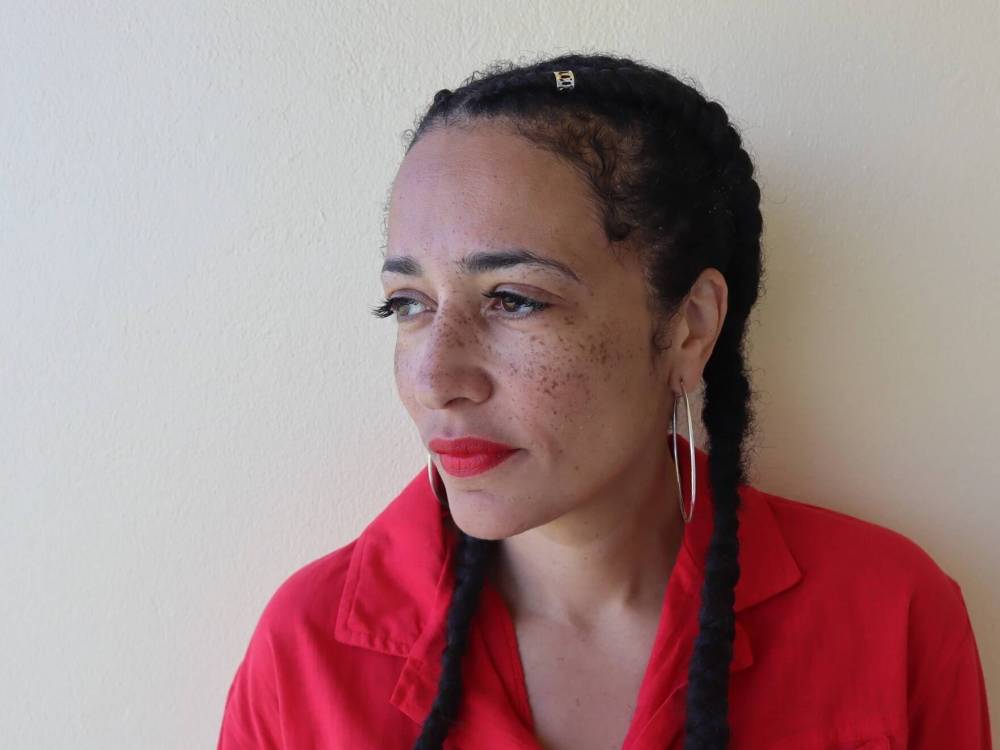
Author Zadie Smith… TK
In particular, it looks at the moral purpose of the novel. Smith, the British writer who famously broke onto the scene at age 24 with White Teeth, wants to position the novel as a radical act of empathy, but she’s too honest not to wonder about its limits. (“What Can We Know of Other People?” one chapter title asks, plaintively.)
Even as Smith spoofs Ainsworth’s dreadful tomes, with their sheer accumulation of dry descriptions — “He too frequently mistakes information for interest,” comments William Thackeray, one of the many real-life characters to drop by — she is also writing her own historical novel, albeit a highly idiosyncratic one.
Smith’s writing moves back and forth in time in elusive, elliptical chapters, some no more than a paragraph. The narrative structure is hard to pin down, but the propulsive force of language and ideas never wavers, packing in energy and interest even when the reader is not quite sure where things are heading.
Like a good Victorian doorstopper, The Fraud is about many things: love and aging and loss; the literary life; race and gender and who gets to tell stories; the tragic twinned histories of Britain and Jamaica, connected through the atrocity of slavery. Above all, it is about fraud.
Mrs. Touchet is a Scottish Catholic widow who has had practicality forced upon her. She and Ainsworth are occasional lovers — William likes a touch of the horsewhip — but her deep feelings are reserved for his delicate wife, Frances.
Mrs. Touchet acts as Ainsworth’s hostess, entertaining literary lions like the young Charles Dickens in the 1830s. But she is shunted aside as she ages, her acerbic wit unwelcome when it is no longer accompanied by the beauty of youth.
As Ainsworth’s reputation declines, Mrs. Touchet also provides tactful protection, even as she finds his novels increasingly unreadable. “Not infrequently he writes twenty pages in an afternoon. He always appeared entirely satisfied with every line,” she notices.
In the 1860s, Mrs. Touchet begins to follow, with her own notepad and pen, the trials of “the Tichborne Claimant,” a man who asserts he is the long-lost aristocrat Sir Roger Tichborne but who is almost certainly a butcher from Wapping. (This is based on a real-life 19th-century case.) She becomes fascinated by Andrew Bogle, a former enslaved man, who supports Sir Roger’s narrative. The account of Bogle’s life, from a Jamaican sugar plantation to a precarious life in England, forms the devastating, concentrated centre of the novel.
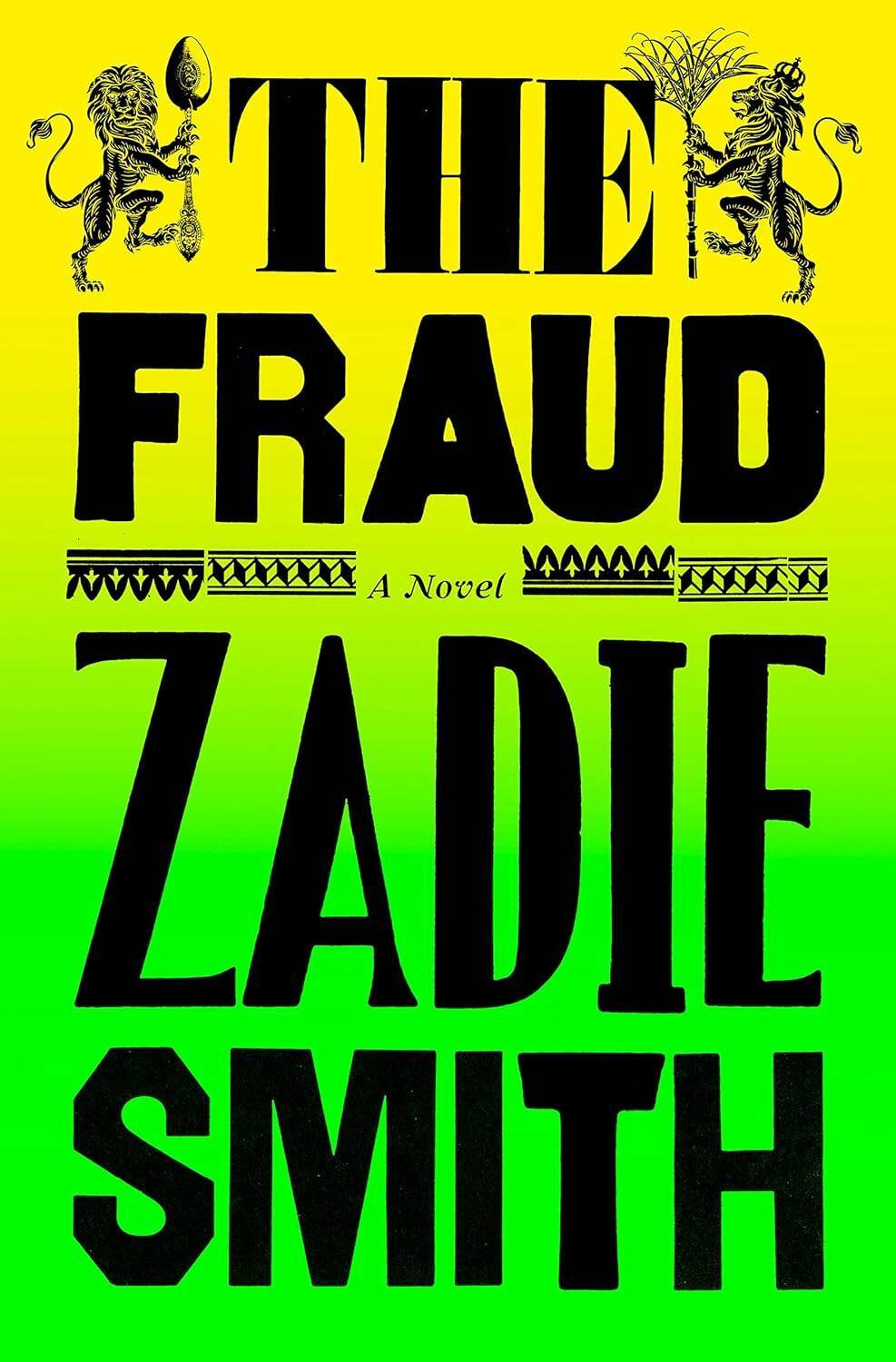
The Fraud
“The fraud” of the title is, most obviously, the Claimant, “a man with no centre, who might be nudged in any direction, depending.” He holds rallies, he raises funds. He denounces the elites and the dishonest press. He whips up a frenzy of support among “the common man,” who ignore the paradox that if he is, in fact, who he claims to be, then he is not one of them. (And yes, the sideways references to Donald Trump make for an absolutely delicious diversion, but this is not the novel’s main point.)
But when it comes to fraudsters, there is also Ainsworth’s literary circle and what Mrs. Touchet views as their moral larceny. “Keep stealing, my friends!” she thinks. “From life for fiction, and from fictions for life.”
Then there’s Mrs. Touchet herself, a staunch abolitionist who finds that when she finally meets formerly enslaved men and women, she feels easier with artistic abstraction (“the noble sons and daughters of Africa — filled with the grace of suffering, illuminated by freedom”) than human actuality.
And finally, since Smith is almost comically unsparing, there’s the novelist herself. Using fiction to examine the value and purpose of fiction, she doesn’t come to any easy conclusions. But in this intense, invigorating sprawl of a work, she does ask some interesting questions.
Alison Gillmor writes on pop culture for the Free Press.
Studying at the University of Winnipeg and later Toronto’s York University, Alison Gillmor planned to become an art historian. She ended up catching the journalism bug when she started as visual arts reviewer at the Winnipeg Free Press in 1992.
Our newsroom depends on a growing audience of readers to power our journalism. If you are not a paid reader, please consider becoming a subscriber.
Our newsroom depends on its audience of readers to power our journalism. Thank you for your support.
Studying at the University of Winnipeg and later Toronto’s York University, Alison Gillmor planned to become an art historian. She ended up catching the journalism bug when she started as visual arts reviewer at the Winnipeg Free Press in 1992.
Our newsroom depends on a growing audience of readers to power our journalism. If you are not a paid reader, please consider becoming a subscriber.
Our newsroom depends on its audience of readers to power our journalism. Thank you for your support.
Advertisement Advertise With Us
Advertisement Advertise With Us