A spellbinding story
History of illustrated grimoires — magicians’ manuals — sure to charm the reader
Advertisement
Read this article for free:
or
Already have an account? Log in here »
To continue reading, please subscribe:

Digital Subscription
One year of digital access for only $205*
- Enjoy unlimited reading on winnipegfreepress.com
- Read the E-Edition, our digital replica newspaper
- Access News Break, our award-winning app
- Play interactive puzzles
*First annual payment billed as $205.00 + GST for one year. This annual subscription will automatically renew at $233.00 + GST every 52 weeks (10% off the regular annual price of $259.35). Offer available to new and qualified returning subscribers only. Cancel any time.
To continue reading, please subscribe:
Add Free Press access to your Brandon Sun subscription for only an additional
$1 for the first 4 weeks*
- Enjoy unlimited reading on winnipegfreepress.com
- Read the E-Edition, our digital replica newspaper
- Access News Break, our award-winning app
- Play interactive puzzles
*Your next Brandon Sun subscription payment will increase by $1.00 and you will be charged $17.95 plus GST for four weeks. After four weeks, your payment will increase to $24.95 plus GST every four weeks.
Read unlimited articles for free today:
or
Already have an account? Log in here »
Hey there, time traveller!
This article was published 27/01/2024 (926 days ago), so information in it may no longer be current.
If you don’t mind the odd hairy demon or the occasional bit of blood, you will be enchanted by this gorgeously illustrated history of magic books.
The purposes for which magic has been used throughout the centuries and across the globe are like a long litany of human desires and fears. There are spells to protect against poisonous snakes, to win at dice and cards, to keep a house free of insects, to prevent a marriage from taking place (or to promote love), to curse a thief, to find buried treasure or to evade madness, sickness or death. For every spell created to repel bad spirits or apparitions, there is a spell to conjure demons and sometimes angels, in order to command their powers.
Owen Davies is one of the foremost historians of magic, witchcraft and ghosts. He is a professor of social history at the University of Hertfordshire in the United Kingdom. This is his second book on grimoires.

Wellcome Collection, London (PDM)
A colour print, circa 1825, entitled The Devil and Dr. Faustus. The fascination with the Faust story influenced impressionable young men to seek and emulate the notorious magician using the grimoires attributed to him to conjure up the devil.
Grimoires are a specific kind of manual written by magicians that describe their incantations, rituals and conjurations of demons and other beings. Sometimes up to several hundred pages long, the books are often a combination of printed text along with the magician’s own annotations describing the results of the spells.
But the history of magic, as Davies describes, also includes ordinary folk who throughout human history and across the continents have used spells. The earliest records of written magic that still survive today in museums are on Sumerian cuneiform clay tablets. Lighter and more portable spells were later inscribed on sheets made from lead, gold or silver. These sheets would be rolled or folded and then stored in small containers to be carried by the person. A poignant example from more recent times is the “bullet blessings” amulets to ward off death found on dead soldiers in the battlefields of the 19th-century Austro-Prussian and Franco-Prussian wars.
What is known about ancient written magic depends on what survived the ages and what was actively collected. Numerous magical spells and charms were written on organic material such as eggshells or leaves, or inscribed in dirt, or washed away by water. In other instances, knowledge of the practices of some cultures have been retained in contemporary museums and archives as a result of colonial looting or the “missionary zeal to understand or suppress indigenous religions,” Davies writes. That this documentary evidence was labelled as magic underscores, as he says, the “idea of magic being the religion of other cultures.”
Art of the Grimoire is organized chronologically in accordance with the progression of printing techniques. Most simply, as technology increased the production of books, so did it increase the proliferation of written magic. With the rise of pulp paper production and accessibility of printing presses, cheap publications and plagiarized knockoffs were often created, sometimes less for the increase in esoteric knowledge than for the sole purpose of selling to a gullible public and enriching the publisher.
A final chapter on contemporary grimoires includes references to the “grimmerie” from the Broadway musical Wicked, the Book of Shadows from the TV show Charmed, the Book of Astaroth from the Disney movie Bedknobs and Broomsticks and the Necronomicon invented by H.P. Lovecraft and then used in other popular culture creations, such as the Evil Dead movie series. Davies also points to the contemporary significance of the internet which has transformed grimoires from “closely guarded, secret manuscripts” to material that is now available freely as part of a “new democratic digital magical tradition.”
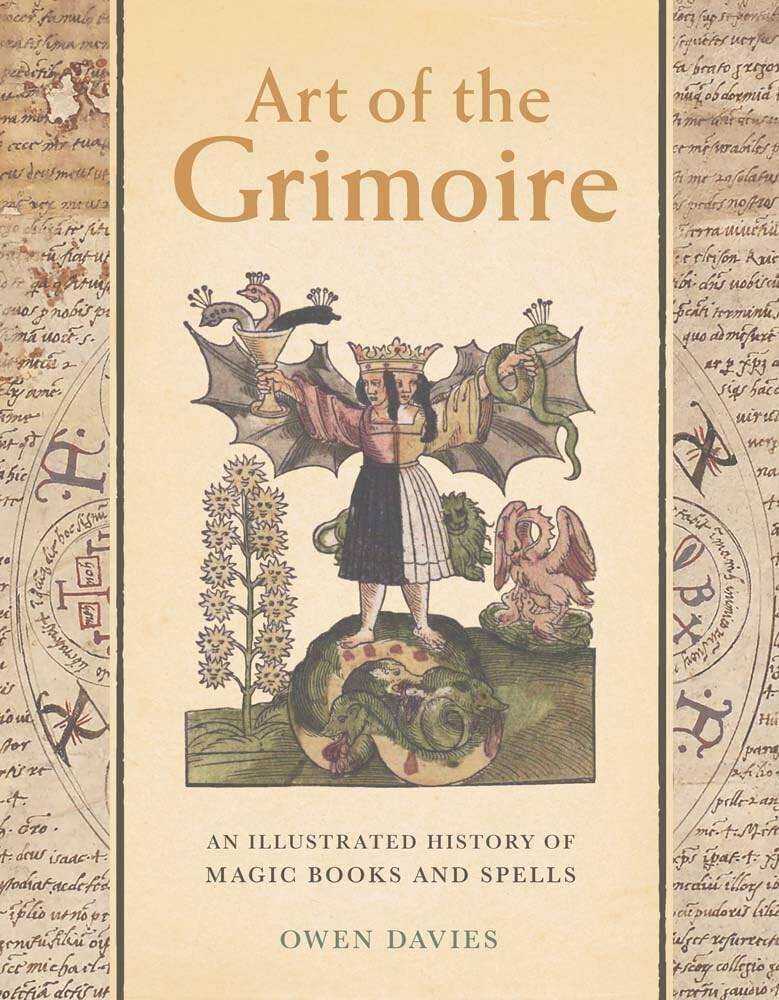
Art of the Grimoire

Beautifully designed, with more than 200 coloured illustrations lavishly printed on lovely thick matte pages, Art of the Grimoire is a intriguing cabinet of curiosities sure to charm the reader.
Mary Horodyski is an archivist in Winnipeg.
Wellcome Collection, London (PDM)
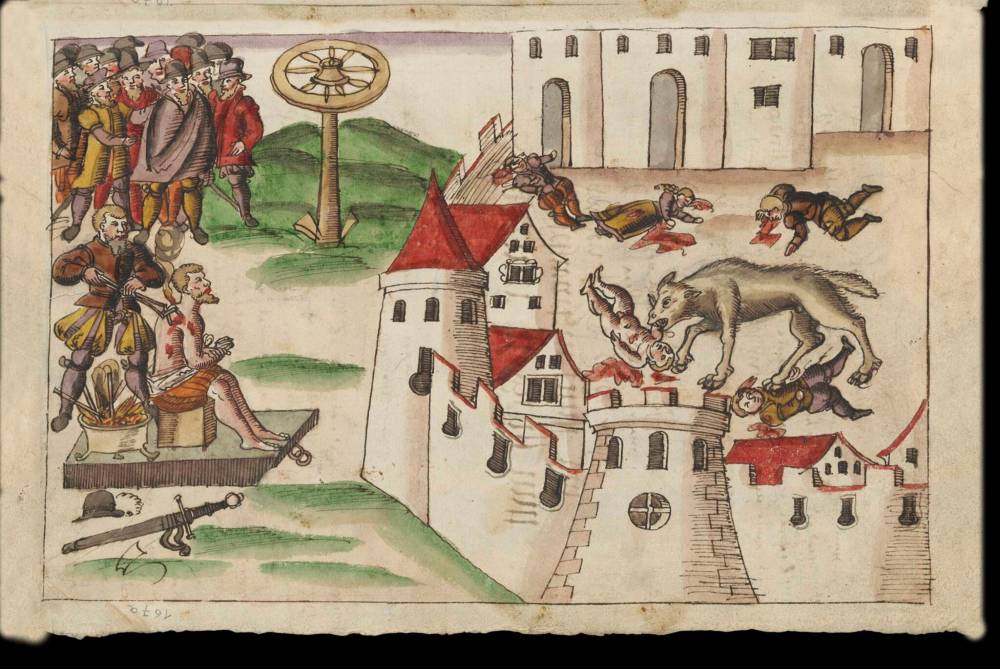
This pen ink drawing of a werewolf attack and subsequent execution, from Johann Jakob Wick’s Wonder Book (circa 1580) depicts a man being tortured with red hot pincers, destined to be executed for the killing of 16 children while in his wolf state.
Wellcome Collection, London (PDM)
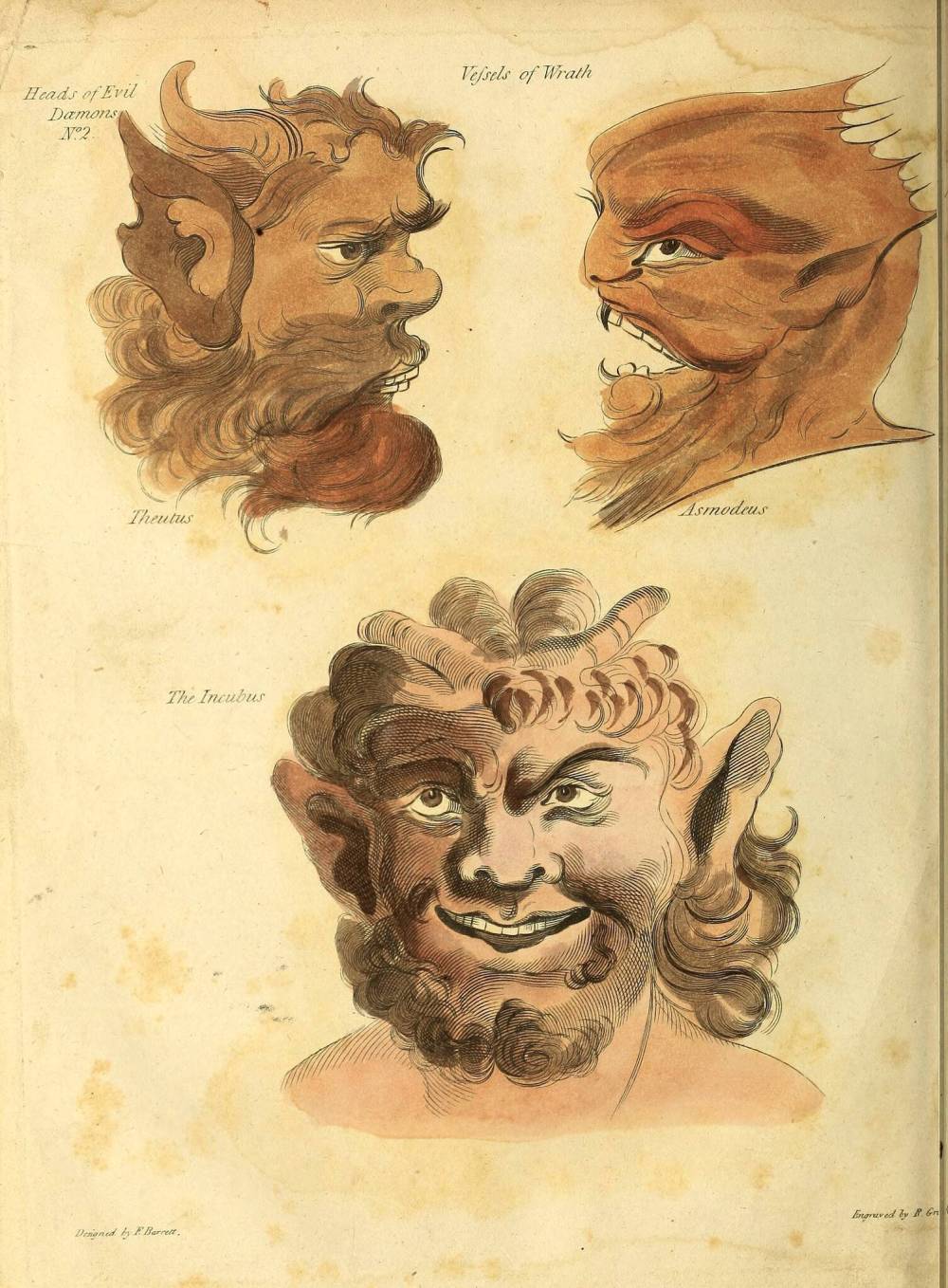
Heads of Evil Demons, Vessels of Wrath, from The Magus (1801), designed by Francis Barrett and engraved by R. Griffith. The three demon heads depicted are Theutus, Asmodeus and the Incubus.
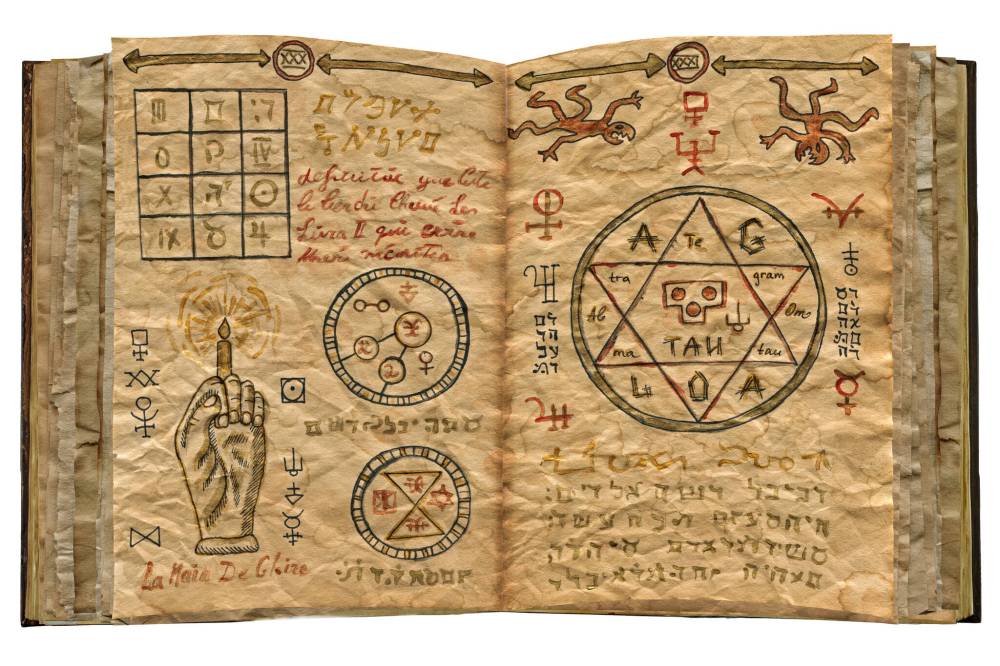
Shutterstock / Vera Petruk
Images from an ‘old magic book with magic mystic symbols and drawings’ by Vera Petruk, watercolour and collage. Drawing inspiration from eastern and western esoteric and occult themes, these illustrations show several pages Petruk created for an imagined European grimoire.