Poignant and profound

Urquhart’s first novel in a decade mines memory, trauma and more on the Canadian Prairies

Advertisement

Advertise with us

In novels such as The Stone Carvers, Away and the Governor General’s Literary Award-winning The Underpainter, Jane Urquhart long ago cemented her status as a master chronicler of Canada’s past, people and landscapes. Her newest novel, a decade in the making, reinforces that status.

Read this article for free:

or

Already have an account? Log in here »

To continue reading, please subscribe:

Subscribe and receive a limited-edition Free Press branded hat or tote.

Digital Subscription

One year of digital access for only $205*

  • Enjoy unlimited reading on winnipegfreepress.com
  • Read the E-Edition, our digital replica newspaper
  • Access News Break, our award-winning app
  • Play interactive puzzles

*First annual payment billed as $205.00 + GST for one year. This annual subscription will automatically renew at $233.00 + GST every 52 weeks (10% off the regular annual price of $259.35). Offer available to new and qualified returning subscribers only. Cancel any time.

To continue reading, please subscribe:

Add Free Press access to your Brandon Sun subscription for only an additional

$1 for the first 4 weeks*

  • Enjoy unlimited reading on winnipegfreepress.com
  • Read the E-Edition, our digital replica newspaper
  • Access News Break, our award-winning app
  • Play interactive puzzles
Start now

*Your next Brandon Sun subscription payment will increase by $1.00 and you will be charged $17.95 plus GST for four weeks. After four weeks, your payment will increase to $24.95 plus GST every four weeks.

Hey there, time traveller!
This article was published 31/08/2024 (700 days ago), so information in it may no longer be current.

In novels such as The Stone Carvers, Away and the Governor General’s Literary Award-winning The Underpainter, Jane Urquhart long ago cemented her status as a master chronicler of Canada’s past, people and landscapes. Her newest novel, a decade in the making, reinforces that status.

In Winter I Get Up at Night is a beautiful, evocative and moving tale of memory and manipulation, family, friendship, trauma and acceptance. The tale is told by Emer, a middle-aged itinerant music teacher living by herself in rural Saskatchewan.

Driving alone each day on often-precarious winter roads to get to her small, isolated school houses, Emer is beset by memories of her childhood. That iconic childhood — with a loving father, a distracted mother and a devoted older brother — changed forever when a great wind swept on to the family’s prairie farm, and shattered their home and their lives forever.

Nicholas Tinkl photo
                                The act of colonizing is one of the larger themes running through Jane Urquhart’s new novel.

Nicholas Tinkl photo

The act of colonizing is one of the larger themes running through Jane Urquhart’s new novel.

Her body broken, Emer spends the next year bedridden in a distant hospital, separated from her family but sustained by two skilful doctors, the loving care of three cloistered nursing nuns, a kind train porter and the tender friendships she develops with the other children in the ward. Emer, Friedrich, Eli, Lily and Tatiana come from vastly different backgrounds, and although each one of them is fighting demons and disease, they entertain and enthrall one another, and serve as a source of light and hope for one another.

The same cannot be said for the three men, aside from her father, that loom large in Emer’s life. A school inspector referred to as the Master, a vile train conductor and the only romantic love of Emer’s life are all men of real (or, in one case, imagined) power, pretense and pomposity. The cruel and taunting train conductor haunts Emer’s dreams and delusions for years, while the seductive Master forces Emer to reimagine her mother’s life and longing. Emer’s love interest Harp, on the other hand, enraptures and soothes Emer, even as he fails or refuses to acknowledge what it is that Emer desires from him.

“But what he didn’t know was compliant though I appeared to be, I wanted everything he had,” Emer recalls. “Every stray thought, each gesture, the length and breadth of him. It wasn’t enough for me to accept the wonder and mystery that the love of him brought out in me. I wanted pledges and allegiances. I wanted complete surrender and treaties with firmly emplaced measures and reparations, in truth, I wanted to clear his wildernesses and plant his fields and colonize him. As he had colonized me.”

The act of colonizing, like the act of cloistering, is one of the many larger themes Urquhart explores in this captivating work of historical and literary fiction. Canada’s Great Plains in the early decades of the 20th century, Urquhart makes clear, were a not just a place for small, intimate dramas about damaged children and unrequited love. They were a battlefield too — a place where religious beliefs, political theory and ideas about the social construct often collided.

And the winds and the snow and the sun had the capacity to make any day better or worse than the day before.
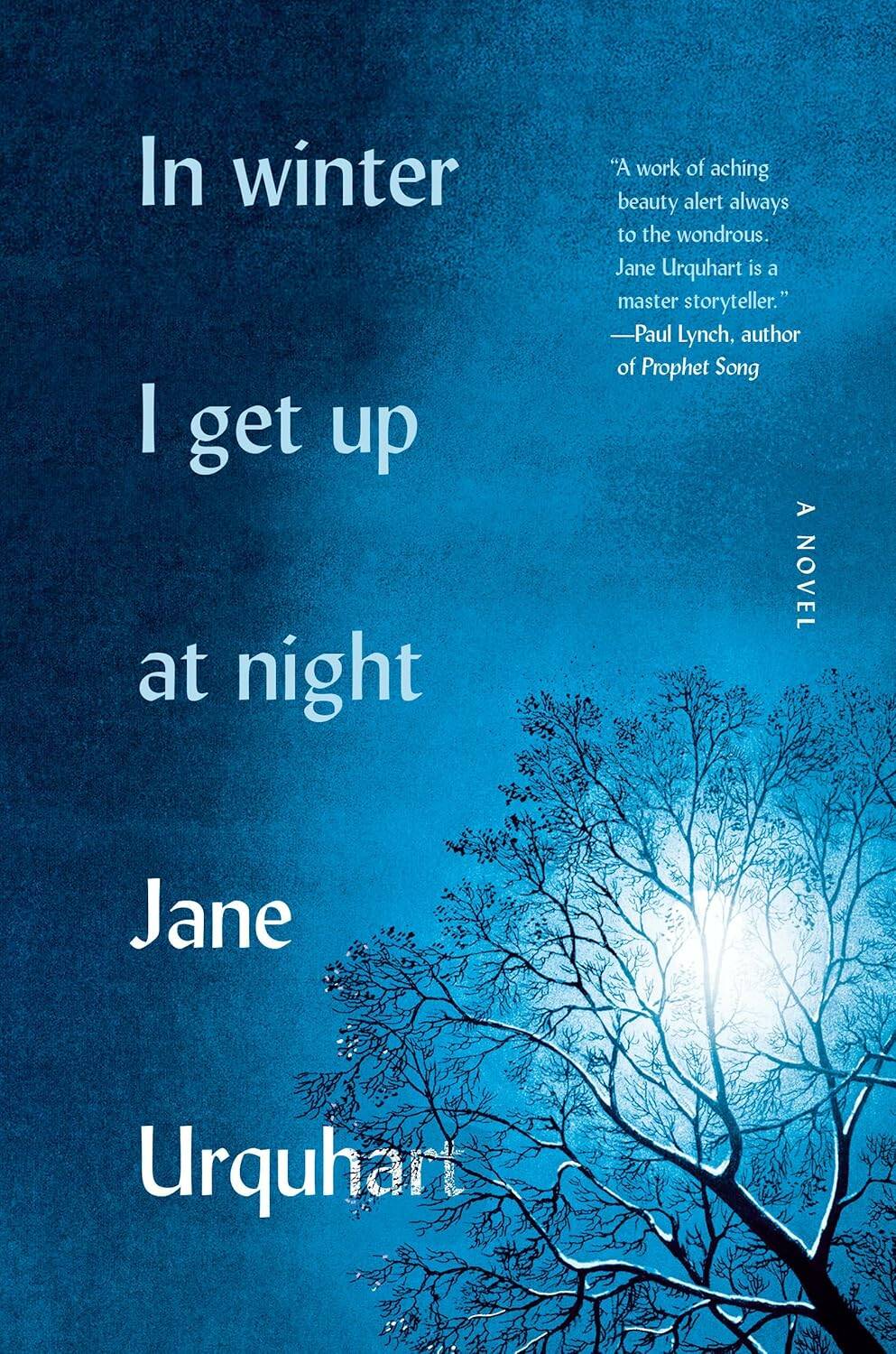
In Winter I Get Up at Night

In Winter I Get Up at Night

Sharon Chisvin is a Winnipeg writer.

Report Error Submit a Tip

More Stories

Pimicikamak FN locked down, police hunt for suspect after fatal shooting

By Zoe Pierce 3 minute read Preview

Pimicikamak FN locked down, police hunt for suspect after fatal shooting

By Zoe Pierce 3 minute read 12:26 PM CDT

Pimicikamak Cree First Nation, also known as Cross Lake, is under lockdown as RCMP Major Crime Services investigate a shooting that left one person dead, Chief David Monias said.

In a social media post early Saturday morning, Monias said there had been a “serious incident” involving gunfire in the community and that one person had been confirmed dead. He announced an immediate community lockdown and said all Treaty and Indian Days events, activities and gatherings were cancelled until further notice.

Monias said the lockdown, which remains ongoing, is intended to help police conduct their investigation and allow safety officials to monitor movement within the community. In a video update posted at 10:30 a.m. Saturday, he confirmed that the shooter is still on the loose.

“We don’t want people unnecessarily moving around in the community that will distract the police or safety officers from their job,” Monias told the Free Press. “The reason why we’re doing that is to make sure that we give police an opportunity to be able to check things out and check suspicious people out.”

Read
12:26 PM CDT

We’re giving, they’re taking — where’s the win?

Editorial 4 minute read Preview

We’re giving, they’re taking — where’s the win?

Editorial 4 minute read Yesterday at 2:00 AM CDT

In the give-and-take of negotiations so far, Canada seems to be doing all the giving, while the United States does all the taking.

In the last few days, the Canadian government said it was backing away from a five per cent levy to be paid by American streaming services such as Amazon and Netflix after, earlier, dropping the three per cent digital services tax. Then, there was what now appears to be succumbing to American President Donald Trump over the Gordie Howe International Bridge, where Canada agreed to let the U.S. share the net revenues from the bridge, even though Canada paid for the entire construction.

Now, Prime Minister Mark Carney is signalling he won’t use energy exports to the United States as a bargaining chip in the current talks on the Canada-U.S.-Mexico free trade agreement, saying he didn’t “see the value” of using Canada’s energy exports to the U.S. as a trade bargaining chip.

“Canadians are reliable,” Carney said Wednesday in Red Deer, Alta. “One of the biggest commodities, arguably the best, is trust. People trust us, and so, when you’re a supplier of a key commodity, key service, you’ve got to think really hard about not supplying.”

Read
Yesterday at 2:00 AM CDT

Crop storage headaches loom on horizon

Laura Rance-Unger 5 minute read Preview

Crop storage headaches loom on horizon

Laura Rance-Unger 5 minute read 2:01 AM CDT

A sense of calm descends over Prairie fields this time of year — at least on the surface.

Activities become more limited in the weeks leading up to harvest. There’s not much farmers can do now to support this year’s crop, other than monitor and protect it from diseases such as sclerotinia in canola and leaf stripe and fusarium head blight in wheat and barley.

July is when you might see farmers wading into a thick stand of canola, conducting a so-called “wet pants test” to get a low-tech read on how much disease-inducing moisture is lurking in the canopy.

Disease pressure is high in a humid, hot summer like this one and it’s kept aerial applicators busy applying fungicides. Sclerotinia spores live on plant residues in the soil and blossom into a mould that destroys the canola stem, starving the maturing pods.

Read
2:01 AM CDT

Nemat’s novel chronicles grandmother’s harrowing life in Russia and Iran

Reviewed by Gordon Arnold 4 minute read Preview

Nemat’s novel chronicles grandmother’s harrowing life in Russia and Iran

Reviewed by Gordon Arnold 4 minute read 2:05 AM CDT

Mistress of the Persian Boarding House is the most enjoyable book I have read in the more than 15 years since I began reviewing books for the Free Press.

Author Marina Nemat’s prose, inspired by her paternal grandmother’s life, flows smoothly, like a babbling brook down a mountain.

Nemat is an Iranian-born Canadian writer and human rights activist known for her bestselling memoirs Prisoner of Tehran and After Tehran: A Life Reclaimed. Arrested at 16 for opposing Iran’s post-revolution regime, she endured torture and forced marriage in Evin Prison before emigrating to Canada in 1991.

Nemat’s grandmothers were both Russian, and she was brought up in a Russian Orthodox Christian family in Tehran. With their Iranian husbands, whom they had married before the Russian Revolution of 1917, both grandmothers fled from Russia to Iran as part of a massive wave of migration.

Read
2:05 AM CDT

Climate change threatens events we wait for all year

Jen Zoratti 5 minute read Preview

Climate change threatens events we wait for all year

Jen Zoratti 5 minute read 2:01 AM CDT

This week, owing to extreme heat and a wild storm with tree-snapping winds, the Royal Winnipeg Ballet had to cancel its full run of Ballet in the Park, a much-loved annual tradition at which people from all over Manitoba can enjoy world-class art in the verdant Assiniboine Park.

Two weeks prior, Rainbow Stage, another jewel of a Winnipeg summer, had to cancel the closing matinee of Jesus Christ Superstar owing to heat and humidity.

And at the beginning of July, Winnipeg Folk Festival attendees baked under scorching temperatures — 47 C with the humidex — to enjoy not just the discovery of music, but the community that has formed in Birds Hill Park on the second weekend of July for over 50 years.

This doesn’t feel great. I do not begrudge cancellations — they are absolutely the correct call for the health and safety of performers and patrons — but I can’t be the only one feeling some existential dread about our summers, and the things that make them special, in the face of a changing climate.

Read
2:01 AM CDT

Urquhart’s first novel in a decade mines memory, trauma and more on the Canadian Prairies

Reviewed by Sharon Chisvin 3 minute read Preview

Urquhart’s first novel in a decade mines memory, trauma and more on the Canadian Prairies

Reviewed by Sharon Chisvin 3 minute read Saturday, Aug. 31, 2024

In novels such as The Stone Carvers, Away and the Governor General’s Literary Award-winning The Underpainter, Jane Urquhart long ago cemented her status as a master chronicler of Canada’s past, people and landscapes. Her newest novel, a decade in the making, reinforces that status.

In Winter I Get Up at Night is a beautiful, evocative and moving tale of memory and manipulation, family, friendship, trauma and acceptance. The tale is told by Emer, a middle-aged itinerant music teacher living by herself in rural Saskatchewan.

Driving alone each day on often-precarious winter roads to get to her small, isolated school houses, Emer is beset by memories of her childhood. That iconic childhood — with a loving father, a distracted mother and a devoted older brother — changed forever when a great wind swept on to the family’s prairie farm, and shattered their home and their lives forever.

Her body broken, Emer spends the next year bedridden in a distant hospital, separated from her family but sustained by two skilful doctors, the loving care of three cloistered nursing nuns, a kind train porter and the tender friendships she develops with the other children in the ward. Emer, Friedrich, Eli, Lily and Tatiana come from vastly different backgrounds, and although each one of them is fighting demons and disease, they entertain and enthrall one another, and serve as a source of light and hope for one another.

Read
Saturday, Aug. 31, 2024