The next chapter
Fadal’s treatise on menopause offers facts, insight, personal stories… and much-needed optimism
Advertisement
Read this article for free:
or
Already have an account? Log in here »
To continue reading, please subscribe:

Digital Subscription
One year of digital access for only $205*
- Enjoy unlimited reading on winnipegfreepress.com
- Read the E-Edition, our digital replica newspaper
- Access News Break, our award-winning app
- Play interactive puzzles
*First annual payment billed as $205.00 + GST for one year. This annual subscription will automatically renew at $233.00 + GST every 52 weeks (10% off the regular annual price of $259.35). Offer available to new and qualified returning subscribers only. Cancel any time.
To continue reading, please subscribe:
Add Free Press access to your Brandon Sun subscription for only an additional
$1 for the first 4 weeks*
- Enjoy unlimited reading on winnipegfreepress.com
- Read the E-Edition, our digital replica newspaper
- Access News Break, our award-winning app
- Play interactive puzzles
*Your next Brandon Sun subscription payment will increase by $1.00 and you will be charged $17.95 plus GST for four weeks. After four weeks, your payment will increase to $24.95 plus GST every four weeks.
Read unlimited articles for free today:
or
Already have an account? Log in here »
Hey there, time traveller!
This article was published 29/03/2025 (539 days ago), so information in it may no longer be current.
For women in search of menopause advice, it’s a tricky landscape to navigate. Separating the snake oil from the science requires a special kind of savvy that many midlife women have developed, courtesy of years of experience having their wallets and vulnerabilities targeted.
Tamsen Fadal, an Emmy award-winning journalist, documentary filmmaker and menopause advocate, has entered the midlife advice space with How to Menopause. The book features a multitude of interviews, research and studies and also includes personal experiences and some tips she’s learned along the way.
In 2019, Fadal suffered through concerning physical symptoms and thought she might be really sick. After seeing several doctors, she finally learned from a gynecologist that she was in menopause. Like many women, she had no idea what to expect. On writing How to Menopause, Fadal says: “This is the book I wish I’d had when I was 40.”
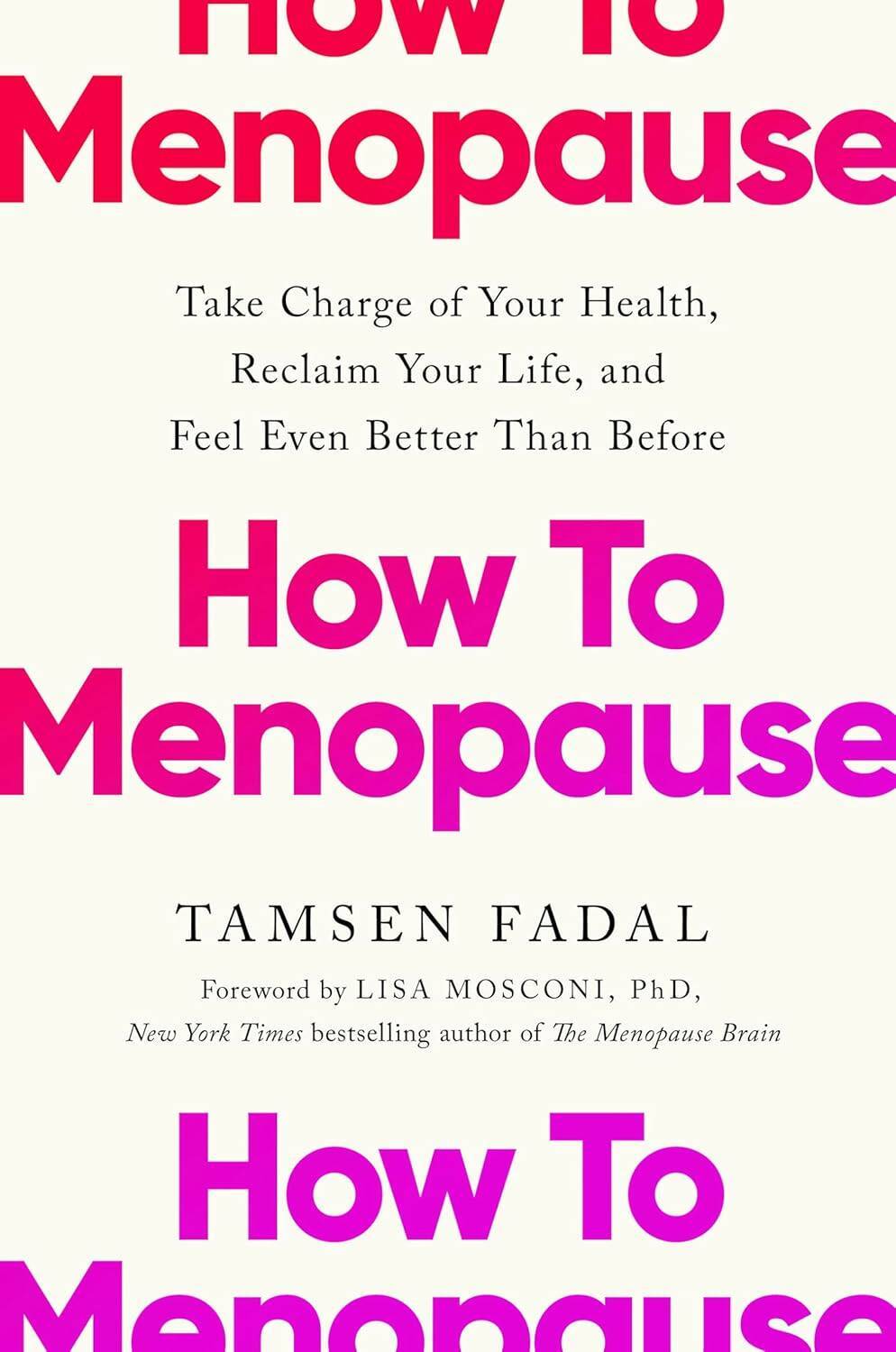
How to Menopause
The 54-year-old Fadal is relatable. Her experiences will resonate with many women, depending on your symptoms; if you’re dealing with brain fog, for example, she’s got you.
As someone who delivered the evening news on television for almost 30 years, words are Fadal’s jam. That changed in November 2019. “I could not remember how to pronounce the word subpoena,” she writes. “It had been happening more often in recent weeks. I would read news from the teleprompter, but then I would get to an ordinary word and ask myself, ‘What is that word?’”
Fadal explains that brain fog is “an unofficial term used to describe difficulties in focusing, memory problems, time lapses, and the sensation that your brain is wrapped in cotton,” adding “(s)ometimes it might even feel (like) you have attention-deficit/hyperactivity disorder or worrying that you’re in the early stages of dementia.”
Among those interviewed is neuroscientist Lisa Mosconi, PhD and author of The Menopause Brain, who says many women in perimenopause have a decline in cognitive performance and have word-finding difficulties. The good news: women’s brains rebound around four to six years after the final menstrual period.
In How to Menopause Fadal says there are over 34 common symptoms including hot flashes, sleep disturbances, weight gain and bone loss — but also more nuanced experiences such as not feeling sexy, feeling invisible and facing mortality.
But there are upsides.
Fadal spoke with Terri Cole, psychotherapist and author of Boundary Boss: “Midlife is a time when women get to be honest with themselves about what is and what is not working. That honesty helps them make changes to create better relationships and a more satisfying life.”
How to Menopause acts as an advocate for improving women’s healthcare. “Many women’s health issues are misdiagnosed outright or downgraded by doctors to something less serious,” says Fadal. The need for menopause training is well documented. And because of the existing lack of knowledge, How to Menopause provides detailed information about the purpose, safety and benefits of hormone therapy.

Supplied photo
Tamsen Fadal is a Emmy award-winning television news anchor, documentary filmmaker and menopause advocate.

The book also provides good information women can take to the doctor’s office to create an informed visit, driving the need for medical intervention from the patient’s perspective.
This is a strategic way to tackle this issue, as Gen X women push the medical establishment to hear their collective roar.
Fadal also offers much-needed optimism about this phase of life. A perspective shift is possible when midlife women realize they can be “done” with expectations set by society and by themselves. When the bother of menstruation, the habit of people pleasing, the demands of parenting, and saying no to things that don’t serve you are taken away… there is freedom.
Women just need to embrace it.
Deborah Bowers is happy to join other Gen X women driving change in the menopause space. But she’s hit the tipping point of information and influencer overload. She thinks her next book review should be some sort of campy beach read.