Banks for the memories

In dystopian debut novel, democracy’s decline and death rings all too familiar

Advertisement

Advertise with us

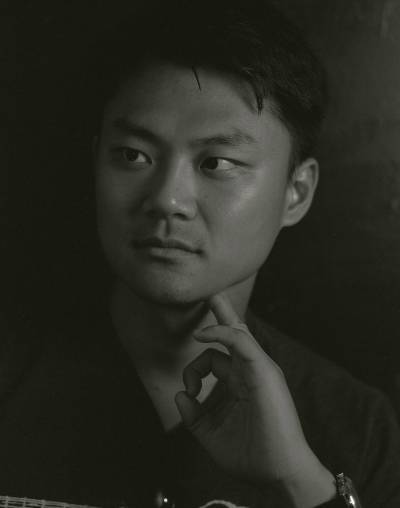
Toronto-based author Yiming Ma’s debut work straddles the line between novel and short-story collection, as he knits the tales of a dozen or more viewpoint characters into one overarching narrative in which a future People’s Republic of China has taken over the entire world.

Read this article for free:


or

Already have an account? Log in here »

To continue reading, please subscribe:

Subscribe and receive a limited-edition Free Press branded hat or tote.

Digital Subscription

One year of digital access for only $205*

  • Enjoy unlimited reading on winnipegfreepress.com
  • Read the E-Edition, our digital replica newspaper
  • Access News Break, our award-winning app
  • Play interactive puzzles

*First annual payment billed as $205.00 + GST for one year. This annual subscription will automatically renew at $233.00 + GST every 52 weeks (10% off the regular annual price of $259.35). Offer available to new and qualified returning subscribers only. Cancel any time.

To continue reading, please subscribe:

Add Free Press access to your Brandon Sun subscription for only an additional

$1 for the first 4 weeks*

  • Enjoy unlimited reading on winnipegfreepress.com
  • Read the E-Edition, our digital replica newspaper
  • Access News Break, our award-winning app
  • Play interactive puzzles
Start now

*Your next Brandon Sun subscription payment will increase by $1.00 and you will be charged $17.95 plus GST for four weeks. After four weeks, your payment will increase to $24.95 plus GST every four weeks.

Hey there, time traveller!
This article was published 16/08/2025 (399 days ago), so information in it may no longer be current.

Toronto-based author Yiming Ma’s debut work straddles the line between novel and short-story collection, as he knits the tales of a dozen or more viewpoint characters into one overarching narrative in which a future People’s Republic of China has taken over the entire world.

Threaded throughout that story of conquest is the sci-fi concept of a brain implant, Mindbank, that allows individuals to upload and download memories. The basic conceit Ma employs here is that every story in this book is in fact a banned memory file, with the framing device of an unknown custodian exploring each story while he waits for the government to notice their illicit nature and whisk him away to a re-education camp.

These files include the memory of a would-be author trying to write the last great novel before “Memory Epics” completely replace writing as an art form, but getting caught up in an escaped plague from a nearby biotech lab. And the layered memories of one Japanese man’s experiences in a fiery wartime Holocaust, whose experiences alternate with the Chinese memory artisans working a century later to alter and rework the story to get it past government censors for public release.
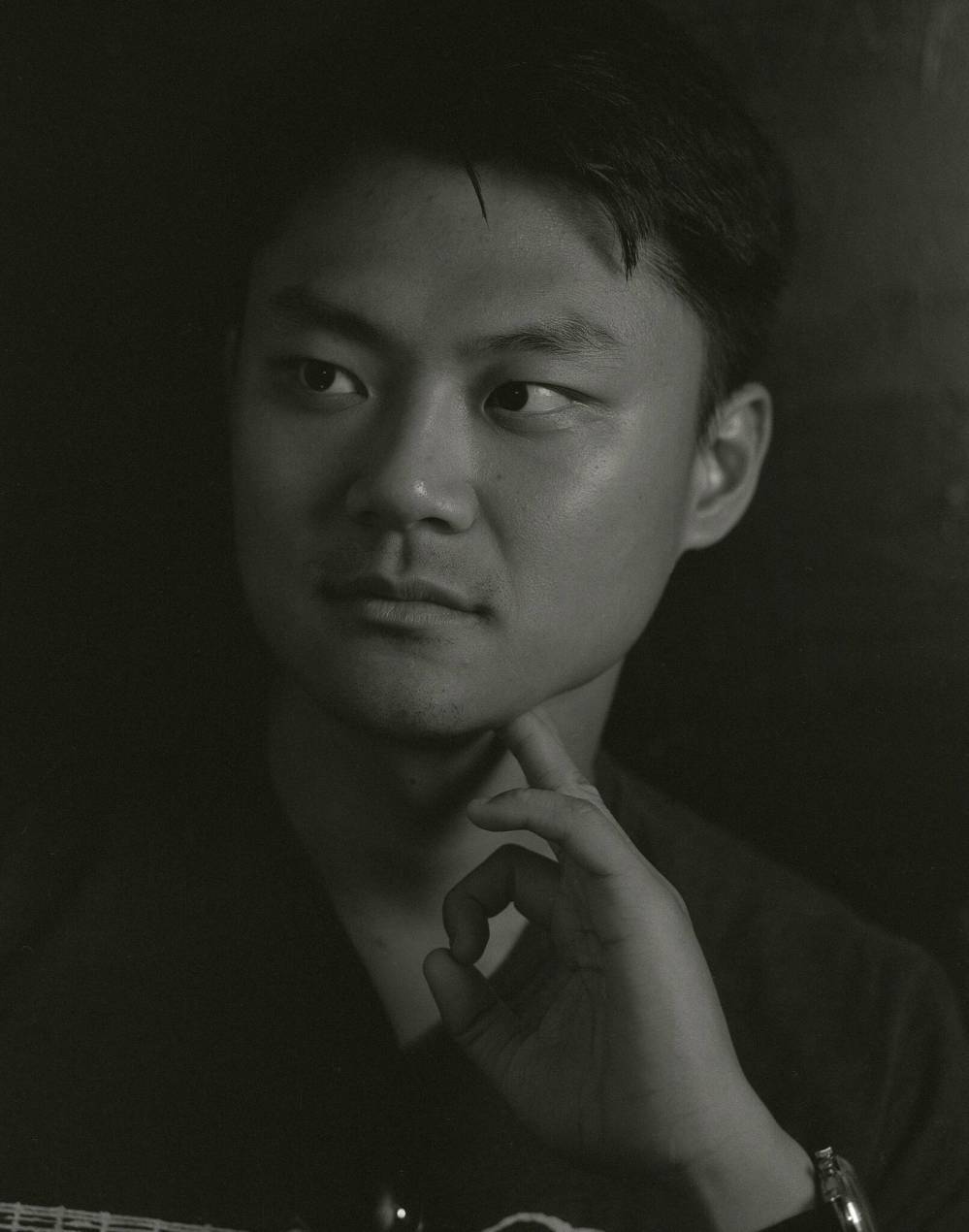
Emma Norman photo
                                Yiming Ma’s powerful debut contemplates how social divisions serve the purpose of the oppressing government.

Emma Norman photo

Yiming Ma’s powerful debut contemplates how social divisions serve the purpose of the oppressing government.

Some stories span the period “before the war,” anywhere from Mao Zedong’s 1960s Cultural Revolution to the present day. Others are from the war period itself and others still take place decades or centuries after the planet-spanning iron rule of the Qin Empire is firmly in place. The viewpoint characters are all Chinese in origin, but range from mainlanders to immigrant families that have become more culturally American.

Race and class are important throughout this work. Is one connected to the Party or not? Is one Chinese-born or foreign-born? Is one yellow, black, brown or white? While Japanese, white Americans, and Black Americans never serve as viewpoint characters, their stories are key to understanding the full picture of this future oppressive society. Ma is clearly always thinking about how social division serves the purposes of the oppressing government, even though he rarely states it explicitly.

One of the most prescient tales centres on the Gaokao, China’s real-life national university entrance exam. This single standardized test can have a profound effect on a young person’s future, usually seeing them study obsessively for years. However, when future technology allows knowledge to be acquired through a simple memory download, the form of the Gaokao changes to a horrific test of grit: examinees are transported to a virtual desert and are tasked to trek for days or weeks until the simulated thirst, pain and injury finally break them. Tellingly, the test is presented as meritocratic, but the reader finds out it is blatantly rigged against test-takers of certain backgrounds, with the protagonist discovering the test has removed one of his legs prior to the start of the race.

The most prominent theme, reinforced by the framing story, is the Orwellian idea of controlling the flow of information to control the populace. Mindbanks, initially an assistive technology, grow over the decades to replace all mass-market entertainment and all social media, and ultimately subsume the social credit system as human thoughts and memories become literally searchable and citizens’ subversive thoughts are inevitably exposed to the Party.

George Orwell’s 1984 showed, through the experiences of one character, how all the different pieces of a government machine could squeeze out any hope of individual liberty or resistance. These Memories Do Not Belong to Us shows those elements of oppression being assembled, bit by bit, across decades and centuries, squeezing the noose tighter, pushing the tendrils of surveillance into ever smaller recesses of individual lives.

The content of this book seems timely, but it’s actually timeless. At any point in the last decade readers would have a touchpoint — today it’s ICE rounding people up into American concentration camps, before that Russia’s blatant state media spin on its invasion of Ukraine, or the Chinese government’s efforts to smother the Hong Kong protests, or still yet the fizzling out of the Arab Spring. When is autocracy not on the rise somewhere or other?
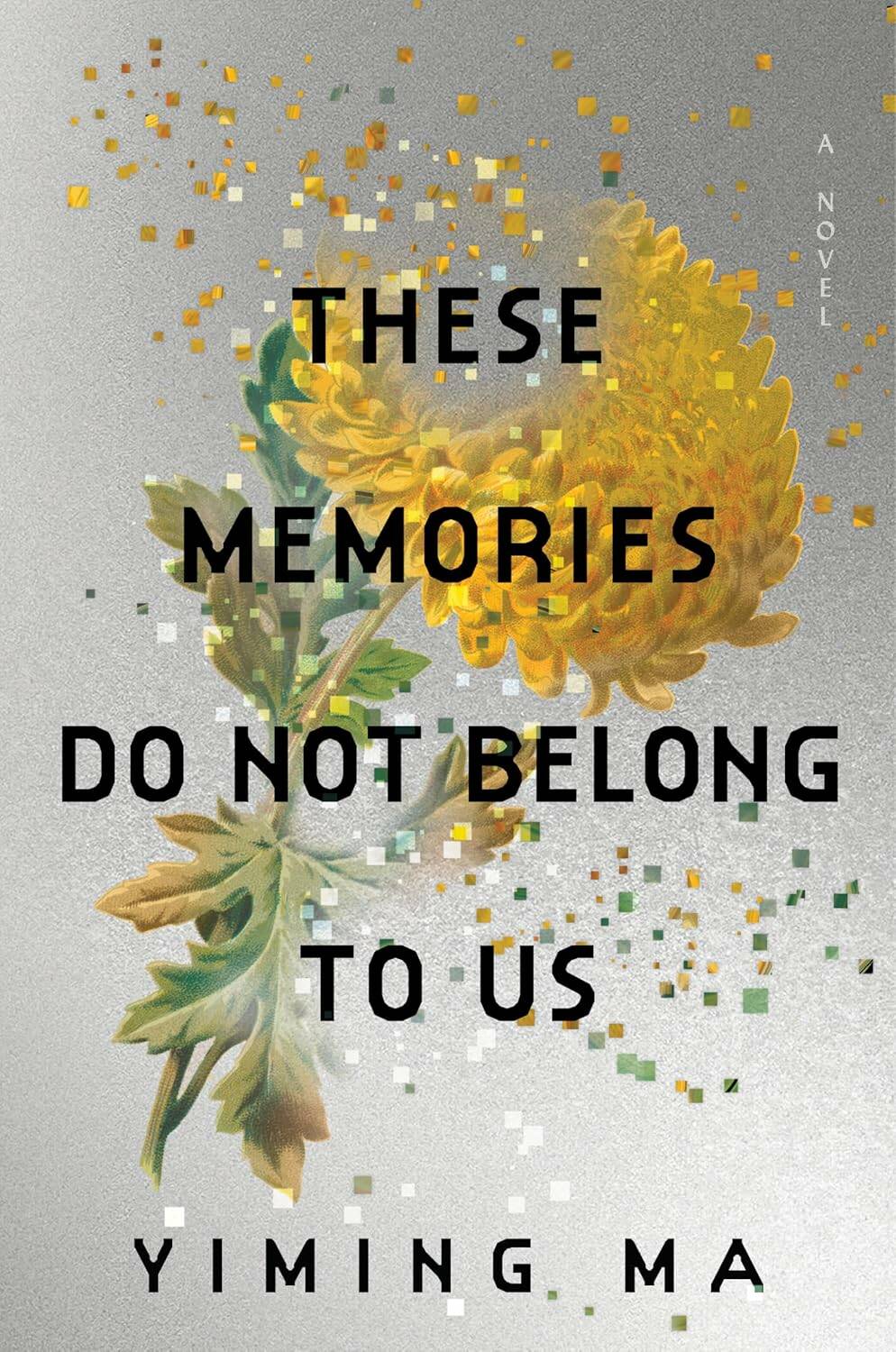
These Memories Do Not Belong to Us

These Memories Do Not Belong to Us

Yiming Ma’s deft, layered commentary on how democracy dies is unfortunately only too relevant. This may be one of the most important books published this year.

Joel Boyce is a Winnipeg writer and educator.

Report Error Submit a Tip

More Stories

His blissful kiss is well worth the risk

Maureen Scurfield 4 minute read Yesterday at 2:00 AM CDT

DEAR MISS LONELYHEARTS: The best kisser I ever met knocked me off balance. My little joke was, “That’s why we have to go home now and lie down in a hurry!” We’ve been seeing each other for almost six months. This man can convince me to do almost anything — so much fun!

But, now he’s been transferred out of province for bigger money at a new company.

He’s leaving soon and he could have asked me to move with him, as his trucking partner, but he didn’t! Other women will soon have their hands on him, believe me!

I’m already 27 and I don’t want to date any more guys — just him. Now what can I do? I feel sadder every day.

Cabernet Sauvignon star of wine festival

Ben Sigurdson 5 minute read Preview

Cabernet Sauvignon star of wine festival

Ben Sigurdson 5 minute read 3:00 AM CDT

The Winnipeg Wine Festival will celebrate the king of red wine grapes next weekend — the theme of this year’s festival, which takes place Sept. 25 and 26 at the RBC Convention Centre, is Cabernet Sauvignon.

Cab Sauv, as it’s also known, is the world’s most widely planted wine grape of any colour, first coming to prominence in the 1800s in France’s Bordeaux region, where the grape is still popular. Rather than single-variety wines, Bordeaux reds tend to be blends, with those coming from the left bank of the Gironde estuary being Cabernet-dominant, while right-bank wines are Merlot-dominant, with Cabernet Sauvignon playing a supporting role. Cabernet and Merlot work well together and many other countries have followed suit in blending the two.

A team at University of California Davis put Cabernet Sauvignon through a DNA test in 1996 and discovered its parent grapes are Cabernet Franc and Sauvignon Blanc — it’s likely that at some point the two varieties, planted next to each other in some vineyard, crossed and mutated and became the grape we know today. (Someone growing grapes in the 19th century must have had an inkling of what was up, as the grape has been called Cabernet Sauvignon since long before the DNA test.)

Flavour-wise, most Cabernet Sauvignon wines are big and bold, with a core of deep dark berry flavours, some graphite and spice notes and relatively bright acidity. It’s a grape that is well-suited to barrel aging, with most examples seeing at least some time in wood.

Read
3:00 AM CDT

A life’s story: activist, educator, organizer knew the true meaning of community

Janine LeGal 7 minute read Preview

A life’s story: activist, educator, organizer knew the true meaning of community

Janine LeGal 7 minute read 3:00 AM CDT

Somewhere between a love for sharing stories and a love of community connections, Michael (Mike) Maunder lived his life. Giving voice to people and neighbourhoods was a passion for the natural-born community organizer.

An author, teacher and principal, Maunder lived in a one-bedroom apartment in West Broadway and devoted himself to community development, education and neighbourhood renewal.

He maintained a connection with Augustine United Church, whose commitment to social justice he appreciated, volunteered at the Sandy-Saulteaux Spiritual Centre, and found comfort in a Buddhist prayer community.

Maunder died on July 15 at the age of 80.

Read
3:00 AM CDT

A quick look at where provinces and territories stand on time changes

The Canadian Press 2 minute read Preview

A quick look at where provinces and territories stand on time changes

The Canadian Press 2 minute read Updated: Yesterday at 6:28 AM CDT

WINNIPEG - Manitoba's government said Thursday the province will be sticking with daylight time year-round, making it the latest jurisdiction to move away from twice-annual time changes. Here's a look at where things stand across Canada:

British Columbia said in March that it was moving to permanent Pacific daylight time. The change also means that parts of northeastern B.C., which have been on mountain standard time year round, are now in alignment with the rest of the province.

Alberta also switched to permanent daylight time this year in what it calls Alberta time. The change means it now has the same time as Saskatchewan year round.

Saskatchewan has been on permanent central standard time since 1966.

Read
Updated: Yesterday at 6:28 AM CDT

Grieving child builds backyard rocket ship

Harriet Zaidman 4 minute read 2:01 AM CDT

I Built a Rocket Ship (Kids Can Press, 32 pages, hardcover, $22) by Winnipegger Anna Lazowski is a tender story for children ages 4-8 about a little girl trying to make sense of her mother’s death. The child engages in conversation with her late mom, agreeing and disagreeing about things said as she carries objects (and of course, the cat) to the backyard. There, she is building a rocket ship she will pilot into the skies to find her mom again.

Jennica Lounsbury’s varied perspectives show the range of emotions the little girl experiences.

● ● ●

Northwoods Lullaby by Mary Casanova (University of Minnesota Press, 32 pages, hardover, $25) is a bedtime book for readers up to age eight, perfect to bring a busy, happy day to a close. Just like children who are listening to adults reading the book, all the animal babies are being tucked into their nests and burrows by loving parents: “Thump and scamper,/nimble clover./ Soon it’s time to rest. Baby loon/ nestles in/as Papa floats along.”

Day 1 of Jets training camp in the books with pairings essentially cemented

Ken Wiebe 7 minute read Preview

Day 1 of Jets training camp in the books with pairings essentially cemented

Ken Wiebe 7 minute read Thursday, Sep. 17, 2026

Nearly six minutes into his question-and-answer session, Scott Arniel took a welcome detour from the news of the day.

After exhausting the discussion around the goalie who wasn’t in training camp, the head coach of the Winnipeg Jets finally got a query about the line combinations and defensive pairings that were unveiled in training camp.

And unlike past years, when exhibition games were more frequent and the training camp wasn’t this condensed, Arniel conceded these groupings were intentional and were likely staying together for some time.

The expansion to an 84-game regular season brings with it a reduction to four pre-season games and a much shorter training camp, which could limit the amount of experimentation that Arniel can do during the next two weeks.

Read
Thursday, Sep. 17, 2026