The journeys of life
In their travels, Zorn’s cast of characters glean valuable insight about the world — and themselves
Advertisement
Read this article for free:
or
Already have an account? Log in here »
To continue reading, please subscribe:

Digital Subscription
One year of digital access for only $205*
- Enjoy unlimited reading on winnipegfreepress.com
- Read the E-Edition, our digital replica newspaper
- Access News Break, our award-winning app
- Play interactive puzzles
*First annual payment billed as $205.00 + GST for one year. This annual subscription will automatically renew at $233.00 + GST every 52 weeks (10% off the regular annual price of $259.35). Offer available to new and qualified returning subscribers only. Cancel any time.
To continue reading, please subscribe:
Add Free Press access to your Brandon Sun subscription for only an additional
$1 for the first 4 weeks*
- Enjoy unlimited reading on winnipegfreepress.com
- Read the E-Edition, our digital replica newspaper
- Access News Break, our award-winning app
- Play interactive puzzles
*Your next Brandon Sun subscription payment will increase by $1.00 and you will be charged $17.95 plus GST for four weeks. After four weeks, your payment will increase to $24.95 plus GST every four weeks.
Read unlimited articles for free today:
or
Already have an account? Log in here »
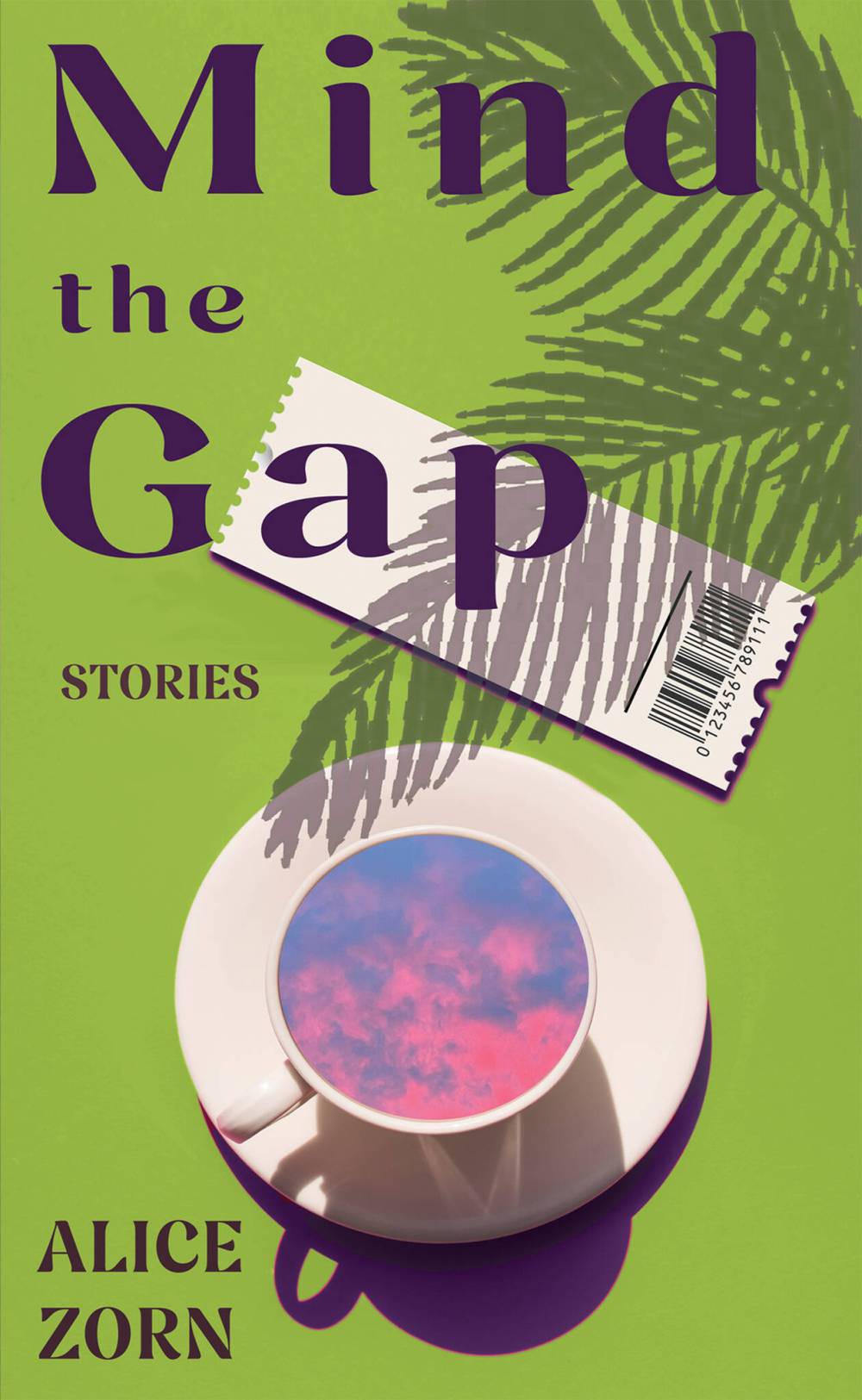
Guanajuato, Mahdia, Vienna, Marrakesh: these are a few destinations that Alice Zorn’s stories visit in her collection Mind the Gap.
The Montreal author’s Colours in Her Hands — in which the attitudes of a woman with Down syndrome clash unpredictably against those of her care-giving brother — was arguably the best Canadian novel of 2024.
Zorn’s skill is apparent throughout the eight stories of Mind the Gap too, though less dramatically. Its characters travel. In Born – Died, Claudia, on the cusp of adulthood and against the feelings of her adoptive parents, travels to Guanajuato in Mexico to find out about her birth family and seek the reason behind her adoption. Instead, she finds her own gravestone.
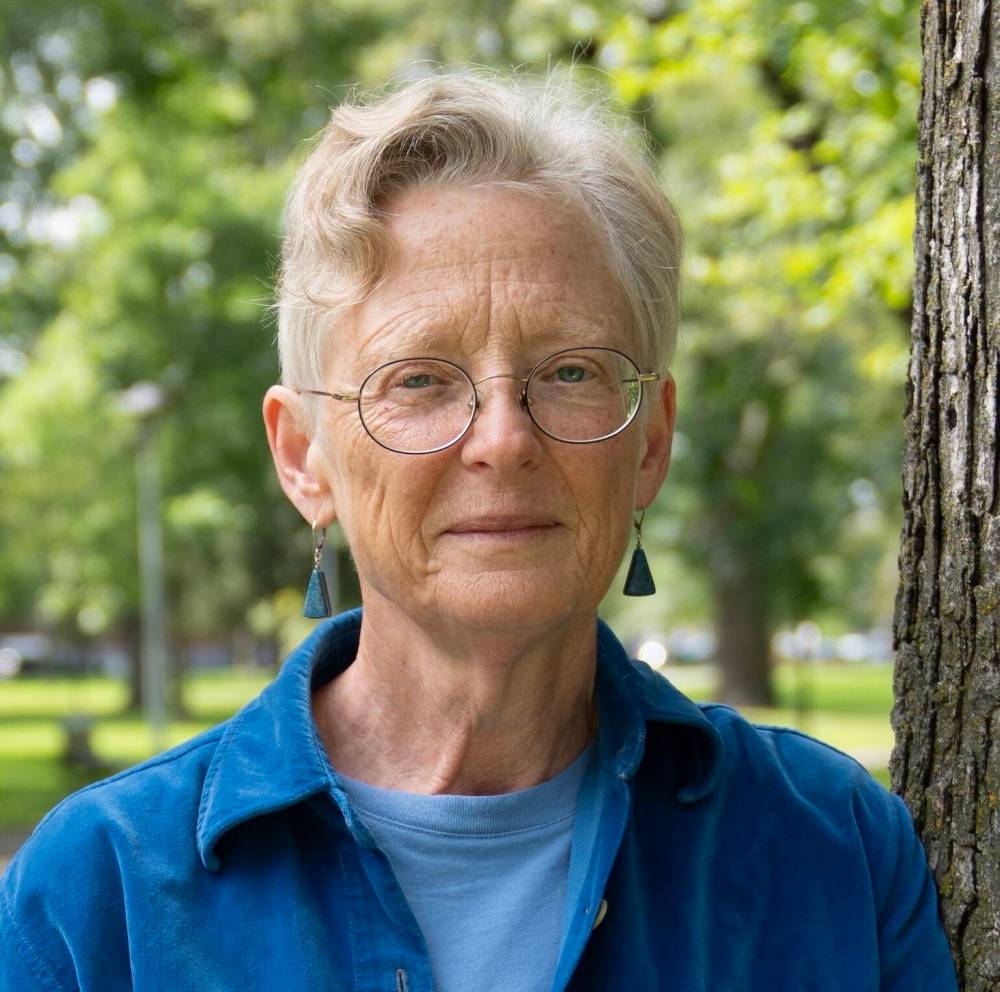
Louise Abbott photo
Some of the most compelling components of Alice Zorn’s writing are the myriad forms of human conflict, and the ways characters might rise above.
Other stories include that of a formerly independent woman, Pia, who travels to Madia in Tunisia with her boyfriend Luc and the boyfriend’s 13-year-old unfriendly daughter Brigitte. Hearing the phrase “the socks… are dead” from her father’s mouth, Brigitte adopts it as an all-purpose reply to most questions. The potential is certainly there for a vacation from hell. In Zorn’s writing, the most intriguing aspects are the myriad forms of human conflict — in this case step-daughter/step-(what?) — and the potential ways in which the antagonists might rise above said conflict.
The title story traces, often from a distance, the friendship and conflict between narrator Barbara and her Austrian cousin Freddy. When young Barbara travels to meet Freddy and his family, he is already a little snob at age 12, discoursing “from the formidable Rolodex that was his brain” about the grandeur of European history to Barbara, she from parochial Montreal. Yet he also sings Johann Wolfgang von Goethe’s achingly beautiful röslein ballad.
Freddy feels a powerful vocation to dedicate his life to God and become a Benedictine monk — to leave “the mock paradise of the modern world.” Because Barbara is a sympathetic ear, Freddy, having renamed himself “Edmund,” thinks that she understands him (she doesn’t), that she should agree to resist modern social mores (she doesn’t) and that she is an ally in his struggle to free himself from his family’s hat business (mostly, she is).
The “gap” between cousins, far from diminishing, grows as he is pushed out of the monastery back into the modern world and as Barbara finally catches on that Edmund, even though he criticizes her unwillingness to let the church solemnize her own common-law relationship, is gay.

The cautionary title warns about the dangerous space between train and platform, but Zorn also uses it as a metaphor for the distance between people, not only between Canadian travellers and Mexicans or Moroccans, but also between Barbara and Edmund — close genetically, culturally and emotionally, yet miles apart.
Zorn’s forays into the complexity of human motive — even monks hold petty jealousies — are convincing and often moving. Her prose can also be funny: “Edmund made marriage sound as attractive as a soldering gun,” she writes in the title story. In the characters’ back-and-forth between modernity and tradition, Zorn, to her credit, doesn’t solve things with a final answer. Although the open ending weakens the story esthetically, she avoids the tendency to cheer, despite all costs, for modern freedoms.
Similarly, in the collection’s novella Morocco, Zorn navigates an insoluble conflict between two women, Nessa and Bev, who travel to Morocco to find out why Nessa’s boyfriend Sky seems to have disappeared there. Bev’s slightly reckless “carpe diem” attitude clashes with Nessa’s safer approach, not only during their travel, but also in a deeper conflict that only slowly becomes apparent.
Again Zorn, to her credit, doesn’t choose between the two women. Instead, she lets her characters try to carry the weight of their humanity. And they do.
Reinhold Kramer is a Brandon University English professor. His most recent book is Are We Postmodern Yet? And Were We Ever?