Off the deep end
Fraught mother-daughter relationship at the core of Hollywood family’s woes
Advertisement
Read this article for free:
or
Already have an account? Log in here »
To continue reading, please subscribe:

Digital Subscription
One year of digital access for only $205*
- Enjoy unlimited reading on winnipegfreepress.com
- Read the E-Edition, our digital replica newspaper
- Access News Break, our award-winning app
- Play interactive puzzles
*First annual payment billed as $205.00 + GST for one year. This annual subscription will automatically renew at $233.00 + GST every 52 weeks (10% off the regular annual price of $259.35). Offer available to new and qualified returning subscribers only. Cancel any time.
To continue reading, please subscribe:
Add Free Press access to your Brandon Sun subscription for only an additional
$1 for the first 4 weeks*
- Enjoy unlimited reading on winnipegfreepress.com
- Read the E-Edition, our digital replica newspaper
- Access News Break, our award-winning app
- Play interactive puzzles
*Your next Brandon Sun subscription payment will increase by $1.00 and you will be charged $17.95 plus GST for four weeks. After four weeks, your payment will increase to $24.95 plus GST every four weeks.
Read unlimited articles for free today:
or
Already have an account? Log in here »
Everyone in Mary H.K. Choi’s novel Pool House is dysfunctional, desperately unhappy and living an illusion.
On the surface, this may be what we expect from Hollywood; lives served up in a glass box, like the pool house in the backyard Stevie and Moon must vacate their house for every time it is booked as an Airbnb — the only way Moon can make ends meet since acting jobs have begun to dry up.
This is not a beautiful story, but there are shiny bits that glow within the turmoil. Its characters are conflicted, self-absorbed, self-destructive, lost but seeking. They are not exactly likable, but we find ourselves hoping for them, if not cheering, and there are turns of phrase within the prose that will steal a reader’s breath. It’s a wrenching story about people drowning in dysfunction. It is a rending, life from rot.
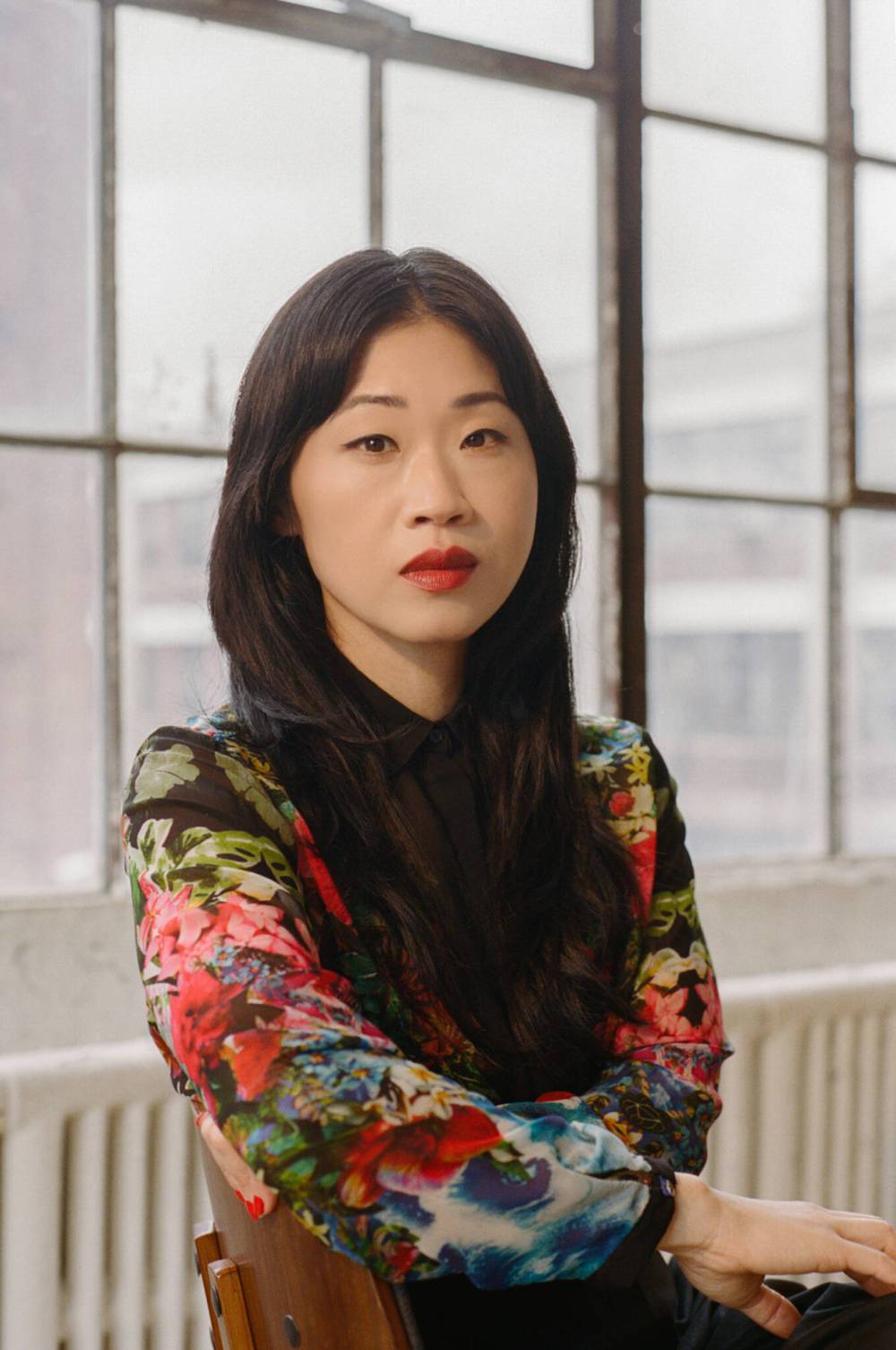
June Kim photo
Author Mary H.K. Choi’s latest novel tells the complicated story of a dysfunctional Hollywood family.
In addition to novels for young adults, bestselling American author Mary H.K. Choi has written essays and comics, and has served as culture correspondent for a weekly news program that aired on HBO. Her work is a thumb on the pulse of all things young, hip and complicated, which serves her well in this novel.
Pool House is primarily a mother-daughter story with four main characters, though one is dead. There’s Stevie, the 20-year-old daughter of Moon, an aging actress once internationally known as the mother in a dysfunctional family sitcom. Adam is the TV son of Moon, now in his 30s. And there is Mac, TV father to Adam, TV husband and real-life lover to Moon and surrogate father to Stevie. Mac is a large presence throughout despite having stepped off a bridge from the story’s start.
The TV family developed a strong bond in real life which continued beyond the show run. They love and understand each other best. Because of this, Stevie, Moon’s birth daughter, has felt “other” all her life. She’s also self-aware and worries that, because her experience with love is skewed, she may not recognize it when it is finally offered. When she was young, she had a crush on Adam. Now she alternates between sexual and familial attraction.
Stevie wants to leave L.A. and her mother’s chaotic gravitational pull, but is unable because she believes Moon can’t make it on her own. Moon wants Stevie to leave so she might have her own independent life, but is also terrified she might.

At Moon’s one-year sobriety birthday, she acknowledges how she’s put her own dysfunction on her daughter. It feels like a turning point. (Spoiler alert: it’s not.)
When Adam, who feels both physical attraction to his surrogate sister and wants to care for her like a parent, challenges Stevie on not ever wanting children (because “Life is too hard to just make someone else do it”), he responds, “Everything amazing is a little bit s–t and everything sh–ty at least ends.” Like Moon, he wants Stevie to get out in the world, knows her “brain needs to bash around with other brains in college.”

Pool House
Pool House offers a Big Brother house-like glimpse at dysfunctional people living messed up but hopeful lives in a literal glass house. Ultimately it is a story of survival and twisted love, ever hopeful for something pure and healthy.
The ending is brutal, horrible, messy, but just as it should be. We understand a sacrifice was made in the only way possible for these characters.
Anita Daher is an author and actor, grateful to live in Winnipeg.