Beauty by design Exchange District's treasured architecture and people captured in dazzling detail
Read this article for free:
or
Already have an account? Log in here »
To continue reading, please subscribe:

Digital Subscription
One year of digital access for only $205*
- Enjoy unlimited reading on winnipegfreepress.com
- Read the E-Edition, our digital replica newspaper
- Access News Break, our award-winning app
- Play interactive puzzles
*First annual payment billed as $205.00 + GST for one year. This annual subscription will automatically renew at $233.00 + GST every 52 weeks (10% off the regular annual price of $259.35). Offer available to new and qualified returning subscribers only. Cancel any time.
To continue reading, please subscribe:
Add Free Press access to your Brandon Sun subscription for only an additional
$1 for the first 4 weeks*
- Enjoy unlimited reading on winnipegfreepress.com
- Read the E-Edition, our digital replica newspaper
- Access News Break, our award-winning app
- Play interactive puzzles
*Your next Brandon Sun subscription payment will increase by $1.00 and you will be charged $17.95 plus GST for four weeks. After four weeks, your payment will increase to $24.95 plus GST every four weeks.
Read unlimited articles for free today:
or
Already have an account? Log in here »
Hey there, time traveller!
This article was published 02/04/2021 (2007 days ago), so information in it may no longer be current.
Thank goodness for low population growth and budget constraints of the 1960s. They saved Winnipeg’s historic Exchange District from being razed and replaced by ugly Brutalist buildings, as happened across North America during the era of so-called urban renewal.
Book review
Treasures of Winnipeg’s Historic Exchange
By George J. Mitchell
Heritage House, 272 pages, $50
The sturdy, built-to-last stone and brick structures still stand, erected between 1896-1914 after the First Nations and Métis were displaced from their ancestral lands. In that time Winnipeg was the fastest growing city in North America.
George J. Mitchell has captured the area’s storied past as well as its vibrant present in Treasures of Winnipeg’s Historic Exchange, a collection of stunning photographs that can’t help but generate an expectation that this heritage area should be preserved.
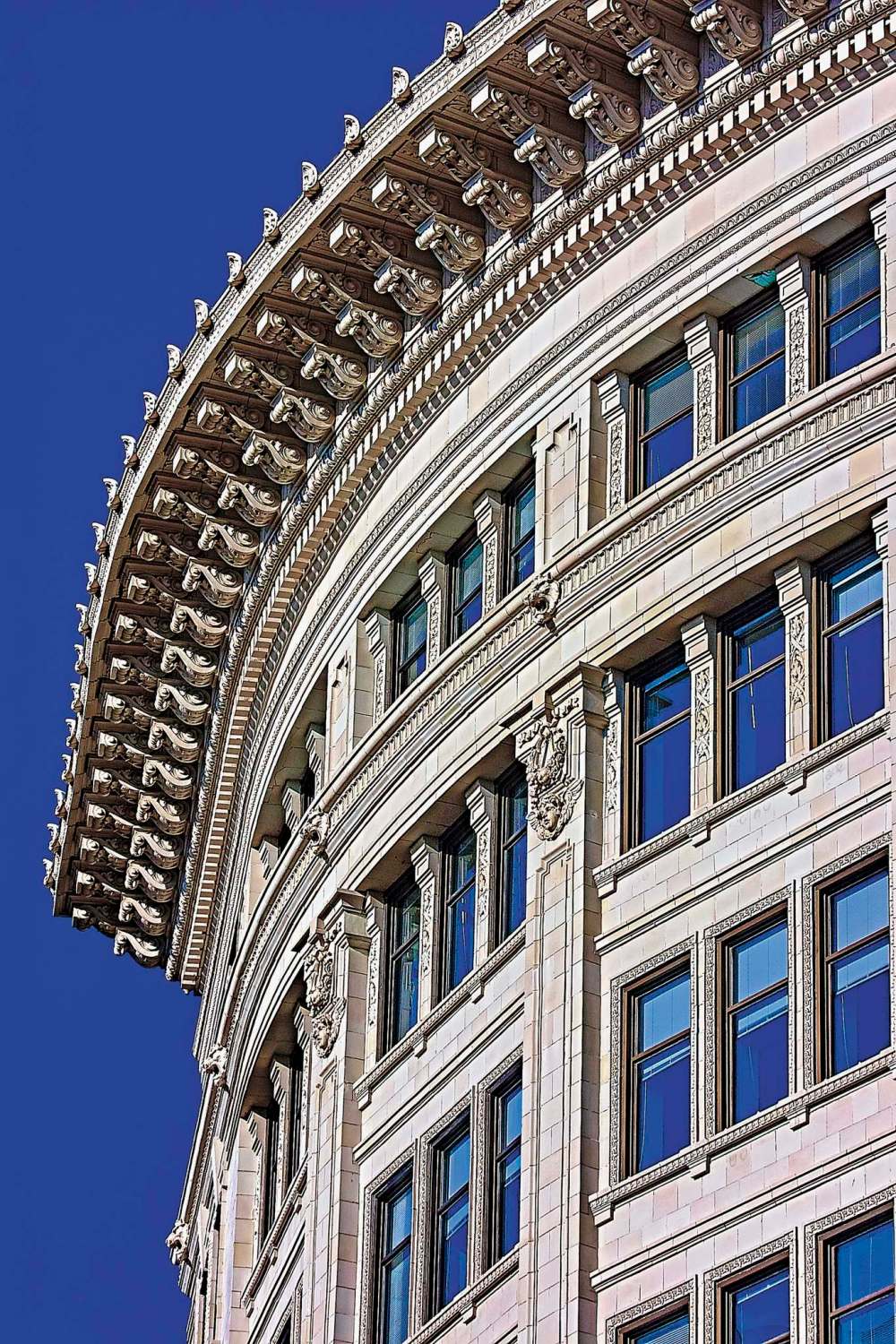
Mitchell’s enhanced digital photographs are uniquely artistic themselves; the sky is white, violet or cerulean blue according to the need, the morning sun bounces off red brickworks, grey and yellow-flecked Manitoba limestone shimmers in the light. Augmented close-ups of intricate cornices, columns and pilasters recall the businessmen, bankers and grain barons who vied for economic dominance. They employed world-class architects to create their visions of empire out in the West. Victorian, Romanesque, Beaux-Arts, Italianate and Chicago designs sit side by side, representing the old and the nouveau riche, their origins and aspirations.

Crisply written sidebars pack in details that bring history to life. Main floor walls of warehouses, for example, were 28 inches thick to support the heavy loads flowing into the booming city. Concrete floors, iron and stone stairs and steel frames were critical design elements for fireproofing.
On Newspaper Row (McDermot Avenue), news was posted on outside walls or shouted through megaphones from windows for major events, such as the outbreak of the First World War. The Winnipeg General Strike was crushed in front of City Hall on Bloody Saturday in 1919 — a testament to the human cost that made the owners wealthy.
Each chapter thoughtfully leads from the past to the present, celebrating the modern use of the buildings and spaces with equal enthusiasm. The key to keeping a city core alive is bringing people in. Warehouses and factories that were written off have been transformed into condominiums. Red River College renovated interiors for current educational use, yet maintained the façades of several buildings on Princess Avenue.
Mitchell pays due to the theatrical arts, from the ornate Pantages Playhouse, where thousands applauded Charlie Chaplin and Buster Keaton on the Vaudeville circuit, to today’s Jazz Winnipeg Festival, Nuit Blanche and the second-largest theatrical event in North America, the Fringe Festival, which sees crowds thronging Old Market Square — “an oasis of green” — to hear music at the Cube and cool off on patios every summer. Entrepreneurship attracts people, too, from specialty boutiques, haberdashers and galleries lining Albert Street to funky sandwich and doughnut shops along King Street.
Many a bridal party has mugged for cameras in the alleyways where horses once trotted, a textured backdrop for a special day. Mitchell includes chapters for other features of the Exchange we take for granted. Fire escapes making zigzag shadows on brick walls are described as “key adornments” and “urban jewellery or extensions of living spaces.”

While the buildings themselves are artistic, the area is also covered in art. Ghost signs still advertise long-defunct factories and goods, thanks to the high percentage of lead in the old oil paint. Modern murals add a contemporary note.
The high-quality paper and bindings literally add weight to the enjoyable content. Mitchell, a former editorial director and publisher of business and trade magazines, has done the city and its citizens a service by reminding us of the value of our past, and how it serves us today.
Harriet Zaidman is a writer in Winnipeg. Many scenes in her middle years novel, City on Strike (Red Deer Press), take place in the Exchange District.