In Conversation with Yann Martel
Advertisement
Read this article for free:
or
Already have an account? Log in here »
To continue reading, please subscribe:

Digital Subscription
One year of digital access for only $205*
- Enjoy unlimited reading on winnipegfreepress.com
- Read the E-Edition, our digital replica newspaper
- Access News Break, our award-winning app
- Play interactive puzzles
*First annual payment billed as $205.00 + GST for one year. This annual subscription will automatically renew at $233.00 + GST every 52 weeks (10% off the regular annual price of $259.35). Offer available to new and qualified returning subscribers only. Cancel any time.
To continue reading, please subscribe:
Add Free Press access to your Brandon Sun subscription for only an additional
$1 for the first 4 weeks*
- Enjoy unlimited reading on winnipegfreepress.com
- Read the E-Edition, our digital replica newspaper
- Access News Break, our award-winning app
- Play interactive puzzles
*Your next Brandon Sun subscription payment will increase by $1.00 and you will be charged $17.95 plus GST for four weeks. After four weeks, your payment will increase to $24.95 plus GST every four weeks.
Read unlimited articles for free today:
or
Already have an account? Log in here »
Hey there, time traveller!
This article was published 12/03/2016 (3859 days ago), so information in it may no longer be current.
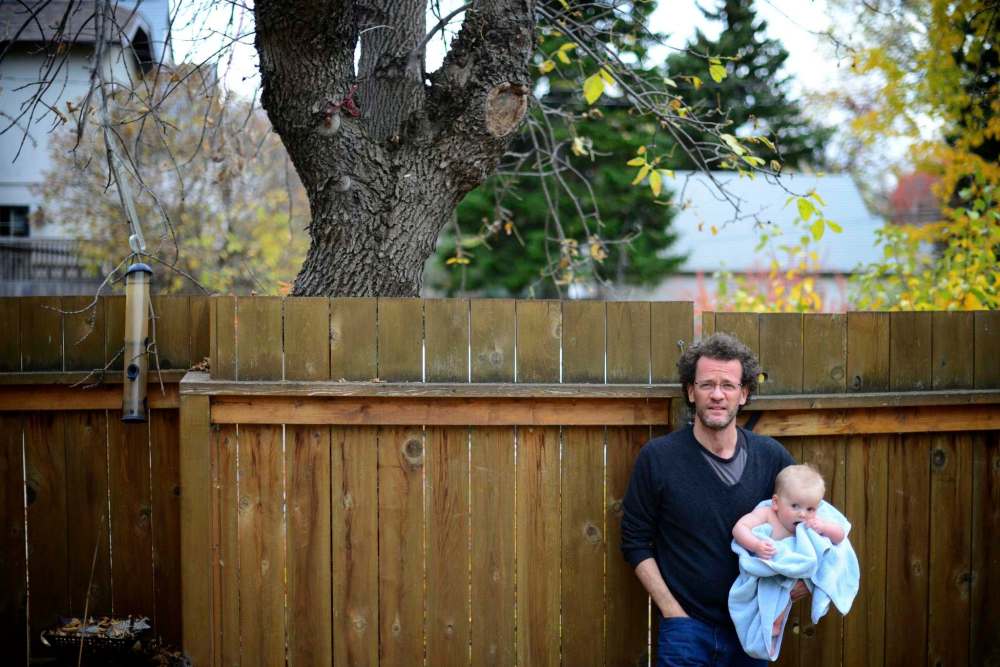
Born in Spain to Québécois parents, Yann Martel has lived in Iran, Turkey and India, but now calls Saskatoon home.
His published works include a collection of short stories, another of letters to former prime minister Stephen Harper, and four novels, including Life of Pi, which won the Man Booker Prize for Fiction and was adapted for the screen by director Ang Lee.
Martel will be in Winnipeg March 14, launching his latest book, The High Mountains of Portugal, at McNally Robinson Booksellers. He took the time to speak to Ariel Gordon.
Free Press: What do you want people to know about this book?
Yann Martel: That it’s a novel, that it features animals and cars and dead bodies and magical mountains.
FP: As a writer (i.e. someone whose artistic practice is predicated on time spent alone) how do you approach readings? What do you get out of them?
YM: As much as I love the illuminated solitude of creation, I also love going on tour to talk about my books. Art is a gift, a social act. I find connecting with readers (and journalists) very stimulating, whether they like my books or not. That’s important to note: it’s not about being patted on the back, it’s about dialogue.
I don’t actually do readings very often, I prefer just to talk about my book. People can read the book for themselves if they want to. What they can’t get so easily is the author talking about his book. So I approach my events in no special way, I just let things happen, the way we don’t prepare when we are going to meet a friend. Discourse will find its natural course.
As for what I get out of it, I get what one gets out of dialoguing: a sense of connection, of binding myself with others into a community.
FP: The High Mountains of Portugal is your sixth book since The Facts Behind the Helsinki Roccamatios was published in 1993. What are your goals for your writing now, as compared to your first books? As compared to the international acclaim of Life of Pi?
YM: With each book that I write, I’m trying to understand something, some aspect of the human condition. So with Helsinki, I was trying to understand the nature of stories, how we build them, why we tell them.
With Self, in which a character spontaneously changes sex twice, boy to girl to boy, I was looking into the nature of gender and sexual orientation.
With Life of Pi, I was curious about faith. What is it? How does it work? What does it mean to have faith?
With Beatrice & Virgil, I wanted to apply the tools of fiction on an event that has resisted fictionalization, unlike every other historical event, including war, slavery, disease… that even being the Holocaust.
And now, with The High Mountains of Portugal, I wanted to look at the tools we have at our disposal to deal with suffering. That use of curiosity as my guiding light will not change, I don’t think. Already I have another novel in mind. The idea popped into my head barely a week ago, while I was in Amsterdam. Anger — what is it? Why are we prone to anger, the way animals are not? What are the workings of anger, its consequences, etcetera? Those questions are already leading me on a narrative chase.
FP: How has having a young family changed your life, and, by extension, your process?
YM: I’m a busier, more sleep-deprived writer, constantly side-swiped by noisy intrusions of joy. It’s a good life. My writing process, in all that, is conducted much the same way as before when I manage to close the door on my gaggle of children. The quiet joy of creation is just more obviously hemmed in by the shrieking joy of the created.
FP: What influence have your Québécois parents — a literary translator and a diplomat-poet — had on your writing?
YM: Their influence was foundational. If I started reading, it’s because they read. If I started writing, it’s because my father wrote. (Émile Martel won the Governor General’s Award for French-language poetry in 1995.) If I continued writing, it’s because my parents encouraged and validated what I did. Being diplomats, they also showed me the world, which is another book.
As for writing in French, I do so privately, to my parents mostly. I went to school in English. English is the language in which I assert myself with the greatest clarity.
FP: What are you reading right now? What are you writing right now?
YM: I’m reading The Iliad, speaking of anger and its consequences. I’m writing nothing, nothing at all. Each time I finish a book, I’m spent. I may think about writing another book, but the idea of actually sitting down and doing so exhausts me. I’ll take a few months off before I actually put on that yoke again.
FP: For four years, you sent former prime minister Stephen Harper a book every two weeks. Have you sent Justin Trudeau anything yet or is that a wait-and-see proposition?
YM: Justin Trudeau obtained a Bachelor’s degree in English literature. And he taught drama at a school. He has read books, understands what the artful word can bring to the soul. I see in him a man more opened up by literature than Stephen Harper ever was. And perhaps by nature he is more open-minded to start with, hence his openness to literature.

Now, how he will fare in office is another question. I believe that leaders must read artful books. How else can they understand the human condition? How else can they reach out to the Other.
But that doesn’t guarantee in itself political success. Look at Michael Ignatieff and his disastrous turn as leader of the Liberal Party. The wealth of literature is a necessary condition, I think, but certainly not the only one.
FP: This novel is about loving and losing love, about leaving home and what it means to be human, but it hinges on the particular sorrow of losing children. Was that particularly difficult to write, as the father of four children?
YM: Not really. The death of a child is the foundational myth of Western civilization, God so loved us that he gave up his son. Clearly, no death goes deeper in its impact than that of a child. Being the father of four, I can see that. But I wasn’t projecting any personal fear of that. I’m not a fearful father (or man, for that matter). At most, I placed my potential sorrow within that inscribed at the heart of the Jesus event.
Ariel Gordon is a Winnipeg writer.
Yann Martel at News Café Monday
Bestselling author Yann Martel will be joined by Free Press literary editor Ben MacPhee-Sigurdson at the News Café (237 McDermot Ave.) on Monday at 9:45 a.m.
The Saskatchewan-based Martel, best-known for his 2001 book Life of Pi, is currently touring in support of his new novel The High Mountains of Portugal.
The public is welcome to watch the interview in person or on the Free Press website.
Related Articles
Author Yann Martel at News Café Monday
Advertisement Advertise With Us
Advertisement Advertise With Us