There’s much to admire in nasty-tempered R.B. Bennett

Advertisement

Advertise with us

Bennett

Read this article for free:


or

Already have an account? Log in here »

To continue reading, please subscribe:

Subscribe and receive a limited-edition Free Press branded hat or tote.

Digital Subscription

One year of digital access for only $205*

  • Enjoy unlimited reading on winnipegfreepress.com
  • Read the E-Edition, our digital replica newspaper
  • Access News Break, our award-winning app
  • Play interactive puzzles

*First annual payment billed as $205.00 + GST for one year. This annual subscription will automatically renew at $233.00 + GST every 52 weeks (10% off the regular annual price of $259.35). Offer available to new and qualified returning subscribers only. Cancel any time.

To continue reading, please subscribe:

Add Free Press access to your Brandon Sun subscription for only an additional

$1 for the first 4 weeks*

  • Enjoy unlimited reading on winnipegfreepress.com
  • Read the E-Edition, our digital replica newspaper
  • Access News Break, our award-winning app
  • Play interactive puzzles
Start now

*Your next Brandon Sun subscription payment will increase by $1.00 and you will be charged $17.95 plus GST for four weeks. After four weeks, your payment will increase to $24.95 plus GST every four weeks.

Opinion

Hey there, time traveller!
This article was published 22/05/2010 (5966 days ago), so information in it may no longer be current.

Bennett

The Rebel Who Challenged and Changed a Nation

By John Boyko

CP
R.B. Bennett (left) and W.L. Mackenzie King link arms in this 1933 photo.
CP R.B. Bennett (left) and W.L. Mackenzie King link arms in this 1933 photo.

Key Porter Books, 464 pages, $35

To Canadians who think of him at all, R.B. Bennett, prime minister during the worst of the Depression, is a caricature.

Bennett looked like the Monopoly man — top hat, waistcoat and watch chain — while gaslesss cars drawn by horses became Bennett buggies and hobo camps were Bennett boroughs.

John Boyko, dean of history and social sciences at Lakefield College School in Ontario, sets out to rescue Bennett from the ignominy that the man largely fashioned for himself.

Boyko has written several books on Canadian politics, including Into the Hurricane: Attacking Socialism and the CCF.

Despite Bennett’s arrogance, nasty temper and stubborn, foolish pride, Boyko finds much to admire in Canada’s 11th prime minister.

Bennett was a Red Tory who believed a judicious use of government power could help forge a better society.

By the 1935 election, Bennett had steered his party far to the left of the Liberals under William Lyon Mackenzie King.

With a reformist zeal that began long before Franklin Delano Roosevelt became U.S. president, Bennett created many institutions that are now Canadian icons.

The CBC, the Bank of Canada and the Economic Council of Canada all sprang from Bennett’s fertile mind.

Bennett initiated the concept of the social safety net by introducing unemployment insurance, minimum wages, old-age pensions and other reforms for workers and farmers.

Boyko consistently demonstrates an encyclopedic knowledge of Canadian history.

He can jump from Sir John A. to Pierre Elliott Trudeau and back to Bennett in a single paragraph to illustrate Bennett’s answers at the time to a prime minister’s perennial problems — Quebec, provincial powers, and the relationship with the United States.

Boyko’s writing is so good and his research so thorough that any Canadian with an interest in our political history can read and enjoy this book.

Boyko lays out the many dramatic ironies and seeming contradictions of this complex character.

Bennett was the corporate lawyer for the Canadian Pacific Railway and made himself rich by using inside information to buy railway land and flip it to others.

Yet he was also a leader in calling for railway reform and played a key role in the formation of the Canadian National Railway, the Crown corporation that competed against the CPR.

He was a lawyer for the Royal Bank of Canada. But he was also an enthusiastic proponent of banking reform, arguing that Parliament should ensure banks acted in the public interest.

One of Bennett’s responses to the Depression was to set up work camps to build roads and put otherwise idle young men to work.

Hundreds of those men, led by Communist organizers, tried to take protests about the camps to Ottawa.

The On to Ottawa trek ended in Regina as the RCMP used baseball bats and machine guns to disperse the mob.

Bennett hadn’t ordered the RCMP action, but he didn’t disapprove it either and so carried all of the blame for the violent treatment of out-of-work Canadians.

In what was widely labelled "Bennett’s New Deal," Bennett took his party even further left in a series of five radio speeches to the nation in early 1935 that contained what were then radical solutions to the Depression.

Mackenzie King’s label — a "death-bed conversion" — stuck, even though Mackenzie King had no ideas of his own and ended up implementing many of Bennett’s.

As his cabinet split around him, with one minister leaving to form his own party, Bennett was left to fight the 1935 election alone.

Canadians vented their frustrations with the Depression on him and trounced his party with its worst results to date.

Bennett moved to Britain, contributed greatly to the effort to win the Second World War, and died shortly after the war with few friends or supporters left to mourn him.

By the end of this book, Boyko’s achievement is that the reader feels Bennett should be mourned as a courageous leader who contributed so much to what is now modern Canada.

Donald Benham works at the Social Planning Council of Winnipeg and Winnipeg Harvest and teaches politics at the University of Winnipeg.




Report Error Submit a Tip

More Stories

Desperate Poilievre wants Canadians to believe the sky is falling when it’s just cloudy outside

Tom Brodbeck 5 minute read Preview

Desperate Poilievre wants Canadians to believe the sky is falling when it’s just cloudy outside

Tom Brodbeck 5 minute read Friday, Sep. 18, 2026

Pierre Poilievre has a problem.

Canadians just don’t seem to be paying much attention to him anymore.

So, naturally, the Conservative Opposition leader has decided to turn up the volume.

At a recent party caucus retreat in Penticton, B.C., Poilievre delivered the familiar message: Canada is in trouble, Canadians are hurting and the Liberal government is making everything worse.

Read
Friday, Sep. 18, 2026

Cabernet Sauvignon star of wine festival

Ben Sigurdson 5 minute read Preview

Cabernet Sauvignon star of wine festival

Ben Sigurdson 5 minute read Yesterday at 3:00 AM CDT

The Winnipeg Wine Festival will celebrate the king of red wine grapes next weekend — the theme of this year’s festival, which takes place Sept. 25 and 26 at the RBC Convention Centre, is Cabernet Sauvignon.

Cab Sauv, as it’s also known, is the world’s most widely planted wine grape of any colour, first coming to prominence in the 1800s in France’s Bordeaux region, where the grape is still popular. Rather than single-variety wines, Bordeaux reds tend to be blends, with those coming from the left bank of the Gironde estuary being Cabernet-dominant, while right-bank wines are Merlot-dominant, with Cabernet Sauvignon playing a supporting role. Cabernet and Merlot work well together and many other countries have followed suit in blending the two.

A team at University of California Davis put Cabernet Sauvignon through a DNA test in 1996 and discovered its parent grapes are Cabernet Franc and Sauvignon Blanc — it’s likely that at some point the two varieties, planted next to each other in some vineyard, crossed and mutated and became the grape we know today. (Someone growing grapes in the 19th century must have had an inkling of what was up, as the grape has been called Cabernet Sauvignon since long before the DNA test.)

Flavour-wise, most Cabernet Sauvignon wines are big and bold, with a core of deep dark berry flavours, some graphite and spice notes and relatively bright acidity. It’s a grape that is well-suited to barrel aging, with most examples seeing at least some time in wood.

Read
Yesterday at 3:00 AM CDT

Serious crash at West Kildonan intersection known for collisions

Nicole Buffie 3 minute read Preview

Serious crash at West Kildonan intersection known for collisions

Nicole Buffie 3 minute read Updated: 6:09 PM CDT

Residents in West Kildonan say an intersection that was the site of a serious car crash Sunday morning is notoriously dangerous.

Rob Lick heard a loud bang around 7 a.m. and rushed out of his home on Leila to see what the commotion was. He saw two crushed SUVs, a white and black one, in the intersection. Police vehicles arrived shortly after.

“It sounded like when (garbage trucks) drop a big dumpster,” he said. “I heard somebody crying or wailing, they were standing by the vehicle so I don’t know who exactly it was or if someone was injured.”

The sound of sirens followed shortly after when emergency crews came to the scene. The intersection was immediately blocked off.

Read
Updated: 6:09 PM CDT

A quick look at where provinces and territories stand on time changes

The Canadian Press 2 minute read Preview

A quick look at where provinces and territories stand on time changes

The Canadian Press 2 minute read Friday, Sep. 18, 2026

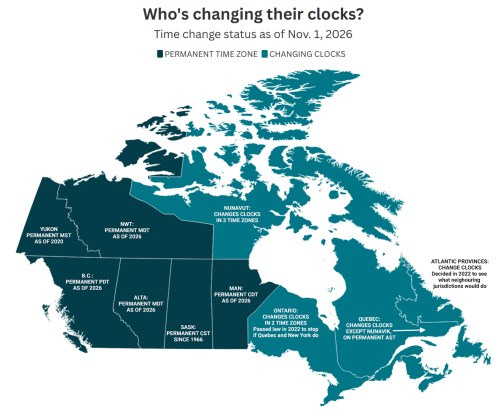
WINNIPEG - Manitoba's government said Thursday the province will be sticking with daylight time year-round, making it the latest jurisdiction to move away from twice-annual time changes. Here's a look at where things stand across Canada:

British Columbia said in March that it was moving to permanent Pacific daylight time. The change also means that parts of northeastern B.C., which have been on mountain standard time year round, are now in alignment with the rest of the province.

Alberta also switched to permanent daylight time this year in what it calls Alberta time. The change means it now has the same time as Saskatchewan year round.

Saskatchewan has been on permanent central standard time since 1966.

Read
Friday, Sep. 18, 2026

National Black Canadians Summit celebrates culture, combats racism

Gabrielle Piché 4 minute read Preview

National Black Canadians Summit celebrates culture, combats racism

Gabrielle Piché 4 minute read Yesterday at 6:06 PM CDT

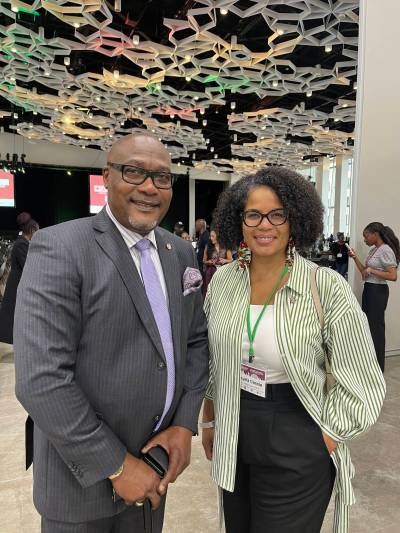
Despite the event’s name — the National Black Canadians Summit — Bruce Miller felt he should attend.

He booked a ticket. And so, this weekend, the Indigenous Manitoban joined roughly 1,500 people flocking to the RBC Convention Centre.

It’s a full schedule — addresses from a former Canadian governor general, sessions on Black mental health and anti-Black racism.

The annual event draws politicians, artists and other professionals from across the country.

Read
Yesterday at 6:06 PM CDT

Botterill’s memoir Why Not You is sure to inspire future rosters in women’s sports

Grace Anne Paizen 8 minute read Preview

Botterill’s memoir Why Not You is sure to inspire future rosters in women’s sports

Grace Anne Paizen 8 minute read 5:36 PM CDT

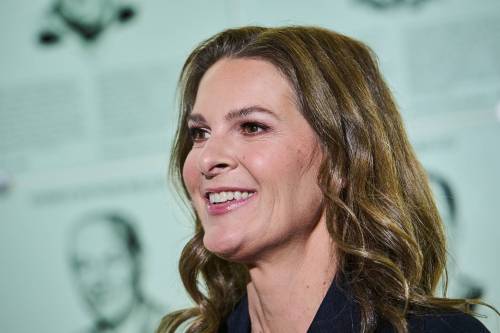
Decorated Olympian. Hard-hitting hockey analyst. Inspiring author. Winnipeg’s own Jennifer Botterill is adding yet another chapter in her historic and storied career.

Botterill’s autobiography Why Not You: My Story of Perseverance, Hockey, and Olympic Gold, that hits the shelves Sept. 22, takes a step-by-step look back at the former forward’s many sports lives — from her days as a ringette player growing up in Winnipeg in the 1980s, to her Olympic debut as a fresh-faced 18-year-old at the 1998 Nagano Games, to her burgeoning career as a hockey analyst as part of the beloved Hockey Night in Canada broadcast crew.

And wrapping up her long resumé was something she already had in the works before she was inducted into the Canadian Hockey Hall of Fame last November.

“It was just nice timing on how it all worked out,” Botterill told the Free Press last week.

Read
5:36 PM CDT