Can the new film ‘Uncharitable’ change people’s minds about overhead at nonprofits?
Advertisement
Read this article for free:
or
Already have an account? Log in here »
To continue reading, please subscribe:

Digital Subscription
One year of digital access for only $205*
- Enjoy unlimited reading on winnipegfreepress.com
- Read the E-Edition, our digital replica newspaper
- Access News Break, our award-winning app
- Play interactive puzzles
*First annual payment billed as $205.00 + GST for one year. This annual subscription will automatically renew at $233.00 + GST every 52 weeks (10% off the regular annual price of $259.35). Offer available to new and qualified returning subscribers only. Cancel any time.
To continue reading, please subscribe:
Add Free Press access to your Brandon Sun subscription for only an additional
$1 for the first 4 weeks*
- Enjoy unlimited reading on winnipegfreepress.com
- Read the E-Edition, our digital replica newspaper
- Access News Break, our award-winning app
- Play interactive puzzles
*Your next Brandon Sun subscription payment will increase by $1.00 and you will be charged $17.95 plus GST for four weeks. After four weeks, your payment will increase to $24.95 plus GST every four weeks.
Read unlimited articles for free today:
or
Already have an account? Log in here »
Hey there, time traveller!
This article was published 20/10/2023 (1081 days ago), so information in it may no longer be current.
NEW YORK (AP) — All Hands and Hearts makes a promise in big letters on the front page of its website: “95 cents of every dollar is spent on our programs.”
The Massachusetts-based disaster relief nonprofit, like so many charitable organizations have for decades, feels the pressure to operate as leanly as possible. Izzy Smith, chief information officer for All Hands and Hearts, which mobilizes volunteers to respond to natural disasters, called it an “enduring challenge for nonprofits” to explain to donors and the public about the need to invest in operations and shared services.
“Financial instability as a nonprofit actually reduces our effectiveness and efficiency,” Smith said.
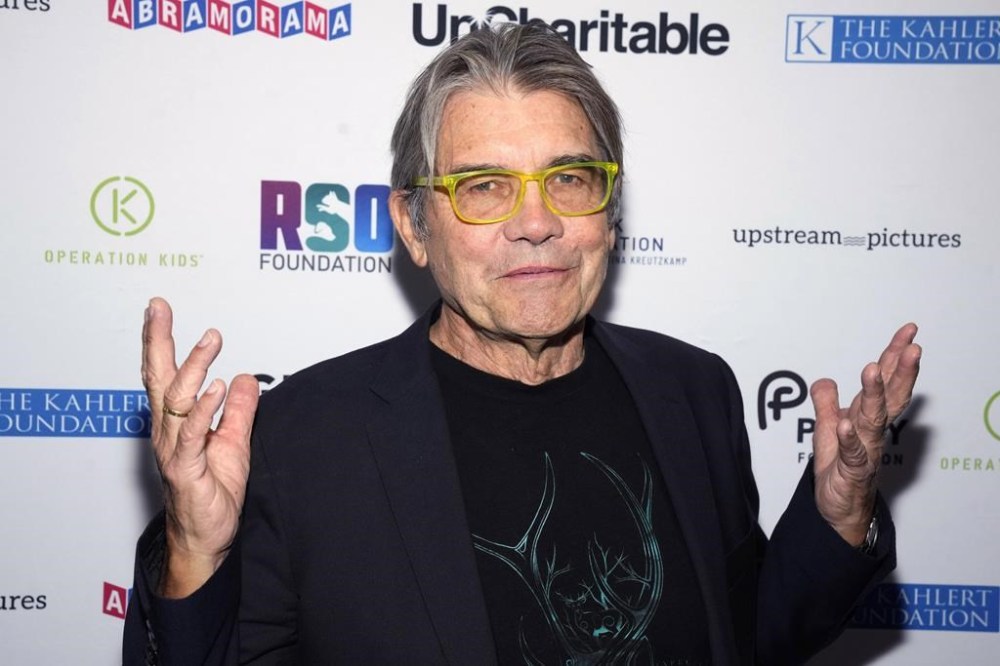
A new documentary “Uncharitable,” from “Paris Trout” and “Losing Isaiah” director Stephen Gyllenhaal, wants to change that. It tells the story of longtime advocate Dan Pallotta, who pioneered the idea of fundraising through bike rides and road races initially to raise money for AIDS and cancer research and treatment. Pallotta has long argued that nonprofits are unfairly pressured to cut salaries, lower operating costs and delay long term investments, which all degrade organizations’ abilities to accomplish their missions.
Pallotta agrees that some philanthropic leaders, including Darren Walker, CEO of the Ford Foundation, who speaks in the film, have increased the funding they allocate for general operations, but he hopes the film will reach a broader audience of smaller donors or those who are not yet convinced.
“I hope that it becomes the equivalent of ‘An Inconvenient Truth’ to the conversation about climate change,” Pallotta said, ’that it puts it on the map in a big way so that it begins to become civically incorrect to judge charities on superficial, knee jerk reactive measures.”
His campaign is personal, though over the years, nonprofit leaders and workers as well as researchers have backed parts of his argument. In 2002, the for-profit fundraising company he started, Pallotta TeamWorks, folded after being sued by some organizations that hired it to run fundraising events. Their complaint was that the company took too big a cut of the funds raised.
In 2008, Pallotta authored a book of the same name, “Uncharitable,” which he also reprised as a TEDTalk that forms the backbone of the documentary.
For almost twenty years, researchers and nonprofits have warned about the negative consequences of starving nonprofits of general operating expenses, also known as overhead. In 2004, the Urban Institute along with several partners conducted a large survey of nonprofits that found investing too little in an organization’s basic infrastructure diminished its effectiveness. In 2009, researchers at The Bridgespan Group found that despite these results, many nonprofit leaders still planned to cut spending on overhead.
These studies pointed out that ratings agencies like GuideStar, which was acquired by Candid, and Charity Navigator contributed to this pressure by focusing on fiscal data provided by nonprofits in their tax returns. In 2013, three of the largest agencies teamed up to challenge what they called the “overhead myth,” writing an open letter to donors that was followed the next year by a letter to nonprofits. The agencies urged donors to consider the results and impact of a charity when deciding where to donate, not just the percentage of their revenue spent on administrative costs and fundraising.
In September, Charity Navigator announced a major overhaul of the methodology it uses for rating nonprofits, which include a significant change in the way it counts spending on fundraising and administrative costs. The intention of the changes is to help prospective donors focus on whether a nonprofit is achieving its mission, said Michael Thatcher, the organization’s president and CEO.
“What does the money do? Not where was the money spent?” he said donors should ask. “It’s nice showing a pie chart with the percentage. It’s easier. It’s harder showing the actual impact that’s been made.”
The ratings agencies, including Charity Navigator and the BBB Wise Giving Alliance, do still recommend that 65-70% of a nonprofit’s revenue should be spent on programming. The BBB Wise Giving Alliance said its opinion research shows that “financial ratios continue to be among the top five signals of trust used by donors, particularly among older and wealthier participants.”
Elizabeth Searing, an assistant professor at the University of Texas at Dallas, pointed to donors and foundations who embrace effective altruism as another countervailing force within the nonprofit field. In part by emphasizing efficiency, those donors continue to pressure nonprofits to decrease their standing costs, using a slightly different vocabulary.
“No one sets out to starve a nonprofit, but no one sets out to be inefficient,” she said. “So you end up being caught between these two strawmen that have been painted by the factions in this argument.”
Searing said that since the pandemic, many donors, foundations and nonprofit boards now see the importance of carrying over some funds from year to year to help nonprofits deal with unexpected circumstances. Similarly, more donors understand the value of granting unearmarked funds, which allow nonprofits to change plans or simply to invest in their staff or improve their infrastructure or technology.
___
Associated Press coverage of philanthropy and nonprofits receives support through the AP’s collaboration with The Conversation US, with funding from Lilly Endowment Inc. The AP is solely responsible for this content. For all of AP’s philanthropy coverage, visit https://apnews.com/hub/philanthropy.