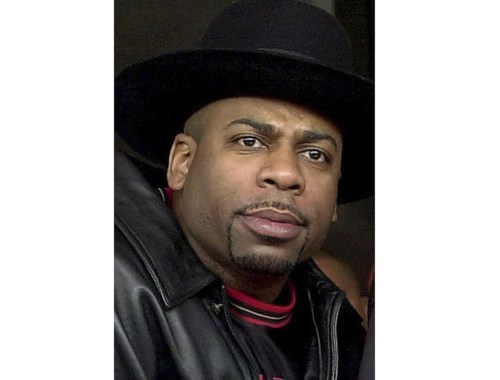
Jam Master Jay dabbled in drug sales ‘to make ends meet,’ witness testifies

Advertisement

Advertise with us

NEW YORK (AP) — A convicted drug dealer reluctantly testified Monday that Jam Master Jay — known for his anti-drug advocacy as part of the groundbreaking rap group Run-DMC — got involved in cocaine deals to pay his bills.

Read this article for free:


or

Already have an account? Log in here »

To continue reading, please subscribe:

Subscribe and receive a limited-edition Free Press branded hat or tote.

Digital Subscription

One year of digital access for only $205*

  • Enjoy unlimited reading on winnipegfreepress.com
  • Read the E-Edition, our digital replica newspaper
  • Access News Break, our award-winning app
  • Play interactive puzzles

*First annual payment billed as $205.00 + GST for one year. This annual subscription will automatically renew at $233.00 + GST every 52 weeks (10% off the regular annual price of $259.35). Offer available to new and qualified returning subscribers only. Cancel any time.

To continue reading, please subscribe:

Add Free Press access to your Brandon Sun subscription for only an additional

$1 for the first 4 weeks*

  • Enjoy unlimited reading on winnipegfreepress.com
  • Read the E-Edition, our digital replica newspaper
  • Access News Break, our award-winning app
  • Play interactive puzzles
Start now

*Your next Brandon Sun subscription payment will increase by $1.00 and you will be charged $17.95 plus GST for four weeks. After four weeks, your payment will increase to $24.95 plus GST every four weeks.

Hey there, time traveller!
This article was published 05/02/2024 (972 days ago), so information in it may no longer be current.

NEW YORK (AP) — A convicted drug dealer reluctantly testified Monday that Jam Master Jay — known for his anti-drug advocacy as part of the groundbreaking rap group Run-DMC — got involved in cocaine deals to pay his bills.

Taking the stand at the federal murder trial over the DJ’s October 2002 death, Ralph Mullgrav gave the first testimony about the alleged drug dealing that, prosecutors claim, got the rap star killed. He was shot dead in his studio in front of stunned aides, one of whom wept in court Monday as she recounted the attack.

Mullgrav said Jam Master Jay, born Jason Mizell, approached him periodically to sell cocaine that the rap star had acquired — “maybe 1 or 2 kilos, here or there.”
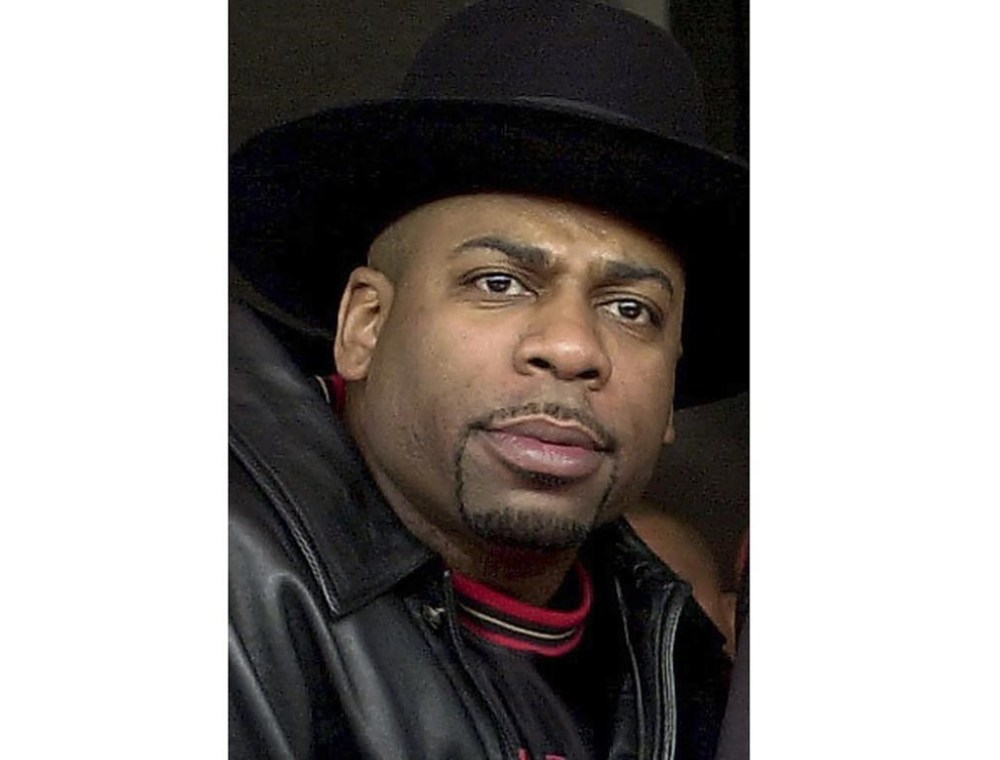
FILE - Jam Master Jay, a.k.a. Jason Mizell is seen in Los Angeles in this Feb. 25, 2002, file photo. A convicted drug dealer reluctantly testified Monday, Feb. 5, 2024 that Jam Master Jay — known for his anti-drug advocacy as part of the groundbreaking rap group Run-DMC — got involved in cocaine trafficking to pay his bills. Ralph Mullgrav gave the first public testimony about the alleged drug dealing that prosecutors claim was the reason why Jam Master Jay was shot dead in his studio in October 2002. (AP Photo/Krista Niles, File)

“Jason wasn’t a drug dealer. He just used it to make ends meet,” Mullgrav told jurors.

The defendants — Mizell’s godson, Karl Jordan Jr., and the DJ’s childhood friend Ronald Washington — have pleaded not guilty to murder in a case that has offered answers to the long-unsolved loss of a hip-hop legend while airing questions about how his life went once the limelight dimmed.

While Run-DMC helped rap gain mainstream popularity in the 1980s as the first rap group to notch gold and platinum albums and have a video in rotation on MTV, it also distanced itself from drugs.

The trio delivered the message in rap with the 1987 hit “It’s Tricky,” with lyrics including: People “offer coke, and lots of dope, but we just leave it alone.” They even recorded an anti-drug public service announcement.

But at the trial, prosecutors and some witnesses have depicted a rap star who became a cocaine middleman as his career slowed and money ran short. Speculation that he was killed over a drug dispute circulated in chatter and media reports for decades, but so did other theories. Mizell’s family insisted he didn’t deal narcotics.

Federal prosecutors have said Mizell was arranging a lucrative cocaine transaction when he was killed. They say Jordan and Washington were going to be cut out because a dealer — now identified as Mullgrav — refused to work with Washington.

Mullgrav told jurors that Mizell approached him in August 2002, saying he had a line on 10 or so kilograms of cocaine and “asking me to move it for him” in Baltimore. Mullgrav lived there at the time and acknowleged he oversaw a cocaine-distribution ring with about 25 workers.

“He wanted me to work with Tinard. I told him no,” Mullgrav said, using Washington’s nickname. They knew each other from growing up, and Mullgrav told jurors he disliked Washington enough to want to shoot him when he appeared in Baltimore around that time.

Mullgrav spent 12 years in federal prison on a drug-related conviction before his 2013 release. He testified only after being arrested on a material witness warrant — a procedure that can be used to compel court appearances — and spending seven days behind bars, said Gary Farrell, an attorney who was appointed to represent him.

Mullgrav had balked at testifying Friday, and he was laconic in court Monday.

Prosecutors and witness Uriel Rincon, a Mizell assistant who was shot alongside him, have said that Jordan shot Mizell while Washington brandished a gun and blocked the door.

A second eyewitness, Lydia High, also testified Monday that Washington was at the doorway and commanded her at gunpoint to lie on the floor.

High, then JMJ Records’ business manager, told jurors that she was looking down at some paperwork when someone walked into the studio and approached Mizell on the evening of Oct. 30, 2002. She didn’t identify the person, but described some attributes that roughly fit Jordan, including a tattooed neck.

The DJ gave the visitor a friendly greeting. But then he let out an expletive, his expression changed and gunshots erupted, High said, struggling to put the experience into words.

“I was — I was — I was frantic and shocked,” she said through tears. She recalled running for the door, where she said Washington — whom she knew from her childhood block — ordered her to the floor.

When asked about Mizell’s condition, she paused and looked downward, crying, before prosecutor Artie McConnell withdrew the question.

While cross-examining High, defense lawyers emphasized that she initially didn’t tell investigators about Washington, nor about a gunman with a neck tattoo.

“I was afraid for my life. I just saw something that I couldn’t believe,” High explained.

Jordan’s attorneys have said he was at his then-girlfriend’s home at the time of the shooting. Washington’s lawyers have argued that he had no reason to kill a friend who was helping him financially.
Report Error Submit a Tip

More Stories

Morning-show veteran swaps microphone for macchiatos at new Corydon café

David Sanderson 9 minute read Preview

Morning-show veteran swaps microphone for macchiatos at new Corydon café

David Sanderson 9 minute read Yesterday at 2:00 AM CDT

Good news if you were used to having your morning coffee with Terri Gale, who earlier this summer signed off from CTV Your Morning, after 15 years on the job.

Gale, the three-hour program’s longtime weather expert, and her husband Rob Gale, the ex-head soccer coach of Valour FC and co-founder of the Northern Super League’s new Winnipeg franchise, are the owners of Golden Hour Café and Bar at 775 Corydon Ave.

Gale (formerly Apostle) nods when she is asked who would know more about caffeinated beverages than a person who, for the last decade and a half, set her alarm to go off in the wee small hours.

“I do love coffee and take mine black. Except because I hate burning my tongue — not a good thing when you speak for a living — I got into the habit of throwing a couple of ice cubes in my cup, to be on the safe side,” Gale says, seated on the second level of their attractive, 2,100-square-foot premises, which officially opened in mid-September.

Read
Yesterday at 2:00 AM CDT

Six high school hockey programs ceased operations following new Hockey Manitoba policy

Joshua Frey-Sam 7 minute read Preview

Six high school hockey programs ceased operations following new Hockey Manitoba policy

Joshua Frey-Sam 7 minute read Friday, Oct. 2, 2026

She lived the best of both worlds.

For the last three years, the 17-year-old wore a sweater for two different hockey programs — her high school team and AAA club in the Manitoba Female Hockey League — and was preparing to flourish in both colours again this winter.

Recently, however, the blue-liner was disappointed to learn she is no longer eligible to play her Grade 12 season with her school owing to a new policy imposed by Hockey Manitoba that bans players from participating in the Manitoba Women’s High School Hockey League if they are rostered on a U18 AAA team.

The rule applies to all athletes who play for both Winnipeg-based and rural AAA teams.

Read
Friday, Oct. 2, 2026

Jam Master Jay dabbled in drug sales ‘to make ends meet,’ witness testifies

Jennifer Peltz, The Associated Press 5 minute read Preview

Jam Master Jay dabbled in drug sales ‘to make ends meet,’ witness testifies

Jennifer Peltz, The Associated Press 5 minute read Monday, Feb. 5, 2024

NEW YORK (AP) — A convicted drug dealer reluctantly testified Monday that Jam Master Jay — known for his anti-drug advocacy as part of the groundbreaking rap group Run-DMC — got involved in cocaine deals to pay his bills.

Taking the stand at the federal murder trial over the DJ's October 2002 death, Ralph Mullgrav gave the first testimony about the alleged drug dealing that, prosecutors claim, got the rap star killed. He was shot dead in his studio in front of stunned aides, one of whom wept in court Monday as she recounted the attack.

Mullgrav said Jam Master Jay, born Jason Mizell, approached him periodically to sell cocaine that the rap star had acquired — “maybe 1 or 2 kilos, here or there.”

“Jason wasn't a drug dealer. He just used it to make ends meet,” Mullgrav told jurors.

Read
Monday, Feb. 5, 2024

Creative powerhouse Perry Rosemond never lost Winnipeg roots

Ben Waldman 7 minute read Preview

Creative powerhouse Perry Rosemond never lost Winnipeg roots

Ben Waldman 7 minute read Yesterday at 6:00 AM CDT

He created King of Kensington, directed the troops in the Royal Canadian Air Farce, and his creative eye was behind the lens for television shows starring Johnny Cash, Tom Jones, Mr. Dress-Up and the Friendly Giant.

He also wrote and developed the Canadian version of Sesame Street during his time as the head of school and preschool programming for CBC in Toronto, and directed a televised special in 2002 for Winnipeg sketch comedy troupe Royal Liechtenstein Theatre Company.

But before his name featured in the credits of some of the most iconic and influential pieces of the Cancon canon, Perry Rosemond was an only child living in a crammed, multi-generational home in Winnipeg’s North End, racing each day to beat the morning bell next door at William Whyte School.

In memoirs that have yet to be published, the late television producer recalled his childhood. “(T)here were 14 of us in the house at 193 Andrews St., and it wasn’t that big of a house,” he writes.

Read
Yesterday at 6:00 AM CDT

Puzzles Palace

1 minute read Monday, Jul. 27, 2026

To solve our puzzles, please subscribe with this special offer: |

Broadening prediction-market gambling a bad idea

Editorial 4 minute read Preview

Broadening prediction-market gambling a bad idea

Editorial 4 minute read Yesterday at 2:01 AM CDT

Let’s make a prediction: sooner or later, when Canadian governments find a way to take their own cut of the action, prediction-contract gambling on everything from sports to entertainment to political decisions is going to come to Canada.

And that’s a horrible, dangerous, pernicious idea.

Unless you have particular access to information — either inside information or strategic information based on skills or education — you’re not likely to make money at it. In fact, structurally, you’re likely to lose. In prediction markets, you basically pay an amount, plus fees from the company involved, to bet on whether something will or will not happen within a certain time frame. The amount you pay for your contract depends on how other people are also betting.

As Wealthsimple describes it, “You buy whichever side you think is right. Prices move with demand, so if the market leans towards one outcome, the more that side costs. If a lot of people are backing the TSX to finish above 38,000, yes gets more expensive and no gets cheaper.”

Read
Yesterday at 2:01 AM CDT