Montreal mayor faces criticism for blocking comments on social media accounts
Advertisement
Read this article for free:
or
Already have an account? Log in here »
To continue reading, please subscribe:

Digital Subscription
One year of digital access for only $205*
- Enjoy unlimited reading on winnipegfreepress.com
- Read the E-Edition, our digital replica newspaper
- Access News Break, our award-winning app
- Play interactive puzzles
*First annual payment billed as $205.00 + GST for one year. This annual subscription will automatically renew at $233.00 + GST every 52 weeks (10% off the regular annual price of $259.35). Offer available to new and qualified returning subscribers only. Cancel any time.
To continue reading, please subscribe:
Add Free Press access to your Brandon Sun subscription for only an additional
$1 for the first 4 weeks*
- Enjoy unlimited reading on winnipegfreepress.com
- Read the E-Edition, our digital replica newspaper
- Access News Break, our award-winning app
- Play interactive puzzles
*Your next Brandon Sun subscription payment will increase by $1.00 and you will be charged $17.95 plus GST for four weeks. After four weeks, your payment will increase to $24.95 plus GST every four weeks.
Read unlimited articles for free today:
or
Already have an account? Log in here »
Hey there, time traveller!
This article was published 10/09/2024 (749 days ago), so information in it may no longer be current.
Montreal Mayor Valérie Plante is facing pushback for a decision to restrict access to her social media accounts, which her office says was an attempt to curb online hate.
Aref Salem, leader of the city’s official Opposition, says Plante and her party, Projet Montréal, are limiting Montrealers’ freedom of expression by blocking comments on social media platforms X and Instagram.
“This is not the way of democracy,” he said in an interview Tuesday. “This is really unethical, even, to not let the population of Montreal interact with the mayor.”
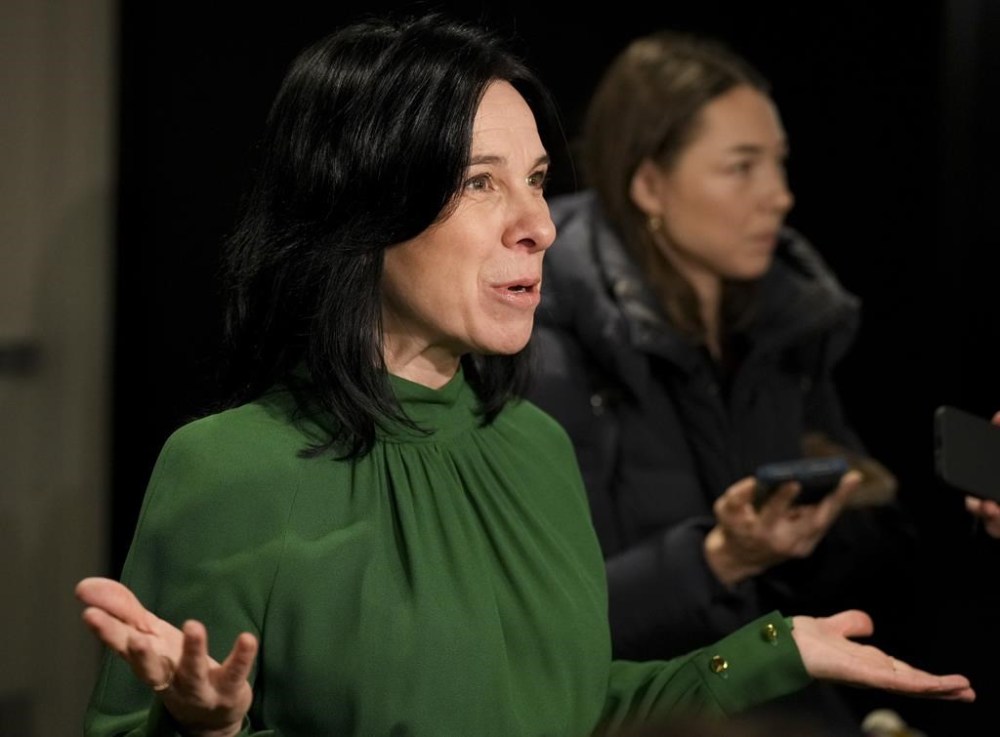
Salem says social media is one of the only ways for citizens to interact with Plante. Residents can voice their concerns in person during a question period at city council meetings, but they have only 90 seconds to ask their question. “Having a social media feed is to connect with the population and ask the population about their opinion,” he said. “It has to be an interaction.”
Currently, the X accounts of Plante and Projet Montréal only allow comments from people or organizations mentioned in the accounts’ posts. Comments on Plante’s Instagram posts are also limited, and it’s not possible to tag her in an Instagram story.
A spokesperson for Plante said the decision was made during the summer to “limit discriminatory, violent, racist, harassing, hateful, homophobic, disrespectful, sexist and defamatory comments” on social media. “Although all of the mayor of Montreal’s digital platforms are places for discussion, it is essential that the tone of the exchanges remains respectful,” said Catherine Cadotte in a statement.
But Salem said elected officials have an obligation to engage with their constituents. He said Plante could deal with online harassment by blocking individual accounts or reporting them to the police. “When we decide to be public figures, that goes with the position,” he said. “When we want to be representative of the population, we have to be representative of the whole population.”
Anaïs Bussières McNicoll, director of the fundamental freedoms program at the Canadian Civil Liberties Association, said a “blanket prohibition on comment” is an unreasonable limitation of people’s freedom of expression. Instead, she said, elected officials should evaluate inappropriate comments on a case-by-case basis.
“I would say that elected officials with significant resources shouldn’t have their cake and eat it too,” she said. “In that if they choose to have access to and to use social media platforms in the context of their public work, they should also accept that their constituents might want to comment on their work on that very public platform.”
In June, the Quebec government passed a law that includes fines of up to $1,500 for anyone who intimidates or harasses a politician, despite criticism that the legislation could threaten free speech.
Plante is not the first politician to block comments on social media accounts. Federal MPs of all political stripes have restricted comments on their X accounts, including Conservative MP Michelle Rempel Garner, Liberal MP Adam van Koeverden and NDP MP Laurel Collins.
Last year, the Governor General’s office announced publicly that it was turning off comments on all of its social media accounts due to “an increase in abusive, misogynistic and racist engagement on social media and online platforms, including a greater number of violent threats.” Gov. Gen. Mary Simon, the first Indigenous person to hold the position, was appointed in 2021.

Though the issue of restricting comments has not received widespread attention, there has been considerable public debate about whether politicians have the right to block individual accounts, thereby preventing users from seeing their posts altogether.
In 2018, three Ottawa residents sought a court order declaring that then-mayor Jim Watson infringed their constitutional right to freedom of expression when he blocked them from his feed on the social media platform then called Twitter — now X. Watson eventually settled the case by unblocking all accounts, and said he agreed that his Twitter feed was in fact a public account.
Last September, a Federal Court judge ordered Environment Minister Steven Guilbeault to unblock Rebel News founder Ezra Levant on X after the right-wing media personality claimed the minister was limiting his ability to engage in debate on matters of public concern.
South of the border, the U.S. Supreme Court ruled earlier this year that government officials who block critics on social media can sometimes be sued for violating the Constitution’s First Amendment.
This report by The Canadian Press was first published Sept. 10, 2024.