Donna Brothers steps away from NBC’s Kentucky Derby coverage after 26 races

Advertisement

Advertise with us

Donna Brothers has been an integral part of NBC’s Kentucky Derby coverage since it acquired the rights to the race in 2001.

Read this article for free:


or

Already have an account? Log in here »

To continue reading, please subscribe:

Subscribe and receive a limited-edition Free Press branded hat or tote.

Digital Subscription

One year of digital access for only $205*

  • Enjoy unlimited reading on winnipegfreepress.com
  • Read the E-Edition, our digital replica newspaper
  • Access News Break, our award-winning app
  • Play interactive puzzles

*First annual payment billed as $205.00 + GST for one year. This annual subscription will automatically renew at $233.00 + GST every 52 weeks (10% off the regular annual price of $259.35). Offer available to new and qualified returning subscribers only. Cancel any time.

To continue reading, please subscribe:

Add Free Press access to your Brandon Sun subscription for only an additional

$1 for the first 4 weeks*

  • Enjoy unlimited reading on winnipegfreepress.com
  • Read the E-Edition, our digital replica newspaper
  • Access News Break, our award-winning app
  • Play interactive puzzles
Start now

*Your next Brandon Sun subscription payment will increase by $1.00 and you will be charged $17.95 plus GST for four weeks. After four weeks, your payment will increase to $24.95 plus GST every four weeks.

Donna Brothers has been an integral part of NBC’s Kentucky Derby coverage since it acquired the rights to the race in 2001.

From speaking to trainers and owners on the walkover to the paddock to interviewing the winning jockey on horseback, Brothers has been front and center for some of the most emotional moments of NBC’s horse racing coverage.

Saturday will be Brothers’ final Run for the Roses. She decided two years ago that this would be her last year, but did not announce it publicly until last week.
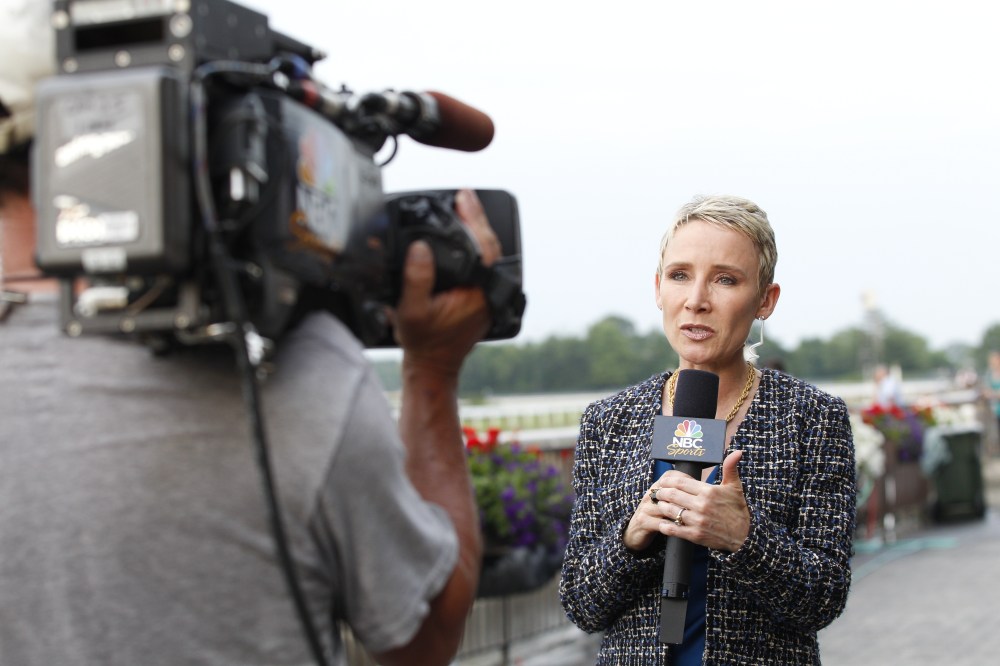
Donna Brothers speaks during a feature for NBC Sports before the Belmont Derby horse race at Belmont Park in Elmont, N.Y., in 2012. (Michael Cohen/NBC via AP)

“I told Lindsay Schanzer, our producer, that I definitely wanted to make it to Kentucky Derby 151 because that would be my 25th Kentucky Derby. But if I had my druthers, I would also like to make it to Derby 152 because then I’ll be 60 years old and I’ll feel like I’ve earned the right to retire,” said Brothers, who turned 60 on April 22. “And so now I have two careers behind me. I retired from being a jockey in 1998.

“There are a lot of people, when I tell ’em I’m going to retire, they seem sad for me. And they’re like, ‘Oh, I know you’re going to miss it.’ And I don’t think that’s going to be the case. I’ve had the second-best seat in the house for 26 years, and I really believe that. I think the best seat in the house is whoever rode the Kentucky Derby winner.”

Brothers is a former jockey who won 1,130 races during her 11-year career. She joined NBC in 2000 for Breeders’ Cup coverage and has been part of the network’s Triple Crown coverage. NBC has had the Preakness Stakes since 2001 and the Belmont Stakes from 2001-05 and 2011-22.

She was the first to interview jockeys Victor Espinoza aboard American Pharaoh in 2015 and Mike Smith on Justify three years later, after they won the Triple Crown.

“Very rarely do you get to work in TV with people who define a role in sports television, and Donna has done that,” said Mike Tirico, who will anchor NBC’s coverage. “The immediate reaction Donna gets race after race, and her observations are such a unique part of what we do in television. And she is one of a kind. Somebody will follow her but will not replace her because she’s irreplaceable.”

When it comes to favorite Derby winner interviews, Brothers said Calvin Borel’s aboard Street Sense in 2007 still stands out.

“I really want to capture what’s in their heart rather than 10 minutes later what’s in their head. And so the ones that stand out the most are the ones that are heartfelt,” she said. “Anyone who saw Calvin win his first Derby, I think, touched everyone’s heart who saw it. And then later that week, he was invited to the White House, and the Queen (Elizabeth II) was in attendance, and so she witnessed his Derby win. As I threw it back to Tom Hammond, I said, ‘You can see a very emotional win for Calvin Borel as the tears are streaming down his face.’ And Tom told me that they hadn’t zoomed in until I said that. The director was obviously listening, and they zoomed in and picked up that emotion. And I think it made everybody feel that same emotion with and for Calvin.”

Brothers has also viewed some of the Derby’s worst moments. She was near the second turn when she saw Eight Belles go down in 2008. The filly broke both her front ankles shortly after crossing the finish line in second place and was euthanized on the track.

Brothers still gets emotional when reflecting on that day, as well as second-guessing the interview she did with jockey Kent Desormeaux aboard Derby winner Big Brown.

“Kent was also upset, and I just said, ‘OK, let’s try to shake it off and concentrate on the fact that you just won the Kentucky Derby.’ And I’m not sure if that was the right thing to do. In hindsight, it might’ve been better to let him address that first, but we didn’t know her status at that time, and we didn’t know it well enough to report on her status,” she said. “In any event, it was challenging because you’re simultaneously heartbroken for the horse that’s on the track. And also simultaneously very happy for this person who just won the Kentucky Derby.”

Brothers is still happy to see jockeys Mike Smith and John Velazquez competing, but also noted that it is a good time for her to walk away.

“I think it’s just time to pass the baton. It’s been an awfully fun ride. But I’m also looking forward to not being in front of the computer for five or six hours a day and doing all the research,” Brothers said. “I’m looking forward to being outside an awful lot, whether that’s hiking or biking or stand-up paddleboarding or golfing, I think it’s just the right time for me.”

___

AP horse racing: https://apnews.com/hub/horse-racing

Report Error Submit a Tip

More Stories

Not falling back means time loop remains unclosed

Jen Zoratti 4 minute read 2:01 AM CDT

I demand restitution. Where’s my hour?

In the traditional fall-back, spring-forward time change set up — you know, ol’ trusty that’s been effect for lo these 63 years — we lost an hour in the spring that we got back in the fall.

That was the social contract: you commit to feeling like you’re on cold medication for a week in March because you know a glorious extra hour of sleep will be returned to you in November. (Unless, of course, you have little kids, but look: we all make our choices.)

Well, that transaction, flawed as it was, isn’t happening this year. That hour you sacrificed to the sun gods in the spring? Gone. Not coming back. We’ve sprung forward and we shan’t be falling back — not in November, and (possibly) not ever. The scale shall remain unbalanced and the loop shall remain unclosed as Manitoba has adopted permanent daylight time.

Canada-U.S. trade relationship is broken, but the damage can — and will — be repaired

Tom Brodbeck 5 minute read Preview

Canada-U.S. trade relationship is broken, but the damage can — and will — be repaired

Tom Brodbeck 5 minute read Thursday, Sep. 17, 2026

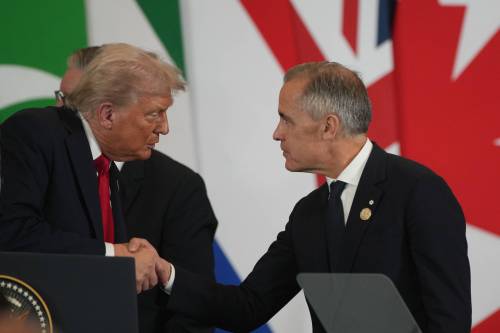
Canada needs to get serious about diversifying its trade beyond the United States. But at the same time, Canadians should expect relations with the U.S. to normalize after Donald Trump is no longer in the White House.

For generations, Canada-U.S. trade was considered almost a fact of geography. The two countries share the world’s longest undefended border, deeply integrated supply chains and a century of commercial relationships.

Canadian manufacturers depend on American customers. American manufacturers depend on Canadian suppliers. Energy, agriculture, automotive production and countless other industries operate across the border as though it barely exists.

That isn’t going to change dramatically, even in the midst of a bitter trade war unleashed by the U.S. president.

Read
Thursday, Sep. 17, 2026

Manitoba abandoning spring, fall clock changes

Carol Sanders 8 minute read Preview

Manitoba abandoning spring, fall clock changes

Carol Sanders 8 minute read Updated: Yesterday at 8:48 AM CDT

Time’s up for the time change in Manitoba.

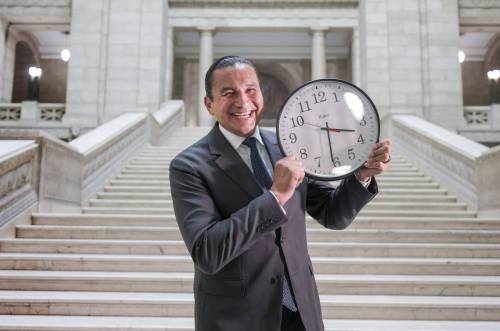
Manitobans won’t be setting their clocks back an hour in November. The province has decided to permanently stay on daylight time after surveying residents on the twice annual clock adjustment.

“We heard from Manitobans loud and clear — no more changing the clocks in Manitoba,” Premier Wab Kinew said in a news release Thursday.

Most of the 72,000 votes submitted in an online EngageMB survey — 92 per cent — said they would like to see the practice end. The survey asked if they preferred earlier sunrises in winter with standard time or the later sunsets in summer with daylight time. More than half of survey participants (58 per cent) indicated a preference to stay on permanent daylight time; 34 per cent voted to eliminate the time change but stay on standard time.

Read
Updated: Yesterday at 8:48 AM CDT

Cabernet Sauvignon star of wine festival

Ben Sigurdson 5 minute read Preview

Cabernet Sauvignon star of wine festival

Ben Sigurdson 5 minute read 3:00 AM CDT

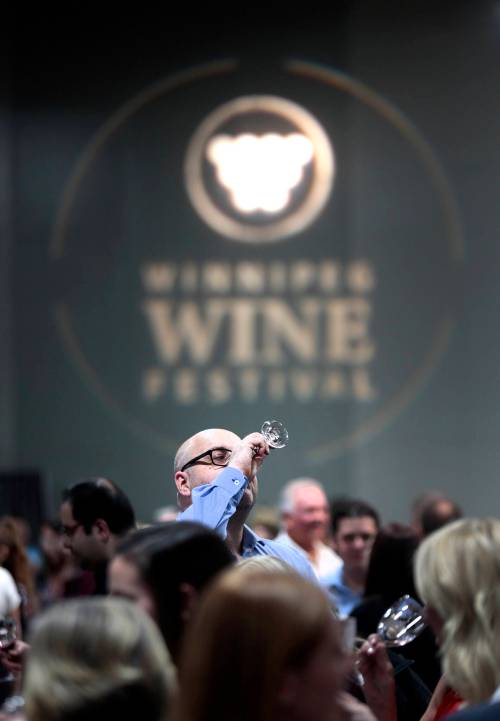
The Winnipeg Wine Festival will celebrate the king of red wine grapes next weekend — the theme of this year’s festival, which takes place Sept. 25 and 26 at the RBC Convention Centre, is Cabernet Sauvignon.

Cab Sauv, as it’s also known, is the world’s most widely planted wine grape of any colour, first coming to prominence in the 1800s in France’s Bordeaux region, where the grape is still popular. Rather than single-variety wines, Bordeaux reds tend to be blends, with those coming from the left bank of the Gironde estuary being Cabernet-dominant, while right-bank wines are Merlot-dominant, with Cabernet Sauvignon playing a supporting role. Cabernet and Merlot work well together and many other countries have followed suit in blending the two.

A team at University of California Davis put Cabernet Sauvignon through a DNA test in 1996 and discovered its parent grapes are Cabernet Franc and Sauvignon Blanc — it’s likely that at some point the two varieties, planted next to each other in some vineyard, crossed and mutated and became the grape we know today. (Someone growing grapes in the 19th century must have had an inkling of what was up, as the grape has been called Cabernet Sauvignon since long before the DNA test.)

Flavour-wise, most Cabernet Sauvignon wines are big and bold, with a core of deep dark berry flavours, some graphite and spice notes and relatively bright acidity. It’s a grape that is well-suited to barrel aging, with most examples seeing at least some time in wood.

Read
3:00 AM CDT

‘She was looking to destroy me’: convicted harasser faces new charges

Dean Pritchard 6 minute read Preview

‘She was looking to destroy me’: convicted harasser faces new charges

Dean Pritchard 6 minute read Thursday, Sep. 17, 2026

When Agnieszka Ciochon-Newton moved into the 55-plus apartment building on Stradbrook Avenue last year, she came across as “timid, soft-spoken and sensitive,” said building manager Tanya Owen.

Little did Owen know the meek-looking 58-year-old woman would soon turn her life and the lives of many of her tenants upside down and threaten her career and family.

“She was looking to destroy me for a simple tenant disagreement,” Owen said Thursday.

Court records show Ciochon-Newton was arrested earlier this month and charged with seven counts of criminal harassment, two counts of uttering threats and one count each of fraud, breaking and entering, attempting to obstruct justice, intimidation of a justice official, mischief and defamatory libel.

Read
Thursday, Sep. 17, 2026

Canada must not accept another Iranian autocracy

David Matas 5 minute read 2:01 AM CDT

Iran is a state run by a radical government victimizing its citizens and its neighbours. How do we change that? Any regime change that repeats the mistakes of the past is not a solution.

What went wrong in the past which led to the current regime? One answer is the U.K. and American aided coup which led to the ouster in 1953 of a democratically elected government headed at the time by Mohammad Mossadegh and its replacement with an American friendly autocrat, the Shah of Iran, Mohammad Reza Pahlavi.

The Shah imposed his rule through the Iranian National Intelligence and Security Organization — SAVAK, the acronym of its Persian name. SAVAK systematically inflicted torture, arbitrary killings and extra-judicial killings on perceived opponents of the regime. It was only a matter of time before repression of a regime directed to serving foreign interests would be overthrown.

What replaced the regime of the Shah, in 1979, the current regime of the mullahs, is a regime as intolerant and violent as the regime of the Shah and then some. That was not inevitable. But neither was it surprising. The vicious nature of the current regime, following the example set by the Shah, and its hatred for the United States, reacting to the U.S. aided imposition of the Shah, both echoes and reacts to the past. In 1979, the U.S. reaped what it sowed in 1953.