World War II forces sweetheart singer Vera Lynn dies at 103
Advertisement
Read this article for free:
or
Already have an account? Log in here »
To continue reading, please subscribe:

Digital Subscription
One year of digital access for only $205*
- Enjoy unlimited reading on winnipegfreepress.com
- Read the E-Edition, our digital replica newspaper
- Access News Break, our award-winning app
- Play interactive puzzles
*First annual payment billed as $205.00 + GST for one year. This annual subscription will automatically renew at $233.00 + GST every 52 weeks (10% off the regular annual price of $259.35). Offer available to new and qualified returning subscribers only. Cancel any time.
To continue reading, please subscribe:
Add Free Press access to your Brandon Sun subscription for only an additional
$1 for the first 4 weeks*
- Enjoy unlimited reading on winnipegfreepress.com
- Read the E-Edition, our digital replica newspaper
- Access News Break, our award-winning app
- Play interactive puzzles
*Your next Brandon Sun subscription payment will increase by $1.00 and you will be charged $17.95 plus GST for four weeks. After four weeks, your payment will increase to $24.95 plus GST every four weeks.
Read unlimited articles for free today:
or
Already have an account? Log in here »
Hey there, time traveller!
This article was published 18/06/2020 (2295 days ago), so information in it may no longer be current.
LONDON – Dame Vera Lynn, the endearingly popular “Forces’ Sweetheart” who serenaded British troops abroad during World War II, has died at 103.
During the war and long after, Lynn got crowds singing, smiling and crying with sentimental favourites such as “We’ll Meet Again,” and “The White Cliffs of Dover.”
“The family are deeply saddened to announce the passing of one of Britain’s best-loved entertainers at the age of 103,” her family said in a statement. “Dame Vera Lynn, who lived in Ditchling, East Sussex, passed away earlier today, 18 June 2020, surrounded by her close family.”
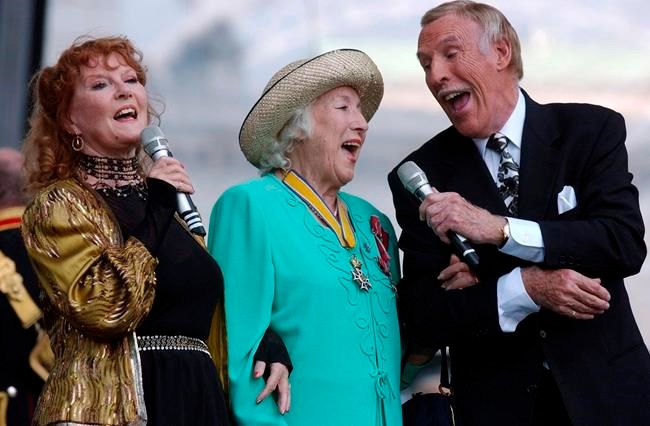
Lynn possessed a down-to-earth appeal, reminding servicemen of the ones they left behind.
“I was somebody that they could associate with,” she once told The Associated Press. “I was an ordinary girl.”
Tributes poured in from political leaders, entertainers, veterans and thousands of fans.
Prime Minister Boris Johnson said her “charm and magical voice entranced and uplifted our country in some of our darkest hours. Her voice will live on to lift the hearts of generations to come.”
Lynn hosted a wildly popular BBC radio show during the war called “Sincerely Yours” in which she sent messages to British troops abroad and performed the songs they requested. The half-hour program came on during the highly coveted slot following the Sunday night news.
“Winston Churchill was my opening act,” she once said.
Lynn had thought the war would doom her chance of success.
“When war first started, when it was declared, I thought, ‘Well there goes my career.’ You know, I shall finish up in a factory or the army or somewhere,” she recalled. “You imagined all the theatres closing down, which didn’t happen except when the sirens sounded. And everybody, if they wanted to, they could stay in the theatre and the show would go on.”
In September 2009, long after her retirement, Lynn topped the British album chart with a best hits collection titled “We’ll Meet Again — The Very Best of Vera Lynn.” It reached No. 1, despite competition from the release of remastered Beatles’ albums.
Amid this year’s coronavirus outbreak, Lynn and opera singer Katherine Jenkins released a charity version of “We’ll Meet Again.” The public found comfort in her words of hope, which resonated in the locked-down country.
In a reflection of her enduring appeal, Queen Elizabeth II also invoked the words of Lynn’s signature song as she addressed the nation in lockdown. The monarch played on the song’s theme, promising that loved ones would be reunited in the end after being separated by the virus.
“We should take comfort that while we may have more still to endure, better days will return,” the queen said. “We will be with our friends again; we will be with our families again; we will meet again.”
Lynn earned her nickname, “The Forces’ Sweetheart,” after coming top in a 1939 Daily Express poll that asked servicemen to name their favourite musical artists. Years later, she reflected on time spent with soldiers abroad.
“What they needed was a contact from home,” she said. “I entertained audiences from 2,000 to 6,000. And the boys would just come out of the jungle and sit there for hours waiting until we arrived and then slip back in once we’d left.”
A plumber’s daughter, Vera Margaret Welch was born on March 20, 1917, in London’s blue-collar East Ham neighbourhood.
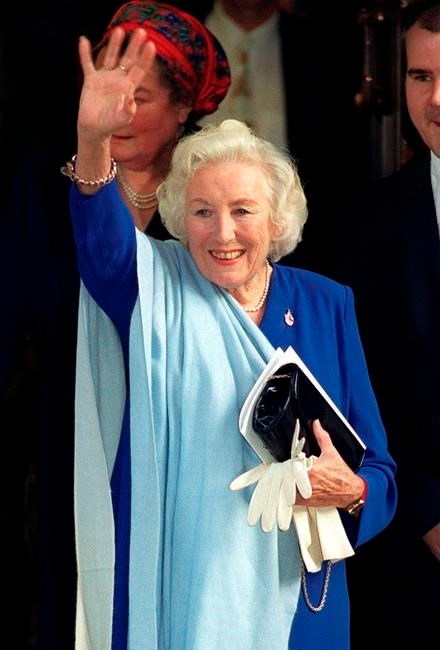
She took her stage name from her grandmother’s maiden name. She started singing in social clubs at age 7 and dropped out of school by 11 when she started touring Britain with a travelling variety show. By 17 she was a band singer, and at 21 — when the war started — she was a known performer.
She married band musician Harry Lewis in 1941, and he went on to manage her career. They had one daughter, Virginia.
Lynn appeared in a handful of films: “We’ll Meet Again” (1942), playing a young dancer who discovers her singing voice; “Rhythm Serenade” (1943), in which she plays a woman who joins the Women’s Royal Navy and organizes a nursery in a munitions factory; and “One Exciting Night” (1944), a comedy about a singer who is mistakenly caught up in a kidnapping.
While Lynn is best remembered for her work during the war, she had great success during the post-war years. Her “Auf Wiedersehen Sweetheart” in 1952 became the first record by an English artist to top the American Billboard charts, staying there for nine weeks. Lynn’s career flourished in the 1950s, peaking with “My Son, My Son,’’ a No. 1 hit in 1954.
After staying away from the business for years, she had a 1970s comeback single “Don’t You Remember When” and even covered Abba’s “Thank you for the Music,” but fans still really wanted to hear the wartime classics. Lynn was made a Dame of the British Empire in 1975.
In the years that followed she continued to support veterans’ causes and raise money for research on cancer and cystic fibrosis. She set up her own charity for children with cerebral palsy, and was a forceful advocate for her causes. She played an important part in a 1989 campaign to win a better pension deal for World War II widows, and until 2010 was actively involved in various veterans charities.
On occasion, Lynn delighted fans by taking up the microphone again. She sang outside Buckingham Palace in 1995 in a ceremony marking the golden jubilee of VE Day. In recent years, Lynn lived a quiet village life in Ditchling, about 40 miles (65 kilometres) south of London.
She did make fleeting mini-appearances, particularly when veterans were involved. During ceremonies last year to mark the D-Day landings, a pre-recorded wish was played to a ballroom full of veterans on a ship sailing to France to mark the event. Tears flowed as Lynn spoke. When she was done, the thunderous applause rattled the windows.
They remembered her many appearances, and the fact that she travelled to Burma to entertain the troops, one of the few entertainers to take on the difficult journey.
Burma veteran Tom Moore, who won over the hearts of the nation when he walked 100 laps of his garden in the runup to his 100th birthday to raise money for the National Health Service during the pandemic, described her death as a “real shame.”
Another veteran, Mervyn Kersh, told The Associated Press that he remembered her beauty and her voice. But more importantly, he remembered a message that resonated with troops far from home.
“She sang songs which expressed feeling, with lyrics which were very meaningful for me and, everyone I knew, as they expressed the sentiments and hopes of a generation from the disaster of Dunkirk, the Blitz, North Africa and the long wait until Normandy,” Kersh told The Associated Press. “I am very sorry to learn that she has gone, but thankful for the 103 years she gave us.”