New on DVD / VOD

Advertisement
Read this article for free:
or
Already have an account? Log in here »
To continue reading, please subscribe:

Digital Subscription
One year of digital access for only $205*
- Enjoy unlimited reading on winnipegfreepress.com
- Read the E-Edition, our digital replica newspaper
- Access News Break, our award-winning app
- Play interactive puzzles
*First annual payment billed as $205.00 + GST for one year. This annual subscription will automatically renew at $233.00 + GST every 52 weeks (10% off the regular annual price of $259.35). Offer available to new and qualified returning subscribers only. Cancel any time.
To continue reading, please subscribe:
Add Free Press access to your Brandon Sun subscription for only an additional
$1 for the first 4 weeks*
- Enjoy unlimited reading on winnipegfreepress.com
- Read the E-Edition, our digital replica newspaper
- Access News Break, our award-winning app
- Play interactive puzzles
*Your next Brandon Sun subscription payment will increase by $1.00 and you will be charged $17.95 plus GST for four weeks. After four weeks, your payment will increase to $24.95 plus GST every four weeks.
Read unlimited articles for free today:
or
Already have an account? Log in here »
Hey there, time traveller!
This article was published 10/10/2013 (4728 days ago), so information in it may no longer be current.
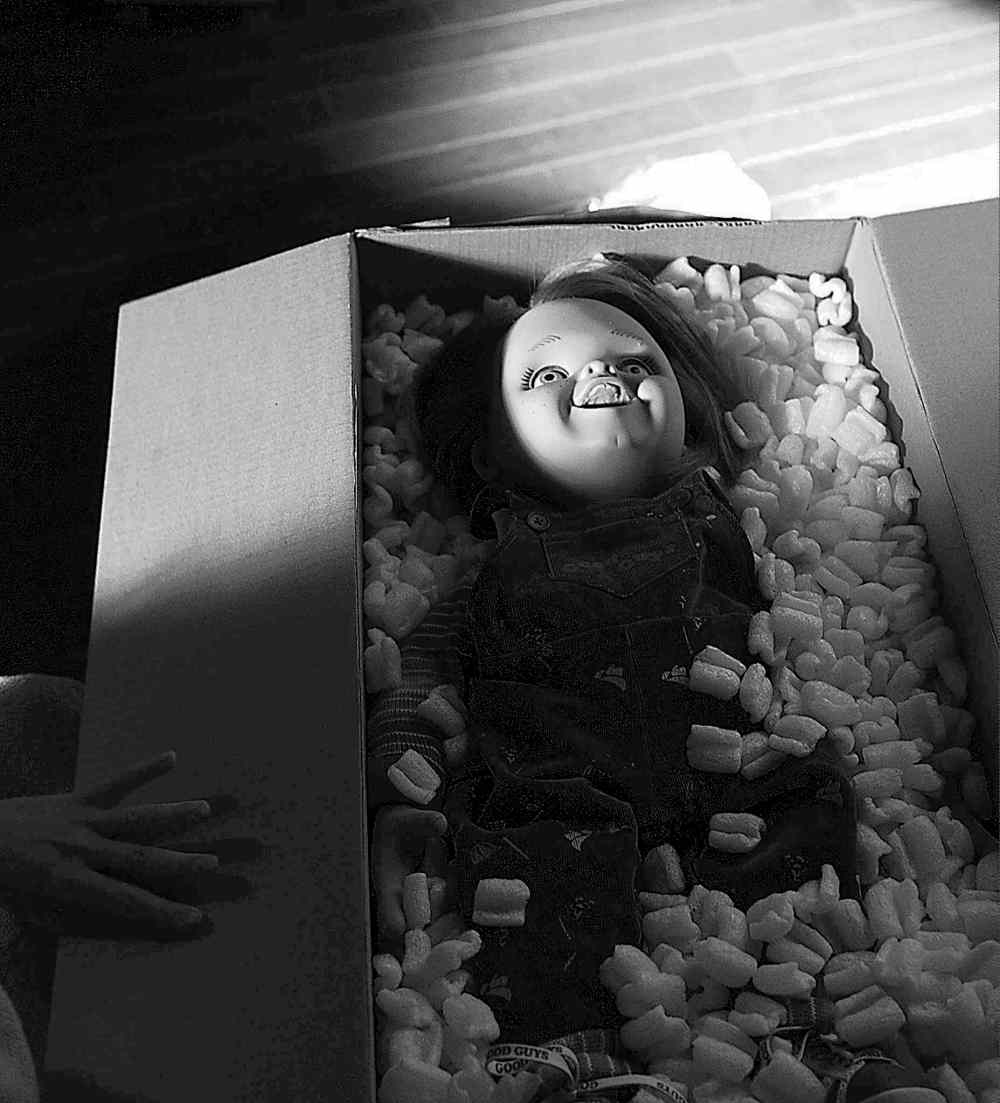
Curse of Chucky
TAKEN on its own, the Winnipeg-lensed Curse of Chucky follows in the tradition of the killer-doll subgenre that hearkens back to the 1945 omnibus thriller Dead of Night and the made-for-TV classic Trilogy of Terror, which featured Karen Black vs. a Zuni fetish doll.
As a franchise, the demon doll Chucky is following in the footsteps of Wes Craven’s subconscious psycho Freddy Kreuger; it started out scary, morphed into self-parody and then returned to its scary roots. In the case of Freddy, that return to form was Wes Craven’s New Nightmare. In the case of Chucky, it’s Curse of Chucky.
For a direct-to-DVD film, this is a handsome production replete with old-school scares. It mostly taking place in a crumbling old Victorian house, the abode of the wheelchair-bound Nica (Fiona Dourif). After receiving the now-retro Chucky doll by courier, this sheltered young woman loses her mom to a mysterious accident involving sharp implements. But she gains the family of her overbearing sister Barb (Danielle Bisutti, whom you would be hard-pressed to recognize after she played the spectral demon-mom in Insidious Chapter 2), along with her sardonic husband Ian (Brennan Elliot), her sweet daughter Alice (Summer Howell) and the family’s sexy nanny Jill (Maitland McConnell).
They’re all on the menu for Chucky, the doll possessed by serial killer Charles Lee Ray (Brad Dourif) with a grudge against Nica’s family dating back to the days when he wasn’t, um, plastic.
Screenwriter-director Don Mancini hasn’t entirely sacrificed the humour inherent in the Chucky franchise, but it comes in a decidedly darker hue here, as when sweet little Alice announces that there is no God. (Chucky told her so.)
If the little Chucky feet skittering across the floor doesn’t induce chills to anyone who saw the original Child’s Play in 1988, it might do the trick for anyone new to the franchise.
The Blu-ray extras give appropriate props to the Winnipeg crew, including special makeup artist Doug Morrow showing off his more grisly effects and director Mancini singing the praises of production designer Craig Sandells.
Watch for an important scene after the credits. **1/2
After Earth
AFTER Earth is an awkward, ill-fitting suit of a movie, from its generic title to its kidney-shaped production design.
After humanity has rendered Earth unfit for their own habitation, people have moved to a new planet, where they are challenged by hostiles whose secret weapon is an “ursa,” a blind killer beast that can literally smell fear and thus chews its way through conventional military. Rising up against this slimy, toothy thing is Cypher Raige (Will Smith), a super-soldier who feels no fear and is thus invisible to the creature.
To teenage would-be warrior Kitai (Will’s young’un Jaden Smith), Cypher is dad — a chilly, withholding, disciplinarian. In an effort to take a hand in Kitai’s development, Cypher takes him along on a business trip… in space. But an asteroid storm cripples their spaceship.
When Kitai regains consciousness, he learns his dad’s legs are broken and that he must journey about 100 kilometres to retrieve an emergency beacon that will summon rescuers. The bad news: they have landed on long-abandoned Earth, where remaining life has apparently evolved with a genetic hostility to humankind.
There is also a core idea that might have yielded something: a young man on a double mission to survive a hostile environment and earn his father’s love.
But ultimately, setting the action in a thinly drawn future feels like flat-out cornball contrivance. It’s like taking an Ernest Hemingway survival tale and shoehorning it into a sci-fi premise: The Old Man and the Sea of Tranquility.
Jaden Smith is a competent enough young actor but not real star material. And perversely, his dad Will is obliged to spend the movie tamping down his own natural screen charisma to make the stoic Cypher, well, a cipher.
With a story credit going to Will Smith, one is forced to the conclusion that the whole movie is the latest in the Smith family’s efforts to make young Jaden a movie star.
Geez, haven’t the Smiths ever heard of a trust fund? *1/2
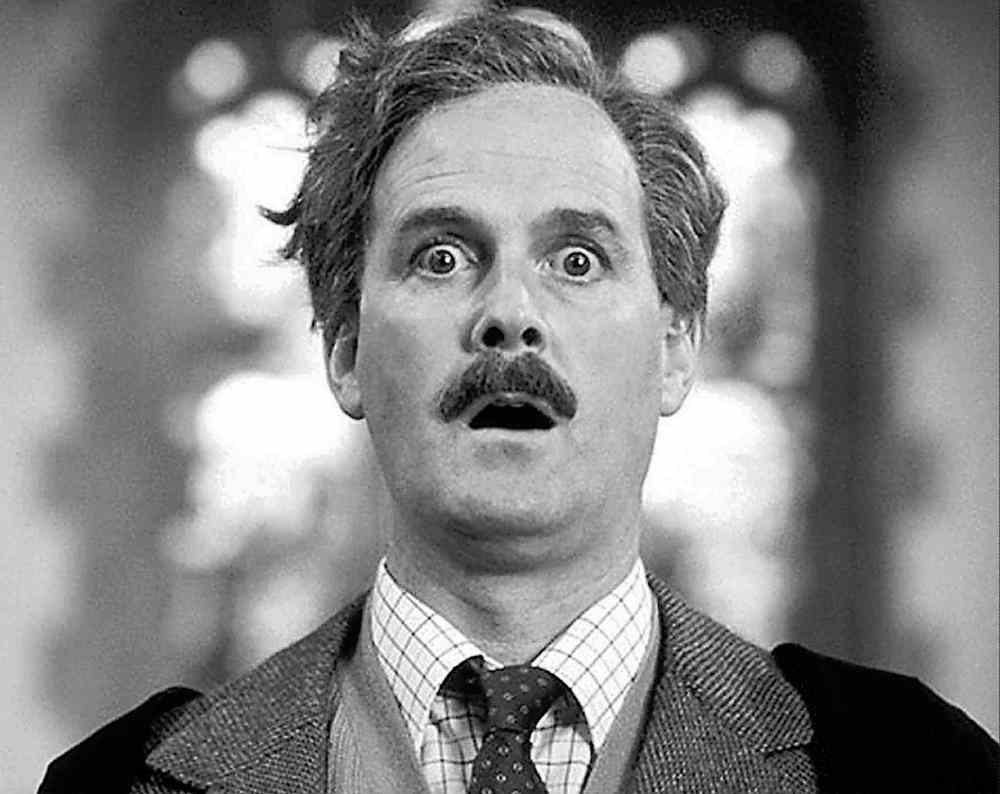
Monty Python’s The Meaning of Life (30th Anniversary Edition)
THIS Blu-ray edition of what is probably the British comedy troupe’s smartest movie features another get-together of the surviving Pythons — John Cleese, Michael Palin, Eric Idle, Terry Jones and Terry Gilliam — to discuss the making of the film. Cleese remains cantankerous about what he sees as the film’s flaws — the First World War sketch and the hallucinogenic “Find the Fish” bit, among them.
But one remains impressed by the collective smarts of the troupe (they shoot the breeze about about philosopher John Locke among other things before they get onto the subject of the movie) and the film itself, a plotless series of sketches tied together by a loose connection to the titular theme.
The musical number Every Sperm is Sacred remains a flat-out classic, one of the best musical production numbers ever, and doubtless one of the reasons the film was banned in Ireland upon its initial theatrical release. ****
Nothing Left to Fear
REMEMBER the 1999 version of The Mummy? Thanks to visual effects, the undead Egyptian of the title could unhinge his jaw like an anaconda and open it to a terrifying gape.
That visual effect is the go-to chill-inducer in Nothing Left to Fear, a modest low-budget little something that represents rock god Slash’s first effort as a horror movie producer.
The movie is based on a prevailing American myth suggesting the town of Stull, Kansas is one of the gateways to hell. Nice-guy pastor Dan (James Tupper) pulls up roots and moves to the town with his lovely wife Wendy (Anne Heche), his two lovely teen daughters Rebecca and Mary (Rebekah Brandes and Jennifer Stone) and young son Christopher (Carter Cabassa) at the behest of the town’s retiring pastor (Clancy Brown).
But all is not as it appears in Stull. One member of the family has apparently been earmarked for some kind of sacrifice, and soon the idyllic little burg turns into Nightmare Town for this innocent clan.
When it comes to actors and setting, the elements are all in place for a decent thriller. Unfortunately, the script by Jonathon W.C. Mills is flaccid and dull, giving the actors very little with which to work. (Why cast Anne Heche as a blancmange mom when she is capable of so much more?)
Those gaping mouths notwithstanding, Nothing Left to Fear very much lives up to its title. *1/2
randall.king@freepress.mb.ca
Our newsroom depends on a growing audience of readers to power our journalism. If you are not a paid reader, please consider becoming a subscriber.
Our newsroom depends on its audience of readers to power our journalism. Thank you for your support.
Our newsroom depends on a growing audience of readers to power our journalism. If you are not a paid reader, please consider becoming a subscriber.
Our newsroom depends on its audience of readers to power our journalism. Thank you for your support.
Advertisement Advertise With Us
Advertisement Advertise With Us