Roth ignores terror’s trends
Fright-flick director strives for originality
Advertisement
Read this article for free:
or
Already have an account? Log in here »
To continue reading, please subscribe:

Digital Subscription
One year of digital access for only $205*
- Enjoy unlimited reading on winnipegfreepress.com
- Read the E-Edition, our digital replica newspaper
- Access News Break, our award-winning app
- Play interactive puzzles
*First annual payment billed as $205.00 + GST for one year. This annual subscription will automatically renew at $233.00 + GST every 52 weeks (10% off the regular annual price of $259.35). Offer available to new and qualified returning subscribers only. Cancel any time.
To continue reading, please subscribe:
Add Free Press access to your Brandon Sun subscription for only an additional
$1 for the first 4 weeks*
- Enjoy unlimited reading on winnipegfreepress.com
- Read the E-Edition, our digital replica newspaper
- Access News Break, our award-winning app
- Play interactive puzzles
*Your next Brandon Sun subscription payment will increase by $1.00 and you will be charged $17.95 plus GST for four weeks. After four weeks, your payment will increase to $24.95 plus GST every four weeks.
Read unlimited articles for free today:
or
Already have an account? Log in here »
Hey there, time traveller!
This article was published 04/10/2015 (4003 days ago), so information in it may no longer be current.
PG-13 horror movies are dead, relegated to a boomlet of here today, gone tomorrow shockers in the late 1990s. So, too, are the rash of Japanese horror remakes that followed The Ring.
Hard-R horror is dead, having flourished briefly in the years after 9/11, when torture haunted America’s national conscience. The haunted-house revival has faded slightly as sequels to Insidious and Paranormal Activity have opened to diminishing returns. And the seemingly unkillable found-footage genre, fuelled by cheap and easy access to video technology, isn’t the reliable gamble it once was, even though it’s inherently low-stakes.
Horror has always been trend-driven and cyclical, with markets for sub-genres such as slasher movies spiking in the ’80s, crashing for a period and then coming back in another form. But the genre itself has been facing an existential crisis in the digital age, when most horror movies are either too small to compete in the multiplex or too unsavoury to gain footing in the art house.
As viewers have migrated from movie theatres to home theatres, it’s horror that’s been hit the hardest.
An audience still exists for it, but for a handful of prominent exceptions, such as the indie breakout It Follows, the market primarily caters to video on demand or streaming services, such as the new curated site Shudder.
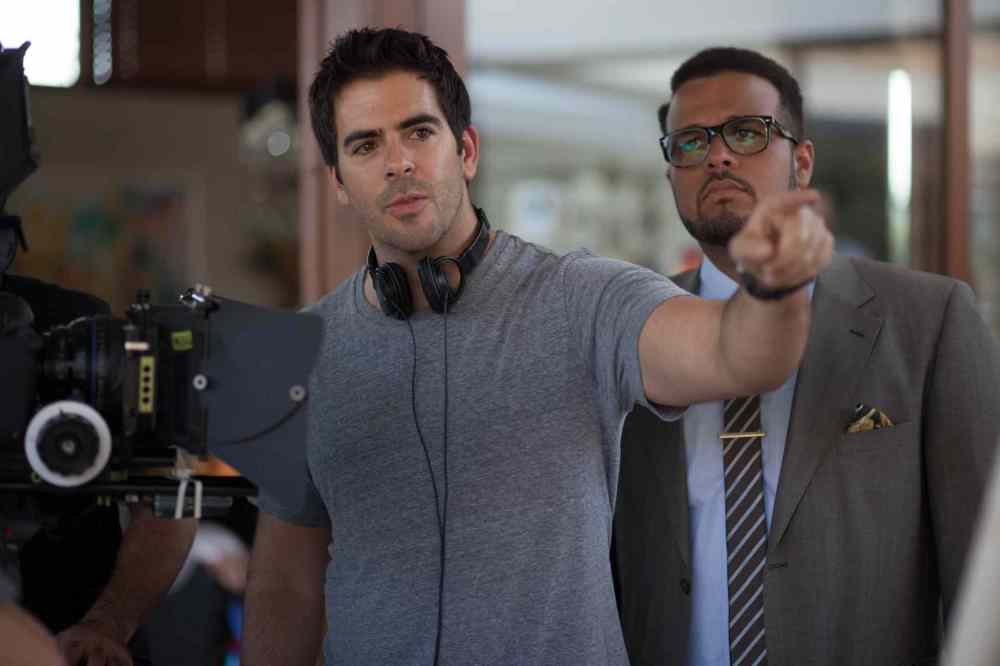
For the past two years, director Eli Roth has been forced to watch these developments from the sidelines. One of the few brand names in horror, with credits that include Cabin Fever and the Hostel movies, Roth premièred The Green Inferno — his grisly homage to Italian exploitation pictures such as Cannibal Holocaust — to the lusty Midnight Madness crowd at the Toronto Film Festival. Open Road Films had picked it up for distribution, eventually settling on a release date the following year, but a complicated dispute between Open Road and the film’s production company, Worldview Entertainment, got it pulled from the schedule a month before opening.
A full year later, The Green Inferno is now in theatres through an arrangement with Jason Blum of Blumhouse Productions, which has stamped its imprimatur on franchise hits such as Paranormal Activity, Insidious, The Purge and Sinister. Released under Blum’s new BH Tilt label, the film opened in wide release without an expensive marketing campaign, relying instead on a viral push that taps into Roth’s considerable fan base while eking the most out of modest returns at the box office. (It earned US$3.5 million in its opening weekend.)
The online strategy seems entirely in keeping with a film that includes the Twitter handle of every cast and crew member in the closing credits. It also minimizes expectations for the type of extreme horror movie that has fallen out of fashion but has long been Roth’s stock-in-trade.
“The Green Inferno is the pilot,” says Roth. “We’re the test-case release to see if you can make a movie and release it on 1,500 screens, targeting an audience with a digital campaign and directly marketing to fans. So then if the movie makes US$10 million (in theatres), it’s a huge hit. You don’t have the pressure of having to make US$60 million because you’re not making movies that are going to appeal to everybody. I’m making something edgy and dangerous.”
How edgy and dangerous exactly? The Green Inferno is Roth’s attack on what he calls “slacktivists,” those socially conscious collegians who opine about the issues of the day on social media but approach them with minimal commitment or depth. As punishment, Roth sends a group of them to the Amazon rainforest, where a mission intended to protect an indigenous tribe from developers ends with the tribe killing most of them and serving at least one for dinner.
“People get involved in a cause in The Green Inferno not because they care about saving the Amazon but because they want credit for saving the Amazon,” says Roth, who likens it to the hashtag activism of #Kony2012, #FreePussyRiot and #BringBackOurGirls.
“They’re not happiest when they shut down the developers. They’re happiest when they’re trending on Twitter and when they make the front page of Reddit. That’s what I see is going on right now. Everyone’s tweeting the hashtag of the week because they want to look like they care.”
That eagerness to provoke and plug into the cultural zeitgeist has been a feature of Roth’s work from the beginning. Cabin Fever could be read as a metaphor for AIDS or the SARS virus, while the Hostel films were his pointed reaction to George W. Bush’s America and its repercussions overseas. Just two weeks after The Green Inferno’s release, Roth returns again with Knock Knock, an infidelity-themed thriller with Keanu Reeves he made while The Green Inferno sat in purgatory. Thematically, the film backs right into the Ashley Madison scandal. But while Roth infuses his work with social commentary, he doesn’t care to follow the current whims of genre filmmaking.
“You can’t be conscious of the trends of the day,” says Roth.
“You can only be conscious of what’s going on in the world and what you want to see and what you feel there’s a lack of in the marketplace. Haunted-house movies are in right now, and some of them are good, but I wanted to make a movie like Hostel that’s unlike anything people have seen in a theatre before.”
‘You don’t want to water down your movie to please everyone. To me, that’s the death of creativity’
“Any time you do something different,” he continues, “there’s always resistance, but generally when you make something original, that’s when people respond to it. You create the trend.”
Between the Hostel films, with their implicit critiques of Abu Ghraib and Guantanamo Bay, and The Green Inferno, which mocks a liberal class of “social-justice warriors,” it can be hard to pin Roth down politically. But whatever their merits, his films stand to be fascinating cultural artifacts.
Plenty of people will find (and have found) The Green Inferno revolting on political grounds or as a simple affront to taste, but even with the two-year delay, it stands to say more about 2015 than any number of its more respected counterparts. And it doesn’t say it softly, either.
“Movies have gotten so safe,” says Roth.
“Everybody tries to write characters who are ‘likable,’ but none of them come off as honest. You have all these movies that read as phony. I never want to shy away from what the subject matter is. I want to tackle it head on and be unapologetic about it. You don’t want to water down your movie to please everyone. To me, that’s the death of creativity.”

Still, Roth expects some blowback from The Green Inferno (and likely Knock Knock, too), and he seems to welcome it, given how heavily he’s gambling on the Internet buzz to buoy its prospects. He loves social media and professes a genuine interest in fielding instant reactions and having discussions about the movie.
Perhaps his canniest gift as a filmmaker is simply poking the hornet’s nest and seeing what happens.
“Whether they like it or hate it,” says Roth, “you want to make a movie people will never forget.”
— Washington Post