Disney cashes in on live-action remakes

Company aims to make animated classics more relevant to a new generation

Advertisement

Advertise with us

Disney’s live-action studio is on a lucrative nostalgia trip.

Read this article for free:


or

Already have an account? Log in here »

To continue reading, please subscribe:

Subscribe and receive a limited-edition Free Press branded hat or tote.

Digital Subscription

One year of digital access for only $205*

  • Enjoy unlimited reading on winnipegfreepress.com
  • Read the E-Edition, our digital replica newspaper
  • Access News Break, our award-winning app
  • Play interactive puzzles

*First annual payment billed as $205.00 + GST for one year. This annual subscription will automatically renew at $233.00 + GST every 52 weeks (10% off the regular annual price of $259.35). Offer available to new and qualified returning subscribers only. Cancel any time.

To continue reading, please subscribe:

Add Free Press access to your Brandon Sun subscription for only an additional

$1 for the first 4 weeks*

  • Enjoy unlimited reading on winnipegfreepress.com
  • Read the E-Edition, our digital replica newspaper
  • Access News Break, our award-winning app
  • Play interactive puzzles
Start now

*Your next Brandon Sun subscription payment will increase by $1.00 and you will be charged $17.95 plus GST for four weeks. After four weeks, your payment will increase to $24.95 plus GST every four weeks.

Hey there, time traveller!
This article was published 17/03/2017 (3488 days ago), so information in it may no longer be current.

Disney’s live-action studio is on a lucrative nostalgia trip.

The company’s latest re-imagining, Beauty and the Beast, marks a big test of their strategy of using live actors to make beloved animated tales more relevant to new generations. Disney has a dozen more possible remakes in the pipeline that it hopes will build on the success of recent films such as Cinderella, The Jungle Book and Maleficent.

Despite a couple misses, the strategy has proven a better bet for the live-action studio than trying to create new legends. Disney has generated almost US$2 billion in net profit from six remakes since 2010, according to S&P Global’s Kagan research unit. That success, coupled with strong showings by other Disney film divisions, including Marvel and Lucasfilm, have made the company the box-office leader.
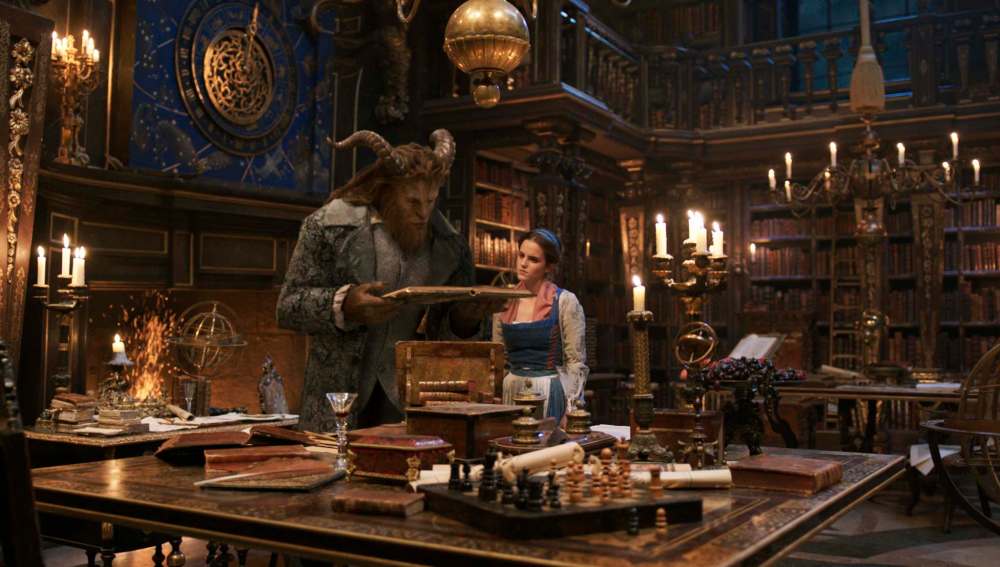
Disney / The Associated Press
Disney predicts its live-action adaptation of Beauty and the Beast will net them US$120 million in ticket sales in the United States and Canada through this weekend.
Disney / The Associated Press Disney predicts its live-action adaptation of Beauty and the Beast will net them US$120 million in ticket sales in the United States and Canada through this weekend.

These live-action films are properties that “everybody knows,” says Doug Creutz, an analyst at Cowen & Co. “It’s probably a safer strategy than taking all that money and trying to create new intellectual property.”

The recent backlash over a gay character in Beauty and the Beast isn’t expected to hurt the film’s potential, with online ticket seller Fandango saying the movie is generating the fastest advance sales of any family feature. The picture, which debuted in more than 4,000 domestic locations on Friday, is forecast to bring in aboutUS$144 million in ticket sales this weekend and may generate US$420 million during its U.S. run, BoxOfficePro.com estimates. Some analysts expect it could double that overseas.

Disney, which says the film is opening in most of the world on the same day, predicts US$120 million in ticket sales from the United States and Canada through Sunday.

The latest reincarnation of the French fairy tale stars Emma Watson as Belle, a bookworm stuck in a French village who yearns for a bigger life until a misadventure leads her to a reclusive beast.

Beauty and the Beast is getting positive reviews, with 69 per cent positive at aggregator Rottentomatoes.com. The film cost about US$160 million to make, according to the studio. With marketing costs the total climbs to around US$300 million, according to a person with knowledge of the matter who asked not to be identified discussing private information. Disney struck gold with the 1991 animated feature — it became the first cartoon to be nominated for a best-picture Oscar.

Disney’s live-action strategy isn’t without risks. When the company strayed from revisiting its classics, disaster sometimes ensued. The Lone Ranger, Tomorrowland and Million Dollar Arm all failed to recover their costs at the box office, as did the Disney-backed live-action adaptation of the Roald Dahl book The BFG from Steven Spielberg. Two stories that came right from Disney’s playbook — the sequel Alice Through the Looking Glass and Pete’s Dragon — were also duds.

The Burbank, Calif.-based studio’s current run of successful remakes began with Alice in Wonderland in 2010. Directed by Tim Burton, the film generated more than US$1 billion in ticket sales. The success of that film, along with Universal Pictures’ 2012 release Snow White and the Huntsman, led studio chairman Alan Horn to wonder, “Why aren’t we doing that?”

Disney’s live-action unit, led by Sean Bailey, built on the success in 2014 with Maleficent, a darker take on Sleeping Beauty, featuring Angelina Jolie. The US$180-million production budget yielded US$759 million in global sales. Cinderella, in 2015, went on to score critical and commercial success, and The Jungle Book won an Oscar in February for visual effects. A sequel is planned.

To Barton Crockett, an analyst at FBR Capital Markets, these films are a necessary new hybrid for a younger generation that’s grown accustomed to cutting-edge special effects.

“It is very hard for them to watch some of the older movies because the movie-making technology was so different than it is today,” Crockett says. “You don’t get the same reaction.”

While Disney is still making original live-action films, such as the Ava DuVernay-directed A Wrinkle in Time, due for release in 2018, it’s largely focused on remaking classics.

A live-action Mulan film is due out in November 2018. Mary Poppins Returns, with Emily Blunt, Meryl Streep and Lin-Manuel Miranda, is set for release the following month. Revivals of Dumbo, The Lion King, Cruella and Aladdin are being developed, and the company may also have in the works The Little Mermaid, a Maleficent sequel, another Peter Pan story and a fresh Pinocchio.

“I don’t think they’re anywhere close to trailing off soon,” says Jeff Bock, senior box office analyst at Exhibitor Relations. “They’ll run out of their best animated films maybe in a decade. That is not to say they don’t continue the adventures in sequels.”

Those films will also help Disney battle superhero fatigue in its Marvel division, which “everyone’s expecting,” says Michael Nathanson, an analyst at MoffettNathanson.

Horn, Disney’s studio head, said at the Beauty and the Beast première that the company remains committed to mining Disney’s best characters.

Remakes of classics “are quintessential Walt Disney Company properties and we believe to our toes that we are the company that should bring these stories to the screen in live action,” Horn says.

“We want to do so with an underscored emphasis on quality — they have to be good.”

— Bloomberg News

Report Error Submit a Tip

More Stories

Clock ticks down on destruction of records documenting residential school abuses

Marsha McLeod 13 minute read Preview

Clock ticks down on destruction of records documenting residential school abuses

Marsha McLeod 13 minute read Yesterday at 12:49 PM CDT

In less than a year, a private company is set to destroy the largest cache of records detailing the widespread abuse of Indigenous children at residential schools in Canada.

The destruction, which was ordered by an Ontario court in 2014 and later upheld by the Supreme Court, is set to take place on Sept. 19, 2027.

This countdown is igniting emotional conversations that seek to balance the immense historical value of the records alongside the confidentiality survivors were promised as part of the process of providing detailed testimony about abuses they’d suffered.

The records were created as part of the Indian Residential Schools Settlement Agreement, a class-action settlement stemming from survivors who began suing the federal government in the late 1990s over the harm they’d been subjected to at residential schools.

Read
Yesterday at 12:49 PM CDT

Broadening prediction-market gambling a bad idea

Editorial 4 minute read Preview

Broadening prediction-market gambling a bad idea

Editorial 4 minute read 2:01 AM CDT

Let’s make a prediction: sooner or later, when Canadian governments find a way to take their own cut of the action, prediction-contract gambling on everything from sports to entertainment to political decisions is going to come to Canada.

And that’s a horrible, dangerous, pernicious idea.

Unless you have particular access to information — either inside information or strategic information based on skills or education — you’re not likely to make money at it. In fact, structurally, you’re likely to lose. In prediction markets, you basically pay an amount, plus fees from the company involved, to bet on whether something will or will not happen within a certain time frame. The amount you pay for your contract depends on how other people are also betting.

As Wealthsimple describes it, “You buy whichever side you think is right. Prices move with demand, so if the market leans towards one outcome, the more that side costs. If a lot of people are backing the TSX to finish above 38,000, yes gets more expensive and no gets cheaper.”

Read
2:01 AM CDT

Winnipeggers witness unveiling of Japanese Canadian monument in B.C.

Morgan Modjeski 6 minute read Preview

Winnipeggers witness unveiling of Japanese Canadian monument in B.C.

Morgan Modjeski 6 minute read 8:39 PM CDT

As Miki Stewart gathered with her family at the Japanese Cultural Association of Manitoba on Saturday afternoon, she was thinking of her parents, Yoshimaru and Yoshi Abe.

Both Stewart, 80, and her sister Yumi Falk, 81, alongside an older brother, were born in the Tashme internment camp in British Columbia. They were among more than 2,600 Japanese Canadians who were forcefully removed and interred at the camp following the bombing of Pearl Harbour and Canada’s declaration of war on Japan in 1941.

“They didn’t talk much about how they suffered,” Stewart said of her parents. “But they did.”

She was amongst a group of more than 150 people who gathered at the association’s McPhillips headquarters on Saturday afternoon to watch the unveiling of the Japanese Canadian Monument in Victoria B.C.

Read
8:39 PM CDT

Volunteer pop-up library axed from Manitoba Youth Centre

Matthew Frank 4 minute read Preview

Volunteer pop-up library axed from Manitoba Youth Centre

Matthew Frank 4 minute read Updated: 11:25 AM CDT

Manitoba Corrections has cancelled a pop-up library program at the Manitoba Youth Centre, leaving inmates without librarian services and fewer options to borrow certain books.

The Prison Libraries Committee, part of the non-profit Manitoba Library Association, operated and funded the volunteer program since 2024 before it was shut down by the province last month. The group previously partnered with the province to offer the service because the facility has no dedicated library of its own.

“It is concerning that community members who are incarcerated, especially youth, are losing out on meaningful programming, access to information and rehabilitation efforts, which are offered at no cost to (Manitoba) Corrections. We urge Manitoba Justice to promote more library services and programming, not less,” said a Sept. 24 letter from the non-profit addressed to the justice minister.

Ashley Huot, chair of the Prison Libraries Committee, said she was puzzled when she received an email last month from Manitoba Corrections stating that the pop-up library was no longer needed.

Read
Updated: 11:25 AM CDT

Letters, Oct. 3

7 minute read 2:01 AM CDT

A morning in the life …

My very first lesson does not start when I walk into that lecture hall, oh no — it starts long before. It begins when I walk to my car, check the estimated arrival time to the University of Manitoba and hope that Winnipeg traffic agrees with it.

A drive that appears completely manageable changes almost immediately when I’m greeted by a tsunami of orange pylons and a line of cars that appears to go on forever. Traffic moves by the inch, lanes magically disappear and the detour I took yesterday now has a detour of its own. These factors make me do a calculation that I have become all too familiar with. How late can I arrive and still find parking, run to my class across campus and get to class with enough time left to make it worth it?

I have grown used to people saying, “Why not just leave earlier?” I do. But when I’m already leaving for my 8:30 a.m. class at 7 a.m., there’s only so much I can do. This drive that some would think is relaxing is one that feels like an assignment that I didn’t know I had to complete and is due at 8:30 a.m.

Jets bench boss Arniel talks rebuilding from last season’s struggles

Mike McIntyre and Ken Wiebe 12 minute read Preview

Jets bench boss Arniel talks rebuilding from last season’s struggles

Mike McIntyre and Ken Wiebe 12 minute read Thursday, Oct. 1, 2026

Scott Arniel has a lot on his plate these days.

But the head coach of the Winnipeg Jets took some time Thursday to sit down with Free Press hockey writers Mike McIntyre and Ken Wiebe to discuss a number of topics on the eve of a new hockey season. This interview has been condensed and edited for clarity.

Wiebe: What was the evaluation of last season like? What did you personally do in an attempt to improve after going from first-overall to 26th-overall?

I just went back and looked at things and made sure my communication was where it needed to be with my players. Was my communication where it needed to be with my boss, with my general manager (Kevin Cheveldayoff)? How our coaching staff worked. How we handled highs and lows. Things I felt I could have done better.

Read
Thursday, Oct. 1, 2026