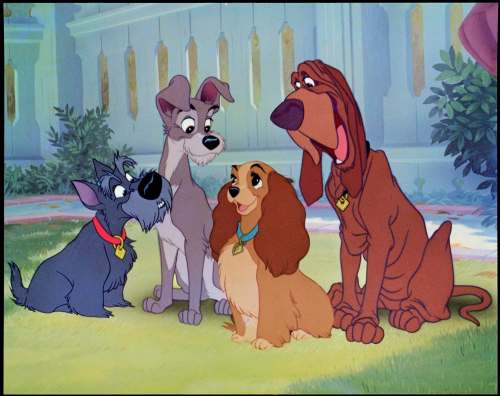
Disney Plus disclaimer a good start
Warning of 'outdated cultural depictions' should go beyond mere acknowledgment

Advertisement
Read this article for free:
or
Already have an account? Log in here »
To continue reading, please subscribe:

Digital Subscription
One year of digital access for only $205*
- Enjoy unlimited reading on winnipegfreepress.com
- Read the E-Edition, our digital replica newspaper
- Access News Break, our award-winning app
- Play interactive puzzles
*First annual payment billed as $205.00 + GST for one year. This annual subscription will automatically renew at $233.00 + GST every 52 weeks (10% off the regular annual price of $259.35). Offer available to new and qualified returning subscribers only. Cancel any time.
To continue reading, please subscribe:
Add Free Press access to your Brandon Sun subscription for only an additional
$1 for the first 4 weeks*
- Enjoy unlimited reading on winnipegfreepress.com
- Read the E-Edition, our digital replica newspaper
- Access News Break, our award-winning app
- Play interactive puzzles
*Your next Brandon Sun subscription payment will increase by $1.00 and you will be charged $17.95 plus GST for four weeks. After four weeks, your payment will increase to $24.95 plus GST every four weeks.
Read unlimited articles for free today:
or
Already have an account? Log in here »
Hey there, time traveller!
This article was published 19/11/2019 (2497 days ago), so information in it may no longer be current.
Disney’s long-awaited streaming platform, Disney Plus, arrived last week to much excitement and a little bit of controversy.
Well, “controversy.” Disney Plus made the correct call by adding a content note to its classic films — you know, the ones with all the racism. The note is benign and intentionally neutral, but that didn’t stop people from complaining that Disney classics are being “ruined by content warnings” and “can’t we just enjoy the movie?”
All the so-called content warning says is: “This program is presented as originally created. It may contain outdated cultural depictions.”
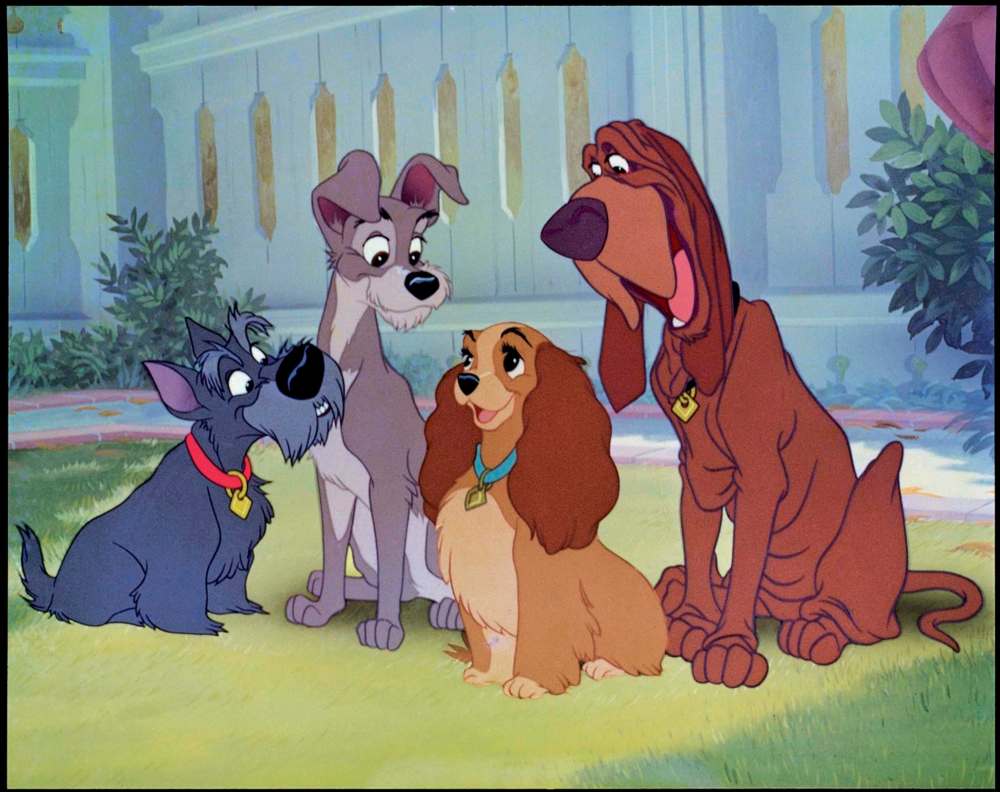
It’s really less of a content warning and more of a content acknowledgment. Besides, the issue is not that the cultural depictions are “outdated.” It’s that they are racist. See: the Siamese cats in 1955’s Lady and the Tramp and also the Siamese cat in 1970’s The Aristocats (took a while to learn that lesson, I guess); the crows in 1941’s Dumbo; Tiger Lily and her Indigenous family in 1953’s Peter Pan, to name but a smattering. (Also, it’s not “may contain.” It’s “definitely contains.”)
Disney Plus has taken a more hardline stance on certain classic films. It will not stream 1946’s Song of the South, for example, which has also never been made available on home video owing to its racist portrayal of African-Americans.
While throwing a content note on other classic films is a good move, Disney Plus should have taken a cue from Warner Bros., which also has plenty of racist stereotypes in its library of cartoons. Although 11 Looney Tunes and Merry Melodies cartoons were removed from syndication — a group known as the Censored Eleven — other clips featuring stereotypes have appeared in DVD releases with the following disclaimer:
“The cartoons you are about to see are products of their time. They may depict some of the ethnic and racial prejudices that were commonplace in the U.S. society. These depictions were wrong then and they are wrong today. While the following does not represent the Warner Bros. view of today’s society, these cartoons are being presented as they were originally created, because to do otherwise would be the same as claiming that these prejudices never existed.”
That last part is key. I don’t believe in altering films to square with modern sensibilities, nor do I think we should ban a work of art that could be used as a valuable teaching and discussion tool — a privileged stance, I acknowledge. History we’re doomed to repeat, and all that.
But I also believe in allowing people to make informed decisions about what they will or will not watch, and it’s never a bad idea to provide some context for the media we’re viewing, especially when the media is largely meant for children — all children. “Viewer discretion is advised” and “parental guidance” are not new concepts. If someone is watching Peter Pan and wants to fast-forward through the absolute cringe fest that is What Made the Red Man Red?, that is their prerogative. If you don’t want to, that is yours.
I was raised on Disney and, as such, am a product of princess culture. The first movie I ever saw in a theatre was 1989’s The Little Mermaid. I learned almost every Disney song you can name on piano. Since the arrival of Disney Plus, I have been plowing through the canon with nostalgic fondness. The classics that were once tucked away in the diabolical scarcity marketing tool that was “the Disney Vault” really are a marvel of animation. They just don’t make ’em like that anymore, that’s for sure.
But I can love The Little Mermaid and think critically about, as I’ve written before, “everyone’s problematic fave about a hoarding fish girl who makes a contractually binding pact with a sea witch and trades her voice for human legs to get a guy to notice her.”
Many parents have valid reasons for wanting to actively avoid princess culture, and the gender stereotypes and beauty standards it upholds.
But I’ll tell you what: like dandelions between patio stones, Disney princesses find a way. You don’t have to actively seek out princesses, mention princesses or look at princesses for princesses to suddenly loom large in your child’s psyche. All it takes is one themed birthday party and bam, your kid is on a first-name basis with Belle, Jasmine, Ariel and Elsa. Such is Disney’s influence on our culture and no kid wants to be left out.

The solution is not to ban princesses. The solution is to talk about them.
Besides, movie viewers give each other content warnings all the time, we just don’t call them that. Few among us went into Bambi blind and most people know that they better buckle up for the first five minutes of Pixar’s Up. Do we enjoy them less? Disney movies, at their best, have always allowed us to talk about difficult things — like death and loneliness and feeling misunderstood — and have taught formative lessons about being brave and letting your conscience be your guide.
A simple content note that allows another opportunity to learn and grow? It’s hard to see how that ruins anything.
jen.zoratti@freepress.mb.ca
Twitter: @JenZoratti
Jen Zoratti is a columnist and feature writer working in the Arts & Life department, as well as the author of the weekly newsletter NEXT. A National Newspaper Award finalist for arts and entertainment writing, Jen is a graduate of the Creative Communications program at RRC Polytech and was a music writer before joining the Free Press in 2013. Read more about Jen.
Every piece of reporting Jen produces is reviewed by an editing team before it is posted online or published in print – part of the Free Press‘s tradition, since 1872, of producing reliable independent journalism. Read more about Free Press’s history and mandate, and learn how our newsroom operates.
Our newsroom depends on a growing audience of readers to power our journalism. If you are not a paid reader, please consider becoming a subscriber.
Our newsroom depends on its audience of readers to power our journalism. Thank you for your support.
Jen Zoratti is a columnist and feature writer working in the Arts & Life department, as well as the author of the weekly newsletter NEXT. A National Newspaper Award finalist for arts and entertainment writing, Jen is a graduate of the Creative Communications program at RRC Polytech and was a music writer before joining the Free Press in 2013. Read more about Jen.
Every piece of reporting Jen produces is reviewed by an editing team before it is posted online or published in print – part of the Free Press‘s tradition, since 1872, of producing reliable independent journalism. Read more about Free Press’s history and mandate, and learn how our newsroom operates.
Our newsroom depends on a growing audience of readers to power our journalism. If you are not a paid reader, please consider becoming a subscriber.
Our newsroom depends on its audience of readers to power our journalism. Thank you for your support.
Advertisement Advertise With Us
Advertisement Advertise With Us