Roger Waters has made Pink Floyd’s classic concept album larger than life
Advertisement
Read this article for free:
or
Already have an account? Log in here »
To continue reading, please subscribe:

Digital Subscription
One year of digital access for only $205*
- Enjoy unlimited reading on winnipegfreepress.com
- Read the E-Edition, our digital replica newspaper
- Access News Break, our award-winning app
- Play interactive puzzles
*First annual payment billed as $205.00 + GST for one year. This annual subscription will automatically renew at $233.00 + GST every 52 weeks (10% off the regular annual price of $259.35). Offer available to new and qualified returning subscribers only. Cancel any time.
To continue reading, please subscribe:
Add Free Press access to your Brandon Sun subscription for only an additional
$1 for the first 4 weeks*
- Enjoy unlimited reading on winnipegfreepress.com
- Read the E-Edition, our digital replica newspaper
- Access News Break, our award-winning app
- Play interactive puzzles
*Your next Brandon Sun subscription payment will increase by $1.00 and you will be charged $17.95 plus GST for four weeks. After four weeks, your payment will increase to $24.95 plus GST every four weeks.
Read unlimited articles for free today:
or
Already have an account? Log in here »
Hey there, time traveller!
This article was published 26/05/2012 (5192 days ago), so information in it may no longer be current.
LOS ANGELES — When Pink Floyd first took its concept album The Wall to the concert stage more than three decades ago, even lead singer and chief songwriter Roger Waters couldn’t have imagined a day when rock music might get any bigger.
But 32 years later, his magnum opus about the battle between individual freedoms and authoritarian oppression has magnified beyond Waters’ own expectations of yore. Now the man who once excoriated the voluminous expansion of the rock concert experience has helped institutionalize it.
“I famously hated playing to large numbers of people and playing in stadiums,” Waters, 68, says from a tour stop in Austin, Texas, earlier this month.
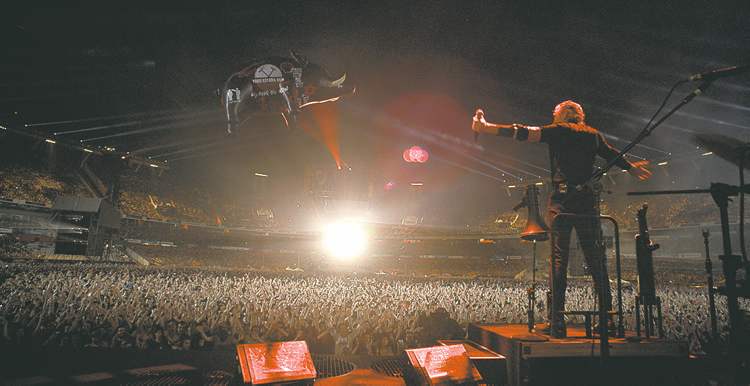
“The outdoor version, which we developed for South America and which is so much bigger than the arena shows, illuminates the piece in ways we can’t and couldn’t do indoors.”
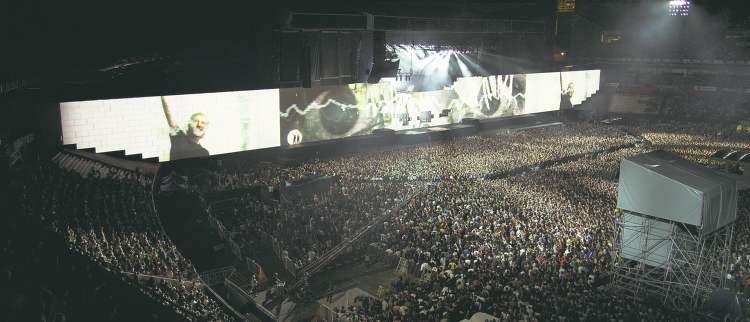
For instance, in the arena version, the metaphorical wall that is gradually built through the course of the evening typically spans about 60 metres. At stadiums, it stretches out to around 150 metres.
“It’s a new concept of how to produce rock SSRqn’ theatre on a great big football field,” Waters says. “We have technology available that’s so profoundly superior to what we had 30 years ago. You can be 200 yards from the show and still be completely engaged with what you’re seeing.”
The recent South American tour of The Wall broke attendance records there — nine sold-out shows at River Plate Stadium in Buenos Aires trounced the previous record of five at the same venue held by the Rolling Stones — and it’s also been among the top-grossing concert draws in North America since he resurrected and updated the show in 2010.
Since bringing The Wall back, Waters has done 150 performances that have grossed US $218 million in 27 countries.
It would be tempting to think that by now The Wall is a well-oiled machine with every element solidly in place, down to the last microsecond of music and pixel of imagery, but it’s still evolving, Waters said.
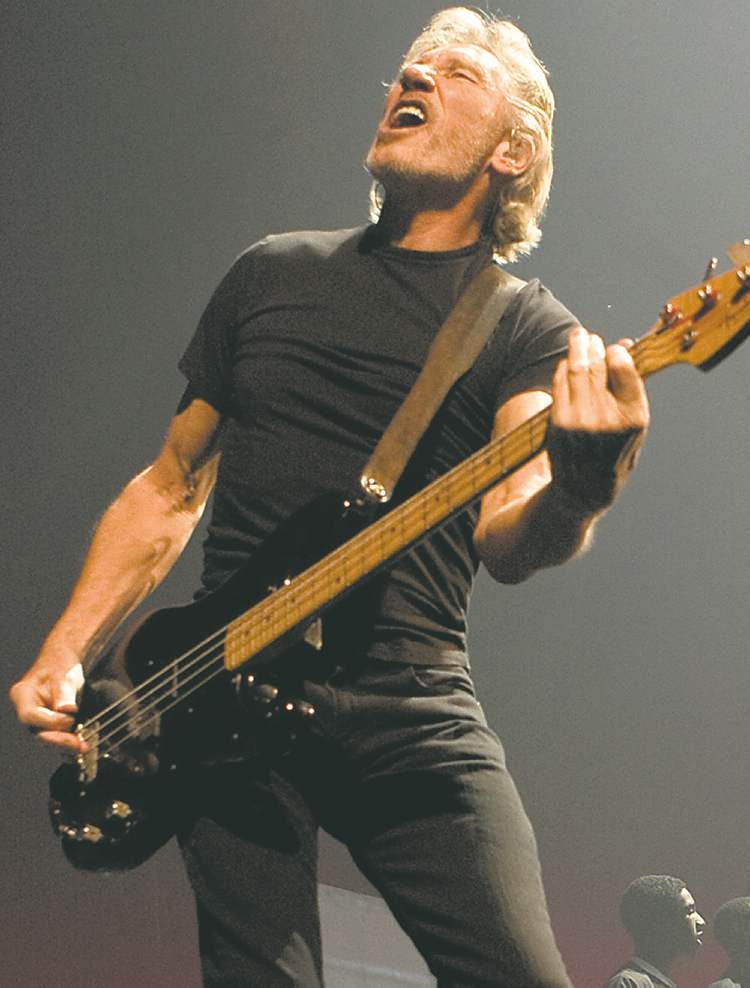
“I take a hard drive straight home from every gig and then look at it the next day or the next night, and I write notes,” he said. “I don’t think there’s been a single day where I haven’t changed something.”
Conceptually, too, the show has grown from its origins as a polemic largely about the angst of one particular rock star.
“The new incarnation of The Wall is completely unlike the 1980 version,” he said. “It’s developed into being much more of an international polemic, and it’s also much more moving,” he said, referring to images, many submitted by fans around the world, of family or friends killed in various wars over the last century.

“In those days it was about the internal struggle of me, when I was younger. It’s now much more about everybody else, much less about me, and what’s going on in politics, communication and all the stuff I care so deeply about. In consequence, lots of people in the audience weep. That makes me very happy, to be able to engage people to where they can empathize with others to the point where they weep.”
Ultimately, that’s the wall that Waters yearns to bring down with his ideas and his music, a campaign of engagement that often leaves him feeling another emotion he didn’t have much contact with three or four decades ago.
“As I sometimes say to the audience now, I’m so moved playing in these big places, being with a great band and seeing the audience’s response,” he said. “They get so emotional, and I’m so moved — I have to admit that 30 years ago I was famously hiding behind my own walls. I didn’t like being in big spaces with lots and lots of people. But in the intervening 30 years, I’ve changed.
“I’m not that miserable (expletive) guy I was then,” he said. “I could not be happier than I am now to be in that room, that space with those people, joining together in communion while we’re performing The Wall. It makes me inordinately happy. I’ve turned into a happy old codger.”
— Los Angeles Times
Concert preview
Roger Waters
- MTS Centre
- Thursday and Friday
- Tickets: $57.75 to $212.75 at Ticketmaster (Thursday sold out)
Related Articles
More than bricks go into making The Wall a rock spectacle
Advertisement Advertise With Us
Advertisement Advertise With Us