Baskery: Swedish sisters make badass banjo music

Advertisement
Read this article for free:
or
Already have an account? Log in here »
To continue reading, please subscribe:

Digital Subscription
One year of digital access for only $205*
- Enjoy unlimited reading on winnipegfreepress.com
- Read the E-Edition, our digital replica newspaper
- Access News Break, our award-winning app
- Play interactive puzzles
*First annual payment billed as $205.00 + GST for one year. This annual subscription will automatically renew at $233.00 + GST every 52 weeks (10% off the regular annual price of $259.35). Offer available to new and qualified returning subscribers only. Cancel any time.
To continue reading, please subscribe:
Add Free Press access to your Brandon Sun subscription for only an additional
$1 for the first 4 weeks*
- Enjoy unlimited reading on winnipegfreepress.com
- Read the E-Edition, our digital replica newspaper
- Access News Break, our award-winning app
- Play interactive puzzles
*Your next Brandon Sun subscription payment will increase by $1.00 and you will be charged $17.95 plus GST for four weeks. After four weeks, your payment will increase to $24.95 plus GST every four weeks.
Read unlimited articles for free today:
or
Already have an account? Log in here »
Hey there, time traveller!
This article was published 03/06/2014 (4511 days ago), so information in it may no longer be current.
Sweden may be the world’s foremost purveyor of pop music, but the Scandinavian nation is fast becoming known for another genre: Americana.
One doesn’t need to look far to find recent examples of young Swedish singer/songwriters picking up acoustic folk/roots instruments and reinterpreting that Nashville-imprinted sound, including I’m Kingfisher (a.k.a. singer/songwriter Thomas Denver Jonsson) and Benjamin Folke Thomas.
“I’ll be your Emmylou and I’ll be your June/If you’ll be my Gram and my Johnny, too,” sang sisters Johanna and Klara Söderberg of First Aid Kit on its monster 2012 single, Emmylou — itself a love letter to the genre.
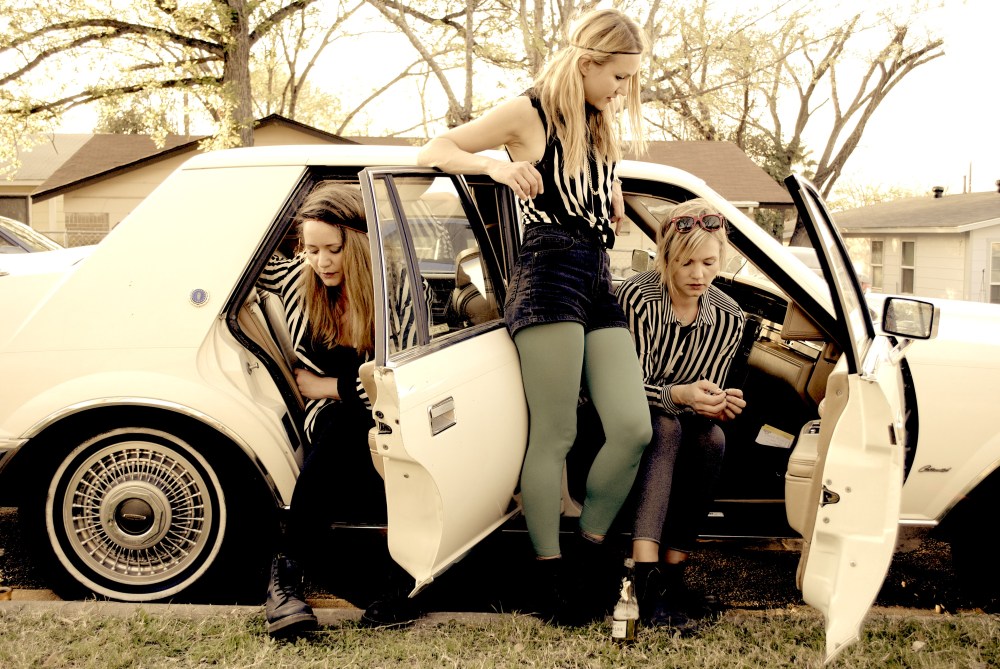
Another group of sisters is poised to break big on this side of the Atlantic. Greta, Stella and Sunniva Bondesson — the women behind Baskery — are bringing their incendiary live show to the Winnipeg Folk Festival’s mainstage on Friday, July 11.
Dubbed everything from “mud-country” to “banjo punk,” Baskery performs with the fiery intensity of any plugged-in rock act, prompting British music mag Q to write: “Don’t (expletive) with the Bondesson sisters.”
With three full-length albums under its belt — 2008’s Fall Among Thieves, 2011’s New Friends and 2013’s Little Wild Life — the trio has relocated to Nashville with the intention of working on a fourth album between tours.
Despite making connections in Music City, the sisters are thinking of self-producing.
“That was not the idea at the beginning, but things change as you go down the road,” Sunniva says over the phone from her adopted hometown in Tennessee. “Being here has sharpened our skills. But we’re going to see what happens. We’ve been introduced to a lot of people.”
Baskery hopes that its time in Nashville yields more than a record. “We want to take the next step in our career,” she says. “We want to get to a safe level and not have to worry so much.”
For them, that means stability; the Bondesson sisters know the sacrifices required to make it in a tough business. Raised in Stockholm, the sisters grew up surrounded by music. Their father, Janåke Bondesson, was a professional musician who covered country and blues tunes.
“Dad was a one-man band,” Sunniva says. “He’s alive and well, but he doesn’t play anymore. He played drums, bass and harmonica, and he figured out he could do it all at the same time. It was much more economical for him to be on the road alone instead of having four band members who would drink away your money for the night. He never wrote his own songs, but he was a great interpreter of music.”
As girls, the sisters joined him on the road, touring all over Europe. “It was very exciting as kids,” Sunniva says. “We loved to travel. Our mom had a — what do you call it? — a real job, I guess, so it was the road with dad.”
Still, it wasn’t always a thrill; Sunniva and her sisters were exposed to the unglamorous life of a musician. They saw their father struggle.
“He was under a lot of pressure,” she says. “Music turned into his daily bread. Having to play many times a week in front of people who weren’t always listening, it killed his passion. So he told us, ‘Whatever you do, write your own music.'”
And so, the trio started writing their own songs in Swedish — “and what we called ‘homemade English'” — in their teens. They even flirted with recording.
“It was a great experience,” she says. “We saw both sides. We had our touring dad fighting for every job — and then getting introduced to the more glamorous side of music. We decided somewhere in there that we wanted to keep the grittiness. We wanted to be in charge of where we went.”
The sisters toured and released two albums as the Slaptones, which featured their dad on drums, before striking out on their own as Baskery in 2006.
The Bondessons were raised on a diet of Neil Young and Muddy Waters — “pretty much male-oriented music,” Sunniva says with a laugh. By the time they reached high school in the 1990s, “it was Green Day, Nirvana and Soundgarden,” she says. “Lots of West Coast rock. Britpop was also a big influence, with Oasis and Blur. There were gangs at school in Stockholm who would either listen to Nirvana and Pearl Jam or Britpop.”
Burned-out on boys with guitars, Sunniva found a kindred spirit in Björk. “She really changed my perception of what music could be,” she says.
Still, when it came to writing and making their own music, the Bondessons, ever the outlaws, gravitated towards American country — which, in 1990s Sweden, was about as alternative as you could get.
“We grew up with rock music. Everyone played the electric guitar and bass, and that wasn’t fun for us. We liked the rhythm in acoustic instruments. There’s only so much you can do with an electric guitar. When we discovered bluegrass, we thought, ‘They really rock on those instruments.'”
Baskery has become part of a movement of like-minded musicians that has found inspiration in the American songbook.
In Scandinavia, roots music is revered. “The roots scene in Sweden stands for quality,” Sunniva says. “Lots of people in Sweden who love folk and blues, they appreciate handcrafted folk music. So if a Canadian or American roots band is coming to Sweden, the expectation is that they will be on another level.”

While the Bondessons are true students and admirers of the genre, the music they make isn’t an homage. They also don’t put pressure on themselves to remain faithful to it; Sunniva says their fourth album is heading in a “Zeppelin meets ABBA” direction. “We’ve had the urge to change with every album. We’re pretty restless,” she says.
Since their arrival in Nashville, the Bondessons have found themselves answering the same question posed by a 2013 essay in The Atlantic: “What Makes Sweden So Good at Pop Music?” — or, more specifically, what makes the Swedes so adept at melody?
Sunniva has a theory.
“I had never thought about it before, but I think it’s because we sing all the time,” she says. “There’s a song for every holiday. We learn those old folk tunes as little children. You think of pop stars like Britney Spears and Katy Perry — and it’s always Swedish guys behind those songs. I can hear it in the melodies. I always think, ‘Ah, I know where they got that.'”
jen.zoratti@freepress.mb.ca
Jen Zoratti is a columnist and feature writer working in the Arts & Life department, as well as the author of the weekly newsletter NEXT. A National Newspaper Award finalist for arts and entertainment writing, Jen is a graduate of the Creative Communications program at RRC Polytech and was a music writer before joining the Free Press in 2013. Read more about Jen.
Every piece of reporting Jen produces is reviewed by an editing team before it is posted online or published in print – part of the Free Press‘s tradition, since 1872, of producing reliable independent journalism. Read more about Free Press’s history and mandate, and learn how our newsroom operates.
Our newsroom depends on a growing audience of readers to power our journalism. If you are not a paid reader, please consider becoming a subscriber.
Our newsroom depends on its audience of readers to power our journalism. Thank you for your support.
Folk Fest previews
The Winnipeg Folk Festival is all about discovery. Every Tuesday from now until the festival, we are digging into the lineup and profiling the artists we think should be on your radar.
Jen Zoratti is a columnist and feature writer working in the Arts & Life department, as well as the author of the weekly newsletter NEXT. A National Newspaper Award finalist for arts and entertainment writing, Jen is a graduate of the Creative Communications program at RRC Polytech and was a music writer before joining the Free Press in 2013. Read more about Jen.
Every piece of reporting Jen produces is reviewed by an editing team before it is posted online or published in print – part of the Free Press‘s tradition, since 1872, of producing reliable independent journalism. Read more about Free Press’s history and mandate, and learn how our newsroom operates.
Our newsroom depends on a growing audience of readers to power our journalism. If you are not a paid reader, please consider becoming a subscriber.
Our newsroom depends on its audience of readers to power our journalism. Thank you for your support.
Advertisement Advertise With Us
Advertisement Advertise With Us
History
Updated on Tuesday, June 3, 2014 9:25 AM CDT: Fixes accents.