The long lost Who
Original Guess Who keyboardist went on to fine career in cabaret, theatre
Advertisement
Read this article for free:
or
Already have an account? Log in here »
To continue reading, please subscribe:

Digital Subscription
One year of digital access for only $205*
- Enjoy unlimited reading on winnipegfreepress.com
- Read the E-Edition, our digital replica newspaper
- Access News Break, our award-winning app
- Play interactive puzzles
*First annual payment billed as $205.00 + GST for one year. This annual subscription will automatically renew at $233.00 + GST every 52 weeks (10% off the regular annual price of $259.35). Offer available to new and qualified returning subscribers only. Cancel any time.
To continue reading, please subscribe:
Add Free Press access to your Brandon Sun subscription for only an additional
$1 for the first 4 weeks*
- Enjoy unlimited reading on winnipegfreepress.com
- Read the E-Edition, our digital replica newspaper
- Access News Break, our award-winning app
- Play interactive puzzles
*Your next Brandon Sun subscription payment will increase by $1.00 and you will be charged $17.95 plus GST for four weeks. After four weeks, your payment will increase to $24.95 plus GST every four weeks.
Read unlimited articles for free today:
or
Already have an account? Log in here »
Hey there, time traveller!
This article was published 09/08/2015 (4079 days ago), so information in it may no longer be current.
You’ll never Guess Who I managed to track down: Manitoba music’s man of mystery, original Guess Who keyboard player Bob Ashley.
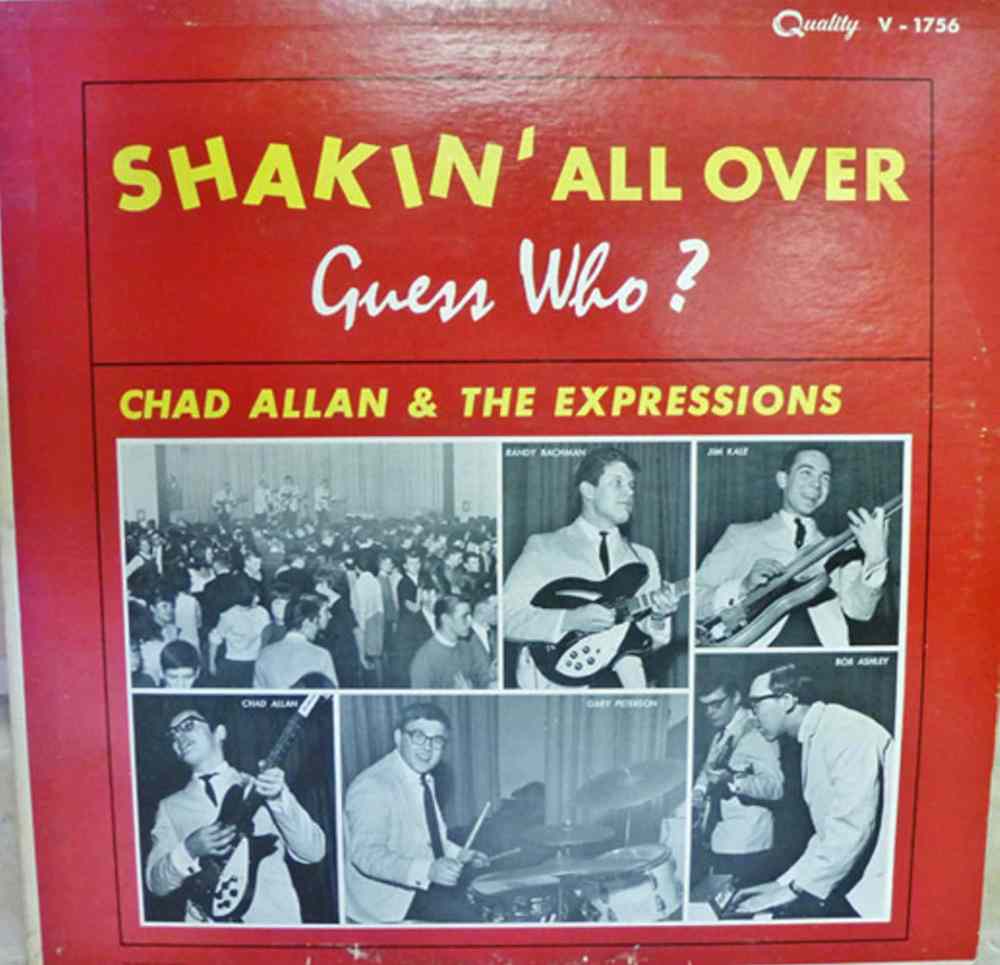
Following his departure from the band in December 1965, Ashley virtually fell off everyone’s radar screens here. Even his former bandmates didn’t know his whereabouts and royalties went unclaimed for years. Few knew the man behind those memorable clinkity-clink piano chops on Shakin’ All Over or the lavish grand piano flourishes in Hurting Each Other enjoyed a widely-respected, award-winning career in musical theatre and cabaret for some 47 years and is still performing. “I don’t know why people think I’m mysterious,” Ashley said with a laugh, from his home in Toronto. “If people wanted to find me they could. It wasn’t hard. I wasn’t hiding from anybody.”
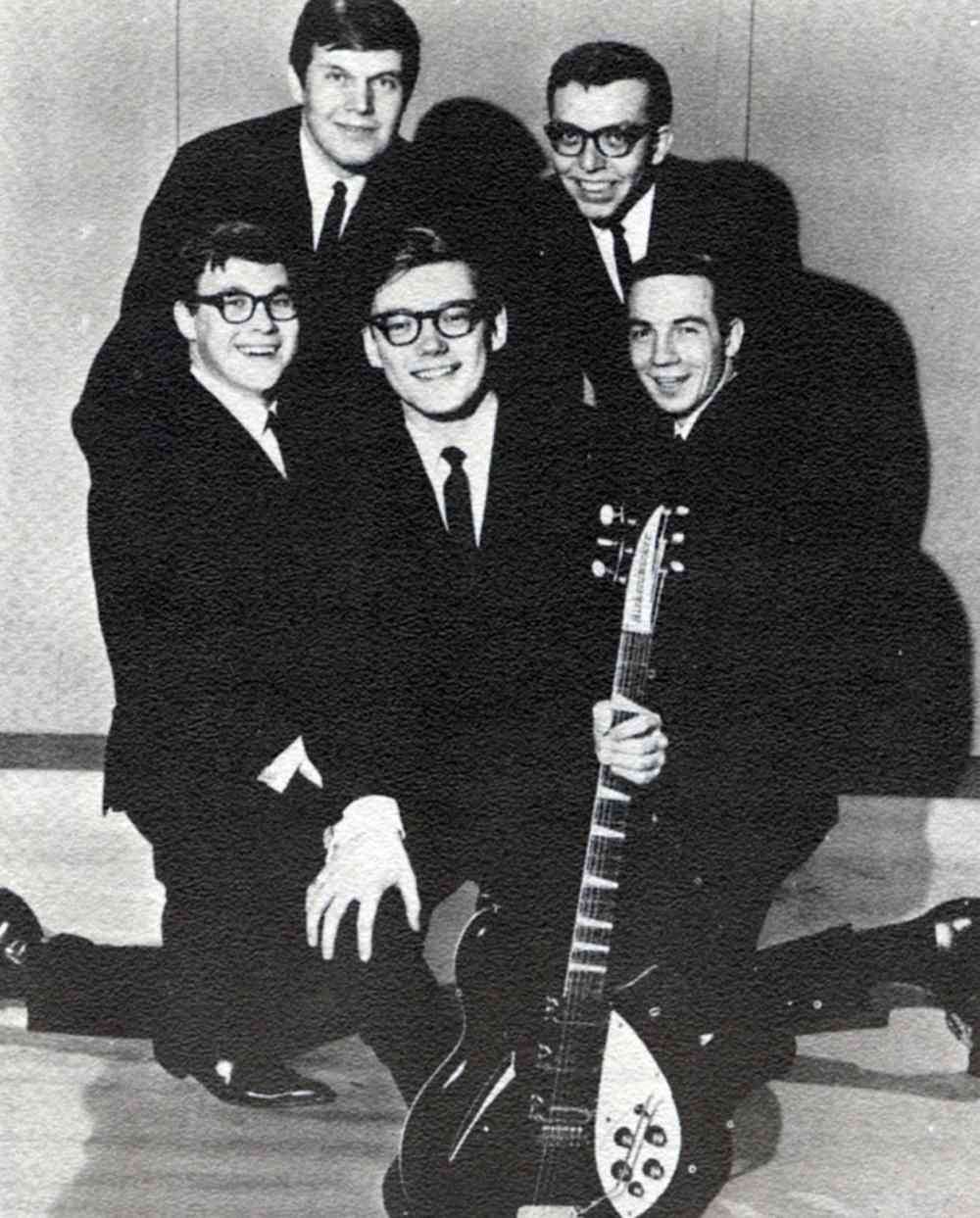
In Toronto, Ashley was able to reinvent himself leaving his rock ‘n’ roll past behind to carve out a prominent spot as an in-demand composer, arranger, musical director and dance accompanist. Most of his associates never knew he had been a member of Canada’s top band in 1965, touring the U.S. in the company of many of the biggest stars of the day.
Born and raised on Clonard Avenue in St. Vital, Ashley began piano lessons at four, studying classical music. Blessed with perfect pitch, by his teens he enjoyed playing pop music and came to the attention of neighbour Jim Kale, who played bass guitar.
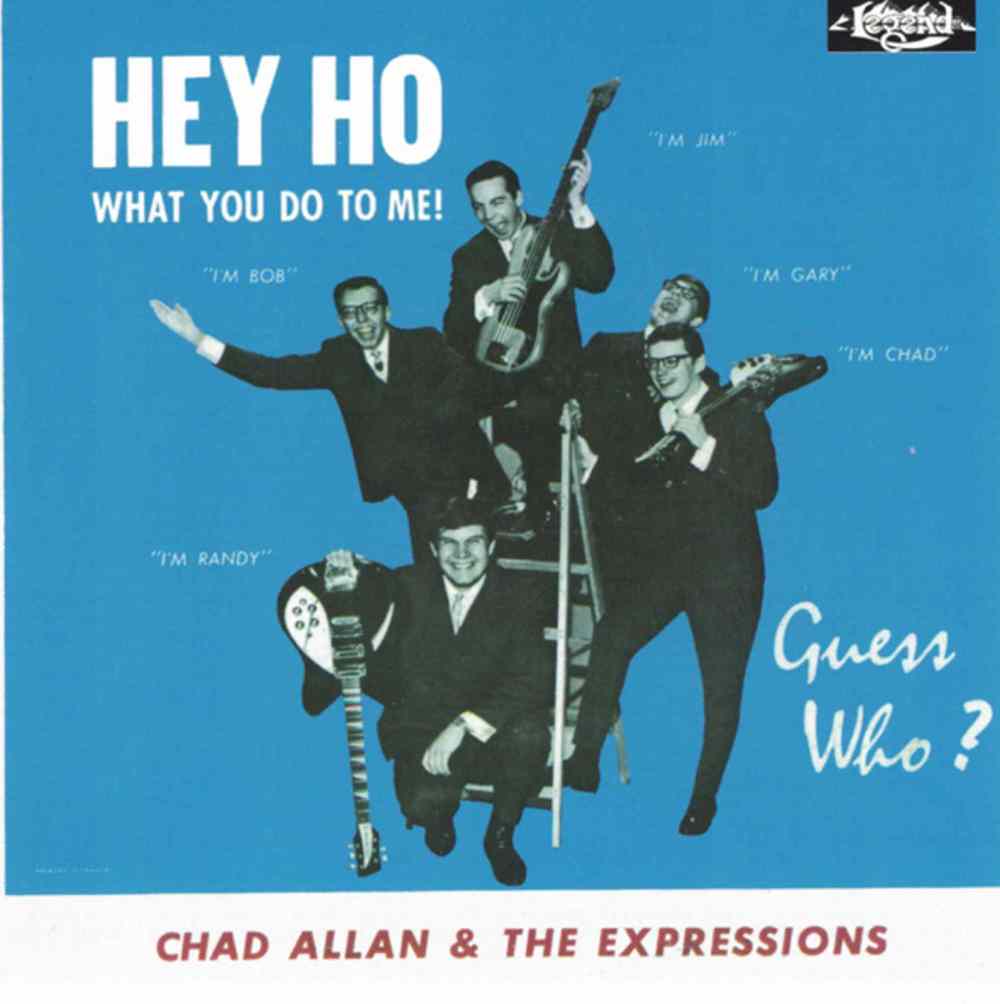
Kale was playing in The Jaywalkers, but with Ashley (then working as a clerk at the Canadian Wheat Board) in tow the two joined promising East Kildonan band Allan’s Silvertones. Fronted by Allan Kowbel, a.k.a. Chad Allan, on guitar and vocals, various personnel changes eventually brought in guitarist Randy Bachman and drummer Garry Peterson, both hailing from West Kildonan, along with a new name: Chad Allan & the Reflections.
“Bob was kind of like our informal musical director,” said Allan. “We learned everything by ear and Bob would tell us if we were playing the wrong chords. He was definitely the most musical member of the band.”
In short order the quintet became the top group in the city. “We were the best jukebox band in town,” Ashley said. “We were always very tight as a band.”
Their individual talents and versatility allowed Chad Allan & the Reflections to play just about anything. The community club dance scene was opening up and along with church basement soirees and high school proms, the band worked every weekend. Allan bought a couple of violin pickups that were thumb-tacked to the back of pianos allowing Ashley to be heard over the other instruments. However, using a community club piano could be troublesome for Ashley.
“With his perfect pitch, Bob hated playing out of tune pianos at gigs,” Allan said. “It would drive him crazy.”
Even Bachman’s string bending was irritating. “It was like fingernails scratching on a blackboard to him,” Bachman said.

“Bob could do all the [country music instrumentalist] Floyd Cramer piano trill stuff superbly,” Bachman added. “Nobody was doing that in the city. In the early days of the Reflections, Bob was the star instrumentalist in the band. He played more solos than me and could play things like Bumble Boogie and Nut Rocker. When he got a little Hohner organ, that expanded the sound and range of the group. We could do Telstar and songs like that.”
The flip side of Chad Allan & the Reflections’ first record, 1963’s Tribute To Buddy Holly, featured Ashley’s nimble piano playing on the group instrumental Back and Forth. In an effort to showcase the talents of the band, the following year their record label issued the instrumental single Inside Out, featuring Ashley, with Bachman’s Made in England on the B side under the name Bob Ashley & the Reflections.
But it was their 1965 single Shakin’ All Over, recorded at CJAY TV’s Polo Park studio, that catapulted the Winnipeg group to national attention, making the top five in every region of the country. Released in the U.S. on New York-based Scepter Records, the raucous recording rose to No. 22 on the Billboard charts.
In June 1965, the band headed to New York to record and tour the eastern seaboard as far down as Florida. “When we recorded in New York, for the first time it felt like the real thing,” Ashley recalled. “They had professional songwriters come in and pitch their songs to us.” Among those were Nick Ashford and Valerie Simpson of Ain’t No Mountain High Enough fame and Gary Geld and Peter Udell, who offered the Guess Who Hurting Each Other. Later a hit for the Carpenters, the Guess Who were the first to record the song.
“I remember touring with the Crystals,” Ashley said. “It was the first time any of us had spent time with African-Americans from New York. It was a totally different culture, but we had a lot of fun. They were our soul sisters.”
Bachman recalled the time the Crystals dragged a shy Ashley onstage with them for He’s A Rebel. “He was so embarrassed,” he said. Ashley also witnessed the darker side of American society travelling through the segregated south. “That was very unsettling. It was so foreign to us coming from Canada. It made me very uneasy.”
After spending much of 1965 on the road, Ashley grew weary of touring.
“I wasn’t enjoying it anymore,” he said. “It wasn’t fun. I was thrilled with the success we had, but I had a lot of personal stuff going on at the time. I wasn’t comfortable with the whole social aspect of being in a band. I became very shy with the public. My headspace was not great. I was suffering from depression.”
A volatile situation at home coupled with a growing realization of who he was led Ashley to leave the group. “I was gay, but didn’t act on it,” he said. “I suppressed it at the time.”
In December, Ashley told his bandmates he was leaving. “I was very taciturn about it,” he recalled. “I didn’t give any notice, I just told them I was done. In hindsight, it wasn’t the most ethical thing to do, but I just couldn’t go on. They were quite surprised.”
As Kale put it: “Ashley just wasn’t cut out for the road.”
Allan filled in on piano until a permanent replacement was found. That new recruit was 17-year-old Burton Cummings. “I was told by a friend that Burton once said he thanked me for leaving the Guess Who and giving him his big break,” Ashley said with a chuckle.
For the next two years, Ashley played various low-profile gigs around the city including a stint with the house band at Pierre’s Restaurant (now the Palomino Club) and working days at the Country Music Centre record shop on Selkirk Avenue. “I was versatile and could play anything,” he said. “Classical, jazz, Broadway, rock ‘n’ roll.” That versatility led him to accompany dancers at the Royal Winnipeg Ballet, a job he found very enjoyable. He also played briefly in pub perennial Wayne Walker’s backing band.
In the spring of 1968, Ashley was accompanying nightclub singer Annabelle Allen when the singer decided to try her luck in Toronto. “It was all very spontaneous,” Ashley said. “We just hopped into a car, Annabelle, her husband, her child and me, and headed to Toronto.”
However, soon after arriving, Ashley found himself abandoned. Undeterred, he decided to stay in Toronto.
“I did some club work because I knew a couple of Winnipeggers who were playing clubs there. Because I had played some classes for the RWB I called up the National Ballet School in Toronto and got a job.”
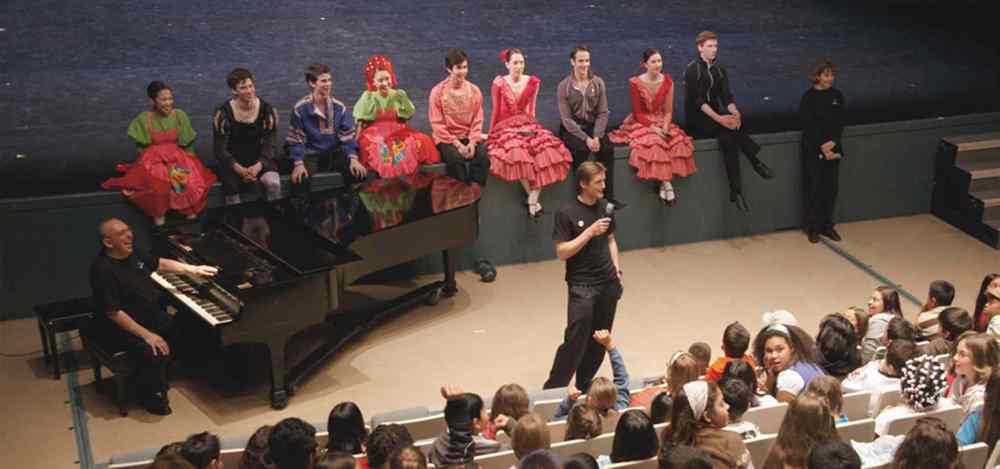
Ashley would be associated with both Canada’s National Ballet School and the National Ballet of Canada on and off for the next 47 years.
Ashley also worked with the dance program at Toronto’s York University. That connection led to musical theatre and cabaret work where he quickly found himself in demand as musical director, arranger, accompanist and writer.
“For about 25 years, theatre was my life,” he said. “I loved it. I was first call for many productions.”
“Bob was one of the most significant musical theatre and cabaret music directors in Toronto for many years,” said theatrical composer Jim Betts. “As a collaborator, he had the ability to flesh out my sometimes simple ideas. He loves being involved in exciting and different kinds of projects.”
The pair’s credits include three Cole Porter productions, On a Summer’s Night for the Charlottetown Festival in 1979 (an adaptation of A Midsummer Night’s Dream), and A Matter of Heart (2009) based on the life and music of legendary musician Stan Rogers.
“We had a wonderful musical partnership,” Betts said, “and Bob had a great influence on any success I enjoyed.”
Ironically, one of the performers in the Stan Rogers production was Terry Hatty, who had been singer in Kale and Peterson’s latter-day Guess Who. “I knew that when I auditioned him,” Ashley said.
Besides finding a whole new career, Ashley also discovered a community that was accepting of him as a gay man. “I finally admitted to myself that that was who I was,” he said. “It was quite acceptable in the ballet and theatre communities in Toronto.”
Ashley’s list of musical director and writing credits is extraordinary, including: Eight to the Bar for the Charlottetown Festival, where he served as musical director for two years; the National Arts Centre’s production of A History of the American Film, directed by John Hirsch; Aimee! inspired by the life of Aimee Semple McPherson; Cocktails for Two Hundred, Lies and Other Lyrics and The Family Way for the National Arts Centre Theatre Company; I’ll Tell You Mine If You Tell Me Yours, Has Anyone Here Found Love and Tonight at 8:30, 9:00 in Newfoundland for Toronto’s Teller’s Cage; America We Hear You Calling for Theatre-in-the-Dell in Toronto; and Puttin’ on the Ritz for the Firehall Theater. He had one of his songs included in Field of Stars, a selection of the best songs from Canadian musicals published in 2005, and won a coveted Dora Mavor Moore Award for musical direction on Piaf — Her Songs, Her Loves.
“Whatever made Bob come to Toronto was certainly to our benefit in the musical theatre community,” Betts said. “Rock ‘n’ roll’s loss was most certainly our gain.”
Ashley has served as musical director and accompanist for more than 50 professional musical theatre productions for most of the major theatres and producers in Canada. Ashley has been on the faculty at the Randolph Academy, Sheridan College Musical Theatre Programs, the Cardinal Carter Academy for the Arts, Queen Street’s Dance Teq and continues to be a member of the artistic staff for Canada’s National Ballet School.
“Bob loves the combination of music and dance,” said Mavis Staines, National Ballet School artistic director and CEO, who first met Ashley when she was a student at the school. “His presence in the studio is a powerful force. He is an enthusiastic contributor, not only to the school, but also to our community programming for adults including our outreach program for Parkinson’s sufferers. It is a privilege and an honour to work with Bob.”
Now in his 70s, Ashley is still actively involved in music. He is a founding partner in Well Seasoned Productions, dedicated to creating works focused on the joys, challenges and celebration of life over 50 and also provides musical direction for PAL (Performing Arts Lodge). In addition, he has partnered with former Second City member, singer/comedienne Carolyn Scott, in the cabaret-style topical revue duo Cheap & Cheerful.
“She is the funniest person on Earth,” Ashley said. “We just have fun and involve the audience. Our shows are a hoot.” The duo recently appeared at Toronto’s Hugh’s Room.
“Everything that has happened in my career I have fallen into,” Ashley said. “I’ll get a call asking if I’d like to be involved with a production and I’ll say ‘Sure!’ I never had to chase a career, it’s always just happened.”

Former Winnipegger Peter Feniak recalled spotting Ashley in A Matter of Heart.

“Bob was one of the musical directors. So I asked him if he was the same Bob Ashley who’d played with the Guess Who. He nearly fell off his chair. He hadn’t been asked that in a long time.”
“I’m proud to have been a member of the Guess Who,” Ashley said. “That was a time of such great innocence, not about the money or fame. But I never put ‘Guess Who member’ on my resumé. Few people know about that.”
Sign up for John Einarson’s fall evening course “From Elvis Presley to Elvis Costello” at mcma.ca/adults
History
Updated on Sunday, August 9, 2015 8:48 AM CDT: Photos changed.