New music
Reviews of this week's CD releases
Advertisement
Read this article for free:
or
Already have an account? Log in here »
To continue reading, please subscribe:

Digital Subscription
One year of digital access for only $205*
- Enjoy unlimited reading on winnipegfreepress.com
- Read the E-Edition, our digital replica newspaper
- Access News Break, our award-winning app
- Play interactive puzzles
*First annual payment billed as $205.00 + GST for one year. This annual subscription will automatically renew at $233.00 + GST every 52 weeks (10% off the regular annual price of $259.35). Offer available to new and qualified returning subscribers only. Cancel any time.
To continue reading, please subscribe:
Add Free Press access to your Brandon Sun subscription for only an additional
$1 for the first 4 weeks*
- Enjoy unlimited reading on winnipegfreepress.com
- Read the E-Edition, our digital replica newspaper
- Access News Break, our award-winning app
- Play interactive puzzles
*Your next Brandon Sun subscription payment will increase by $1.00 and you will be charged $17.95 plus GST for four weeks. After four weeks, your payment will increase to $24.95 plus GST every four weeks.
Read unlimited articles for free today:
or
Already have an account? Log in here »
Hey there, time traveller!
This article was published 20/03/2020 (2357 days ago), so information in it may no longer be current.
Pop / Rock
Cantor Dust
Too Many Stars (Independent)
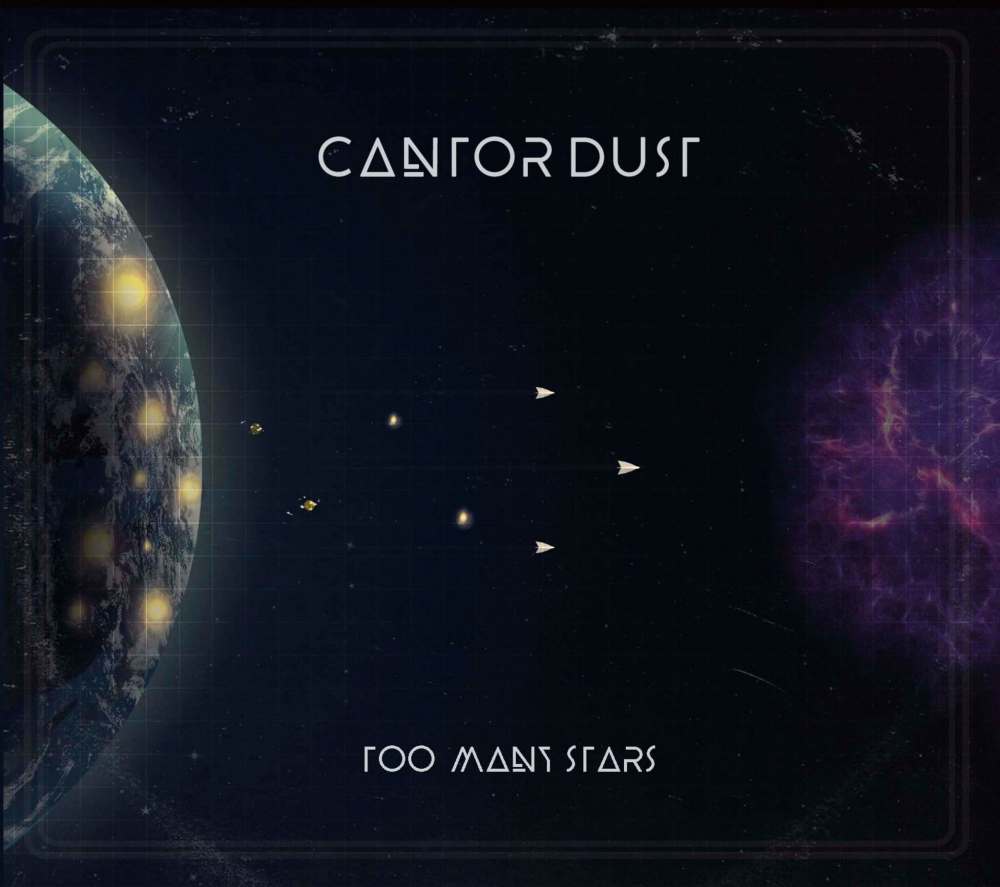
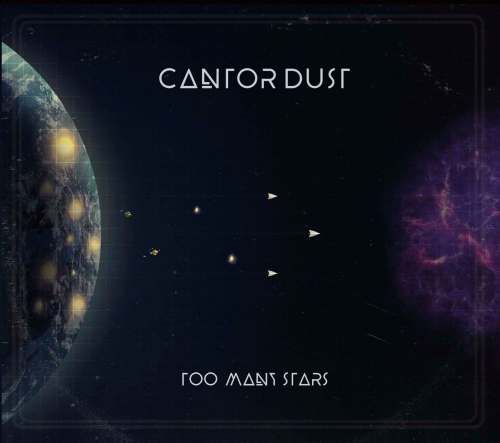
Multi-instrumentalist singer and songwriter Mark Klassen is the driving force behind Cantor Dust, a keyboard-based prog-rock project from Winnipeg that has released several albums over the past two decades. Most of those recordings have been solo affairs, but as Klassen has refined his sound and vision, he’s also brought in other musicians.
His latest outing, Too Many Stars — launched March 7 with a show at The Handsome Daughter – is a full-on collaboration with electric cellist and vocalist Natanielle Felicitas. Together as Cantor Dust, they have created a rather fun sci-fi rock opera — an 11-tune song-cycle that chronicles the wonder, isolation, sorrow and resolution of an epic journey to the furthest reaches of the universe.
Sure, the insignificance of humanity in the vastness of space is a theme that’s as old as time and, sure, atmospheric sounds meant to evoke a sense of space have been around since Robert Moog marketed the first synthesizers in the mid-’60s — but this is genuinely good stuff. While the story of Too Many Stars is hard to follow without a lyric sheet, the record’s mononymous song titles (Space, Weary, Lapse… and so on) hint at each track’s mood, and the combination of Klassen’s dramatic piano melodies and synthesized orchestrations with Felicitas’ cello (plucked, bowed and modulated with various effects) makes for a wholly enthralling listen. Her backing vocals also add a great deal.
The centrepiece of the album is its title track, which opens with deftly plucked, arpeggiated cello notes that become a driving rhythm. Klassen’s most dramatic singing performance of the album (he practically growls several lines) helps build tension as the space traveller realizes the search for light in a sea of darkness requires more of a leap of faith than a definitive destination. ★★★1/2
Stream these: Space; Sick; Too Many Stars
— John Kendle
Roots / Country
Waco Brothers
Resist! (Bloodshot)
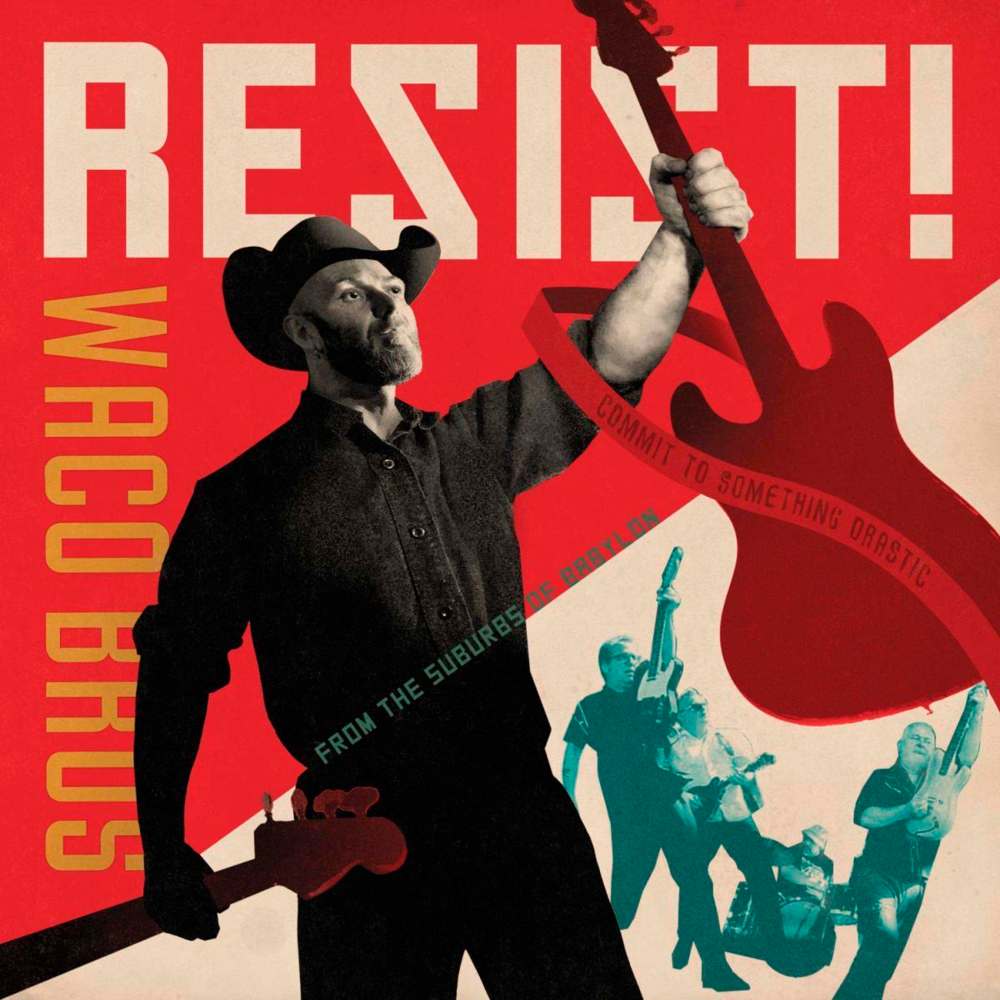
The compilation set from the Chicago-based Waco Brothers is subtitled “From the Suburbs of Babylon — Commit To Something Drastic,” and these sentiments are an apt description of the music here.
Former Mekons member Jon Langford (Pine Valley Cosmonauts, the Three Johns) fronts the band, and it’s his experience in that U.K. post punk/roots combo and his desire to create modern protest music that drives the Wacos’ alternative country beat.
Plenty Tough and Union Made and $ Bill the Cowboy both date way back to the band’s initial Bloodshot offering …To The Last Cowboy and are rock-solid examples of the sound it established early on. Langford is no smooth crooner and instead relies on a kind of shouty vocal style that pays homage to his punky roots back Old Blighty. Plenty Tough… is a bit of a raver in a rockabilly style with harshly strummed acoustic guitars racing along to a slap bass and kinetic beat supplied by former Graham Parker and the Rumour drummer Steven Goulding. Lincoln Town Car (2005) rolls along on a sweet tandem steel guitar and mandolin riff and exquisite vocals from Dean Schlabowske. Never Real (from 2000) dives deeper into a pure country rock rhythm with its clear two-step beat while New Deal Blues charges along like a speedy freight train. Cover versions are always enjoyable as they give the listener a kind of bellwether into a bands’ influences. Neil Young classic Revolution Blues is rearranged into a country rocker with a lot of guts while the Waco take on I Fought The Law is probably the next best version of this ode to rebellion after the Clash.
Hopefully, at least in American politics, the closing track, Bad Times Are Coming ‘Round Again, won’t be too prophetic. “Well we all knew things had to get better, if we kept acting rational and sane, now I can see the clouds on he horizon, bad times are coming ‘round again…” Maybe it is exactly the right time to resist. ★★★1/2
Stream these: Blink of an Eye, New Deal Blues
— Jeff Monk
Jazz
Ernesto Cervini
Tetrahedron (Anzic)
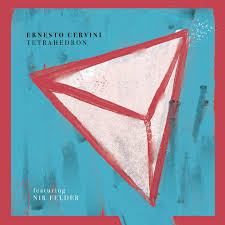
Toronto drummer/composer/band leader Ernesto Cervini is a very busy, extremely talented musician. He leads several bands reflecting various jazz styles and moods, with this album adding to that list.
A tetrahedron is a polyhedron with four faces, as depicted on the album’s cover. In this case the “four faces” are Luis Deniz (alto saxophone), Nik Felder (guitar), Rich Brown (bass) and Ernesto Cervini (drums). The original concept for the band was apparently as a chordless trio, but the addition of guitarist Felder brings an excellent added dimension.
The major tone and impact of the album is somewhat harder-edged than several of Cervini’s recent releases. Much of this is due to the personnel here. Deniz’ alto drives many tracks, and Felder’s guitar, coupled with Brown’s powerful bass, delivers added intensity. Cervini’s solos on tracks such as Forward Motion, not to mention his compositional chops, reflect his usual strong foundational leadership.
There are gentle tracks such as Angelicus, along with up-tempo tunes such as Boo Radley (a reference from To Kill a Mockingbird, and a tune that would have been enough to make that reclusive character come out). All members can really dig in or fly at any tempo, making the combination of these U.S.- and Canadian-based musicians an inspired choice. Most of the compositions are Cervini’s, along with a cover of the old standard Softly as in a Morning Sunrise. That tune kicks off the album in a wonderfully cheeky style that sets up the whole gig. The interplay between all “four faces” makes this album a true winner. Highly recommended. ★★★★1/2
Stream these: Softly as in a Morning Sunrise, Stro
— Keith Black
Classical
Steven Osborne
Prokofiev Piano Sonata Nos. 6, 7 & 8 (Hyperion)
In this new album that feels oh-so-right for these brave times we’re living in, Scottish pianist Steven Osborne tackles Russian composer Sergei Prokofiev’s War Sonatas trilogy, comprised of three piano sonatas written in the grim shadows of the Second World War as well as Stalin’s deadly purges in the Soviet Union.
They also showcase Osborne’s bravura, first evidenced during his sharply militaristic attack during the opening movement of Sonata No. 6 in A major, Op. 82, followed by an equally, crisply percussive Allegretto. By contrast, his legato phrasing is displayed during the decidedly more lyrical Tempo di valzer lentissimo, before his all-guns-blazing version of the thrilling toccata finale.
Sonata No. 7 in B flat major, Op. 83 offers an even wilder ride, with the pianist bringing out its acerbic, biting nature including cackling rhythms and pungent dissonances during the opening movement. He then treats listeners to its more poetic side, brought to life during its central section by his luminous tone and careful voicing of chords, before another enthralling “moto perpetuo” finale, that is driven forward by his fierce technical prowess.
The final offering, Sonata No. 8 in B flat major, Op. 84, becomes the album’s beating heart, with Osborne revealing his innate understanding of the trilogy’s overall architecture. Its first two movements unfold as a sensitive denouement to what has come before, capped by a final flurry during the third movement that punctuates Prokofiev’s personal commentary on war and other desperate times in an immediate, visceral way that only art can. ★★★★1/2
Stream this: Prokofiev’s Sonata No. 7 in B flat major, Op. 83
— Holly Harris