Sombre refrain
Anishinaabe musician Fontaine brought people together through voice and song

Advertisement
Read this article for free:
or
Already have an account? Log in here »
To continue reading, please subscribe:

Digital Subscription
One year of digital access for only $205*
- Enjoy unlimited reading on winnipegfreepress.com
- Read the E-Edition, our digital replica newspaper
- Access News Break, our award-winning app
- Play interactive puzzles
*First annual payment billed as $205.00 + GST for one year. This annual subscription will automatically renew at $233.00 + GST every 52 weeks (10% off the regular annual price of $259.35). Offer available to new and qualified returning subscribers only. Cancel any time.
To continue reading, please subscribe:
Add Free Press access to your Brandon Sun subscription for only an additional
$1 for the first 4 weeks*
- Enjoy unlimited reading on winnipegfreepress.com
- Read the E-Edition, our digital replica newspaper
- Access News Break, our award-winning app
- Play interactive puzzles
*Your next Brandon Sun subscription payment will increase by $1.00 and you will be charged $17.95 plus GST for four weeks. After four weeks, your payment will increase to $24.95 plus GST every four weeks.
Read unlimited articles for free today:
or
Already have an account? Log in here »
Hey there, time traveller!
This article was published 14/01/2022 (1720 days ago), so information in it may no longer be current.
When the pandemic started, my friend Vince Fontaine walked a lot, which he told me in October when we reconnected for the first time in what had to have been several years. He’d reached out in a Facebook message, asking if I would write some press materials for his band, Indian City, and I was delighted to hear from him.
“Hope you’re kicking ass,” I replied. “I’d love to talk about what you’re looking for.”
I don’t do much freelance anymore, but this was an exception. I didn’t know Vince well, but I’d known him forever, which becomes its own form of connection. Time has a way of making those who are familiar into safe ports in the storm; for me, Vince was one of those people I was always glad to see, when life’s currents brought us to the same shore.
We’d met when I was barely out of my teens, writing about local music for what was then Winnipeg’s street weekly and, not too long after, the Free Press. I was in awe of him, a little. He was, by then, a highly established musician, having toured the world with his trailblazing roots-rock band, Eagle & Hawk; but I was just a wide-eyed kid.
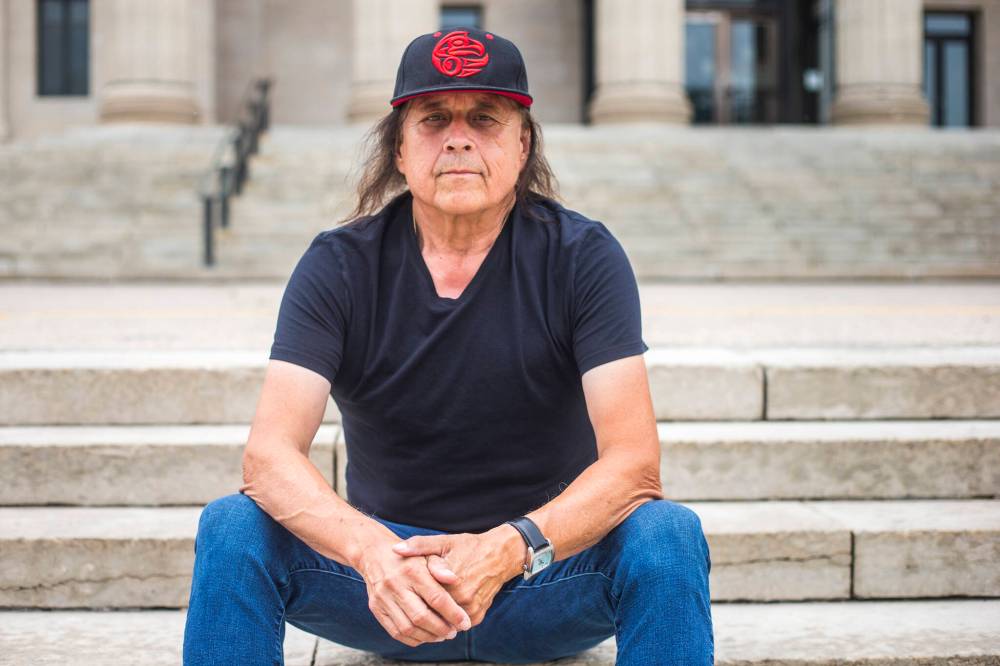
Vince was kind to me from the beginning. He’d tell colourful stories about his travels in Europe, and his vision for infusing Indigenous values into rock and pop music. He was a great storyteller. He was an Anishinaabe man, a member of Sagkeeng First Nation. He loved his culture, his people, his family and his fellow musicians.
It’s strange to realize this now, but Vince was one of the first Indigenous people with whom I’d really connected, and shared a real conversation. I’d grown up in what was then a predominantly white enclave in Winnipeg’s southern end; it was only in those first days of my adulthood that I’d begun to understand it as a city divided.
How sad it is, to grow up in a place so scarred that some of us reached voting age without having ever had any meaningful interaction with an Indigenous person. How lucky Winnipeg is, that Vince was there to invite so many of us to have those conversations. To share music. To share stories. To listen.
So when he reached out in October, asking me to write a press release for Indian City’s new album, Code Red, I was happy to help. That week, we chatted on the phone for an hour, or more. He told me about how he’d walked, in the first months of the pandemic. How he’d just walked and thought, and felt ideas welling up that he wanted to put into song.
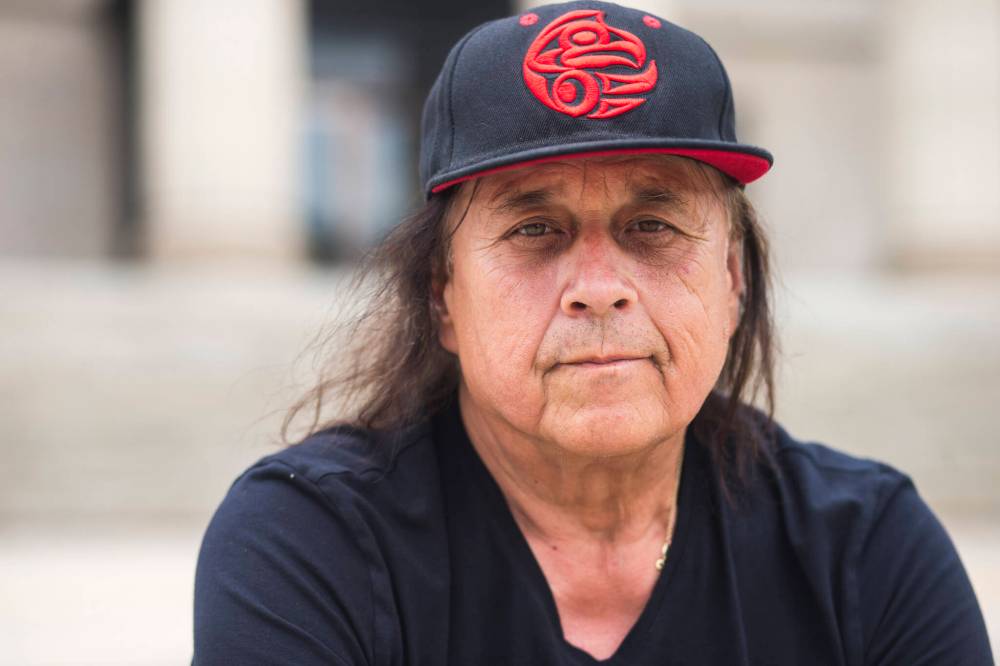
He spoke about thinking about what kind of music people would want to hear when the pandemic was over. It would be something positive, he thought, something uplifting. Something that resonated with Anishinaabe culture’s seven sacred teachings, the values that carry us through life: honesty, love, courage, truth, wisdom, humility and respect.
“It turns out the things that are important are still the same,” Fontaine said. “Life will carry on. But we had a moment where we thought about what is important, and found that it’s love, and caring. I anticipated that one day we would be past the pandemic, and what would we want to hear? It’s uplifting. It’s pop. That was the idea, to glance ahead.”
And he told me about how he’d been chatting last July 1 with Blue Rodeo frontman Jim Cuddy. The two knew each other from around the music scene, and particularly from playing together at the Juno Awards’s annual charity hockey game, which pits NHL alumni against a team of Canadian musicians.
Indian City declares Code Red

Posted:
Vince Fontaine wants no confusion about what the title of Indian City’s new album, Code Red, is about.
Vince told Cuddy he was heading to the big march that day, to honour the children who died in residential schools. As the two spoke about this, an idea blossomed to have Cuddy sing a tune on the new Indian City album. To Vince, it captured the spirit of the Truth and Reconciliation Commission’s Call to Action no. 83: artistic collaboration across cultures.
“I wanted to stretch out on this album and invite a non-Indigenous person into the circle, so to speak,” he said. “For me, that’s what reconciliation is: broadening the circle and showing people that togetherness again.”
That was a beautiful word, “togetherness,” and a beautiful idea. Even then, at the moment he spoke it, I thought about how much Vince had always embodied it, in his easy way. He’d always been someone who brought people together, who opened space for others, who found the magic in collaboration.
That month, I wrote what Vince had asked for. I wish I could say the last words we shared were something meaningful, a kind word, an interesting story, but it was just him texting to confirm my email to send an e-transfer.
You never think about how any little exchange could be your last chance to share a few words. You never think about what you wish you’d have said, should the currents of life never bring you back together. Then something happens, and you vow never to end things that way again, but the mundanities of life make keeping that pledge impossible.
On Tuesday evening, I was absentmindedly scrolling through Twitter when I saw Vince’s photo on the screen, and stopped cold. It was a post from his niece, NDP MLA Nahanni Fontaine, and as I took in the first few words I felt the blood rush out of my hands: “It is with terrible sadness and shock…”
Vince had died suddenly, of a heart attack. He was 62 years old.
That night, hundreds of people shared their warm memories of Vince, and I joined them. I thought about how Vince wrote songs for the end of a pandemic he didn’t live to see. I thought about the stories he’d told me. I thought about how I hadn’t known him well, only forever, and about what I wished I’d said the last time we texted.
Thank you, I would have said. Thank you for being kind to me, when you were an acclaimed musician and I was just a kid. Thank you for gifting us with your voice, and your vision. Thank you for making so many connections, for living the values you wished to see in the world, and for finding joy in sharing the talents you’d been given.
There will be a celebration of Vince Fontaine’s life this Sunday, at the Oodena Celebration Circle at The Forks. It starts at 1 p.m. and runs for two hours, outdoors and with COVID-19 protocols in place. There will be an honour song by the Walking Wolf Singers and performances by some of Vince’s vast musical family.
All are welcome, Nahanni Fontaine said.
It should be a perfect winter day to remember. The forecast that day calls for a relatively gentle temperature. Manitoba is better for having known Vince; what better way to honour that legacy than by coming together.
melissa.martin@freepress.mb.ca
Melissa Martin
Reporter-at-large
Melissa Martin reports and opines for the Winnipeg Free Press.
Every piece of reporting Melissa produces is reviewed by an editing team before it is posted online or published in print — part of the Free Press‘s tradition, since 1872, of producing reliable independent journalism. Read more about Free Press’s history and mandate, and learn how our newsroom operates.
Our newsroom depends on a growing audience of readers to power our journalism. If you are not a paid reader, please consider becoming a subscriber.
Our newsroom depends on its audience of readers to power our journalism. Thank you for your support.
Melissa Martin
Reporter-at-large
Melissa Martin reports and opines for the Winnipeg Free Press.
Every piece of reporting Melissa produces is reviewed by an editing team before it is posted online or published in print — part of the Free Press‘s tradition, since 1872, of producing reliable independent journalism. Read more about Free Press’s history and mandate, and learn how our newsroom operates.
Our newsroom depends on a growing audience of readers to power our journalism. If you are not a paid reader, please consider becoming a subscriber.
Our newsroom depends on its audience of readers to power our journalism. Thank you for your support.
Related Articles
Indigenous musician a connecting force in music scene

Advertisement Advertise With Us
Advertisement Advertise With Us