Will Neil Young influence others to demand accountability?

Advertisement
Read this article for free:
or
Already have an account? Log in here »
To continue reading, please subscribe:

Digital Subscription
One year of digital access for only $205*
- Enjoy unlimited reading on winnipegfreepress.com
- Read the E-Edition, our digital replica newspaper
- Access News Break, our award-winning app
- Play interactive puzzles
*First annual payment billed as $205.00 + GST for one year. This annual subscription will automatically renew at $233.00 + GST every 52 weeks (10% off the regular annual price of $259.35). Offer available to new and qualified returning subscribers only. Cancel any time.
To continue reading, please subscribe:
Add Free Press access to your Brandon Sun subscription for only an additional
$1 for the first 4 weeks*
- Enjoy unlimited reading on winnipegfreepress.com
- Read the E-Edition, our digital replica newspaper
- Access News Break, our award-winning app
- Play interactive puzzles
*Your next Brandon Sun subscription payment will increase by $1.00 and you will be charged $17.95 plus GST for four weeks. After four weeks, your payment will increase to $24.95 plus GST every four weeks.
Read unlimited articles for free today:
or
Already have an account? Log in here »
Hey there, time traveller!
This article was published 27/01/2022 (1696 days ago), so information in it may no longer be current.
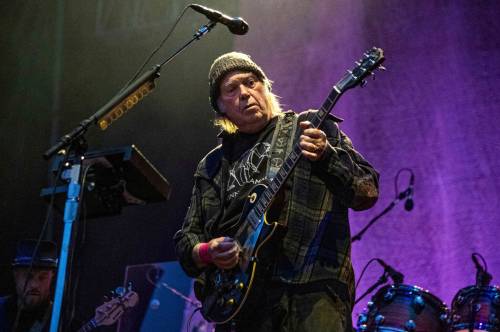
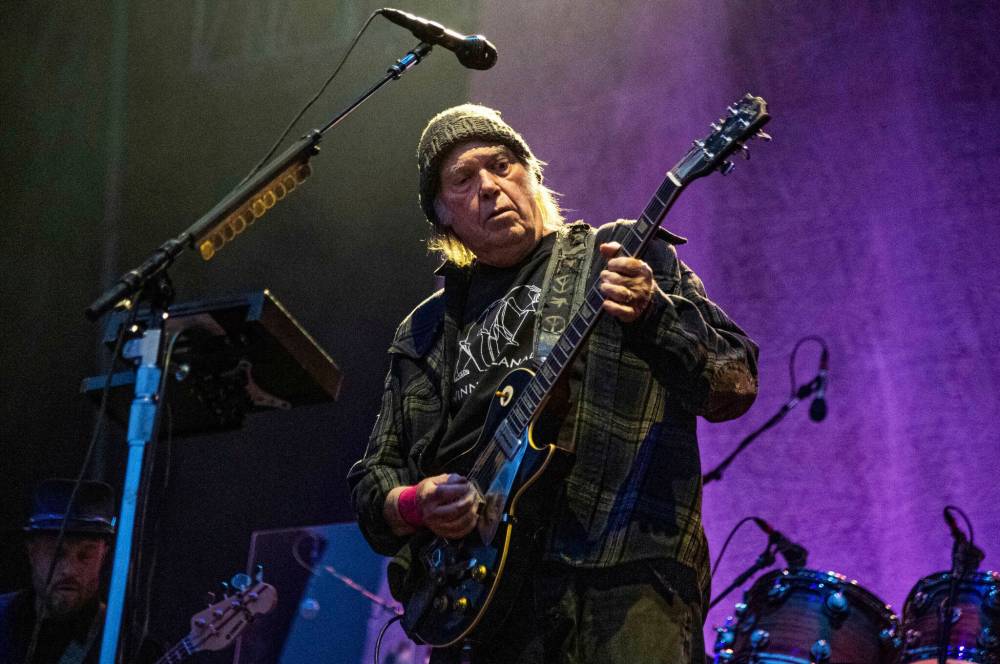
Neil Young made headlines this week when he issued an ultimatum to Spotify: him or Joe Rogan.
In a since-deleted letter to his label and management team on his website, the singer/songwriter demanded the removal of his music from streaming-giant Spotify because of vaccine disinformation — specifically the vaccine disinformation being spread by the reliably controversial Rogan on his now Spotify-exclusive podcast, The Joe Rogan Experience.
Some examples: Rogan was an early champion of ivermectin, a.k.a. the horse dewormer, which he then claimed he was taking after he contracted COVID-19 in the summer. He’s also claimed that young healthy people do not need to be vaccinated, and claimed that mRNA vaccines are “gene therapy.”
The JRE was the most-popular podcast on Spotify last year, with millions of listeners per episode. That’s a lot of people who are not only hearing disinformation, but then likely spreading it themselves among their Facebook friends.
All of this raises a question: whose responsibility is disinformation, anyway?
This is not an issue exclusive to Spotify. Social media has made everyone a publisher and content creator. Instagram influencers — who now make up a billion-dollar industry — casually spread both disinformation (deliberate) and misinformation (not deliberate) all the time, particularly in wellness spaces and, troublingly, in maternal wellness spaces. But they all use variations of the same qualifier to let themselves (and the platform) off the hook: “I’m not a medical doctor, but this is what works for me. I’m just telling you what works for me.”
OK, sure — but the problem is baked right into the name of your profession: influencer. Which means that people are, for better or worse, influenced by you. They respect your opinion, or at least your taste in products.
People tend to trust their peers; spend enough time with influencers or podcasters, via their Instagram Stories or having their chatter constantly accompanying you while you’re out for a walk or while you’re stirring sauce on the stove, well, they start to feel like people you know. People you can trust. So, it’s not hard to draw a line from a dangerous idea someone spouted on a podcast to the identical one being parroted at a dinner with friends. Repeat ad infinitum.
Young isn’t the only one who has demanded accountability from Spotify regarding the content of The Joe Rogan Experience. In December, a group of American scientists, medical professionals, professors, and science communicators wrote an open letter to the streaming service, underlining their concerns about Rogan’s podcast. “Though Spotify has a responsibility to mitigate the spread of misinformation on its platform, the company presently has no misinformation policy,” the letter reads.

They are absolutely correct. The platforms that host people — Instagram, Spotify, TikTok, whomever — should ultimately be responsible for the content they produce. And that doesn’t need to look like blanket censorship; as Jill Filipovic writes in a CNN column, “(Rogan) should be given room to discuss what he wants, even if that offends people who disagree with him politically. But the company should draw the line at dangerous life-threatening conspiracy theories and the kind of misinformation that could result in unnecessary illness and death.” She notes, too, that there is precedent for the removal of certain episodes of Rogan’s podcast.
Rogan’s fans skew young. I don’t think that the Venn diagram between Neil Young’s audience and Joe Rogan’s is exactly an overlapping circle. But if Young’s position could inspire other big-name artists and content creators to demand accountability and action from the platforms that host them — and that there will be expensive consequences for people who deliberately deceive the public — perhaps we could begin to tame the hydra that is disinformation.
Meanwhile, multiple media outlets reported Wednesday that Spotify has stripped Young’s music from the platform. “We regret Neil’s decision to remove his music from Spotify, but hope to welcome him back soon,” a Spotify spokesman told the Wall Street Journal, which also reported Rogan’s deal with the platform, signed in 2020, to be worth $100 million.
jen.zoratti@freepress.mb.ca
Twitter: @Jen Zoratti
Jen Zoratti is a columnist and feature writer working in the Arts & Life department, as well as the author of the weekly newsletter NEXT. A National Newspaper Award finalist for arts and entertainment writing, Jen is a graduate of the Creative Communications program at RRC Polytech and was a music writer before joining the Free Press in 2013. Read more about Jen.
Every piece of reporting Jen produces is reviewed by an editing team before it is posted online or published in print – part of the Free Press‘s tradition, since 1872, of producing reliable independent journalism. Read more about Free Press’s history and mandate, and learn how our newsroom operates.
Our newsroom depends on a growing audience of readers to power our journalism. If you are not a paid reader, please consider becoming a subscriber.
Our newsroom depends on its audience of readers to power our journalism. Thank you for your support.
Jen Zoratti is a columnist and feature writer working in the Arts & Life department, as well as the author of the weekly newsletter NEXT. A National Newspaper Award finalist for arts and entertainment writing, Jen is a graduate of the Creative Communications program at RRC Polytech and was a music writer before joining the Free Press in 2013. Read more about Jen.
Every piece of reporting Jen produces is reviewed by an editing team before it is posted online or published in print – part of the Free Press‘s tradition, since 1872, of producing reliable independent journalism. Read more about Free Press’s history and mandate, and learn how our newsroom operates.
Our newsroom depends on a growing audience of readers to power our journalism. If you are not a paid reader, please consider becoming a subscriber.
Our newsroom depends on its audience of readers to power our journalism. Thank you for your support.
Advertisement Advertise With Us
Advertisement Advertise With Us