Series blends period perfection, modern relevance

Advertisement
Read this article for free:
or
Already have an account? Log in here »
To continue reading, please subscribe:

Digital Subscription
One year of digital access for only $205*
- Enjoy unlimited reading on winnipegfreepress.com
- Read the E-Edition, our digital replica newspaper
- Access News Break, our award-winning app
- Play interactive puzzles
*First annual payment billed as $205.00 + GST for one year. This annual subscription will automatically renew at $233.00 + GST every 52 weeks (10% off the regular annual price of $259.35). Offer available to new and qualified returning subscribers only. Cancel any time.
To continue reading, please subscribe:
Add Free Press access to your Brandon Sun subscription for only an additional
$1 for the first 4 weeks*
- Enjoy unlimited reading on winnipegfreepress.com
- Read the E-Edition, our digital replica newspaper
- Access News Break, our award-winning app
- Play interactive puzzles
*Your next Brandon Sun subscription payment will increase by $1.00 and you will be charged $17.95 plus GST for four weeks. After four weeks, your payment will increase to $24.95 plus GST every four weeks.
Read unlimited articles for free today:
or
Already have an account? Log in here »
Hey there, time traveller!
This article was published 07/08/2021 (1874 days ago), so information in it may no longer be current.
The Pursuit of Love (now streaming on Amazon Prime) opens in London in 1941, which might make it sound like another wartime historical saga — spirit of the Blitz and all that — except the scene involves some light nudity and is accompanied by a song from The Who. (Later soundtrack choices include T. Rex, Marianne Faithfull, New Order and Sleater-Kinney.)
Clearly, writer-director Emily Mortimer means to shake up the period literary adaptation with this snappy three-episode series, which is based on the 1945 novel by Nancy Mitford.
Heritage drama that plays it straight can be overly cosy and nostalgic, but straining too hard after contemporary edginess can result in empty postmodern dazzle.
Mortimer walks a deft line. She offers perfect period details, from the chonky handknit sweaters to the posh drawing rooms, and picks up much of that Mitford wit — a lot of the dialogue is lifted straight from the novel.
But Mortimer also wants to speak to modern audiences about the position of women, the potential trap of romance and the enduring importance of female friendship. That may sound a bit earnest — a quality Mitford would have deplored as hopelessly middle-class — but Mortimer’s approach is leavened with hyper-stylized, quick-cut visual energy and plenty of irony and humour. (Take the very English sex scene in which one of the characters can be heard to mutter, “All this tweed.”) At its best, The Pursuit of Love is a high-spirited romp that also happens to contain a serious feminist message.
After the initial flash-forward to 1941, the story loops back to look at aristocratic life between the wars. Mitford’s books were often fictionalized versions of the author and her sisters, the so-called “Mitford Six,” though any fictionalization of this eccentric titled family, no matter how bizarre, would have a hard time living up to the real thing. The Mitford girls included a communist (Jessica), some fascists (the Hitler-loving Diana and Unity) and a duchess.
The story is narrated by sensible, practical cousin Fanny (Cruella’s Emily Beecham), but it’s mostly about glamorous Linda (Downton Abbey’s Lily James), a passionate soul who “either loves or loathes, laughs or cries,” with nothing in between. She’s intensely romantic, which “is absolutely fatal for a woman,” as one friend points out.
Linda is expected to make a good marriage and has been prepared for nothing else. Her ranting, roaring, whacking father (Dominic West) has a hatred of “educated females.”
Walled up in the family’s freezing manor house, Linda spends a lot of time staring at the telephone waiting for her life to begin, while playing the (aptly named) card game Patience. No surprise, then, that this sheltered girl falls for basically the first man who asks her to dance, even though he’s a pompous bore. Soon she flees her capitalist banker for an ardent communist. (The comrades are lovely, she tells Fanny, “but they don’t chat.”)

Linda desires to be desired but has no idea what she herself wants. “She really needs to spend five minutes on her own,” remarks Lord Merlin, played with delicious drawling decadence by Andrew Scott (aka Fleabag’s Hot Priest).
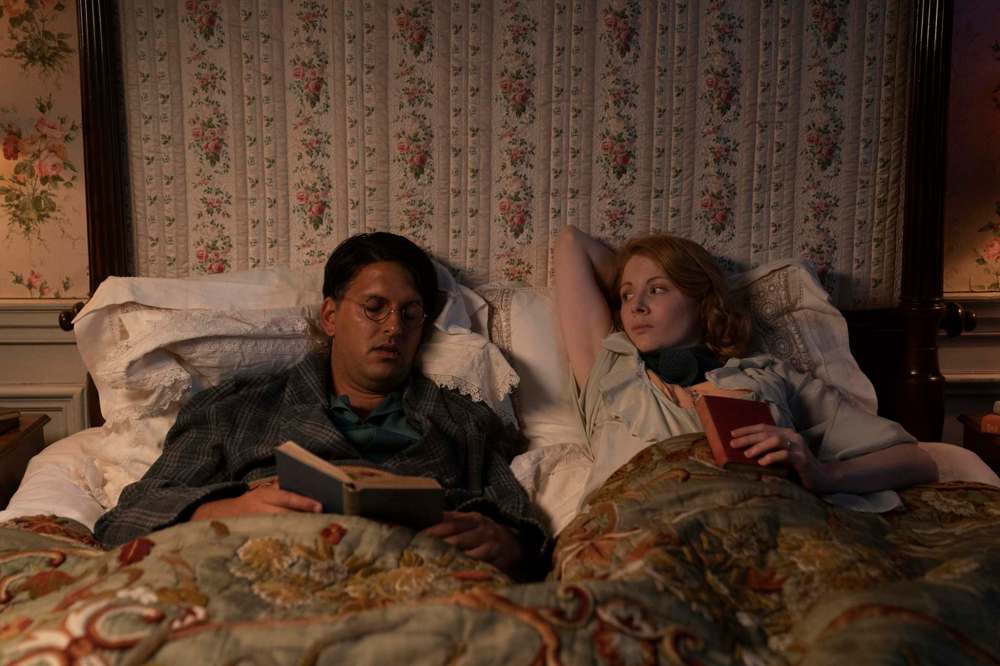
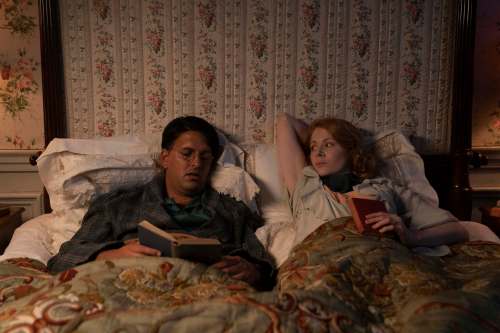
Linda’s story, as she flounders around looking for true love, illustrates the risks for women who don’t conform. The story of Fanny — who’s dutiful, slightly dowdy, clomping about in sensible shoes — demonstrates the pressures to behave. Married to a rather sweet Oxford don and raising a bunch of children, she acknowledges that sometimes motherhood “can make you feel as if half of you has been stuffed into a suitcase.” But her own mother (played by Mortimer with a louche sort of charm) is a cautionary tale: She’s been dubbed “the Bolter” for her habit of abandoning her child and multiple husbands.
“Happily married or unhappily married, that’s the choice if you’re a woman,” laments Fanny at one point, suggesting that the series, which on its glittering surface might seem like a romantic comedy, is decidedly anti-romantic.
In the final scene, one character offers a hope that their children’s future granddaughters — that would be women who are in their 20s right now — can be something more than the sum of their romantic choices. It’s a moment where Mortimer’s need to be relevant tips over into being overly explicit and didactic, but it’s followed by a wonderfully cynical and purely Mitfordian closing line. When Fanny suggests that Linda might have finally found the one true love of her life, the Bolter replies: “Oh, darling, one always thinks that. Every, every time.”
alison.gillmor@freepress.mb.ca
Studying at the University of Winnipeg and later Toronto’s York University, Alison Gillmor planned to become an art historian. She ended up catching the journalism bug when she started as visual arts reviewer at the Winnipeg Free Press in 1992.
Our newsroom depends on a growing audience of readers to power our journalism. If you are not a paid reader, please consider becoming a subscriber.
Our newsroom depends on its audience of readers to power our journalism. Thank you for your support.
Studying at the University of Winnipeg and later Toronto’s York University, Alison Gillmor planned to become an art historian. She ended up catching the journalism bug when she started as visual arts reviewer at the Winnipeg Free Press in 1992.
Our newsroom depends on a growing audience of readers to power our journalism. If you are not a paid reader, please consider becoming a subscriber.
Our newsroom depends on its audience of readers to power our journalism. Thank you for your support.
Advertisement Advertise With Us
Advertisement Advertise With Us