Our culinary heritage
Winnipeg author focuses on Manitoba's historic kitchens and the food that came from them
Advertisement
Read this article for free:
or
Already have an account? Log in here »
To continue reading, please subscribe:

Digital Subscription
One year of digital access for only $205*
- Enjoy unlimited reading on winnipegfreepress.com
- Read the E-Edition, our digital replica newspaper
- Access News Break, our award-winning app
- Play interactive puzzles
*First annual payment billed as $205.00 + GST for one year. This annual subscription will automatically renew at $233.00 + GST every 52 weeks (10% off the regular annual price of $259.35). Offer available to new and qualified returning subscribers only. Cancel any time.
To continue reading, please subscribe:
Add Free Press access to your Brandon Sun subscription for only an additional
$1 for the first 4 weeks*
- Enjoy unlimited reading on winnipegfreepress.com
- Read the E-Edition, our digital replica newspaper
- Access News Break, our award-winning app
- Play interactive puzzles
*Your next Brandon Sun subscription payment will increase by $1.00 and you will be charged $17.95 plus GST for four weeks. After four weeks, your payment will increase to $24.95 plus GST every four weeks.
Read unlimited articles for free today:
or
Already have an account? Log in here »
Hey there, time traveller!
This article was published 08/11/2017 (3245 days ago), so information in it may no longer be current.
I cook in an old Manitoba kitchen. It’s 100 years old and is similar to the kitchen I grew up with, which was also old. A lot of my kitchen tools are old, too. When I visit the Métis kitchen exhibit at the Manitoba Museum, I can point out about a dozen artifacts that are also in my kitchen and still being used every day.
Some things are just timeless. It’s also possible I need to update my kitchenware.
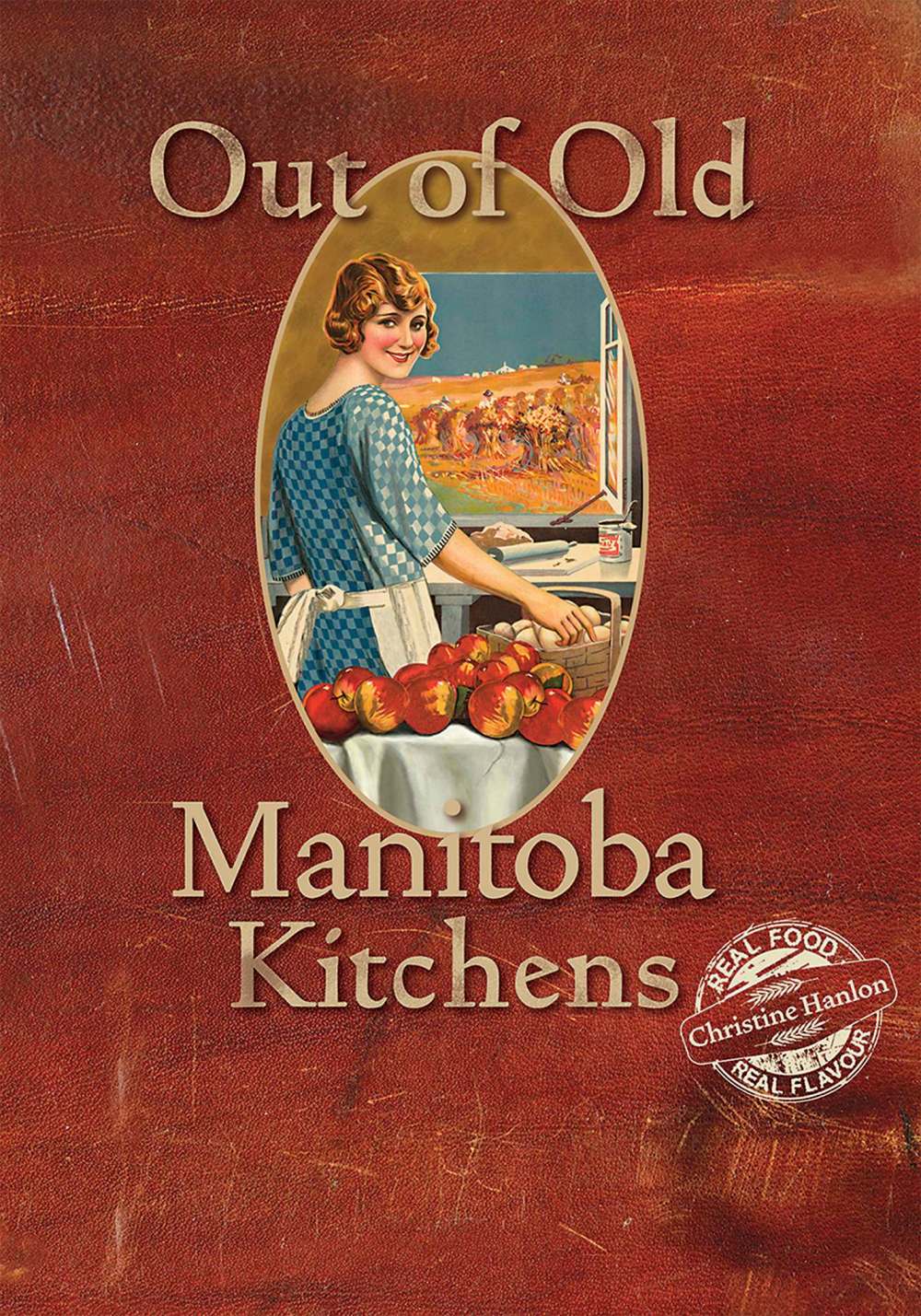
Christine Hanlon is a local writer with a passion for food who understands the value of looking back — both to remember and to record. She’s done that with her book Out of Old Manitoba Kitchens ($24.95), the second in a series of Canadian historical cookbooks from Purcell McIntyre Publishing (the first was Out of Old Saskatchewan Kitchens).
“Writing this book was a natural fit for me,” says Hanlon, who also authored The Manitoba Book of Everything.
“One thing that most people don’t know is that I used to be a Grade 6 teacher and I taught Canadian history.”
This year, Canada’s 150th, is the perfect time to celebrate the history of local food, since it is bound up with all other aspects of history.
“I love history — I always tell people that the word “story” is in history and to me that’s what history should be and how it should be presented,” she says.

“This cookbook is full of stories — and they’re real people who contributed to this book and they all had fascinating stories to tell.”
Hanlon does not look at recipes created later than the 1920s. She says that after that time period, commercially produced foods became more widely available and they began to displace many foods that were made from scratch in home kitchens.
Her own arrival in Canada is a little unusual.
“My great-grandparents did come here as homesteaders, from Brittany in the 1920’s, but that part of the family was disconnected for a while and I was actually born in France,” she says, adding her own status as an immigrant gave her some insight.
“It made me want to embrace local food even more,” she says.
“My mother came with French traditions and foods and this aversion to corn, which is very common among recent European immigrants, I think.”
She points out that corn is a North American food that went to Europe.
“When corn came to Europe, for some reason it just fell out of favour and it was only fed to animals, so it took me a long time to discover the deliciousness of corn — but eventually I embraced it,” she says.
Hanlon says it took between a year-and-a-half and two years to gather and work on all her materials for the book. People were enthusiastic and generously shared stories, recipes and photos.
“I went to a lot of the heritage groups and places around the province to gather the recipes and information,” she says.
“I met a gentleman named Dick Thorsteinson, and he had a whole collection of family photos from New Iceland — and he put them on a CD for me for the book… amazing!”
She discovered cookbooks at a lot of heritage centres, including St. Norbert.
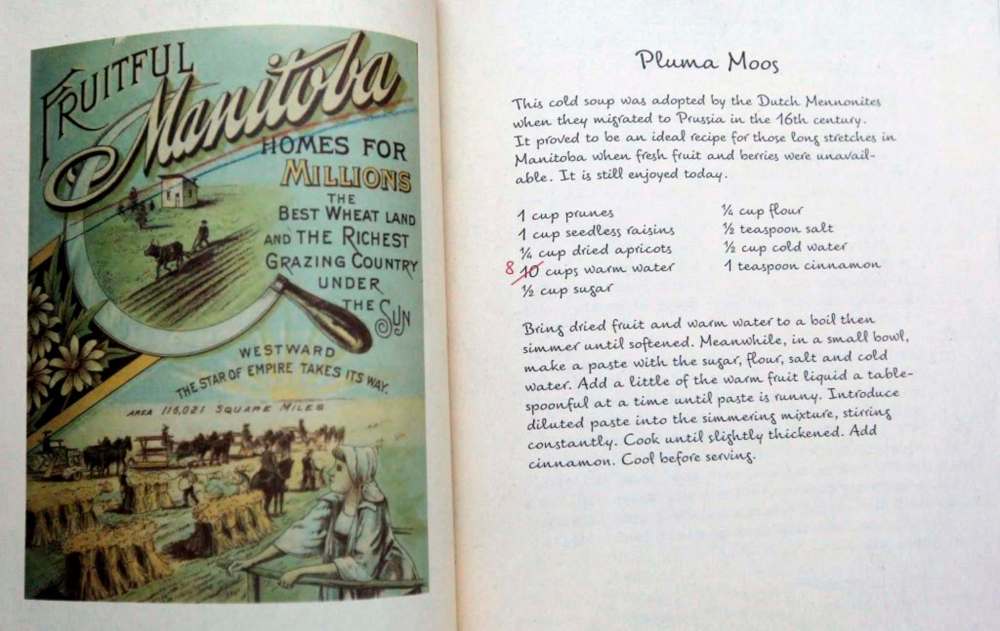
“A lot of these places have made cookbooks as fundraisers,” she says.
“Corinne Tellier from St. Norbert had another collection of family recipes, and some of the photos were hers.”
Hanlon discovered they lived near each other and more family photos were offered.
“I visited a woman in Arborg and they also had a cookbook with some recipes that were handwritten as well,” she says.
“She actually facilitated my talking with the families whose recipes were passed down and that’s where I got the story from the man whose mother always put the paska bread dough to rise under his bed because his room was above the stove.”
At the Mennonite Heritage Village in Steinbach, she met Lawrence Klippenstein, a local historian.
“He shared some names of people that he thought would have recipes for me and pretty soon I was talking to Mennonites from all over the province — it was fantastic!” she says.
“Even though I went to a lot of heritage sites, it was really connecting with these people and getting these stories that was important and was the most fun.”
Hanlon confirmed what most of us already suspect — people are really passionate about their food.
“You can’t separate their culture from their food,” she says. “The Mennonites brought their waffle irons over — that’s a pretty heavy thing — but food was so important to them. The two go hand in hand, and that’s what keeps the culture alive.”
Some of the recipes are very old. She’s included notes and discussions about the traditional foods of Manitoba’s Indigenous people (including beaver tail and moose nose) as well as some from the Métis people (meatballs from beef, venison or bison), who deftly combined European ingredients with what they had on hand at home.
“I didn’t know that bannock had its early roots in Scotland,” says Hanlon. “It’s a beautiful melding of cultures.”
She says another historical group that helped her was the Lord Selkirk Society of Rupertsland, who shared a recipe that was passed down from the 1800s that arrived with Scottish settlers with the HBC.
The cookbook is designed to look as if it had been cobbled together by a home cook.
“The publishers sent me a cookbook called Maw Broon’s Cookbook: The Nation’s Favourites, and they wanted the cookbook to look like that, kind of old and stained — old-fashioned — like the cookbooks that people used to make for themselves, where you glue in all the recipes, and you write some in, and cross things out,” she says.
She says the publisher also wanted her input.
“I also really liked some of the illustrations that I found in the old cookbooks, so I worked hard to get those — there’s an illustration of some singing vegetables from an old Ukrainian cookbook that are my favourites,” she says.
She was able to find vintage labels in the old cookbooks at the St. Boniface Museum and in other archival collections.
“I always thought the little rat on top of the Five Roses label was weird,” she says.
Of course these recipes, and their ingredients, are from a time when “eat local” wasn’t a movement — it was a fact of life.
“There are some ingredients that I didn’t realize are native to Manitoba — sunchokes for example,” she says. (Sunchokes are a tubular-shaped, thin-skinned root vegetable of the sunflower plant family in season from late fall through early spring.)
“One of the things I didn’t know about was sorrel… and I just love the soup,” she says.
Hanlon spent a lot of time testing and rewriting the recipes in order to standardize them so they could be used today. She says people wrote them down the way they spoke.
“I’ve made so many of the recipes from the book so many times that I’ve told everybody that at my annual Christmas party this year that all the food I am making is only from the book,” she says. “Most of these recipes use things that you already have in your pantry.”
She says that learning about all of these foods and how people made use of them gave her a real sense of pride about Manitoba and that she is especially pleased that it was published during Canada’s 150th year.
“I have deeper feeling for Manitoba and I want people to know that the food we eat today didn’t just come out of nowhere,” she says.
“It has a rich history and deep, deep roots.”
Twitter: @WendyKinginWpg