Choosing the right variety is pear-amount
Advertisement
Read this article for free:
or
Already have an account? Log in here »
To continue reading, please subscribe:

Digital Subscription
One year of digital access for only $205*
- Enjoy unlimited reading on winnipegfreepress.com
- Read the E-Edition, our digital replica newspaper
- Access News Break, our award-winning app
- Play interactive puzzles
*First annual payment billed as $205.00 + GST for one year. This annual subscription will automatically renew at $233.00 + GST every 52 weeks (10% off the regular annual price of $259.35). Offer available to new and qualified returning subscribers only. Cancel any time.
To continue reading, please subscribe:
Add Free Press access to your Brandon Sun subscription for only an additional
$1 for the first 4 weeks*
- Enjoy unlimited reading on winnipegfreepress.com
- Read the E-Edition, our digital replica newspaper
- Access News Break, our award-winning app
- Play interactive puzzles
*Your next Brandon Sun subscription payment will increase by $1.00 and you will be charged $17.95 plus GST for four weeks. After four weeks, your payment will increase to $24.95 plus GST every four weeks.
Read unlimited articles for free today:
or
Already have an account? Log in here »
Hey there, time traveller!
This article was published 30/10/2019 (2487 days ago), so information in it may no longer be current.
Apples may get all of autumn’s accolades, but it’s time for pears to muscle in on the action.
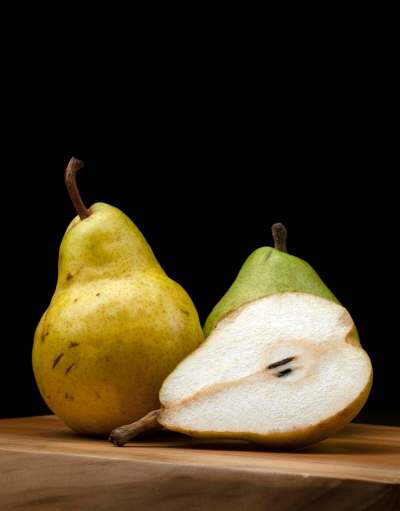
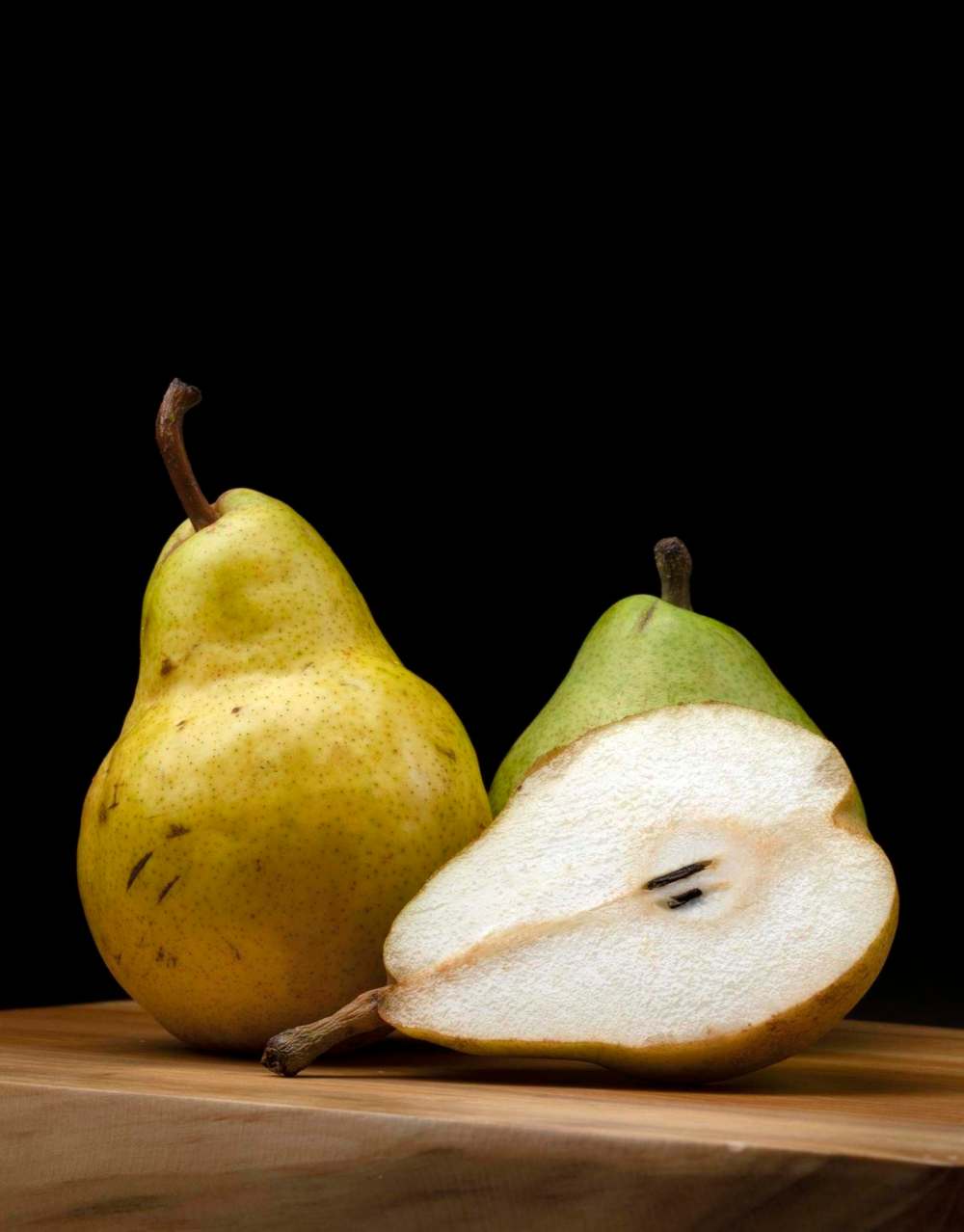
Understanding which pear varieties are best for which uses will help you choose wisely from the fruit you’ll see at grocery stores and farmers markets.
You can eat any pear raw, from juicy Bartletts to crisp Asian pears. But in cooking, you may want the pear to retain its shape, or you may want it to melt into a concentrated sauce.
Some varieties are more grainy or gritty than others but peeling any pear will help reduce that graininess. As pears ripen on the tree, they develop stone cells, and most of these lie just under the skin. Most pears are harvested before they’re fully ripe for this reason. While the skin is full of nutrients, sometimes you just want that grittiness to go away.
Like apples, cut pears will brown when exposed to air. For salads and other raw uses where appearance is important, place the pears in water acidulated with lemon juice for a quick bath to prevent browning.
These are the varieties you’re likely to see this season, with a bit of information about them and their best uses.
Anjou: Firm and mild flavoured, Anjous are good for cooking where you want the pear to pick up the flavours of its cooking companions. Red and green Anjous have the same flavour.
Asian: As crisp as a ripe apple, Asian pears are mild in flavour. They’re the outlier in the pear family, more apple than pear.
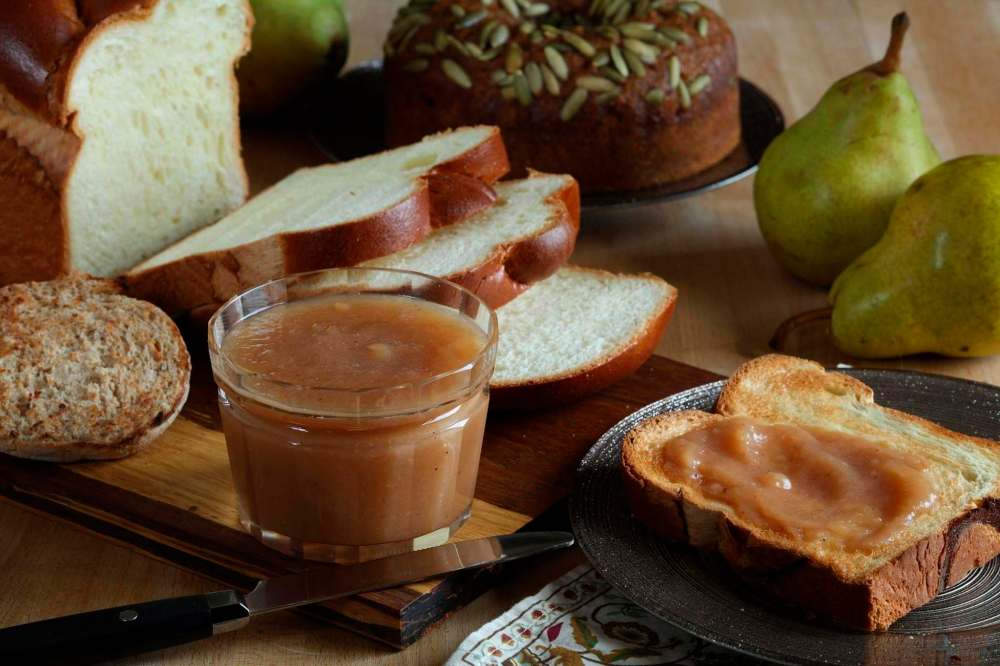
Bartlett: The juiciest of all the pears, a ripe Bartlett will leave your chin dripping when you eat it out of hand. Choose red or green Bartletts when you want the fruit to cook into a sauce, as we do in the vanilla-cardamom pear butter recipe here.
Bosc: Crisp and mildly sweet, Boscs are the classic choice for poached pears. They’re easy to recognize because of their cinnamon-coloured russeted skin. They tend to be a nice size as well.
Comice: Brightly flavoured with the quintessential pear taste, Comice pears are less grainy than many other varieties.
Concorde: A favourite in Europe, the Concorde has a long neck that makes it immediately identifiable. Its distinctively vanilla flavour makes it a favourite for roasting and grilling, but it’s also great out of hand.
Forelle: A pretty speckled pear that’s popular in Europe, this small pear is best for snacking. Its name comes from the German word for “trout,” because its colours echo the flashing brilliance of the fish. Grown in small quantities in the Pacific Northwest, Forelle tells you it’s ripe when the skin under its red speckles turns from green to yellow.
French butter: Small with concentrated flavours, make sure French butter pears are fully ripe before use. Underripe fruit has a sharp, tannic flavor. Good for snacking, or in salads.
Seckel: Just as with French butter pears, make sure the little Seckel pears are fully ripe before eating to avoid a tannic hit. Best out of hand, or in salads.
Robin Mather is a longtime food journalist and the author of The Feast Nearby, a collection of essays and recipes from a year of eating locally on a budget.
Pear-Almond Tart
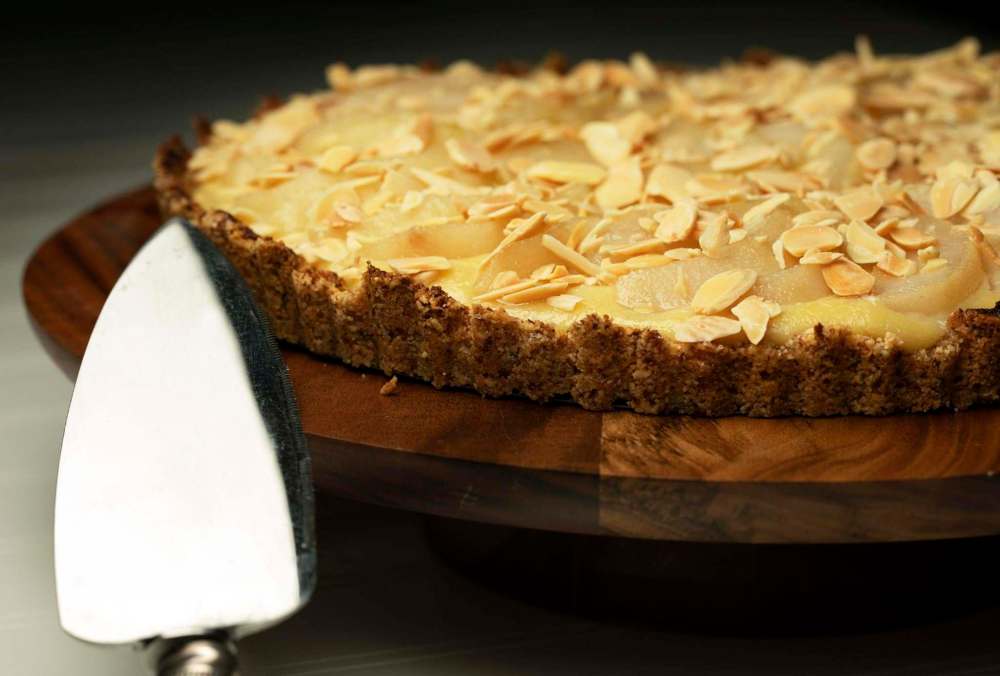
This simple tart will look — and taste — more impressive than its simple ingredients might suggest. Remember that you want pears that will hold their shape for this tart. If you can’t find crème fraîche, substitute lightly sweetened sour cream as a garnish at serving time.
Makes about 12 servings
Crust:
560 ml (2¼ cups) ground almond meal
67 ml (4½ tbsp) sugar
120 ml (8 tbsp) melted salted butter
Filling:
500 ml (2 cups) sugar, divided use (plus more for browning)
3 Anjou, Bosc or Comice pears, peeled, sliced in half
375 ml (1½ cups) milk
10 ml (2 tsp) vanilla
3 eggs, lightly beaten
60 ml (¼ cup) flour
60 ml (¼ cup) sliced toasted almonds
Crème fraîche, sweetened sour cream or whipped cream
For the crust: Heat the oven to 175 C (350 F). Combine almond meal, sugar and melted butter in a medium bowl. Stir to combine. Pat the crust mixture into the bottom and up the sides of a 30-cm (12-inch) tart pan and press into place with the bottom of a drinking glass. Bake the crust until just coloured, 10 to 15 minutes. Remove and allow to cool completely before filling.
For the filling: Heat 1 L (4 cups) water and 375 ml (1½ cups) sugar to a boil in a large saucepan over medium-high heat. Reduce heat to low. Add the pears; poach until tender, 20-25 minutes. Remove pears from the syrup. Allow to cool, then cut out cores. Cut the pears into fans by slicing into ¼-inch slices that remain attached by about ½ inch at the stem end. Set aside.
Combine milk and vanilla in a small saucepan and bring it to just a simmer over medium heat. (Don’t let it boil over.) Combine eggs, remaining 125 ml (½ cup) sugar and the flour in a large saucepan. Temper the mixture by slowly whisking in a little of the hot milk. Then gradually whisk in the rest. Cook, whisking continuously, over medium heat. At the first sign of a boil, 3 to 6 minutes, remove pan from the heat while continuing to whisk until mixture begins to thicken. Allow the custard to cool.
Spoon cooled custard into the tart shell. Lay the fanned-out pears, stem end inward, in the custard. Scatter the sliced almonds over top. Sprinkle with 15-30 ml (1 to 2 tbsp) sugar. Heat the broiler in the oven. Place the tart on the middle rack, 10 to 13 cm (4 to 5 inches) from the broil. Allow to broil until pears and custard are golden, about 5 minutes, watching carefully.
Serve warm with crème fraîche, sweetened sour cream or whipped cream.
Vanilla-Cardamom Pear Butter
Makes about 235 ml (7 half-pints)
You’ll definitely want to use ripe Bartlett pears for this fruit butter because they cook into a silky purée. Making this pear butter in the slow cooker means you don’t have to stand over it while it cooks. We’ve given directions to both can and freeze this sumptuous delight.
3 kg (6½ pounds) Bartlett pears, peeled, cored and cut into 1 cm (½-inch) cubes
Juice of 1 large lemon
125 ml (½ cup) sugar
1 ml (¼ tsp) coarse salt
10 ml (2 tsp) vanilla
5 ml (1 tsp) ground cardamom
60 ml (4 tbsp) unsalted butter
Tumble all ingredients except butter into a slow cooker. Stir to blend, then cover and cook on low until the pear butter is thick and mounds on a spoon, 8 to 10 hours. Test its readiness by placing a spoonful on a plate; if no liquid escapes around the edges, the pear butter is ready. If it weeps, continue to cook with the lid crosswise to allow excess liquid to evaporate.
Stir in the butter until it is fully melted. Ladle the hot pear butter into sterile half-pint jars, leaving ¼-inch headspace. To can, apply lids and rings just until finger tight; process in a boiling water bath for 10 minutes. To freeze, allow the pear butter to cool to room temperature, then freeze without lids. Once pear butter is frozen, add lids and freeze for up to six months.
— Chicago Tribune