Tariffs: Quebec liquor board prepares to destroy $300,000 worth of American alcohol

Advertisement

Advertise with us

MONTREAL - The Quebec liquor board may be forced to destroy $300,000 worth of American alcohol that the province has banned from stores.

Read this article for free:


or

Already have an account? Log in here »

To continue reading, please subscribe:

Subscribe and receive a limited-edition Free Press branded hat or tote.

Digital Subscription

One year of digital access for only $205*

  • Enjoy unlimited reading on winnipegfreepress.com
  • Read the E-Edition, our digital replica newspaper
  • Access News Break, our award-winning app
  • Play interactive puzzles

*First annual payment billed as $205.00 + GST for one year. This annual subscription will automatically renew at $233.00 + GST every 52 weeks (10% off the regular annual price of $259.35). Offer available to new and qualified returning subscribers only. Cancel any time.

To continue reading, please subscribe:

Add Free Press access to your Brandon Sun subscription for only an additional

$1 for the first 4 weeks*

  • Enjoy unlimited reading on winnipegfreepress.com
  • Read the E-Edition, our digital replica newspaper
  • Access News Break, our award-winning app
  • Play interactive puzzles
Start now

*Your next Brandon Sun subscription payment will increase by $1.00 and you will be charged $17.95 plus GST for four weeks. After four weeks, your payment will increase to $24.95 plus GST every four weeks.

Hey there, time traveller!
This article was published 21/08/2025 (409 days ago), so information in it may no longer be current.

MONTREAL – The Quebec liquor board may be forced to destroy $300,000 worth of American alcohol that the province has banned from stores.

The provincial government on March 4 ordered the state-owned corporation to empty shelves of U.S. alcohol in response to tariffs imposed by President Donald Trump.

Since then, U.S. alcohol purchased before the boycott has been kept in storage, but Quebec’s liquor board says that unless the government changes its guidelines it will have to destroy some products set to expire. Affected products are mainly rosé and boxed wines, ready-to-drink cocktails, and certain beers and liqueurs not suitable for prolonged storage.
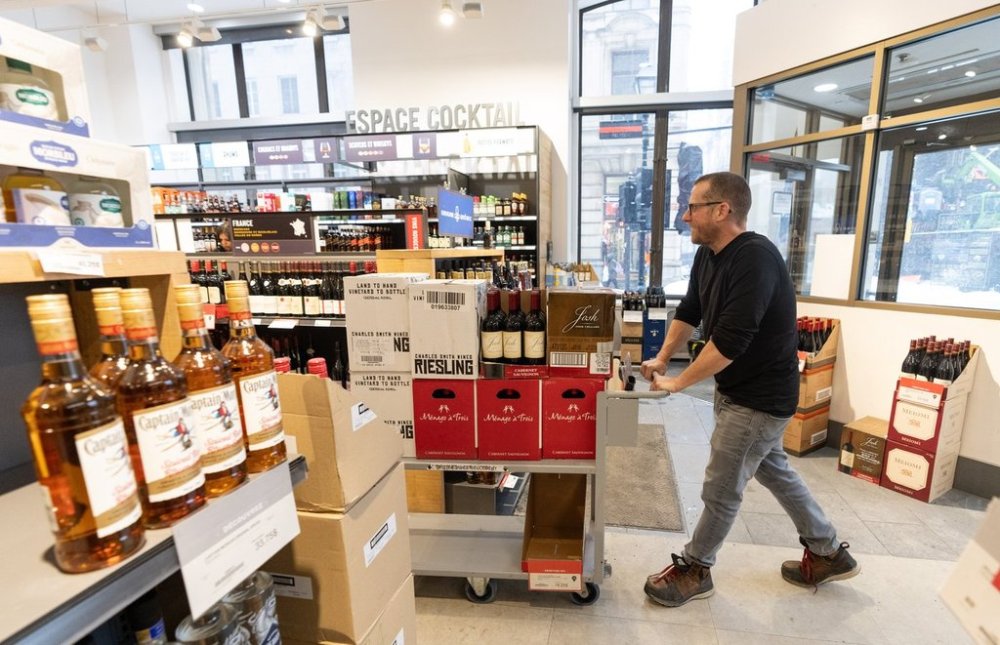
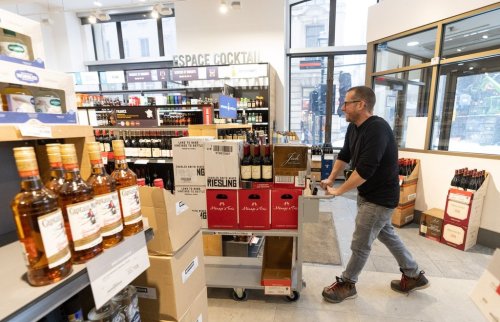
An employee removes American wines from an SAQ liquor store in Montreal on Tuesday, March 4, 2025. THE CANADIAN PRESS/Christinne Muschi

“The scenario surrounding these products has not yet been finalized and the operation is still ongoing,” liquor board spokesperson Laurianne Tardif said in a written statement. “Several factors, including the duration of the operation, the number of products involved and future decisions regarding their fate, will have a direct impact on the potential costs.”

The $300,000 worth of stock represents only a small portion of the $27 million of American products in storage. The storage itself cost the corporation nearly $500,000 between March 4 and June 21.

In June, liquor board president and CEO Jacques Farcy said the American products had not yet lost their value. “These are not fresh or perishable products,” he said at the time. “If things drag on, there may be further discussions.”

He indicated it would be up to the Quebec government to decide when the liquor board could resume selling American alcohol.

The office of Finance Minister Éric Girard did not immediately answer a question about whether the government would relax the ban to avoid destroying stock purchased before the boycott. However, a spokesperson noted that the products in question have not yet expired.

In March, several other provinces including Ontario and Alberta also directed their liquor regulators to stop buying American products, while B.C. banned liquor from “red states” that voted for Trump in the 2024 election.

However, Alberta and Saskatchewan have since reversed those decisions and are once again allowing the sale of U.S. alcohol. 

Trade measures, including liquor-sales bans and a 25 per cent tariff on U.S. alcohol imports, are being felt south of the border. The American Association of Wine Economists recently reported that in June, the value of U.S. wine exports to Canada had dropped by nearly 97 per cent compared to 2024.

Chris Swonger, president and CEO of the Distilled Spirits Council of the United States, said exports of distilled spirits to Canada are down 65 per cent compared to last year. He said the sales bans have also cost Canadian provincial governments significant revenue. 

“Just hearing the news about a province destroying … products that have already been paid for is just really, really unfortunate,” he said, adding, “doesn’t make a lot of sense” for governments to be “inflicting pain” on themselves. 

The Wine Institute, an advocacy group for the California wine industry, said in a statement that the tariff feud has meant a financial and personal loss for U.S. producers. “Our winemakers have spent decades building trusted relationships with Canadian consumers and trade partners and those connections matter,” said Honore Comfort, vice-president of international marketing. 

“To have them disrupted by a trade dispute that does not involve our wineries is disheartening for all of us.”

This report by The Canadian Press was first published Aug. 21, 2025.

Report Error Submit a Tip

More Stories

Sisters relieved hospital takes accountability after mother’s death

Scott Billeck 5 minute read Preview

Sisters relieved hospital takes accountability after mother’s death

Scott Billeck 5 minute read Thursday, Oct. 1, 2026

Eight months after losing their mother, two Winnipeg sisters say an internal hospital review has finally given them something they had been seeking since her death: accountability.

Chelsea Mann and Samantha Burns said St. Boniface Hospital officials acknowledged mistakes were made in the care of their mother, Judy Burns, during a recent meeting to discuss the findings of a critical incident review into her death.

The acknowledgement marked a significant departure from an earlier meeting with hospital officials, when they felt their concerns were largely dismissed.

Burns, 68, died on Jan. 21, three days after being admitted, after experiencing rectal bleeding.

Read
Thursday, Oct. 1, 2026

’Disgusting’ posters being investigated by police

Morgan Modjeski 4 minute read 2:22 PM CDT

The Winnipeg Police Service major crimes unit is investigating what some have labelled offensive and hateful posters on full-display at a Winnipeg home.

One of the people irked by the display is Gracie Garrett. She’s has lived on Ashburn Street in Winnipeg’s Minto neighbourhood for almost ten years. She’s never felt unsafe in the neighbourhood before, but now, a set of posters plastered on a nearby house are making her feel uneasy.

The five signs, posted facing the street prominently on a front window, contain a slur, refer to Nazis as “heroes” and call Muslims, Christians and other groups “evil.”

Learning of the signs Friday, Garrett said she’ll be reporting the posters to police, as she worries they incite and promote violence.

Board game company charts winning path

Aaron Epp 5 minute read Preview

Board game company charts winning path

Aaron Epp 5 minute read Yesterday at 7:09 PM CDT

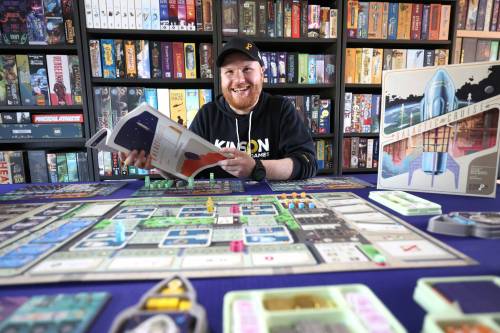
Dennis Northcott has launched a game without frontiers.

The Winnipeg entrepreneur is the co-designer of Galactic Cruise, a board game published last year by Kinson Key Games LLC, the business he co-founded. Since its release, Galactic Cruise has been translated into 11 languages and sold around 50,000 copies worldwide.

It’s also one of three finalists for this year’s Deutsche Spiele Preis, a prestigious community-voted board game award. Northcott will travel to Essen, Germany, later this month, where the winner will be announced at Spiel Essen, an annual board game trade fair.

“It’s been amazing,” Northcott said of the response to Galactic Cruise during an interview in his Island Lakes neighbourhood home earlier this week. “The sales have been great, but it’s also been amazing in terms of people giving their reviews.”

Read
Yesterday at 7:09 PM CDT

Tariffs: Quebec liquor board prepares to destroy $300,000 worth of American alcohol

Stéphane Rolland and Maura Forrest, The Canadian Press 3 minute read Preview

Tariffs: Quebec liquor board prepares to destroy $300,000 worth of American alcohol

Stéphane Rolland and Maura Forrest, The Canadian Press 3 minute read Thursday, Aug. 21, 2025

MONTREAL - The Quebec liquor board may be forced to destroy $300,000 worth of American alcohol that the province has banned from stores.

The provincial government on March 4 ordered the state-owned corporation to empty shelves of U.S. alcohol in response to tariffs imposed by President Donald Trump.

Since then, U.S. alcohol purchased before the boycott has been kept in storage, but Quebec's liquor board says that unless the government changes its guidelines it will have to destroy some products set to expire. Affected products are mainly rosé and boxed wines, ready-to-drink cocktails, and certain beers and liqueurs not suitable for prolonged storage.

"The scenario surrounding these products has not yet been finalized and the operation is still ongoing," liquor board spokesperson Laurianne Tardif said in a written statement. "Several factors, including the duration of the operation, the number of products involved and future decisions regarding their fate, will have a direct impact on the potential costs."

Read
Thursday, Aug. 21, 2025

Broadening prediction-market gambling a bad idea

Editorial 4 minute read Preview

Broadening prediction-market gambling a bad idea

Editorial 4 minute read 2:01 AM CDT

Let’s make a prediction: sooner or later, when Canadian governments find a way to take their own cut of the action, prediction-contract gambling on everything from sports to entertainment to political decisions is going to come to Canada.

And that’s a horrible, dangerous, pernicious idea.

Unless you have particular access to information — either inside information or strategic information based on skills or education — you’re not likely to make money at it. In fact, structurally, you’re likely to lose. In prediction markets, you basically pay an amount, plus fees from the company involved, to bet on whether something will or will not happen within a certain time frame. The amount you pay for your contract depends on how other people are also betting.

As Wealthsimple describes it, “You buy whichever side you think is right. Prices move with demand, so if the market leans towards one outcome, the more that side costs. If a lot of people are backing the TSX to finish above 38,000, yes gets more expensive and no gets cheaper.”

Read
2:01 AM CDT

A day on the campaign trail: Winnipeg's mayor, seeking a second term, does double duty

Malak Abas 12 minute read Preview

A day on the campaign trail: Winnipeg's mayor, seeking a second term, does double duty

Malak Abas 12 minute read Updated: Yesterday at 5:56 PM CDT

In the weeks leading up to the civic election, Scott Gillingham has been performing a juggling act: he’s running to be Winnipeg’s 45th mayor, while still serving as its 44th.

“If someone asks me about the campaign, I’m going to answer them. But I think for most people, I’m the mayor of Winnipeg, even if I’m showing up as a candidate,” Gillingham, 58, says. “I try to do all I can to maintain that distinction.”

The Free Press joined Gillingham on a recent rainy September Saturday on the campaign trail, where he served in both roles during an event-laden day. City council’s final meeting before the Oct. 28 election was days earlier.

In Winnipeg, it’s rare for an incumbent to be defeated. But Gillingham knows his win in 2022 wasn’t exactly a landslide — he won with 27.5 per cent of the vote — and he’s been thinking about his second term ever since.

Read
Updated: Yesterday at 5:56 PM CDT