Rockstar can remain on liquor-store shelves
Health Canada finally decides drink's fate
Advertisement
Read this article for free:
or
Already have an account? Log in here »
To continue reading, please subscribe:

Digital Subscription
One year of digital access for only $205*
- Enjoy unlimited reading on winnipegfreepress.com
- Read the E-Edition, our digital replica newspaper
- Access News Break, our award-winning app
- Play interactive puzzles
*First annual payment billed as $205.00 + GST for one year. This annual subscription will automatically renew at $233.00 + GST every 52 weeks (10% off the regular annual price of $259.35). Offer available to new and qualified returning subscribers only. Cancel any time.
To continue reading, please subscribe:
Add Free Press access to your Brandon Sun subscription for only an additional
$1 for the first 4 weeks*
- Enjoy unlimited reading on winnipegfreepress.com
- Read the E-Edition, our digital replica newspaper
- Access News Break, our award-winning app
- Play interactive puzzles
*Your next Brandon Sun subscription payment will increase by $1.00 and you will be charged $17.95 plus GST for four weeks. After four weeks, your payment will increase to $24.95 plus GST every four weeks.
Read unlimited articles for free today:
or
Already have an account? Log in here »
Hey there, time traveller!
This article was published 18/05/2010 (5969 days ago), so information in it may no longer be current.
OTTAWA — Health Canada has decided not to ban the sale of pre-mixed alcoholic energy drinks at liquor stores, despite having warned people not to the mix alcohol with the energy drinks they pick up from the corner store.
After struggling with the file for more than a year, the department has issued a directive to liquor boards across the country to clarify that alcoholic beverages can have caffeine in them, so long as the stimulant is derived from an ingredient that naturally contains caffeine. This means alcoholic energy drinks are fine because the caffeine comes from a natural source, usually guarana.
The directive, sent earlier this spring, comes more than a year after Health Canada provided different information to the Canadian Food Inspection Agency, whose inspectors enforce Health Canada’s health and safety rules for beverages and foods.
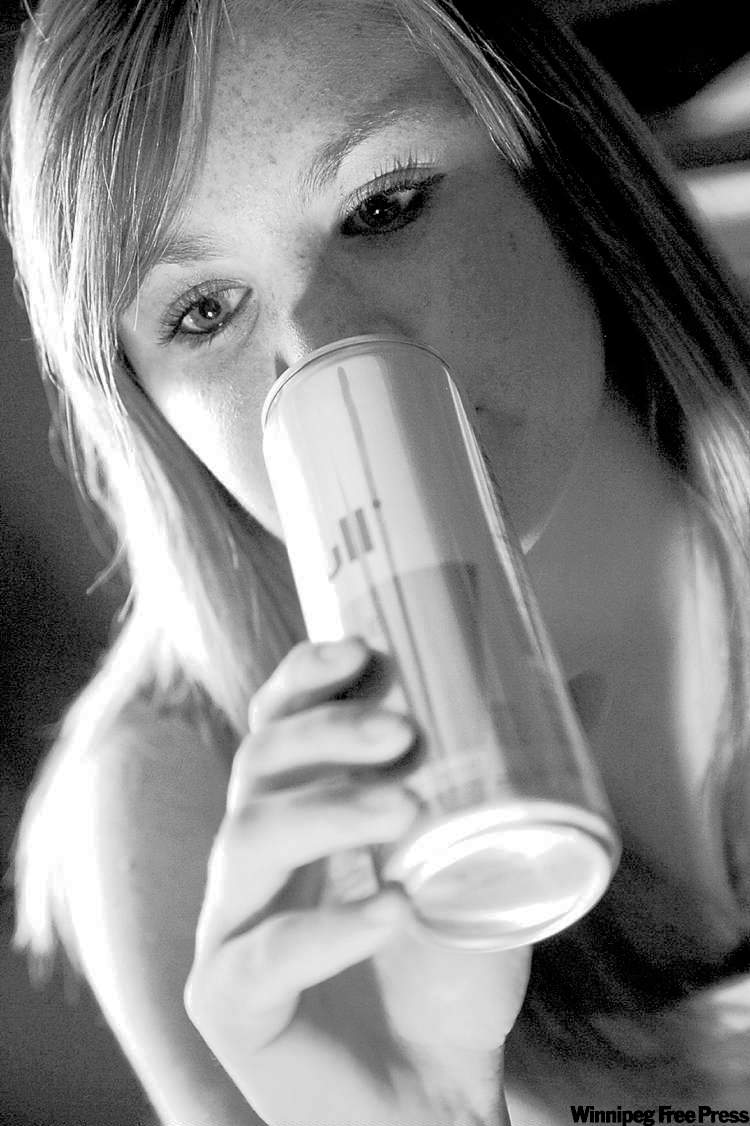
In January 2009, Health Canada told CFIA the addition of vitamins, amino acids and caffeine to alcoholic beverages was not permitted under the Food and Drugs Act and regulations. And “alcoholic beverages formulated with these ingredients, which are frequently added to energy drinks, are subject to enforcement action by the Canadian Food Inspection Agency,” according to correspondence released to Canwest News Service under access to information legislation.
The agency’s national manager for nutrition and health claims responded by pleading with Health Canada to spell out in a “transparent” way its position that alcoholic energy drinks, which had flooded the market by then, did not comply with Health Canada rules.
“It would be good that this was made clear to CFIA that all of these types of products in the marketplace would now be non-compliant foods and are not eligible to apply for natural health product licences. The industry and liquor boards should be advised of this as well in a transparent manner,” the CFIA official said.
She also asked Health Canada to tone down the characterization these alcoholic energy drinks sold at liquor stores were subject to enforcement action by CFIA “so that the obvious question falls out — ‘What is the CFIA doing about these non-compliant products?’ “

In Manitoba, vodka-based energy beverage Rockstar has been available at Manitoba Liquor Control Commission stores for a number of years, according to spokeswoman Diana Soroka. “There has been lots of talk in the (liquor) industry about mixing alcohol and energy drinks. We’ve been advising licensed establishments to be very careful with the non-mixed version (of Rockstar). Some people order vodka and Red Bull but on the Red Bull can, it says, ‘do not mix with alcohol.’ I think a lot of people miss that,” she said.
Health Canada confirmed it does not permit the sale of alcoholic beverages or mixtures that contain caffeine that has been added directly to them, “whether the additive is derived from an artificial source or obtained in purified form from a natural source.” But there are some food ingredients that naturally contain caffeine, such as chocolate, coffee and guarana, and alcoholic beverages or mixtures with these types of ingredients are permitted.
“It seems just ridiculous. I guess I hadn’t classified it as natural and non-natural caffeine. I assumed it was all natural, but I guess it doesn’t really matter because the effects are the same,” said Dr. Karen Leslie, a specialist in adolescent medicine who oversees the teen substance abuse program at the Hospital for Sick Children.
“The really big concern is when you drink caffeine at the same time as alcohol, you actually don’t appreciate or notice the effect the alcohol is having on you.”
— Canwest News Service, with file from Geoff Kirbyson