Home items are getting smarter and creepier, like it or not

Advertisement

Advertise with us

NEW YORK - One day, finding an oven that just cooks food may be as tough as buying a TV that merely lets you change channels.

Read this article for free:


or

Already have an account? Log in here »

To continue reading, please subscribe:

Subscribe and receive a limited-edition Free Press branded hat or tote.

Digital Subscription

One year of digital access for only $205*

  • Enjoy unlimited reading on winnipegfreepress.com
  • Read the E-Edition, our digital replica newspaper
  • Access News Break, our award-winning app
  • Play interactive puzzles

*First annual payment billed as $205.00 + GST for one year. This annual subscription will automatically renew at $233.00 + GST every 52 weeks (10% off the regular annual price of $259.35). Offer available to new and qualified returning subscribers only. Cancel any time.

To continue reading, please subscribe:

Add Free Press access to your Brandon Sun subscription for only an additional

$1 for the first 4 weeks*

  • Enjoy unlimited reading on winnipegfreepress.com
  • Read the E-Edition, our digital replica newspaper
  • Access News Break, our award-winning app
  • Play interactive puzzles
Start now

*Your next Brandon Sun subscription payment will increase by $1.00 and you will be charged $17.95 plus GST for four weeks. After four weeks, your payment will increase to $24.95 plus GST every four weeks.

Hey there, time traveller!
This article was published 07/01/2019 (2779 days ago), so information in it may no longer be current.

NEW YORK – One day, finding an oven that just cooks food may be as tough as buying a TV that merely lets you change channels.

Internet-connected “smarts” are creeping into cars, refrigerators, thermostats, toys and just about everything else in your home. CES 2019, the gadget show opening Tuesday in Las Vegas, will showcase many of these products, including an oven that co-ordinates your recipes and a toilet that flushes with a voice command.

With every additional smart device in your home, companies are able to gather more details about your daily life. Some of that can be used to help advertisers target you — more precisely than they could with just the smartphone you carry.
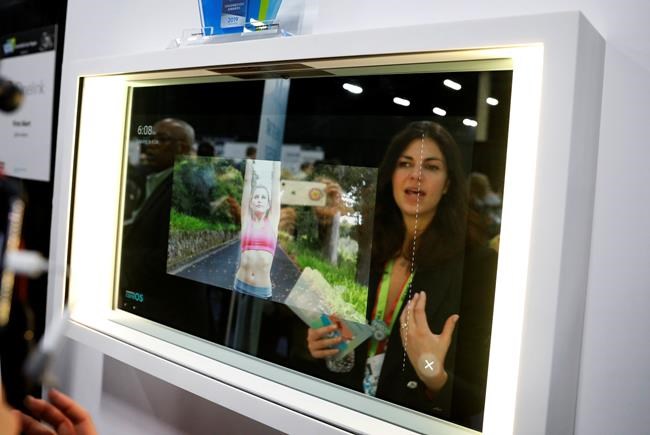
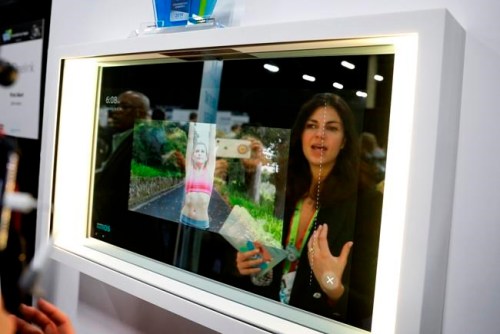
A woman demonstrates the Artemis smart mirror at the CareOS booth during CES Unveiled at CES International, Sunday, Jan. 6, 2019, in Las Vegas. The interactive mirror has video capture, virtual try-ons, facial and object recognition, and can give the user video instruction on specific makeup products, among other things. (AP Photo/John Locher)

“It’s decentralized surveillance,” said Jeff Chester, executive director for the Center for Digital Democracy, a Washington-based digital privacy advocate. “We’re living in a world where we’re tethered to some online service stealthily gathering our information.”

Yet consumers so far seem to be welcoming these devices. The research firm IDC projects that 1.3 billion smart devices will ship worldwide in 2022, twice as many as 2018.

Companies say they are building these products not for snooping but for convenience, although Amazon, Google and other partners enabling the intelligence can use the details they collect to customize their services and ads.

Whirlpool, for instance, is testing an oven whose window doubles as a display. You’ll still be able to see what’s roasting inside, but the glass can now display animation pointing to where to place the turkey for optimal cooking.

The oven can sync with your digital calendar and recommend recipes based on how much time you have. It can help co-ordinate multiple recipes, so that you’re not undercooking the side dishes in focusing too much on the entree. A camera inside lets you zoom in to see if the cheese on the lasagna has browned enough, without opening the oven door.

As for that smart toilet, Kohler’s Numi will respond to voice commands to raise or lower the lid — or to flush. You can do it from an app, too. The company says it’s all about offering hands-free options in a setting that’s very personal for people. The toilet is also heated and can play music and the news through its speakers.

Kohler also has a tub that adjusts water temperature to your liking and a kitchen faucet that dispenses just the right amount of water for a recipe.
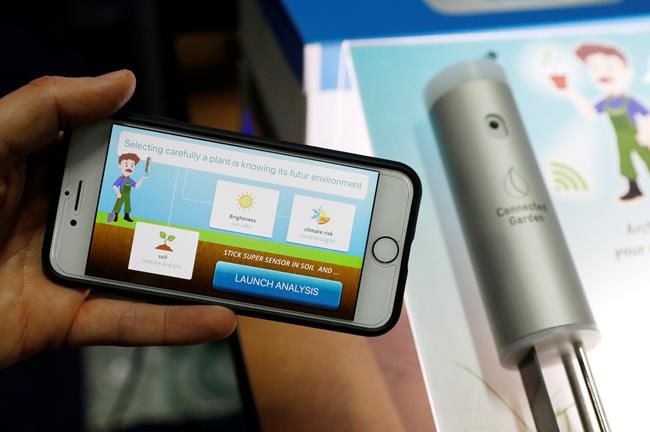
The Archibald gardener app, left, and Super Sensor, right, are on display at the Connected Garden booth during CES Unveiled at CES International, Sunday, Jan. 6, 2019, in Las Vegas. The Super Sensor, over a 24-hour period, can analyze the soil, brightness and climate and recommend types of plants according to preferences. The app has augmented reality and recommends care for specific types of plants. (AP Photo/John Locher)

For the most part, consumers aren’t asking for these specific features. After all, before cars were invented, people might have known only to ask for faster horses. “We try to be innovative in ways that customers don’t realize they need,” Samsung spokesman Louis Masses said.

Whirlpool said insights can come from something as simple as watching consumers open the oven door several times to check on the meal, losing heat in the process.

“They do not say to us, ‘Please tell me where to put (food) on the rack, or do algorithm-based cooking,'” said Doug Searles, general manager for Whirlpool’s research arm, WLabs. “They tell us the results that are most important to them.”

Samsung has several voice-enabled products, including a fridge that comes with an app that lets you check on its contents while you’re grocery shopping. New this year: Samsung’s washing machines can send alerts to its TVs — smart TVs, of course — so you know your laundry is ready while watching Netflix.

Other connected items at CES include:

— a fishing rod that tracks your location to build an online map of where you’ve made the most catches.

— a toothbrush that recommends where to brush more.
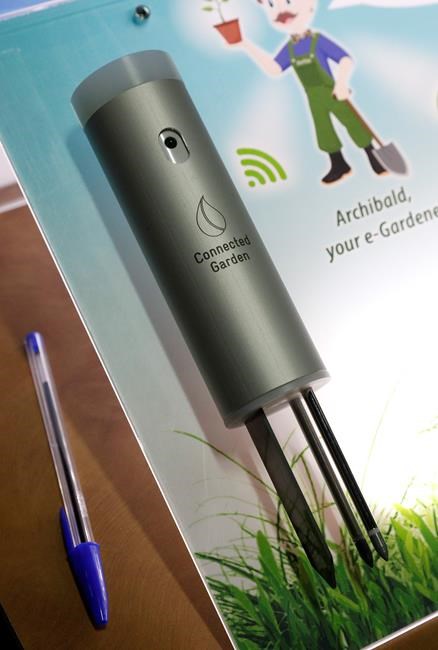
The Super Sensor is on display at the Connected Garden booth during CES Unveiled at CES International, Sunday, Jan. 6, 2019, in Las Vegas. The Super Sensor, over a 24-hour period, can analyze the soil, brightness and climate and recommend types of plants according to preferences. (AP Photo/John Locher)

— a fragrance diffuser that lets you control how your home smells from a smartphone app.

These are poised to join internet-connected security cameras, door locks and thermostats that are already on the market. The latter can work with sensors to turn the heat down automatically when you leave home.

Chester said consumers feel the need to keep up with their neighbours when they buy appliances with the smartest smarts. He said all the conveniences can be “a powerful drug to help people forget the fact that they are also being spied on.”

Gadgets with voice controls typically aren’t transmitting any data back to company servers until you activate them with a trigger word, such as “Alexa” or “OK Google.” But devices have sometimes misheard innocuous words as legitimate commands to record and send private conversations .

Even when devices work properly, commands are usually stored indefinitely. Companies can use the data to personalize experiences — including ads. Beyond that, background conversations may be stored with the voice recordings and can resurface with hacking or as part of lawsuits or investigations.

Knowing what you cook or stock in your fridge might seem innocuous. But if insurers get hold of the data, they might charge you more for unhealthy diets, warned Paul Stephens, director of policy and advocacy at the Privacy Rights Clearinghouse in San Diego. He also said it might be possible to infer ethnicity based on food consumed.
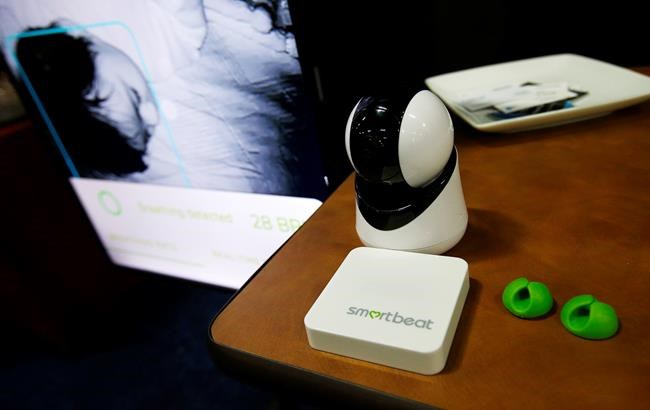
Smartbeat displays a internet connected camera that measures a baby's breathing rate and will send an alert to parents if any problems are detected, at the CES Unveiled at CES International Sunday, Jan. 6, 2019, in Las Vegas. (AP Photo/Ross D. Franklin)

Manufacturers are instead emphasizing the benefits: Data collection from the smart faucet, for instance, allows Kohler’s app to display how much water is dispensed. (Water bills typically show water use for the whole home, not individual taps.)

The market for smart devices is still small, but growing. Kohler estimates that in a few years, smart appliances will make up 10 per cent of its revenue. Though the features are initially limited to premium models — such as the $7,000 toilet — they should eventually appear in entry-level products, too, as costs come down.

Consider the TV. “Dumb” TVs are rare these days, as the vast majority of TVs ship with internet connections and apps, like it or not.

“It becomes a check-box item for the TV manufacturer,” said Paul Gagnon, an analyst with IHS Markit. For a dumb one, he said, you have to search for an off-brand, entry-level model with smaller screens — or go to places in the world where streaming services aren’t common.

“Dumb” cars are also headed to the scrapyard. The research firm BI Intelligence estimates that by 2020, three out of every four cars sold worldwide will be models with connectivity. No serious incidents have occurred in the United States, Europe and Japan, but a red flag has already been raised in China, where automakers have been sharing location details of connected cars with the government.

As for TVs, Consumer Reports says many TV makers collect and share users’ viewing habits. Vizio agreed to $2.5 million in penalties in 2017 to settle cases with the Federal Trade Commission and New Jersey officials.

Consumers can decide not to enable these connections. They can also vote with their wallets, Stephens said.
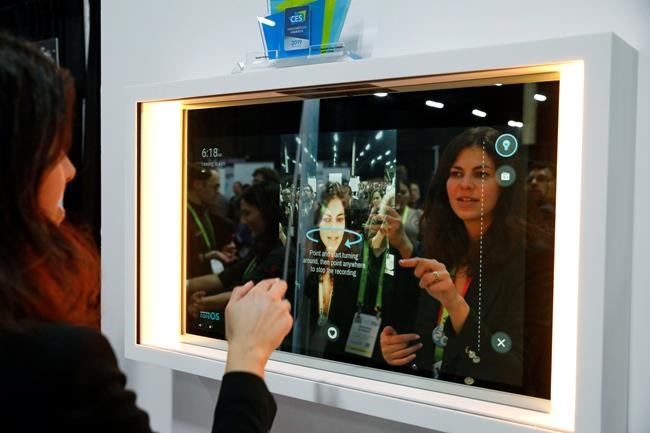
A woman demonstrates the Artemis smart mirror at the CareOS booth during CES Unveiled at CES International, Sunday, Jan. 6, 2019, in Las Vegas. The interactive mirror has video capture, virtual try-ons, facial and object recognition, and can give the user video instruction on specific makeup products, among other things. (AP Photo/John Locher)

“I’m a firm believer that simple is better. If you don’t need to have these so-called enhancements, don’t buy them,” he said. “Does one really need a refrigerator that keeps track of everything in it and tells you you are running out of milk?”

___

AP writers Joseph Pisani and Matt O’Brien in Las Vegas and Frank Bajak in Boston contributed to this story.

Report Error Submit a Tip

More Stories

Firefighter’s death fuels cancer fight

Zoe Pierce 5 minute read Preview

Firefighter’s death fuels cancer fight

Zoe Pierce 5 minute read Saturday, Aug. 15, 2026

The United Fire Fighters of Winnipeg is mourning the loss of Winnipeg firefighter Darrel Maynard while continuing its work to raise awareness of occupational cancer and improve health protections for firefighters.

Maynard, a senior firefighter II and acting lieutenant with the Winnipeg Fire Paramedic Service, died Aug. 5 at age 41 after a three-year battle with occupational cancer.

He served Winnipeg for nearly two decades and leaves behind his wife Francine and sons Colin and Christian.

“Darrel was an incredible, incredible person, an incredible firefighter, and really, really special to all of us,” said Nick Kasper, president of UFFW.

Read
Saturday, Aug. 15, 2026

Best to fess up about grandkid-sitting fatigue

Maureen Scurfield 5 minute read 2:00 AM CDT

DEAR MISS LONELYHEARTS: We love our grandchildren, but now we’re sick of them. The two sets of parents — our adult children — have been parking their kids out here on the farm with us while they take back-to-back road trips to see their friends. We’ve had enough.

Grandma and I want them to come back and get the “brats” (just joking, they’re nice kids) so we can relax.

You have to be so careful with city kids around the farm who don’t know when they’re going to make a mistake and get hoofed by an animal or run over by a farm implement.

How do we tell our kids the party is over early, and they really need to come back before grandma and I give out?

Home items are getting smarter and creepier, like it or not

Anick Jesdanun, The Associated Press 8 minute read Preview

Home items are getting smarter and creepier, like it or not

Anick Jesdanun, The Associated Press 8 minute read Monday, Jan. 7, 2019

NEW YORK - One day, finding an oven that just cooks food may be as tough as buying a TV that merely lets you change channels.

Internet-connected "smarts" are creeping into cars, refrigerators, thermostats, toys and just about everything else in your home. CES 2019, the gadget show opening Tuesday in Las Vegas, will showcase many of these products, including an oven that co-ordinates your recipes and a toilet that flushes with a voice command.

With every additional smart device in your home, companies are able to gather more details about your daily life. Some of that can be used to help advertisers target you — more precisely than they could with just the smartphone you carry.

"It's decentralized surveillance," said Jeff Chester, executive director for the Center for Digital Democracy, a Washington-based digital privacy advocate. "We're living in a world where we're tethered to some online service stealthily gathering our information."

Read
Monday, Jan. 7, 2019

Could renewed interest in strategically critical rare earth elements finally make sub-sector profitable?

Joel Schlesinger 6 minute read Preview

Could renewed interest in strategically critical rare earth elements finally make sub-sector profitable?

Joel Schlesinger 6 minute read Saturday, Aug. 15, 2026

Rare earth elements are among the most critical of mined resources for modern economies.

They’re essential in manufacturing specialized magnets used in a host of technologies from wind turbines and electric vehicles to hard drives, smartphones, television screens, and fibre optics. Most notably, however, rare earth minerals are increasingly vital to the defence industry.

These 17 elements — closely related chemically and usually found all together in mineral deposits — have indeed been growing in geopolitical importance as the United States, Canada and other Western nations recognize their dependence on production from China.

It is the world’s largest producer and processor of rare earths, including the most in-demand elements neodymium and praseodymium used to manufacture very light and powerful magnets for an array of technologies, including the most advanced weapons of modern warfare.

Read
Saturday, Aug. 15, 2026

Hometown hero hits CEBL championship clinching shot

Taylor Allen 5 minute read Preview

Hometown hero hits CEBL championship clinching shot

Taylor Allen 5 minute read Yesterday at 6:34 PM CDT

Chapter 1 of Winnipeg Sea Bears basketball was capped by hometown hero Chad Posthumus.

It was May 27, 2023, and the late, great centre out of River East Collegiate had a put-back basket off a Teddy Allen miss to give the Sea Bears a 90-85 victory over the Vancouver Bandits in Winnipeg’s inaugural game, in front of what was then a record crowd of 7,303.

So, on Saturday, it was rather poetic that Simon Hildebrandt — another Winnipegger and a player Posthumus used to mentor — was the one to put an exclamation mark on the franchise’s latest and greatest chapter.

Hildebrandt drilled a wide-open three in Target Score Time to crown the Sea Bears as the 2026 CEBL champions.

Read
Yesterday at 6:34 PM CDT

Letters, Aug. 17

7 minute read 2:00 AM CDT

Be statesmanlike, Pierre

Re: Canadians have moved on, Poilievre hasn’t (Aug. 7); Poilievre’s trade bluster a desperate bid for attention (Aug. 12)

If I were Pierre Poilievre, I wouldn’t be just thinking about becoming the next prime minister. I’d be thinking about legacy in larger terms — meaning how would I ultimately want to be remembered.

And I would want to be remembered as the politician who, even if not having achieved the ultimate goal of becoming prime minister, left the political world as a respected statesman. As such, with respect to trade and the relationship with the United States, I would be guided by the following maxim found in Tom Brodbeck’s Aug. 12 column: The goal should be to maximize Canada’s leverage while reducing its vulnerability.