WEATHER ALERT

Report finds few seniors are getting routine memory checkups

Advertisement

Advertise with us

WASHINGTON - Few seniors get their thinking and memory abilities regularly tested during check-ups, according to a new report from the Alzheimer's Association that raises questions about how best to find out if a problem is brewing.

Read this article for free:

or

Already have an account? Log in here »

To continue reading, please subscribe:

Subscribe and receive a limited-edition Free Press branded hat or tote.

Digital Subscription

One year of digital access for only $205*

  • Enjoy unlimited reading on winnipegfreepress.com
  • Read the E-Edition, our digital replica newspaper
  • Access News Break, our award-winning app
  • Play interactive puzzles

*First annual payment billed as $205.00 + GST for one year. This annual subscription will automatically renew at $233.00 + GST every 52 weeks (10% off the regular annual price of $259.35). Offer available to new and qualified returning subscribers only. Cancel any time.

To continue reading, please subscribe:

Add Free Press access to your Brandon Sun subscription for only an additional

$1 for the first 4 weeks*

  • Enjoy unlimited reading on winnipegfreepress.com
  • Read the E-Edition, our digital replica newspaper
  • Access News Break, our award-winning app
  • Play interactive puzzles
Start now

*Your next Brandon Sun subscription payment will increase by $1.00 and you will be charged $17.95 plus GST for four weeks. After four weeks, your payment will increase to $24.95 plus GST every four weeks.

Hey there, time traveller!
This article was published 04/03/2019 (2703 days ago), so information in it may no longer be current.

WASHINGTON – Few seniors get their thinking and memory abilities regularly tested during check-ups, according to a new report from the Alzheimer’s Association that raises questions about how best to find out if a problem is brewing.

Medicare pays for an annual “wellness visit” that is supposed to include what’s called a cognitive assessment — a brief check for some early warning signs of dementia, so people who need a more thorough exam can get one.

But doctors aren’t required to conduct a specific test, and there’s little data on how often they perform these cognitive snapshots.
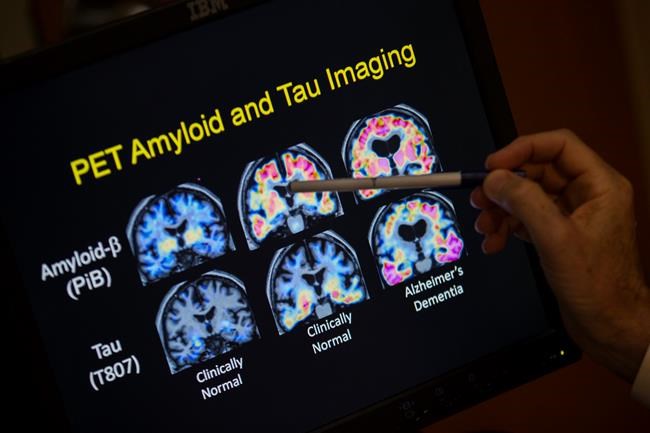
FILE - In a May 19, 2015 file photo, R. Scott Turner, Professor of Neurology and Director of the Memory Disorder Center at Georgetown University Hospital, points to PET scan results that are part of a study on Allheimer's disease at Georgetown University Hospital, in Washington. An Alzheimer’s Association survey being released Tuesday, March 5, 2019 found about half of seniors say they’ve ever discussed thinking or memory with a health provider, and less than a third report ever getting formally assessed for cognitive problems. (AP Photo/Evan Vucci, File)

About half of seniors say they’ve ever discussed thinking or memory with a health care provider, and less than a third say they’ve ever been assessed for possible cognitive problems, according to an Alzheimer’s Association survey being released Tuesday.

Even fewer, 16 per cent, said they get regular cognitive assessments — a stark contrast to the blood pressure and cholesterol checks that just about everyone gets routinely. Just 1 in 3 knew cognition is supposed to be part of the annual wellness visit.

Even though many older adults say they’ve noticed changes in their mental abilities, “the majority of the time seniors are waiting for the physician to bring it up,” said Alzheimer’s Association chief program officer Joanne Pike.

WHY IS THIS IMPORTANT?

About 50 million people worldwide have dementia, and Alzheimer’s is the most common type, affecting 5.8 million people in the U.S. The disease takes root in the brain decades before symptoms appear. There is no cure, and today’s treatments only ease symptoms, not blocking the disease from gradually worsening.

Still, it’s important to be alert to signs of mental decline. Some slowing of memory is a normal part of aging, like temporarily misplacing your keys. But more significant declines in memory, thinking skills or behaviour can require medical care.

It might be something treatable like sleep apnea, depression or a side effect of medication.

But if someone is developing dementia, knowing early allows people time to plan for their future care — and to participate in research studies of possible new treatments, Pike said.

WHAT’S INVOLVED IN A COGNITIVE ASSESSMENT?

The doctor looks for any signs of impairment as the check-up gets under way, asks the patient directly about any changes over time, and asks any family members who came along for the visit if they have concerns.

Then the doctor sometimes, not always, administers a test, such as telling the senior to remember a short list of words or to draw a clock showing a certain time.

Some written tests excel at spotting subtle problems, but they’re too simplistic to rule out trouble in high-functioning people. Nor does a poor score mean there’s really a problem, just that more sophisticated testing is required.

WHY DON’T ALL SENIORS GET SCREENED?

Medical guidelines don’t say everyone needs a formal assessment with those memory quizzes, cautioned Dr. Sumi Sexton of Georgetown University’s School of Medicine and editor of the journal American Family Physician, who wasn’t involved with the survey.

In fact, you might be getting assessed and not realize it, she said. Maybe a conversation with the doctor shows that you’re pretty active and doing well. Or maybe the doctor spots that you’re taking medications that can impede cognition — and changes your prescription, waiting to see if that solved any problem before looking for other potential causes.

“We are all attuned to memory issues,” said Sexton, who tends to screen frequently — but wasn’t surprised at the report’s low screening numbers, because a discussion about cognitive impairment takes time in an already crammed check-up.

And it’s hard for patients to bring up, said Jim Gulley, 69, who was diagnosed with early-stage Alzheimer’s in 2015. He marked “memory issues” on a check-up questionnaire but then crossed it out — only to have his longtime doctor insist on a discussion.

“I was definitely afraid,” said Gulley, of Penfield, New York. His father had had dementia, and he knew “the stigma is not dead.” But after Gulley told his church about his diagnosis, he was inundated with help — and with other seniors asking how to know if something’s wrong. He now counsels people to talk to their doctors early.

___

The Associated Press Health & Science Department receives support from the Howard Hughes Medical Institute’s Department of Science Education. The AP is solely responsible for all content.

Report Error Submit a Tip

More Stories

Report finds few seniors are getting routine memory checkups

Lauran Neergaard, The Associated Press 5 minute read Preview

Report finds few seniors are getting routine memory checkups

Lauran Neergaard, The Associated Press 5 minute read Monday, Mar. 4, 2019

WASHINGTON - Few seniors get their thinking and memory abilities regularly tested during check-ups, according to a new report from the Alzheimer's Association that raises questions about how best to find out if a problem is brewing.

Medicare pays for an annual "wellness visit" that is supposed to include what's called a cognitive assessment — a brief check for some early warning signs of dementia, so people who need a more thorough exam can get one.

But doctors aren't required to conduct a specific test, and there's little data on how often they perform these cognitive snapshots.

About half of seniors say they've ever discussed thinking or memory with a health care provider, and less than a third say they've ever been assessed for possible cognitive problems, according to an Alzheimer's Association survey being released Tuesday.

Read
Monday, Mar. 4, 2019

City has plenty of frozen dessert oases to discover

AV Kitching 6 minute read Preview

City has plenty of frozen dessert oases to discover

AV Kitching 6 minute read Updated: 10:42 AM CDT

No matter the weather, ice cream is always a welcome addition to the day.

It’s a rite of passage as, at the slightest hint of a thaw, Winnipeggers descend in droves, heeding the siren call of institutions such as Sargent Sundae (2053 Portage Ave.) and Bridge Drive-In (766 Jubilee Ave. and 1680 Main St.) that slide open their shutters any time from late March to early April, ready to welcome dedicated connoisseurs seeking their first taste of the season.

We’re blessed with an abundance of ice-cream joints in this city, ranging from brick-and-mortar storefronts to mobile carts and pop-up stalls, all serving generous scoops of childhood faves alongside rather more innovative flavours.

With so many dairy bars and frozen dessert parlours dotted around, there’s no need to choose just one spot to satisfy your sweet tooth.

Read
Updated: 10:42 AM CDT

‘Eight credible threats’ against Hydro employees: CEO

Chris Kitching 6 minute read Preview

‘Eight credible threats’ against Hydro employees: CEO

Chris Kitching 6 minute read Updated: Yesterday at 4:32 PM CDT

Manitoba Hydro president and CEO Allan Danroth took aim at critics and revealed he and staff members have been threatened while defending the Crown corporation’s plan for three new combustion turbines Monday.

Without identifying individuals, Danroth said “constant, uninformed criticism” of Hydro and misinformation has eroded public trust and contributed to hostilities and an unsafe workplace for employees.

“Manitoba Hydro is currently managing eight credible threats against our employees, five of them directed at me personally,” Danroth told a Public Utilities Board hearing in Winnipeg.

“More troubling is these threats are increasingly affecting our front-line workforce. In the last year, my employees have been threatened with weapons, including guns, while performing their duties, and in one recent incident a homeowner directed his dogs to attack one of our meter readers.”

Read
Updated: Yesterday at 4:32 PM CDT

Cyclists shown Winnipeg’s warmer side

Tiago Resko 4 minute read Preview

Cyclists shown Winnipeg’s warmer side

Tiago Resko 4 minute read Yesterday at 5:57 PM CDT

Fundraising cyclists from New Brunswick who had their bikes stolen in Winnipeg got to see a completely different side of the city over the weekend.

Read
Yesterday at 5:57 PM CDT

Puzzles Palace

1 minute read Updated: Yesterday at 1:37 PM CDT

To solve our puzzles, please subscribe with this special offer: |

West End drug bust result of focus on community concerns: WPS

Free Press staff 2 minute read Preview

West End drug bust result of focus on community concerns: WPS

Free Press staff 2 minute read 2:56 PM CDT

Winnipeg police say a methamphetamine and cocaine bust at a Spence Street home last week is an example of the force focusing on community concerns about drug dealing, violence and open illicit substance use in the downtown and West End.

Winnipeg Police Service community support officers began investigating two individuals suspected of selling meth and cocaine from the home on the 200 block of Spence Street earlier this month.

Last Friday, police executed a warrant at the residence, where they arrested a 20-year-old man and a 27-year-old woman and seized a slew of illicit goods.

Police found a sawed-off shotgun, a hatchet, four knives and two cans of bear spray, along with 20 grams of meth and 47 grams of cocaine.

Read
2:56 PM CDT