Monkey birth a step to saving fertility of boys with cancer

Advertisement

Advertise with us

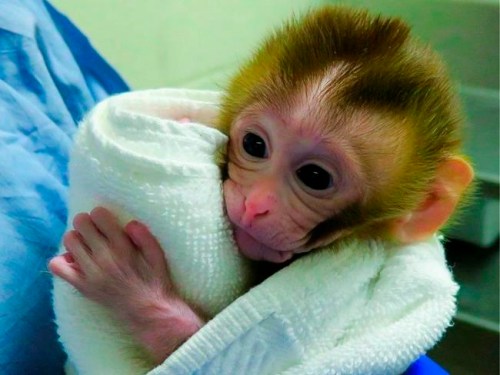
WASHINGTON - Scientists are closing in on a way to help young boys undergoing cancer treatment preserve their future fertility — and the proof is the first monkey born from the experimental technology.

Read this article for free:


or

Already have an account? Log in here »

To continue reading, please subscribe:

Subscribe and receive a limited-edition Free Press branded hat or tote.

Digital Subscription

One year of digital access for only $205*

  • Enjoy unlimited reading on winnipegfreepress.com
  • Read the E-Edition, our digital replica newspaper
  • Access News Break, our award-winning app
  • Play interactive puzzles

*First annual payment billed as $205.00 + GST for one year. This annual subscription will automatically renew at $233.00 + GST every 52 weeks (10% off the regular annual price of $259.35). Offer available to new and qualified returning subscribers only. Cancel any time.

To continue reading, please subscribe:

Add Free Press access to your Brandon Sun subscription for only an additional

$1 for the first 4 weeks*

  • Enjoy unlimited reading on winnipegfreepress.com
  • Read the E-Edition, our digital replica newspaper
  • Access News Break, our award-winning app
  • Play interactive puzzles
Start now

*Your next Brandon Sun subscription payment will increase by $1.00 and you will be charged $17.95 plus GST for four weeks. After four weeks, your payment will increase to $24.95 plus GST every four weeks.

Hey there, time traveller!
This article was published 21/03/2019 (2718 days ago), so information in it may no longer be current.

WASHINGTON – Scientists are closing in on a way to help young boys undergoing cancer treatment preserve their future fertility — and the proof is the first monkey born from the experimental technology.

More and more people are surviving childhood cancer, but nearly 1 in 3 will be left infertile from the chemotherapy or radiation that helped save their life.

When young adults are diagnosed with cancer, they can freeze sperm, eggs or embryos ahead of treatment. But children diagnosed before puberty can’t do that because they’re not yet producing mature eggs or sperm.
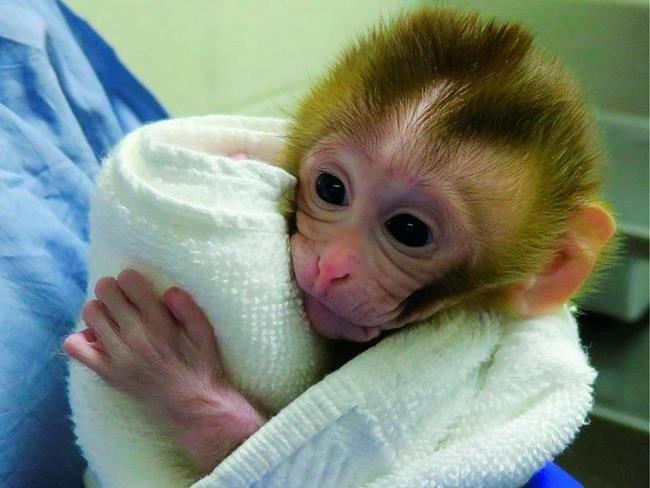
This undated photo provided by the Oregon Health and Science University in March 2019 shows a baby monkey named Grady, born from an experimental technology that aims to help young boys undergoing cancer treatment preserve their future fertility. Scientists froze testicular tissue from a monkey that had not yet reached puberty, and later thawed it to produce sperm used for Grady’s conception. (OHSU via AP)

“Fertility issues for kids with cancer were ignored” for years, said University of Pittsburgh reproductive scientist Kyle Orwig. “Many of us dream of growing up and having our own families. We hope our research will help these young patients to do that.”

Orwig’s team reported a key advance Thursday: First, they froze a bit of testicular tissue from a monkey that hadn’t yet reached puberty. Later, they used it to produce sperm that, through a monkey version of IVF, led to the birth of a healthy female monkey named Grady.

The technique worked well enough that human testing should begin in the next few years, Orwig said.

“It’s a huge step forward” that should give hope to families, said Susan Taymans of the National Institute of Child Health and Human Development, which helped fund the research published in the journal Science. “It’s not like science fiction. It’s something that seems pretty attainable.”

University of Pittsburgh Medical Center and a handful of other hospitals already freeze immature testicular tissue from young cancer patients, in hopes of knowing how to use it once they’re grown and ready to have their own children.

Boys are born with stem cells inside little tubes in the testes, cells that start producing sperm after puberty’s testosterone jolt. Orwig’s goal: Keep sperm-producing stem cells safe from cancer treatment by freezing small pieces of testicular tissue, and using them to restore fertility later in life.

How? Enter the monkey research.

Orwig’s team froze tissue from young male monkeys, and then sterilized them. Once the monkeys approached puberty, the researchers thawed those tissue samples and gave them back to the original animal — implanting them just under the skin.

“We’re not hooking it up to the normal plumbing,” Orwig cautioned.
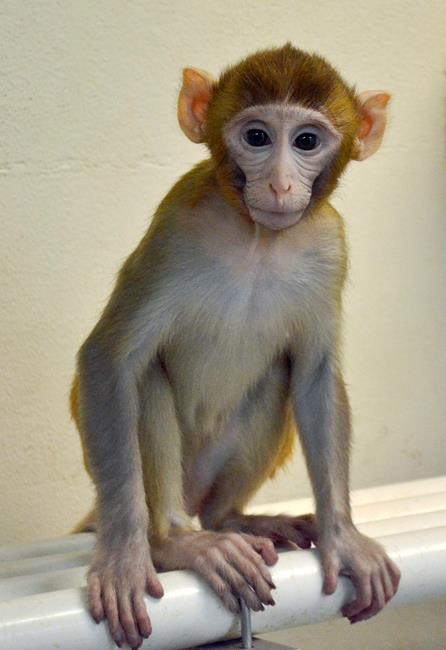
This undated photo provided by the Oregon Health and Science University in March 2019 shows a monkey named Grady, born from an experimental technology that aims to help young boys undergoing cancer treatment preserve their future fertility. Scientists froze testicular tissue from a monkey that had not yet reached puberty, and later thawed it to produce sperm used for Grady’s conception. (OHSU via AP)

Boosted by hormones, the little pieces of tissue grew. Months later, the researchers removed them. Sure enough, inside was sperm they could collect and freeze.

Colleagues at the Oregon National Primate Research Center injected some of that sperm into eggs from female monkeys and implanted the resulting embryos. Last April, Grady was born, and “she plays and behaves just like every other monkey that was grown the normal way,” Orwig said.

If the technique sounds a little bizarre, it’s similar to a female option.

Girls’ eggs are in an immature state before puberty. Researchers have removed and frozen strips of ovarian tissue harbouring egg follicles from young women before cancer treatment, in hopes that when transplanted back later the immature eggs would resume development. It’s considered experimental even for young adults but some births have been reported. Now some hospitals bank ovarian tissue from girls, too.

Surgery involving the boys’ testicular tissue is less invasive, noted Orwig, who also is researching ways to reinsert sperm-producing stem cells where they belong rather than the more roundabout technique.

The new research shows “immature testicular tissue may become an option” to preserve boys’ fertility, Nina Neuhaus and Stefan Schlatt of the Center of Reproductive Medicine and Andrology in Muenster, Germany, wrote in an accompanying editorial.

Meanwhile, “it’s important for parents to know about this,” said Christine Hanlon of Holiday, Florida, who took her son Dylan to Pittsburgh to have his tissue stored when he was newly diagnosed with Ewing’s sarcoma at age 9.

Today Dylan is a healthy teen, and no one knows if he’ll ever need the stored tissue, one of more than 200 samples Orwig’s study has preserved. But Hanlon was thrilled to learn the research is moving along, just in case.

“You lose part of your childhood in cancer treatment,” Hanlon said. “If there was a chance I could help him have normalcy in his future, with the potential of having a family if that’s what he decided to do, I wanted to be able to.”
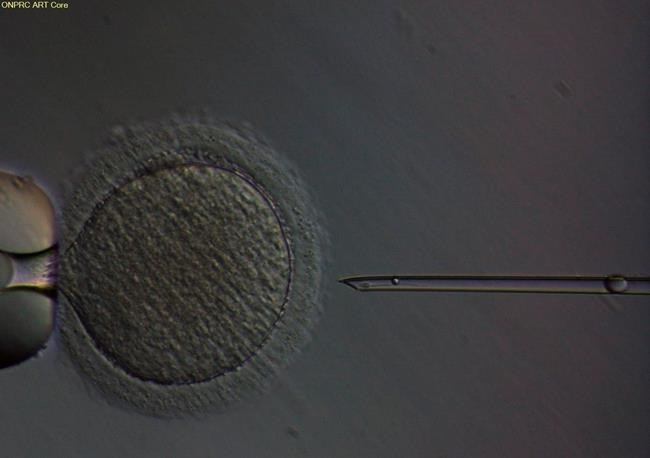
In this undated microscope photo provided by the Oregon Health and Science University in March 2019, sperm produced from previously frozen monkey testicular tissue is injected into a monkey egg. (OHSU via AP)

___

Online:

University of Pittsburgh fertility preservation program: www.fertilitypreservationpittsburgh.org

___

The Associated Press Health & Science Department receives support from the Howard Hughes Medical Institute’s Department of Science Education. The AP is solely responsible for all content.

Report Error Submit a Tip

More Stories

‘Last chance’ clearance U.S. booze punted from Liquor Marts

Carol Sanders 5 minute read Preview

‘Last chance’ clearance U.S. booze punted from Liquor Marts

Carol Sanders 5 minute read Thursday, Aug. 27, 2026

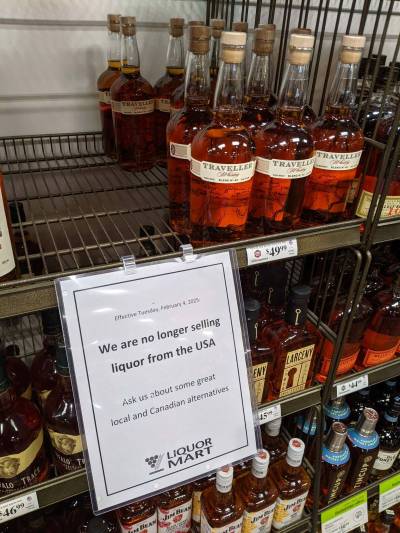
American alcohol that returned to Manitoba Liquor Mart shelves in May as part of a “last chance” sale is headed back to storage or will be destroyed.

“We are removing U.S. liquor products from Liquor Mart shelves,” a spokesperson for Manitoba Liquor and Lotteries said Thursday. The Crown corporation had been pushing to off-load its stockpile of U.S. booze.

Premier Wab Kinew launched a provincewide boycott of American alcohol in March 2025 to fight back against tariffs imposed by U.S. President Donald Trump. Manitoba Liquor and Lotteries has not placed new orders since the boycott began, but it still had inventory.

As of early May, the U.S. inventory had a value of roughly $3.4 million, which is roughly one-third of what was removed from shelves and placed in storage, Manitoba Liquor and Lotteries has said. It was unable to provide an inventory update on Thursday.

Read
Thursday, Aug. 27, 2026

Catch the Devil follows serial con man preying on victims along the Gulf Coast — then repatedly duping law enforcement

Reviewed by Jordan Ross 4 minute read Preview

Catch the Devil follows serial con man preying on victims along the Gulf Coast — then repatedly duping law enforcement

Reviewed by Jordan Ross 4 minute read 2:00 AM CDT

The debut book from Pamela Colloff, a Texas-based investigative reporter for ProPublica and staff writer for the New York Times Magazine, complicates romantic notions of the scam artist and invites readers to reflect on the systems that enable them.

Read
2:00 AM CDT

Monkey birth a step to saving fertility of boys with cancer

Lauran Neergaard, The Associated Press 5 minute read Preview

Monkey birth a step to saving fertility of boys with cancer

Lauran Neergaard, The Associated Press 5 minute read Thursday, Mar. 21, 2019

WASHINGTON - Scientists are closing in on a way to help young boys undergoing cancer treatment preserve their future fertility — and the proof is the first monkey born from the experimental technology.

More and more people are surviving childhood cancer, but nearly 1 in 3 will be left infertile from the chemotherapy or radiation that helped save their life.

When young adults are diagnosed with cancer, they can freeze sperm, eggs or embryos ahead of treatment. But children diagnosed before puberty can't do that because they're not yet producing mature eggs or sperm.

"Fertility issues for kids with cancer were ignored" for years, said University of Pittsburgh reproductive scientist Kyle Orwig. "Many of us dream of growing up and having our own families. We hope our research will help these young patients to do that."

Read
Thursday, Mar. 21, 2019

Doctor pays $500K to revamp courtyard at care home where he works

By Zoe Pierce 4 minute read Preview

Doctor pays $500K to revamp courtyard at care home where he works

By Zoe Pierce 4 minute read Thursday, Aug. 27, 2026

Fifty years after Dr. Pravinsagar Mehta began caring for residents at Actionmarguerite, a courtyard he had long watched deteriorate is getting a new life after he and his wife committed $500,000 to its redevelopment and long-term maintenance.

Read
Thursday, Aug. 27, 2026

Hydro announces CEO out after two years

Chris Kitching 7 minute read Preview

Hydro announces CEO out after two years

Chris Kitching 7 minute read Updated: Yesterday at 9:09 PM CDT

Allan Danroth is out as Manitoba Hydro’s president and CEO — a departure that came as a surprise to some observers — just two years after he was hired.

Danroth left for personal reasons, the Crown corporation’s board chair, Jamie Wilson, said Friday, while announcing chief operating officer Hal Turner as interim president and CEO ahead of a national and international search for a replacement.

“Today’s one of those days where you have a lot of mixed emotions,” Turner told reporters at Hydro’s downtown Winnipeg headquarters. “I just want to say on behalf of all the employees in Manitoba Hydro, we very much appreciate Allan’s leadership over the last two years.”

Turner wouldn’t say whether he will apply to be the next permanent CEO.

Read
Updated: Yesterday at 9:09 PM CDT

Province announces phys-ed curriculum overhaul

Maggie Macintosh 6 minute read Preview

Province announces phys-ed curriculum overhaul

Maggie Macintosh 6 minute read Thursday, Aug. 27, 2026

Manitoba is overhauling phys-ed class and requiring all high school students to regularly work up a sweat on school grounds to graduate.

Premier Wab Kinew announced on Thursday that a new curriculum is being piloted across the kindergarten to Grade 12 system this fall.

Changes to phys-ed and health education — which apply to all grades, but Grade 11 and 12 students, in particular — will ensure these mandatory subjects are delivered entirely in-person, starting in the 2028-29 school year.

The policy is called “Every Body, Every Day.”

Read
Thursday, Aug. 27, 2026