Marijuana ER visits climb in Denver hospital study

Advertisement

Advertise with us

Five years after Colorado first legalized marijuana, a new study shows pot's bad effects are sending more people to the emergency room.

Read this article for free:

or

Already have an account? Log in here »

To continue reading, please subscribe:

Subscribe and receive a limited-edition Free Press branded hat or tote.

Digital Subscription

One year of digital access for only $205*

  • Enjoy unlimited reading on winnipegfreepress.com
  • Read the E-Edition, our digital replica newspaper
  • Access News Break, our award-winning app
  • Play interactive puzzles

*First annual payment billed as $205.00 + GST for one year. This annual subscription will automatically renew at $233.00 + GST every 52 weeks (10% off the regular annual price of $259.35). Offer available to new and qualified returning subscribers only. Cancel any time.

To continue reading, please subscribe:

Add Free Press access to your Brandon Sun subscription for only an additional

$1 for the first 4 weeks*

  • Enjoy unlimited reading on winnipegfreepress.com
  • Read the E-Edition, our digital replica newspaper
  • Access News Break, our award-winning app
  • Play interactive puzzles
Start now

*Your next Brandon Sun subscription payment will increase by $1.00 and you will be charged $17.95 plus GST for four weeks. After four weeks, your payment will increase to $24.95 plus GST every four weeks.

Hey there, time traveller!
This article was published 25/03/2019 (2691 days ago), so information in it may no longer be current.

Five years after Colorado first legalized marijuana, a new study shows pot’s bad effects are sending more people to the emergency room.

Inhaled marijuana caused the most severe problems at one large Denver area hospital. Marijuana-infused foods and candies, called edibles, also led to trouble. Patients came to the ER with symptoms such as repeated vomiting, racing hearts and psychotic episodes.

The study, published Monday in Annals of Internal Medicine, stemmed from tales of tourists needing emergency care after gobbling too many marijuana gummies.
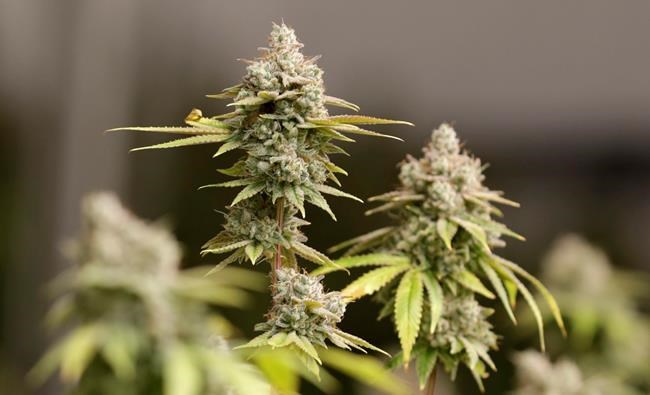
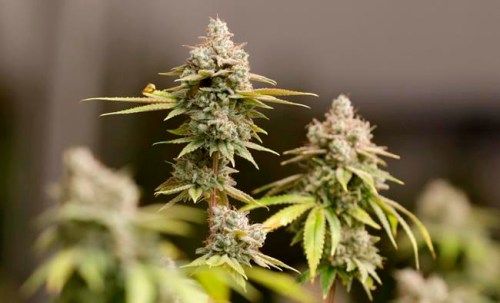
FILE - This Monday, Jan. 28, 2019 file photo shows marijuana buds ready for harvest in Akron, Ohio. A study shows marijuana is sending more people to the emergency room in one large Denver hospital. Inhaled weed caused the most severe problems. Marijuana-infused foods and candies also led to trouble.(AP Photo/Tony Dejak)

“It was hard to know if these were just anecdotes or if there was a true phenomenon,” said lead author Dr. Andrew Monte of UCHealth University of Colorado Hospital.

Three deaths in Colorado tied to edible products also prompted the study.

Emergency room records from Monte’s hospital show a three-fold increase in marijuana cases since the state became the first to allow sales of recreational marijuana in January 2014. Nearly a third of patients were admitted to the hospital, evidence of severe symptoms, Monte said.

In 2012, the ER saw an average of one patient every other day with a marijuana-caused problem. By 2016, the count was two to three per day.

That’s not enough to swamp the emergency department, Monte said, but it stresses an already burdened system.

Most people can use marijuana safely, Monte said, but with its increased availability and higher THC concentrations, “we may be seeing more adverse drug reactions,” he said.

THC is the part of marijuana that gets people high.

A growing cannabis industry promotes the drug as a cure-all while downplaying dangers, said Dr. Erik Messamore, a psychiatrist at Northeast Ohio Medical University who wasn’t involved in the research. More than 30 states now allow marijuana for at least medical use. New Jersey is debating becoming the 11th state to approve recreational pot. The U.S. government considers marijuana illegal.

“You can’t trust the people who sell the drugs to be upfront with the risk,” Messamore said, calling for warning labels similar to those on tobacco products.

The analysis confirmed edibles are trouble. Statewide, they made up less than 1 per cent of total cannabis sales, measured by THC content. Yet 11 per cent of ER visits were triggered by edibles.

Monte said edibles are too dangerous to be part of the recreational marketplace. Slow to kick in, their effects last too long for a good party drug, he said. They work better for those who want to use them as medicine.

Yet information on safe dosing is lacking, as Denver resident Arlene Galchinsky learned. She took a marijuana gummy for pain on top of a prescription narcotic, becoming so disoriented her husband called paramedics. Galchinsky, 79, didn’t go to the ER, but the experience shook her up.

“It was extremely scary,” she said of the feeling. “When was this going to go away? It was so frightening.”
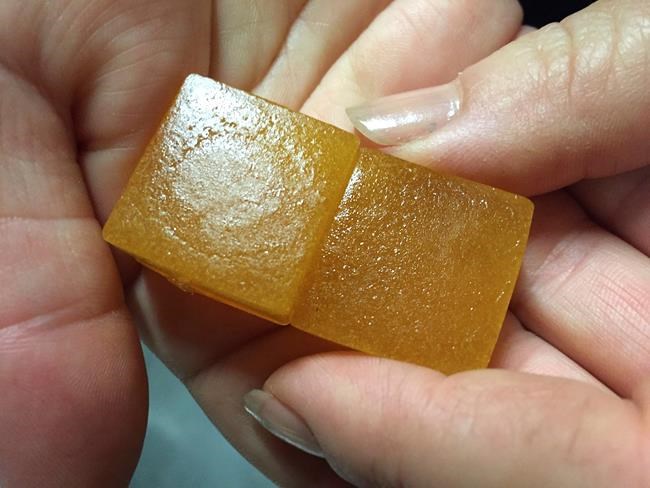
FILE - This Thursday, June 2, 2016 file photo shows lime-flavored cannabis-infused gummy candy in Portland, Ore., on the first day recreational marijuana users could legally purchase marijuana edibles and oils in the state. A study shows marijuana is sending more people to the emergency room in one large Denver hospital. Inhaled weed caused the most severe problems. Marijuana-infused foods and candies also led to trouble.(AP Photos/Gillian Flaccus)

In the state-funded study , there were 2,567 emergency visits at the Denver hospital caused by marijuana from 2012-2016. It’s not just tourists; 9 out of 10 cases were Colorado residents.

Seventeen per cent of the visits were for uncontrolled bouts of vomiting. It was most often from inhaled marijuana, not edibles.

Twelve per cent of the cases were for acute psychosis, where people without a history of mental disorders lose touch with reality. That was more frequently seen with edibles.

Intoxication and heart problems were other common complaints.

In an editorial, Dr. Nora Volkow, director of the National Institute on Drug Abuse, called for more research on the benefits and harms of marijuana. She and co-author Ruben Baler wrote there is an “urgent need” for greater oversight of manufacturing and labeling as marijuana use increases with state legalization.

Monte, an ER doctor who specializes in toxicology, doesn’t use marijuana. “I’m too busy,” he said. “I can’t spend time being high.”

___

The Associated Press Health & Science Department receives support from the Howard Hughes Medical Institute’s Department of Science Education. The AP is solely responsible for all content.

___

Follow AP’s complete marijuana coverage: https://apnews.com/Marijuana .
Report Error Submit a Tip

More Stories

Federal government to build $267-M emergency research lab in Winnipeg

Chris Kitching 6 minute read Preview

Federal government to build $267-M emergency research lab in Winnipeg

Chris Kitching 6 minute read Updated: Yesterday at 4:42 PM CDT

The federal government says it will build a $267-million medical countermeasures laboratory in Winnipeg with the goal of preparing Canada for future pandemics or outbreaks.

Expected to open in 2033, the national site will help the country develop vaccines, therapeutics and diagnostic tools, Winnipeg Liberal MP Terry Duguid said.

“This is a big deal for our city and for our province, a big deal for life sciences in Canada,” he told reporters Wednesday. “This facility is going to help protect the nation and help protect the world.”

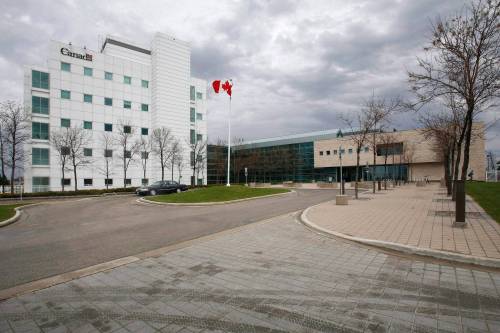
Ottawa said the site — to be located next to the National Microbiology Laboratory’s Canadian Science Centre for Human and Animal Health on Arlington Street, just north of William Avenue — draws on lessons learned during the COVID-19 pandemic.

Read
Updated: Yesterday at 4:42 PM CDT

Marijuana ER visits climb in Denver hospital study

Carla K. Johnson, The Associated Press 4 minute read Preview

Marijuana ER visits climb in Denver hospital study

Carla K. Johnson, The Associated Press 4 minute read Monday, Mar. 25, 2019

Five years after Colorado first legalized marijuana, a new study shows pot's bad effects are sending more people to the emergency room.

Inhaled marijuana caused the most severe problems at one large Denver area hospital. Marijuana-infused foods and candies, called edibles, also led to trouble. Patients came to the ER with symptoms such as repeated vomiting, racing hearts and psychotic episodes.

The study, published Monday in Annals of Internal Medicine, stemmed from tales of tourists needing emergency care after gobbling too many marijuana gummies.

"It was hard to know if these were just anecdotes or if there was a true phenomenon," said lead author Dr. Andrew Monte of UCHealth University of Colorado Hospital.

Read
Monday, Mar. 25, 2019

Concordia doctor denies responsibility for Calgary man’s permanent disability

Erik Pindera 4 minute read Preview

Concordia doctor denies responsibility for Calgary man’s permanent disability

Erik Pindera 4 minute read Tuesday, Aug. 4, 2026

A Concordia Hospital doctor accused in a negligence lawsuit after a Calgary man was left permanently disabled when he was given a massive overdose of a powerful sedative has denied she ordered he be given the drug.

Zachary Hoogerdyk’s father, Edward Hoogerdyk, and the Alberta government filed their statement of claim earlier this year in Court of King’s Bench naming the Winnipeg Regional Health Authority, provincial health agency Shared Health, Concordia Hospital, Dr. Anna Ziomek and two other hospital staff as defendants.

Hoogerdyk, who was 23 at the time, went to Concordia’s urgent-care centre with flu-like symptoms and worsening breathing difficulties on March 25, 2024 while he was in Winnipeg on business and to visit family, the lawsuit says.

The claim alleges Ziomek diagnosed Hoogerdyk with low levels of oxygen in his blood and a strain of the flu, before ordering him to be intubated.

Read
Tuesday, Aug. 4, 2026

Puzzles Palace

1 minute read Monday, Jul. 27, 2026

To solve our puzzles, please subscribe with this special offer: |

Goldeyes match record with 11th consecutive win

Taylor Allen 2 minute read Yesterday at 10:05 PM CDT

The Winnipeg Goldeyes needed three innings to cement a victory over the Chicago Dogs on Wednesday night.

The Fish, who ended the evening with 17 hits, drove in 10 runs in the third frame in a 14-5 beatdown over the visitors from the Windy City.

“We really capitalised this time,” said centre fielder Noah Marcelo “We faced a couple of pitchers (in the third), and I was in the locker room and I was almost up again — I was changing my pants because I ripped my pants. But we’re just rolling right now.

“This was a special game, for sure.”

It’s your call on further contact with ‘dad’

Maureen Scurfield 5 minute read 2:01 AM CDT

DEAR MISS LONELYHEARTS: My birth father has shown up in Manitoba — he got a transfer here for a job. He has never expressed any interest in me before except to send my mother pay-off money over the years.

At his insistence, I met recently with him and his wife for lunch and then we went to a mall where he wanted to buy me really expensive running shoes. I’m an adult — not a little kid.

Also, “Dad” is not a success in my eyes. Where was he when I really needed him?

Unfortunately, I look just like him — the younger version my mom says she fell for years ago. Apparently, I passed muster at the first meeting with him and he wants to have a barbecue at their house to show me around to other relatives.