Alaska seafood industry making plans for China tariff impact

Advertisement

Advertise with us

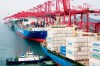
KODIAK, Alaska - Alaska's seafood industry is exploring strategies to reduce damage from the Trump administration's trade dispute with China, officials said.

Read this article for free:


or

Already have an account? Log in here »

To continue reading, please subscribe:

Subscribe and receive a limited-edition Free Press branded hat or tote.

Digital Subscription

One year of digital access for only $205*

  • Enjoy unlimited reading on winnipegfreepress.com
  • Read the E-Edition, our digital replica newspaper
  • Access News Break, our award-winning app
  • Play interactive puzzles

*First annual payment billed as $205.00 + GST for one year. This annual subscription will automatically renew at $233.00 + GST every 52 weeks (10% off the regular annual price of $259.35). Offer available to new and qualified returning subscribers only. Cancel any time.

To continue reading, please subscribe:

Add Free Press access to your Brandon Sun subscription for only an additional

$1 for the first 4 weeks*

  • Enjoy unlimited reading on winnipegfreepress.com
  • Read the E-Edition, our digital replica newspaper
  • Access News Break, our award-winning app
  • Play interactive puzzles
Start now

*Your next Brandon Sun subscription payment will increase by $1.00 and you will be charged $17.95 plus GST for four weeks. After four weeks, your payment will increase to $24.95 plus GST every four weeks.

Hey there, time traveller!
This article was published 10/05/2019 (2668 days ago), so information in it may no longer be current.

KODIAK, Alaska – Alaska’s seafood industry is exploring strategies to reduce damage from the Trump administration’s trade dispute with China, officials said.

The Alaska Seafood Marketing Institute plans to explore how Alaska can enter additional markets to expand the state’s seafood brand, The Kodiak Daily Mirror reported Thursday.

The U.S. plans to raise tariffs on $200 billion in Chinese imports from 10% to 25% Friday.

China is the largest export market and re-processor of Alaska seafood, with about $989 million worth of sales to China in 2017 alone. That is more than 50% of the state’s seafood products, the institute said.

The institute is looking at “both traditional and nontraditional markets” for seafood globally, Executive Director Jeremy Woodrow said.

A survey of Alaska seafood businesses found 65% immediately lost sales after tariffs were implemented, 50% reported sales delays and 36% reported lost customers in China. Another 21% reported they had unanticipated costs because of the trade dispute, Woodrow said.

“Because of the conflict, it makes our product less competitive in that marketplace,” Woodrow said.

In March, Woodrow told the Alaska House Fisheries Committee that 2018 seafood sales were off by more than 20% and that the industry should expect to take a big hit in the Chinese market in 2019.

Tariffs can have different market effects depending on the seafood species being sold, such as crab or salmon, and whether the product is live or reprocessed, said Garrett Evridge of the McDowell Group, an economic analysis firm in Anchorage.

“With all this trade stuff, the impact of uncertainty is the largest impact,” Evridge said.

___

Information from: Kodiak (Alaska) Daily Mirror, http://www.kodiakdailymirror.com

Report Error Submit a Tip

More Stories

Carney’s defence of Lake Ontario carries enormous weight

Niigaan Sinclair 4 minute read Preview

Carney’s defence of Lake Ontario carries enormous weight

Niigaan Sinclair 4 minute read Yesterday at 4:28 PM CDT

For centuries on Turtle Island (North America), explorers, map makers, and political leaders have erased Indigenous place names and substituted them — more often than not — with political, ethnocentric, and self-aggrandizing names.

In recent years, a few places on the continent have had Indigenous names re-established, but as of today, few of the original names are “official.”

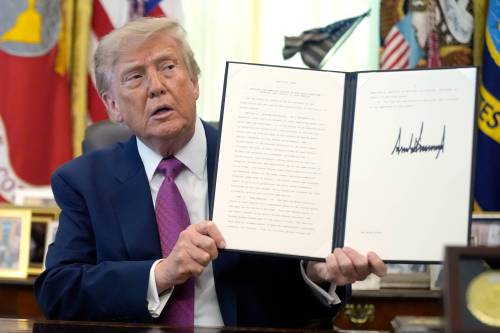
So, it was no surprise when U.S. President Donald Trump on Thursday signed an executive order directing the U.S. Department of the Interior and Board on Geographic Names to take steps within 30 days to officially rename Lake Ontario as “Lake America.”

The move may have been a result of the Canada-U.S. trade war and Trump’s pettiness and ego, but it also fits in perfectly with his career.

Read
Yesterday at 4:28 PM CDT

Puzzles Palace

1 minute read Monday, Jul. 27, 2026

To solve our puzzles, please subscribe with this special offer: |

Doctor pays $500K to revamp courtyard at care home where he works

By Zoe Pierce 4 minute read Preview

Doctor pays $500K to revamp courtyard at care home where he works

By Zoe Pierce 4 minute read Thursday, Aug. 27, 2026

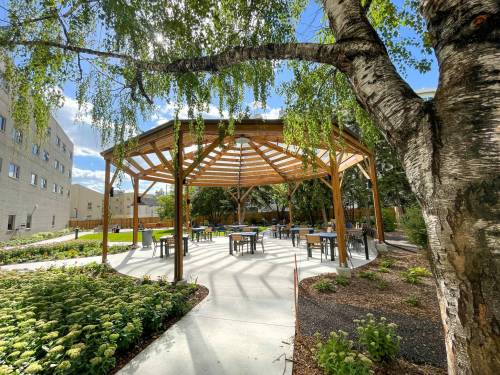
Fifty years after Dr. Pravinsagar Mehta began caring for residents at Actionmarguerite, a courtyard he had long watched deteriorate is getting a new life after he and his wife committed $500,000 to its redevelopment and long-term maintenance.

Read
Thursday, Aug. 27, 2026

‘Not his best work,’ Kinew says of Trump’s order to rename Lake Ontario

Carol Sanders 3 minute read Preview

‘Not his best work,’ Kinew says of Trump’s order to rename Lake Ontario

Carol Sanders 3 minute read Thursday, Aug. 27, 2026

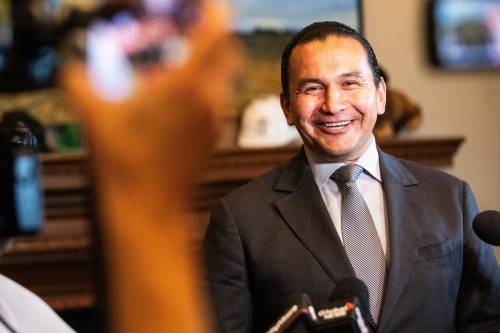
An executive order by U.S. President Donald Trump to rename Lake Ontario as Lake America is “sad,” Premier Wab Kinew says.

Read
Thursday, Aug. 27, 2026

Beware invasive, ‘frightening’ waterhemp

Laura Rance-Unger 4 minute read Preview

Beware invasive, ‘frightening’ waterhemp

Laura Rance-Unger 4 minute read 2:01 AM CDT

There’s a threat lurking on the edge of Manitoba farmers’ fields this fall that’s even scarier than the escalating trade war with their biggest customer.

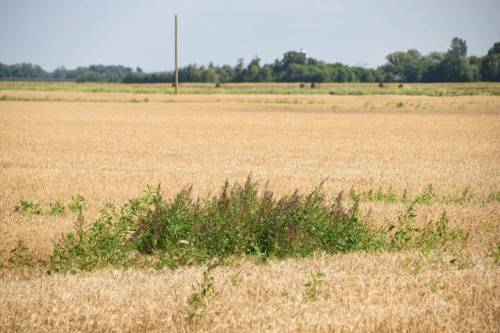
Provincial extension advisers are warning farmers to watch for a weed known as “tall waterhemp,” which, true to its name, may already be towering above ready-to-harvest crops.

Those wispy tentacles waving in the breeze look pretty innocuous from a distance. But this highly invasive member of the pigweed family produces hundreds of thousands of seeds that are just itching for dispersal through farmers’ combines and across their fields.

Each of those tiny seeds — one small pill container filled halfway holds 44,000 — can produce plants with stems the width of saplings and heights of two to five metres. One or two plants can quickly turn into a patch. If waterhemp takes over a field, it can choke out the growing crop and cut yields by more than 90 per cent.

Read
2:01 AM CDT

Owners, agents reviewing bids to purchase Fort Garry Hotel

Chris Kitching 3 minute read Preview

Owners, agents reviewing bids to purchase Fort Garry Hotel

Chris Kitching 3 minute read Thursday, Aug. 27, 2026

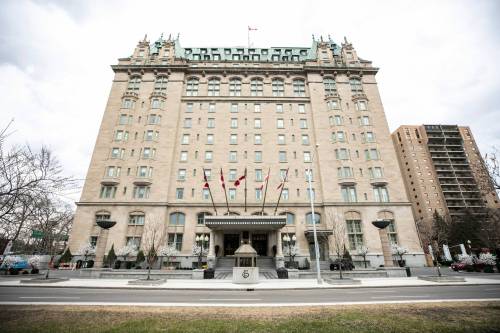
Downtown Winnipeg’s Fort Garry Hotel is a step closer to a potential sale.

Read
Thursday, Aug. 27, 2026