Science summary: A look at novel coronavirus research around the globe

Advertisement

Advertise with us

Thousands of scientists around the world are working on problems raised by the COVID-19 pandemic. Here is a summary of some recent research from peer-reviewed academic journals and scientific agencies:

Read this article for free:


or

Already have an account? Log in here »

To continue reading, please subscribe:

Subscribe and receive a limited-edition Free Press branded hat or tote.

Digital Subscription

One year of digital access for only $205*

  • Enjoy unlimited reading on winnipegfreepress.com
  • Read the E-Edition, our digital replica newspaper
  • Access News Break, our award-winning app
  • Play interactive puzzles

*First annual payment billed as $205.00 + GST for one year. This annual subscription will automatically renew at $233.00 + GST every 52 weeks (10% off the regular annual price of $259.35). Offer available to new and qualified returning subscribers only. Cancel any time.

To continue reading, please subscribe:

Add Free Press access to your Brandon Sun subscription for only an additional

$1 for the first 4 weeks*

  • Enjoy unlimited reading on winnipegfreepress.com
  • Read the E-Edition, our digital replica newspaper
  • Access News Break, our award-winning app
  • Play interactive puzzles
Start now

*Your next Brandon Sun subscription payment will increase by $1.00 and you will be charged $17.95 plus GST for four weeks. After four weeks, your payment will increase to $24.95 plus GST every four weeks.

Hey there, time traveller!
This article was published 16/04/2020 (2347 days ago), so information in it may no longer be current.

Thousands of scientists around the world are working on problems raised by the COVID-19 pandemic. Here is a summary of some recent research from peer-reviewed academic journals and scientific agencies:

A study in the journal Nature has looked at when a person with lab-confirmed COVID-19 is most infectious. In examining 77 pairs of people, one of whom had been infected by the other, it found that the sick person had the highest viral load right about the time their symptoms began to appear. The paper estimates that 44 per cent of the study cases resulted from contact with an infected person before symptoms began. It concludes that infectiousness peaks on or just before people begin to feel sick, and suggests public health measures should be adjusted to account for probable substantial presymptomatic transmission.
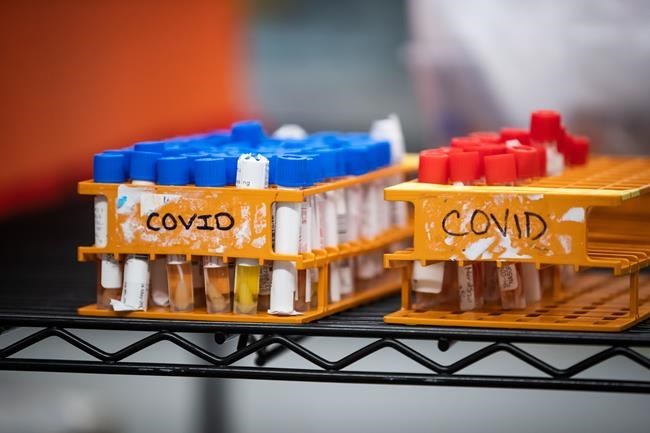
Specimens to be tested for COVID-19 are seen at LifeLabs after being logged upon receipt at the company's lab, in Surrey, B.C., on Thursday, March 26, 2020. THE CANADIAN PRESS/Darryl Dyck

Canadian research that suggested dogs could be a possible source of the novel coronavirus is getting a rough ride. The original paper, published in Molecular Biology and Evolution, said the novel coronavirus has far less of a certain type of genetic material than other viruses in the same family. It said dogs carry a virus that has a similar profile of that material, suggesting canines could be the original source of the virus causing COVID-19. Other scientists, however, have dismissed that as speculation. They point out that there is wide variation between viruses and that similarities between the novel coronavirus and the dog virus don’t necessarily mean the two are linked.

A paper in the journal Science says the future of social distancing and other non-drug ways to slow the spread of COVID-19 depends on how long immunity lasts for people who have been infected. The paper says immunity to reinfection probably fades over time and wintertime outbreaks are likely to occur for years to come. It says those outbreaks will be just as capable of overloading health-care capacity as the current pandemic. The authors conclude that without a vaccine or other pharmaceutical developments, social distancing and other controls may be needed off and on through 2022, with the disease itself reappearing as late as 2025.

The journal Psychology, Health and Medicine has examined the mental-health impacts of COVID-19 in 7,236 respondents from China. It found 35 per cent suffered anxiety, 20 per cent showed depressive symptoms and 18 per cent had poor sleep during the outbreak in that country. People under 35 years old were most affected. Health-care workers had the highest rate of poor sleep, and that rate increased the more time they spent at work. The journal recommends continuous monitoring of such workers during outbreaks.

One Chinese study that has not been peer-reviewed says it has found little benefit to the use of hydroxychloroquine, an antimalarial drug that has been the centre of controversy. The study compared 75 adult COVID-19 patients who received standard treatment with 75 who received treatment along with hydroxychloroquine. It found no measurable differences in viral load between the two groups after 28 days — nor did it find differences at five points during that interval — suggesting hydroxychloroquine did not cure the infection. Some symptoms were alleviated, however, once researchers stopped giving other antiviral drugs to those taking hydroxychloroquine. The study found adverse side effects were three times higher for those who took hydroxychloroquine, the most common being diarrhea.

A paper to be published in the Journal of Infection has broken down how long different groups remained infectious with the novel coronavirus. Researchers found the median time between diagnosis and the last positive test for the virus was 26 days. There was no significant difference between men and women. Patients younger than 60 carried the virus for about 20 days and those who were older were infectious for 28 days.

This report by The Canadian Press was first published April 16, 2020

Report Error Submit a Tip

More Stories

Canada-U.S. trade relationship is broken, but the damage can — and will — be repaired

Tom Brodbeck 5 minute read Preview

Canada-U.S. trade relationship is broken, but the damage can — and will — be repaired

Tom Brodbeck 5 minute read Thursday, Sep. 17, 2026

Canada needs to get serious about diversifying its trade beyond the United States. But at the same time, Canadians should expect relations with the U.S. to normalize after Donald Trump is no longer in the White House.

For generations, Canada-U.S. trade was considered almost a fact of geography. The two countries share the world’s longest undefended border, deeply integrated supply chains and a century of commercial relationships.

Canadian manufacturers depend on American customers. American manufacturers depend on Canadian suppliers. Energy, agriculture, automotive production and countless other industries operate across the border as though it barely exists.

That isn’t going to change dramatically, even in the midst of a bitter trade war unleashed by the U.S. president.

Read
Thursday, Sep. 17, 2026

Puzzles Palace

1 minute read Monday, Jul. 27, 2026

To solve our puzzles, please subscribe with this special offer: |

Klein has burned bridges with PM, Gillingham says

Joyanne Pursaga 3 minute read Preview

Klein has burned bridges with PM, Gillingham says

Joyanne Pursaga 3 minute read Yesterday at 5:51 PM CDT

One mayoral candidate accused another of writing a column so critical it could compromise his ability to work with the federal government.

Read
Yesterday at 5:51 PM CDT

Gillingham in lead with decided voters

Nicole Buffie 6 minute read Preview

Gillingham in lead with decided voters

Nicole Buffie 6 minute read Yesterday at 6:55 PM CDT

A cloud of uncertainty is hanging over Winnipeg as October’s municipal election nears.

Three months after a poll showed more than 40 per cent of Winnipeggers wanted to see someone other than current mayor Scott Gillingham elected, a new Abacus Data poll indicates more than half of Winnipeg voters are undecided heading into next month’s civic election.

Of decided voters, 55 per cent favour Gillingham compared to 23 per cent for former councillor and provincial cabinet minister Kevin Klein and 11 per cent for funeral director Mike Vogiatzakis.

Of all respondents, just over 50 per cent said they were unsure while 13 per cent said they will not vote.

Read
Yesterday at 6:55 PM CDT

Give-and-take relationship of Roman leaders takes centre stage in Harris’s historical fiction

Reviewed by Kathryne Cardwell 4 minute read Preview

Give-and-take relationship of Roman leaders takes centre stage in Harris’s historical fiction

Reviewed by Kathryne Cardwell 4 minute read 2:01 AM CDT

British novelist Robert Harris’s latest work is a reflection on tyranny, corruption and betrayal among all-powerful political leaders.

You might be forgiven for thinking it’s a contemporary thriller — it’s actually historical fiction set in ancient Rome.

A former BBC journalist, Harris debuted as a novelist in 1992 with Fatherland, an alternative history where Nazi Germany won the Second World War.

Since then, the prolific author has become best-known for his works of historical fiction, especially his ancient Rome trilogy released from 2006-2015 and the novel Conclave, which was published in 2016 and was made into the film of the same name in 2024.

Read
2:01 AM CDT

Siloam Mission, WFPS discussing on-site paramedic to reduce staggering number of emergency calls

Scott Billeck 4 minute read Preview

Siloam Mission, WFPS discussing on-site paramedic to reduce staggering number of emergency calls

Scott Billeck 4 minute read Yesterday at 2:00 AM CDT

Winnipeg’s fire-paramedic service and its largest homeless-serving organization are discussing what it would look like to station at least one paramedic at Siloam Mission, as emergency calls to the downtown facility surge.

The ongoing discussions come as Winnipeg Fire Paramedic Service crews were dispatched 1,771 times during the first eight months of the year to the two adjacent Siloam properties at 303 Stanley St. and 300 Princess St.

WFPS said most of the calls were related to overdoses or other consequences of substance use, with the total nearly double the 854 calls recorded over the same period last year. By comparison, there were 831 calls during the same span in 2024, and 591 in 2023.

“The number of emergency calls isn’t sustainable for us as a service, but it’s certainly not sustainable for them as an agency trying to provide services,” WFPS chief Ryan Sneath told the Free Press. “And they recognize that they’re impacting emergency services, not them specifically, but the site in a significant way.”

Read
Yesterday at 2:00 AM CDT