Anxiety, confusion, terror, relief: Giving birth in pandemic
Advertisement
Read this article for free:
or
Already have an account? Log in here »
To continue reading, please subscribe:

Digital Subscription
One year of digital access for only $205*
- Enjoy unlimited reading on winnipegfreepress.com
- Read the E-Edition, our digital replica newspaper
- Access News Break, our award-winning app
- Play interactive puzzles
*First annual payment billed as $205.00 + GST for one year. This annual subscription will automatically renew at $233.00 + GST every 52 weeks (10% off the regular annual price of $259.35). Offer available to new and qualified returning subscribers only. Cancel any time.
To continue reading, please subscribe:
Add Free Press access to your Brandon Sun subscription for only an additional
$1 for the first 4 weeks*
- Enjoy unlimited reading on winnipegfreepress.com
- Read the E-Edition, our digital replica newspaper
- Access News Break, our award-winning app
- Play interactive puzzles
*Your next Brandon Sun subscription payment will increase by $1.00 and you will be charged $17.95 plus GST for four weeks. After four weeks, your payment will increase to $24.95 plus GST every four weeks.
Read unlimited articles for free today:
or
Already have an account? Log in here »
Hey there, time traveller!
This article was published 16/03/2021 (1986 days ago), so information in it may no longer be current.
NEW YORK – Pregnancy, birth and life with a newborn in the middle of a pandemic has brought on high anxiety, ever-shifting hospital protocols and intense isolation for many of the millions of women who have done it around the world.
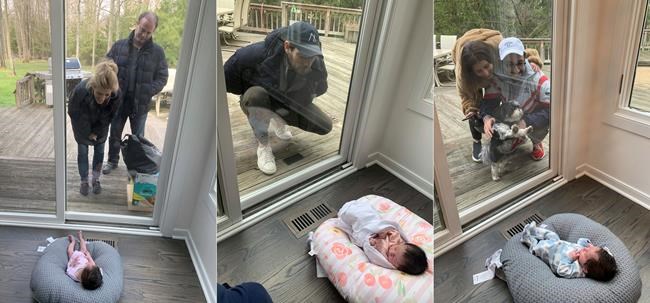
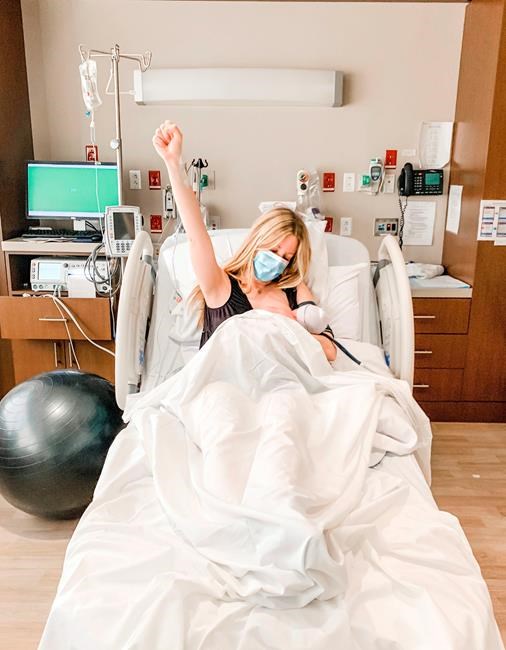
As the pandemic stretches into a second year and economic worry persists, demographers are studying the reasons for an anticipated pandemic baby bust. Women, meanwhile, have learned to go through labour in masks and to introduce fresh arrivals to loved ones through windows.
Fear, anxiety and chaos were particularly acute in New York City during the early months of the pandemic in what was one of the country’s most devastating hot spots.
Whitnee Hawthorne gave birth to her second son May 7 in a New York hospital. Ten months later, her baby has yet to meet his paternal grandparents, who live in Louisiana.
“Our first son met them the second week of his life,” said Hawthorne, whose husband was thankfully by her side after a ban on birth partners during delivery was lifted at their hospital several weeks before her time.
As a Black woman, she said, she had decided she would leave the state rather than be in labour alone.
“I’m keenly aware of the high maternal death rates for Black women and also, having had a negative experience with a nurse during my first birth, I was scared,” Hawthorne said.
Like Hawthorne, Nneoma Maduike was masked when she gave birth Aug. 1 to her second child, a son, after a pregnancy filled with unknowns.
“The anxiety was absolutely awful. Information was evolving as quickly as anything you can imagine,” said Maduike, who lives in Brooklyn. “I didn’t know what guidance to follow. My husband’s a doctor and he was still going in every single day and that brought on even more anxiety.”
Twenty-four hours after a cesarean section, Maduike was cleared to go home. Hospitals at the time were attempting to protect new mothers and babies from the virus by shuffling them out early, lightening the load as well on skeleton staffs.
While her husband was on hand for the birth, neither knew the hospital would require their newborn to stay in Maduike’s room, rather than the nursery, as a precaution. Her husband went home to be with their older child, leaving her to care for the baby alone soon after surgery. Then it was a struggle getting her husband back inside the hospital due to safety concerns.
There were no visitors, of course, in stark contrast to her first delivery. No friends were permitted to drop by the hospital with balloons, flowers and food. Maduike’s mother, who lives in Texas, didn’t move in for an extended stay after the baby came home, a tradition in their Nigerian culture. Her mother did manage a far shorter visit, but with little time to gather the many ingredients for ji mmiri oku, a yam pepper soup offered to new moms after birth.
Maduike won’t soon forget meeting her baby in a mask. “There’s something so sad about that,” she said. “You’re terrified to eliminate that barrier because you just don’t know.”
Due to pandemic travel restrictions, her father remains stuck in Nigeria and still hasn’t met her baby.
Liz Teich and her husband moved with their 3-year-old in February 2020 from Brooklyn to suburban New Rochelle before she gave birth to their second child about two months later. They landed within a containment zone in one of the earliest COVID surges in the U.S. The hospital, under pressure from women due to deliver there, had just lifted its ban on birth partners in the delivery room when Teich went into labour.
“My husband had to leave the hospital two hours after the birth,” she said. “I was lucky. I suffered hemorrhaging after the first birth. I was really concerned to be alone during a pandemic when the hospital was short-staffed.”
Thirty hours after giving birth, Teich and her baby were home.
“I didn’t even shower. I was too scared to touch the bathroom. We didn’t know if the virus was airborne or whether it was on surfaces, or really anything about the virus at all. I mostly laboured at home because I was too scared to go,” she said.
Teich found herself doubled over in a hospital parking garage during contractions less than two minutes apart after circling with her husband looking for a spot because valet service had been eliminated. She didn’t want to be dropped off, fearing he wouldn’t be allowed in on his own.
“I thought, you know, if I give birth in the car it might be safer than in the hospital,” she laughed.
The pain of separation was felt in other ways, too.
Parham Zar, founder and managing director of the Egg Donor & Surrogacy Institute in Los Angeles, said that in the early months of the pandemic, parents awaiting 52 births via surrogate were impacted by travel barriers at his agency alone.
“The vast majority of parents were located in China, and while the biological parents are typically present during the child’s birth, they couldn’t travel to the U.S. to unite with their children. Some surrogates took care of the children for months before they could be joined by his or her biological family,” Zar said.
Jen Guyuron, in Cleveland, gave birth last March to a girl, Gigi, and she’s pregnant again.
“Nobody met Gigi and now we’re coming out with two babies,” she said. “The hospital was basically shutting down right as we walked in. I vividly remember telling my husband that he better not cough or sneeze. We were in survival mode.”
Her mom, who with her dad waited in their car at the hospital while she was in labour, wrote Guyuron a poem after Gigi arrived. It inspired Guyuron to write a poem to her new daughter. She turned her words into a children’s book, “The Baby in the Window,” which she self-published as a way to let other pandemic moms know they aren’t alone.
The story looks forward to easier times, when parents can freely let others hold their babies, visit with loved ones without masks and let their children out to play without pandemic worry.
In Gigi’s case, siblings, grandparents, cousins and friends first met her through the windows of Guyuron’s home. There were socially distanced dinners in her parents’ garage and meals on her patio wrapped in blankets by a heat lamp.
“There’s a lot of sadness being isolated in our houses without family around,” Guyuron said. “It’s been really hard as a new mom. You expect to come home to all these big hugs and happiness and family, and we didn’t have any of that.”
Since Gigi has largely known only masks on the faces of others, Guyuron wonders if revealed faces will be jarring to her.
“She only knows masks,” Guyuron said. “They definitely don’t scare her.”
___
Follow Leanne Italie on Twitter at http://twitter.com/litalie
Related Articles
Mothers-to-be stressed out by COVID-19 restrictions
Advertisement Advertise With Us
Advertisement Advertise With Us