Time, misinfo complicate teaching 9/11 to kids born after it

Advertisement

Advertise with us

COLUMBUS, Ohio (AP) — Nagla Bedir didn't discuss Sept. 11 with her New Jersey high school students last year. Mid-pandemic, with remote learning, it wasn't a conversation she wanted to have via computer screen. But this year, returning to the classroom just after the end of America's longest war, she figures she can't not teach about it.

Read this article for free:


or

Already have an account? Log in here »

To continue reading, please subscribe:

Subscribe and receive a limited-edition Free Press branded hat or tote.

Digital Subscription

One year of digital access for only $205*

  • Enjoy unlimited reading on winnipegfreepress.com
  • Read the E-Edition, our digital replica newspaper
  • Access News Break, our award-winning app
  • Play interactive puzzles

*First annual payment billed as $205.00 + GST for one year. This annual subscription will automatically renew at $233.00 + GST every 52 weeks (10% off the regular annual price of $259.35). Offer available to new and qualified returning subscribers only. Cancel any time.

To continue reading, please subscribe:

Add Free Press access to your Brandon Sun subscription for only an additional

$1 for the first 4 weeks*

  • Enjoy unlimited reading on winnipegfreepress.com
  • Read the E-Edition, our digital replica newspaper
  • Access News Break, our award-winning app
  • Play interactive puzzles
Start now

*Your next Brandon Sun subscription payment will increase by $1.00 and you will be charged $17.95 plus GST for four weeks. After four weeks, your payment will increase to $24.95 plus GST every four weeks.

Hey there, time traveller!
This article was published 09/09/2021 (1838 days ago), so information in it may no longer be current.

COLUMBUS, Ohio (AP) — Nagla Bedir didn’t discuss Sept. 11 with her New Jersey high school students last year. Mid-pandemic, with remote learning, it wasn’t a conversation she wanted to have via computer screen. But this year, returning to the classroom just after the end of America’s longest war, she figures she can’t not teach about it.

So later this month — after students in her international diplomacy class have introduced themselves and agreed on how they’ll have respectful conversations — she plans to ask two questions: What do you know about 9/11, why it happened, and the aftermath? And how is it connected to Afghanistan?

She isn’t sure what they’ll say, but she’s set on having the discussion.

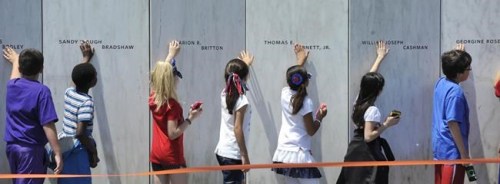
FILE - In this May 24, 2016 file photo, fourth grade students from Baldwin-Whitehall school district near Pittsburgh, touch the
FILE - In this May 24, 2016 file photo, fourth grade students from Baldwin-Whitehall school district near Pittsburgh, touch the "wall of names" at the Flight 93 Memorial in Shanksville, Pa.,during their classroom experience. (Todd Berkey/The Tribune-Democrat via AP, File)

“I think it’s really important that teachers don’t shy away from teaching about these things,” says Bedir, co-founder of the organization Teaching While Muslim. Many educators worry about teaching anything that’s considered political, she says, “and I think it’s really unfortunate because there is so much misinformation and disinformation in the world.”

Along with packed curriculums and calendars, those are just some of the challenges of teaching about Sept. 11 to kids born since that day, who get so much of their information from online and social media spaces, and sometimes don’t have the interest or media literacy to differentiate truth from conspiracy theories that persist 20 years later.

Today’s students don’t have memories from that day but have heard about it all their lives, and that’s bound to lead to questions, says Jennifer Grygiel, a Syracuse University professor who researches social media and the internet. If they aren’t given factual information that helps them understand what happened and why, untruths can fill the void.

“Conspiracy theories take root when there are unknowns, and there were so many unknowns about that day,” Grygiel says. “In the absence of information, people go online. And what do they find? It depends.”

An online search for content related to 9/11 conspiracy theories turns up millions of hits: videos, blogs and whole websites devoted to different theories, as well as accurate information that attempts to debunk the myths. Platforms like YouTube and Facebook say they’ve taken steps to curb the spread of 9/11 misinformation by promoting authoritative information about the attacks, or by adding links to other sources that debunk myths.

Questions about conspiracy theories and 9/11 misinformation often arise in training that the National Sept. 11 Memorial & Museum has offered for hundreds of teachers, according to Noah Rauch, its senior vice president for education and public programs. The subject comes up so much that it developed specific sessions for teachers who want to use 9/11 and related conspiracy theories to teach critical thinking skills.

Longtime history teacher Kathy Durham uses 9/11 to teach her high schoolers in rural West Wendover, Nevada, about perspectives and primary sources, looking at documentaries and old news coverage and requiring them to talk to adults who remember that day.

Occasionally students claim the attacks were an inside job, and Durham says she pushes them to analyze the credibility of sources and evidence.

“It’s really, really a delicate thing, because my job is to teach kids to think and not tell them what to think,” Durham says.

Some schools teach about 9/11 around the anniversary, briefly discuss it in contemporary history classes or incorporate resources offered by the memorial, the government, nonprofits or teachers unions. Often the approach is up to the educator, even in states where education standards require it for certain grades or classes.

“I think that the way it’s been taught has largely been memorializing the events versus really digging into the context of 9/11 and the ongoing sort of results of 9/11,” says Jeremy Stoddard, a University of Wisconsin-Madison professor who has researched that subject.

In the early years, it was an emotionally charged topic, but now more of the challenge is engaging students so distanced from it, says Anthony Gardner, whose brother Harvey died at the World Trade Center. Gardner founded the September 11th Education Trust, which released a curriculum to help teachers incorporate 9/11-related lessons not just on the anniversary but in coursework throughout the year.

It’s important, Gardner says, that students hear about those who died, the aftermath, related deaths that came later, and the lessons learned.

FILE - Matthew Prosser and Gina Rhoads of Shanksville-Stonycreek High School ring the Bells of Remembrance during the service of remembrance tribute to the passengers and crew of Flight 93 at the Flight 93 National Memorial in Shanksville, Pa, Sunday, Sept. 11, 2016, as the nation marks the 15th anniversary of the Sept. 11 attacks. (AP Photo/Jared Wickerham, File)

“We made that pledge to never forget,” he says.

Corey Winchester, a high school history teacher in Evanston, Illinois, tries to teach about Sept. 11 not as just a moment in time but “something that we’re still interacting with” and a lesson about perspectives. That means he might make connections to it while teaching about internment of Japanese-Americans or the Vietnam War, he says.

For some teachers, incorporating personal stories helps drive home the wide impact of 9/11. Liz Prince is having her fifth graders at DeSoto Central Elementary school in Southaven, Mississippi, record an interview with someone they know about a Sept. 11 experience, then share it with classmates. She also ordered books to help with age-appropriate explanations about places that were targeted and people who died.

But Prince says she’s not ready to discuss Afghanistan, which she considers too political for her classroom.

At Princeton High School outside Cincinnati, social studies teacher Jim O’Connor has fielded questions from his students about why U.S. troops were in Afghanistan for so long. He says he’ll tell them his memories about teaching on the day of the attacks, and how, as part of the Air National Guard, he later had to help deploy friends to Iraq. He hopes talking about the sense of patriotism and unity that emerged reminds students that such things are possible.

In New Jersey, Bedir plans to outline the basics of what happened, then have students explore the timeline of U.S. involvement in Afghanistan since even before 2001. She, too, anticipates recounting her own experience, when she was a student herself.

She was 11, attending a school with a view of the smoking New York skyline. Her parents feared for her safety as anti-Muslim sentiment rose after the attacks, and she says they halted her plans to begin wearing a hijab.

She ended up waiting a decade.

___

Klepper, who reported from Providence, R.I., covers misinformation for The Associated Press. Find the reporters on Twitter at https://twitter.com/kantele10 and https://twitter.com/davidklepper.

Report Error Submit a Tip

More Stories

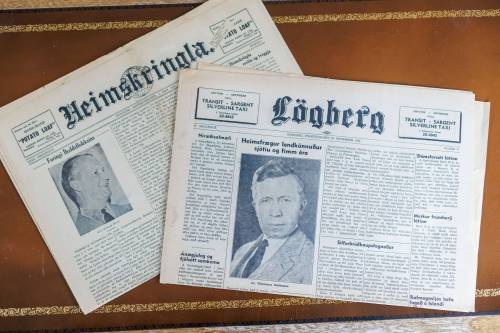
‘We’re small, but we’re strong and mighty’: Lögberg-Heimskringla newspaper celebrates 140 years in Manitoba

Aaron Epp 6 minute read Preview

‘We’re small, but we’re strong and mighty’: Lögberg-Heimskringla newspaper celebrates 140 years in Manitoba

Aaron Epp 6 minute read 6:00 AM CDT

A “friend” of the Icelandic community is now 140 years old.

Lögberg-Heimskringla, a Winnipeg-based newspaper that serves the Icelandic diaspora throughout North America, has published continuously for nearly a century-and-a-half. Staff and supporters celebrated the anniversary Saturday afternoon during a gathering at the Scandinavian Cultural Centre.

“Whatever else it may be, Lögberg-Heimskringla is a friend in print — a familiar cultural institution that has enriched our lives and understanding, informing us and entertaining us at the same time,” editor Stefan Jonasson wrote in the paper’s anniversary issue, published on Sept. 15.

“It has served as a vessel to convey the Icelandic culture and heritage in North America through the course of several generations and changing circumstances, preserving memories from the past, imagining what lies ahead and reinventing itself along the way.”

Read
6:00 AM CDT

U.S. expats in city prepare to cast their ballots

Nicole Buffie 4 minute read Preview

U.S. expats in city prepare to cast their ballots

Nicole Buffie 4 minute read 6:00 AM CDT

American expats are making their voices heard from north of the border for the upcoming U.S. midterm elections.

Jean Dunmire sported a button emblazoned with the word “VOTE” and an American and Canadian flag as she walked out of the Bill and Helen Norrie Library Sunday afternoon. She had just registered to vote in the midterms from afar for the first time.

“I think it’s really important this time around because a lot of the senators and representatives in the House of Representatives are being reelected and I definitely want to see some changes. Things have gone way off the rails with (U.S. President Donald) Trump and he’s just destroying the country,” Dunmire said.

The 76-year-old moved to Lethbridge, Alta., from California in 1969 before settling in Manitoba in 1973. She’s voted in the last two presidential elections but felt it important to cast a ballot in the midterms owing to ongoing conflict in her home country.

Read
6:00 AM CDT

Time, misinfo complicate teaching 9/11 to kids born after it

Kantele Franko And David Klepper, The Associated Press 7 minute read Preview

Time, misinfo complicate teaching 9/11 to kids born after it

Kantele Franko And David Klepper, The Associated Press 7 minute read Thursday, Sep. 9, 2021

COLUMBUS, Ohio (AP) — Nagla Bedir didn't discuss Sept. 11 with her New Jersey high school students last year. Mid-pandemic, with remote learning, it wasn't a conversation she wanted to have via computer screen. But this year, returning to the classroom just after the end of America's longest war, she figures she can't not teach about it.

So later this month — after students in her international diplomacy class have introduced themselves and agreed on how they'll have respectful conversations — she plans to ask two questions: What do you know about 9/11, why it happened, and the aftermath? And how is it connected to Afghanistan?

She isn't sure what they'll say, but she's set on having the discussion.

“I think it’s really important that teachers don’t shy away from teaching about these things,” says Bedir, co-founder of the organization Teaching While Muslim. Many educators worry about teaching anything that’s considered political, she says, “and I think it’s really unfortunate because there is so much misinformation and disinformation in the world.”

Read
Thursday, Sep. 9, 2021

Steinbach Credit Union member warns others after scammer steals $10K

Scott Billeck 5 minute read Preview

Steinbach Credit Union member warns others after scammer steals $10K

Scott Billeck 5 minute read Friday, Sep. 18, 2026

A Winnipeg single mother whose bank account was drained of nearly $10,000 says Steinbach Credit Union needs to warn its members about what she believes is a broader security problem.

The woman, who is not being named to protect her identity, said a scammer gained access to her account earlier this week after calling SCU’s contact centre, claiming to be her and successfully completing the credit union’s authentication process.

She said she knows of at least six others who have experienced similar incidents in which callers impersonate SCU account holders and pass the authentication checks.

The woman discovered something was wrong when her minor son asked why money had been transferred out of an account they jointly hold.

Read
Friday, Sep. 18, 2026

Jets up against the clock

Mike McIntyre 8 minute read Preview

Jets up against the clock

Mike McIntyre 8 minute read Yesterday at 7:03 PM CDT

Time has often been on the side of the Winnipeg Jets, with Cole Perfetti’s famous “Manitoba Miracle” buzzer-beater serving as Exhibit A.

But that won’t necessarily be the case this coming season, when the clock threatens to become a stubborn and, at times, confusing opponent.

Premier Wab Kinew’s decision to adopt permanent daylight time will have a significant impact on the hockey club, both as hosts and visitors, head coach Scott Arniel told the Free Press on Sunday.

Athletes are creatures of habit, and their regular routines are going to be challenged during the period from Nov. 1 to March 14, which covers the majority of the 84-game campaign.

Read
Yesterday at 7:03 PM CDT

AC/DC leaves Winnipeg crowd thunderstruck

Rob Williams 5 minute read Preview

AC/DC leaves Winnipeg crowd thunderstruck

Rob Williams 5 minute read 12:11 AM CDT

AC/DC proved once again that rock ‘n’ roll ain’t noise pollution.

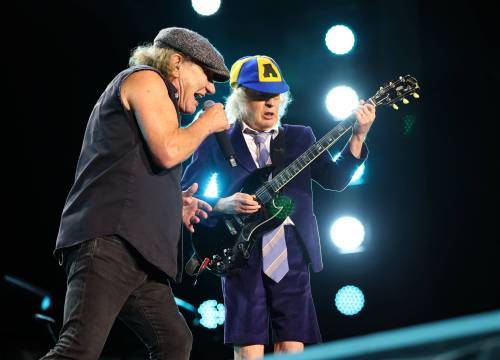
A rowdy stadium of about 35,000 people at Princess Auto Stadium couldn’t agree more as the Australian rock legends made their first trip to the city since 2015 on their PWR/UP tour, cranking out two hours and 20 minutes of raw and raunchy high-voltage material, a mix of blues, crunchy power chords, melodic riffs and double entendres that spanned five decades.

Their wide-ranging appeal was apparent in the demographic makeup of the crowd, which ranged from young children to seniors, many clad in $30 glowing devil horns from the well-stocked merch booth that also offered posters, banners, beer koozies, lanyards, tour books and T-shirts.

There is no one in music quite like guitar god Angus Young. He is 71, but onstage he is ageless, a hyperactive teenager dressed in his signature blue schoolboy uniform and yellow and blue cap, running around, duck-walking and leaping in the air while cranking out riff after riff and extended solos on his trusty black Gibson SG.

Read
12:11 AM CDT