EXPLAINER: How China got blue skies in time for Olympics
Advertisement
Read this article for free:
or
Already have an account? Log in here »
To continue reading, please subscribe:

Digital Subscription
One year of digital access for only $205*
- Enjoy unlimited reading on winnipegfreepress.com
- Read the E-Edition, our digital replica newspaper
- Access News Break, our award-winning app
- Play interactive puzzles
*First annual payment billed as $205.00 + GST for one year. This annual subscription will automatically renew at $233.00 + GST every 52 weeks (10% off the regular annual price of $259.35). Offer available to new and qualified returning subscribers only. Cancel any time.
To continue reading, please subscribe:
Add Free Press access to your Brandon Sun subscription for only an additional
$1 for the first 4 weeks*
- Enjoy unlimited reading on winnipegfreepress.com
- Read the E-Edition, our digital replica newspaper
- Access News Break, our award-winning app
- Play interactive puzzles
*Your next Brandon Sun subscription payment will increase by $1.00 and you will be charged $17.95 plus GST for four weeks. After four weeks, your payment will increase to $24.95 plus GST every four weeks.
Read unlimited articles for free today:
or
Already have an account? Log in here »
Hey there, time traveller!
This article was published 07/02/2022 (1697 days ago), so information in it may no longer be current.
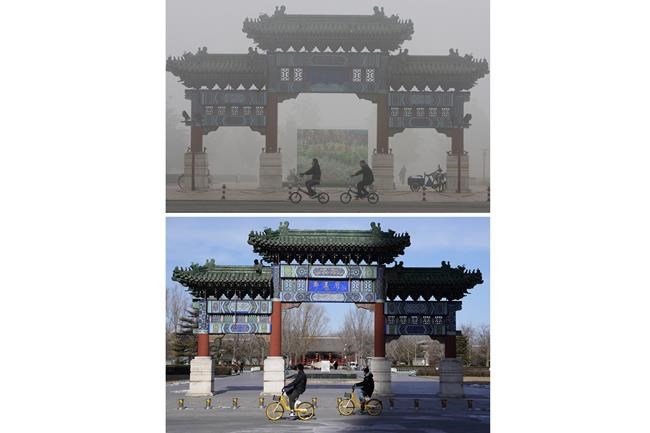
BEIJING (AP) — The blue skies greeting Olympic athletes here this month are a stark change from just a decade ago when the city’s choking air pollution was dubbed an “Airpocalypse” and blamed for scaring off tourists.
Beijing’s air still has a long way to go, but is measurably better than past years when smog often made it difficult to see nearby buildings and people wore masks to protect themselves from pollution, not COVID-19. The city’s notorious pollution also made news in 2016, when Facebook CEO Mark Zuckerberg posted a photo of himself jogging in the haze through Tiananmen Square with a smile on his face. Some mused on social media that he was trying to ingratiate himself with Chinese authorities.
Yet at this month’s Beijing Games, the air is clear enough for athletes to see the mountains surrounding the city.
A look at what’s behind the transformation.
WHAT CHANGED?
After pollution hit record levels in 2013 and became a source of international attention and widespread public discontent, China launched an ambitious plan to improve its air quality and said it would fight pollution “with an iron fist,” according to a recent report from the Energy Policy Institute at Chicago. That was also around the time the country bid on this month’s Winter Games.
The ensuing efforts were similar to the measures China had previously taken to ensure clear skies for the 2008 Summer Games in Beijing, but on a larger scale, the report notes. Tougher emissions standards were imposed on coal-fired plants and the number of cars on the road was curbed to cut vehicle emissions. Local officials were given environmental targets, and coal-fired boilers in homes were replaced with gas or electric heaters.
The government’s reporting of air quality data also improved.
Jia Pei, a 30-year-old Beijing resident who enjoys exercising outside, said the improved air quality puts him in a better mood.
“In the past when there was smog, I would feel that I was inhaling dust into my mouth,” he said.
IS BEIJING’S AIR CLEAN NOW?
Despite the progress, Beijing’s annual average air pollution last year was still more than six times the limit laid out by the World Health Organization’s guidelines.
And the concentration of coal-burning industries that still surrounds the city means it remains susceptible to bad air days, said Lauri Myllyvirta at the Center for Research on Energy and Clean Air in Helsinki, Finland.
When those happen can depend on factors like car traffic or how much wind there is to blow away smog.
Still, Chinese officials hail the country’s achievements. Last year, they say there were 288 days of good air quality days in Beijing, compared to 176 days in 2013.
HOW IS HEALTH AFFECTED?
The effects of air pollution can be visceral and include irritated eyes and difficulty breathing.
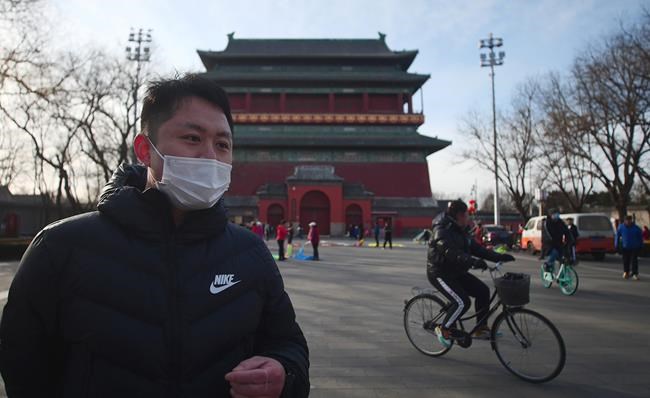
“You could hear people coughing all over because of it,” said Myllyvirta, who was living in Beijing until 2019.
Children, older adults and people with health conditions including asthma are more likely to feel the effects. The very fine particles that make up air pollution can get deep into people’s lungs and have been linked to health problems including irregular heartbeats and decreased lung function.
Poorer people might also be more vulnerable if they can’t afford air purifiers or need to work outdoors, said Guojun He, a researcher at the University of Hong Kong and co-author of the report from the Energy Policy Institute at Chicago.
WHAT’S NEXT?
China has committed to being carbon neutral by 2060. And though the country still relies heavily on coal for electricity, He said it has made significant progress in curbing emissions and is rapidly developing clean energy from sources like wind and solar.
“When it’s possible, I think in general, the transition is going to be happening and it’s actually happening right now,” He said.
In the meantime, he noted the government can also take short-term measures when it wants, such as temporarily shutting down factories. That can help ensure clearer skies for big political or social events, like the Olympics.
___
Associated Press researcher Chen Si contributed to this report.
___
The Associated Press Health and Science Department receives support from the Howard Hughes Medical Institute’s Department of Science Education. The AP is solely responsible for all content. New York-based AP journalist Candice Choi is on assignment at the Beijing Olympics. Follow her on Twitter at http://twitter.com/candicechoi
Related Articles
Oly Live: Germany's Geiger wins gold




Advertisement Advertise With Us
Advertisement Advertise With Us