First year of COVID-19 pandemic saw fewer Alberta stroke patients, more deaths: study

Advertisement

Advertise with us

CALGARY - The first year of the COVID-19 pandemic in Alberta saw fewer stroke patients, but a higher number of stroke-related deaths, according to new research.

Read this article for free:


or

Already have an account? Log in here »

To continue reading, please subscribe:

Subscribe and receive a limited-edition Free Press branded hat or tote.

Digital Subscription

One year of digital access for only $205*

  • Enjoy unlimited reading on winnipegfreepress.com
  • Read the E-Edition, our digital replica newspaper
  • Access News Break, our award-winning app
  • Play interactive puzzles

*First annual payment billed as $205.00 + GST for one year. This annual subscription will automatically renew at $233.00 + GST every 52 weeks (10% off the regular annual price of $259.35). Offer available to new and qualified returning subscribers only. Cancel any time.

To continue reading, please subscribe:

Add Free Press access to your Brandon Sun subscription for only an additional

$1 for the first 4 weeks*

  • Enjoy unlimited reading on winnipegfreepress.com
  • Read the E-Edition, our digital replica newspaper
  • Access News Break, our award-winning app
  • Play interactive puzzles
Start now

*Your next Brandon Sun subscription payment will increase by $1.00 and you will be charged $17.95 plus GST for four weeks. After four weeks, your payment will increase to $24.95 plus GST every four weeks.

Hey there, time traveller!
This article was published 27/03/2022 (1652 days ago), so information in it may no longer be current.

CALGARY – The first year of the COVID-19 pandemic in Alberta saw fewer stroke patients, but a higher number of stroke-related deaths, according to new research.

The study, published Monday in the Canadian Medical Association Journal, was conducted by a team of eight doctors and other researchers across the province.

“One of the things that we began to realize within the first few months of the pandemic … is that there seemed to be a decline in the number of people presenting with acute strokes,” lead author Dr. Aravind Ganesh, a neurologist at the University of Calgary, said in an interview.
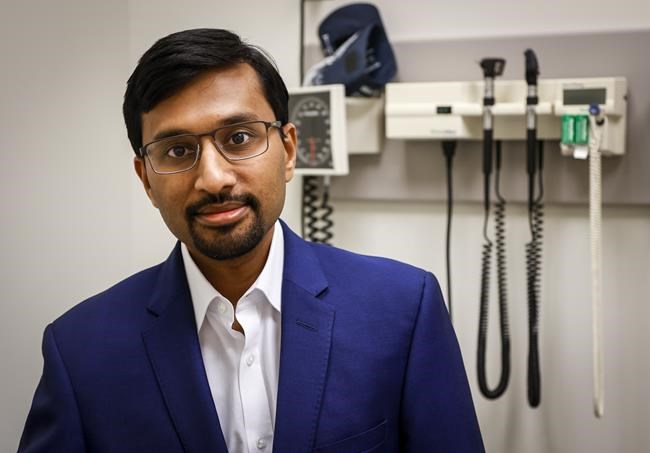
Dr. Aravind Ganesh, assistant professor of neurology at the University of Calgary, is pictured at the Cumming School of Medicine in Calgary, Alta., Thursday, March 24, 2022.THE CANADIAN PRESS/Jeff McIntosh

Several countries, he said, had started noticing a trend of fewer people seeking emergency care for a variety of medical issues during the pandemic.

“The question that people started asking was whether the … public health restrictions that we had implemented as a result of the pandemic might be having some unintended consequences of dissuading people from attending at the hospital for emergencies like stroke and heart disease,” said Ganesh.

“So, the premise for this study came from this very legitimate worry on our part.”

Researchers looked at data for 19,531 Alberta patients from January 2016 to February 2020 and another 4,900 patients during the first year of the COVID-19 pandemic.

“In the first wave of the pandemic in Alberta, we had quite a decline in the number of people who were presenting with acute ischemic stroke — that’s strokes because of blood clots in the brain,” explained Ganesh.

“Along with that, we also found the that the use of stroke therapies … declined by about the same amount.”

Researchers also found that the number of patients with stroke symptoms did not return to pre-pandemic levels after the first wave in spring 2020.

“Especially during the second- and third-wave periods of our study, when COVID-19 cases surged, we expected to observe an increase in stroke presentations instead of declines,” they write in the study.

Ganesh said he and other researchers were able to look at what happened to those patients by studying how many people died due to strokes.

“We found those out-of-hospital deaths ended up rising four out of the five time periods in the pandemic,” he said. “We ended up being able to find some of these missing strokes that way.”

Similar results were found in hospitals.

“During the second wave of the pandemic and the third wave of the pandemic, more people ended up dying in hospital who had strokes,” he said.

The study looked at population-level data, so it’s not clear why people decided not to seek treatment.

“Is it that people were waiting to seek help until their strokes became more severe?” he asked.

Ganesh said researchers don’t know for sure, but they believe people were trying to avoid hospitals.

“We suspect it was hospital avoidance because of the out-of-hospital deaths that we found.”

He said the results of the research weren’t all bad.

“We actually did end up catching up later on in the pandemic,” said Ganesh.

He said public health officials and doctors also worked to remind people to go to the hospital for emergencies.

“What we’ve understood is that we really need to think critically about the kind of public health messaging we do during the pandemic.”

This report by The Canadian Press was first published March 28, 2022
Report Error Submit a Tip

More Stories

Puzzles Palace

1 minute read Monday, Jul. 27, 2026

To solve our puzzles, please subscribe with this special offer: |

Winnipeggers witness unveiling of Japanese Canadian monument in B.C.

Morgan Modjeski 6 minute read Preview

Winnipeggers witness unveiling of Japanese Canadian monument in B.C.

Morgan Modjeski 6 minute read Yesterday at 8:39 PM CDT

As Miki Stewart gathered with her family at the Japanese Cultural Association of Manitoba on Saturday afternoon, she was thinking of her parents, Yoshimaru and Yoshi Abe.

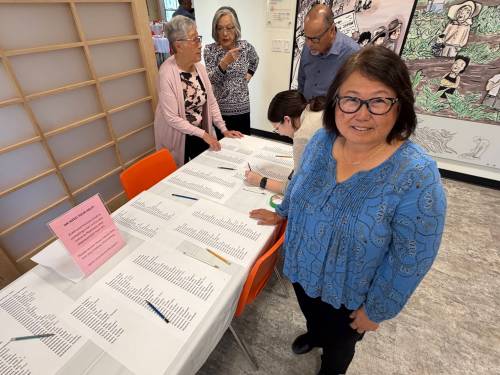
Both Stewart, 80, and her sister Yumi Falk, 81, alongside an older brother, were born in the Tashme internment camp in British Columbia. They were among more than 2,600 Japanese Canadians who were forcefully removed and interred at the camp following the bombing of Pearl Harbour and Canada’s declaration of war on Japan in 1941.

“They didn’t talk much about how they suffered,” Stewart said of her parents. “But they did.”

She was amongst a group of more than 150 people who gathered at the association’s McPhillips headquarters on Saturday afternoon to watch the unveiling of the Japanese Canadian Monument in Victoria B.C.

Read
Yesterday at 8:39 PM CDT

Creative powerhouse Perry Rosemond never lost Winnipeg roots

Ben Waldman 7 minute read Preview

Creative powerhouse Perry Rosemond never lost Winnipeg roots

Ben Waldman 7 minute read Yesterday at 6:00 AM CDT

He created King of Kensington, directed the troops in the Royal Canadian Air Farce, and his creative eye was behind the lens for television shows starring Johnny Cash, Tom Jones, Mr. Dress-Up and the Friendly Giant.

He also wrote and developed the Canadian version of Sesame Street during his time as the head of school and preschool programming for CBC in Toronto, and directed a televised special in 2002 for Winnipeg sketch comedy troupe Royal Liechtenstein Theatre Company.

But before his name featured in the credits of some of the most iconic and influential pieces of the Cancon canon, Perry Rosemond was an only child living in a crammed, multi-generational home in Winnipeg’s North End, racing each day to beat the morning bell next door at William Whyte School.

In memoirs that have yet to be published, the late television producer recalled his childhood. “(T)here were 14 of us in the house at 193 Andrews St., and it wasn’t that big of a house,” he writes.

Read
Yesterday at 6:00 AM CDT

’Disgusting’ posters being investigated by police

Morgan Modjeski 4 minute read Yesterday at 2:22 PM CDT

The Winnipeg Police Service major crimes unit is investigating what some have labelled offensive and hateful posters on full-display at a Winnipeg home.

One of the people irked by the display is Gracie Garrett. She’s has lived on Ashburn Street in Winnipeg’s Minto neighbourhood for almost ten years. She’s never felt unsafe in the neighbourhood before, but now, a set of posters plastered on a nearby house are making her feel uneasy.

The five signs, posted facing the street prominently on a front window, contain a slur, refer to Nazis as “heroes” and call Muslims, Christians and other groups “evil.”

Learning of the signs Friday, Garrett said she’ll be reporting the posters to police, as she worries they incite and promote violence.

Blown lead spoils Jets opener

Mike McIntyre 7 minute read Preview

Blown lead spoils Jets opener

Mike McIntyre 7 minute read Friday, Oct. 2, 2026

Younger. Faster. Stronger.

They may still be a long ways from a finished product, but it’s safe to say the new-look Winnipeg Jets made a mostly favourable first impression on Friday night in front of a sold-out crowd at Canada Life Centre.

Sure, a 4-3 overtime loss to a hard-nosed Boston Bruins outfit is going to sting a little, especially since the home team was just 98 seconds away from a regulation victory.

But if the Jets can bottle up this kind of energy and effort, they should enjoy plenty of success over the course of the 84-game campaign.

Read
Friday, Oct. 2, 2026

Mayoral candidate Vogiatzakis criticized for living outside Winnipeg

Malak Abas 4 minute read Preview

Mayoral candidate Vogiatzakis criticized for living outside Winnipeg

Malak Abas 4 minute read Friday, Oct. 2, 2026

A mayoral hopeful took heat from other candidates Friday for living outside Winnipeg while running in the civic election.

Mike Vogiatzakis’s primary residence is in the Rural Municipality of St. Andrews, about 25 kilometres north of Winnipeg — a community with its own mayor and councillors.

But the funeral director said he owns a home in Winnipeg where he divides his time, and he would move to the city full-time if elected mayor.

“It doesn’t matter where a person lives. Why are we dividing St. Andrews and Manitoba and Winnipeg? I’ve met the criteria to run for mayor,” Vogiatzakis said Friday morning.

Read
Friday, Oct. 2, 2026