Free COVID testing will fade with US health emergency in May
Advertisement
Read this article for free:
or
Already have an account? Log in here »
To continue reading, please subscribe:

Digital Subscription
One year of digital access for only $205*
- Enjoy unlimited reading on winnipegfreepress.com
- Read the E-Edition, our digital replica newspaper
- Access News Break, our award-winning app
- Play interactive puzzles
*First annual payment billed as $205.00 + GST for one year. This annual subscription will automatically renew at $233.00 + GST every 52 weeks (10% off the regular annual price of $259.35). Offer available to new and qualified returning subscribers only. Cancel any time.
To continue reading, please subscribe:
Add Free Press access to your Brandon Sun subscription for only an additional
$1 for the first 4 weeks*
- Enjoy unlimited reading on winnipegfreepress.com
- Read the E-Edition, our digital replica newspaper
- Access News Break, our award-winning app
- Play interactive puzzles
*Your next Brandon Sun subscription payment will increase by $1.00 and you will be charged $17.95 plus GST for four weeks. After four weeks, your payment will increase to $24.95 plus GST every four weeks.
Read unlimited articles for free today:
or
Already have an account? Log in here »
Hey there, time traveller!
This article was published 11/04/2023 (1255 days ago), so information in it may no longer be current.
WASHINGTON (AP) — When the COVID-19 public health emergency ends in the U.S. next month, you’ll still have access to a multitude of tests but with one big difference: Who pays for them.
For the first time, you may have to pick up some or all of the costs, depending on insurance coverage and whether the tests are done at home or in a doctor’s office.
But there’s still time to get some free tests before the May 11 change, and there could still be free ones available afterward. Some state and local governments may continue to distribute free home tests through clinics, libraries and community centers. And the federal government, for now, is still sending free tests through the U.S. Postal Service to households that haven’t already received two shipments.
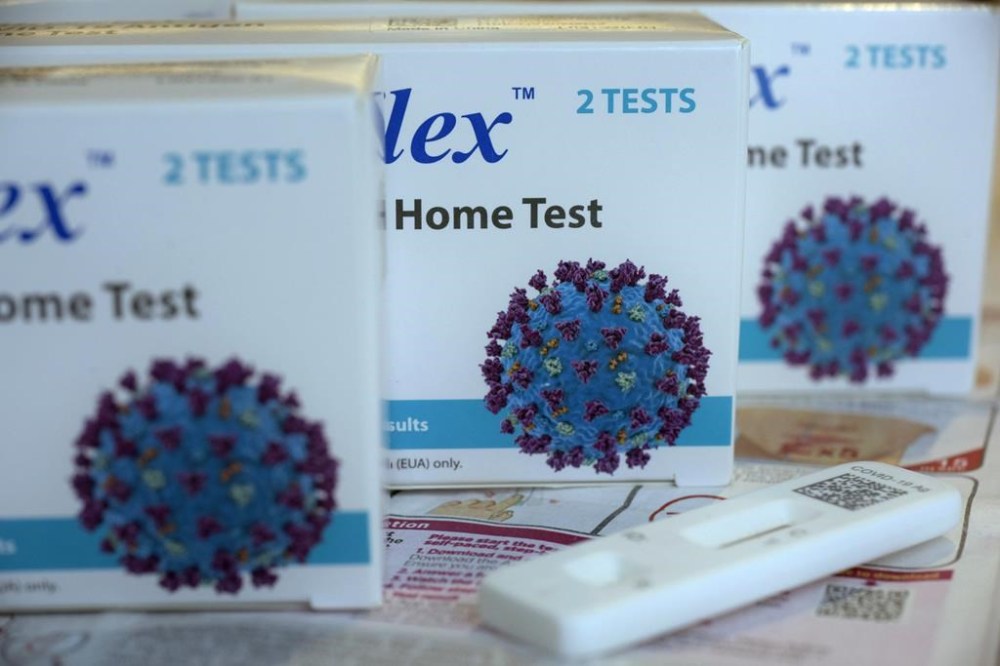
And don’t discount those old tests you haven’t used. The expiration date on the package may have been extended. The Food and Drug Administration’s website provides a list to check and see which tests are still good.
Here’s a look at what the end of the government’s emergency declaration on May 11 means for testing:
AT-HOME TESTS
The biggest changes will be for over-the-counter tests, which account for the vast majority of screening in the U.S. today.
Since early 2021, the federal government has required all private insurers to cover up to eight COVID-19 tests per month. That requirement will soon go away. Coverage is also scheduled to lapse for tens of millions of seniors in the federal government’s Medicare program, though some members of Congress are pushing to extend the benefit.
While some private insurers may continue to cover all or some home tests, there will be no longer be a nationwide rule. A two-pack of tests typically costs between $20 and $24.
“What we will see is a hodgepodge of approaches by different insurance companies, which is going to make it difficult for individuals to know what they’re going to be paying,” said Christina Silcox, of the Duke Margolis Center for Health Policy, which recently issued a report on the outlook for testing.
One exception will be for those enrolled in the government Medicaid program for low-income individuals and families, who will continue to receive free tests until September 2024.
IN-OFFICE TESTS
Americans can also expect to pay more for any COVID-19 tests performed at a hospital, clinic or doctor’s office.
Insurers have been barred from charging copays, or any other cost-sharing fees related to COVID-19 testing. That requirement also ends next month.
While insurers will still cover basic testing costs, some people could face new fees for a portion of the test’s price or for the services of the health professional performing it. Lab tests have typically ranged between $70 and $100 and some of that could be passed along to patients.
COVID-19 vaccines and drugs will remain free because they are not paid for through insurance, but by the federal government. One concern is that uncertainty around testing costs could lead to delays in treatment. Current treatments for high-risk patients, like Paxlovid, generally need to be taken within the first few days of symptoms to be effective.
If people are worried about testing costs, “they may wait a couple days to see if things clear up and miss that five-day treatment window,” Silcox said.
TESTING CAPACITY
The U.S. struggled to build up its test manufacturing capacity during the first two years of the pandemic, with demand waning after each surge. Experts worry that the country could again be caught flat-footed after the federal government stops purchasing tests in bulk.
Only after the U.S. government said it would buy 1 billion tests did production stabilize, reaching a peak of 900 million monthly tests in February 2022.
“Those bulk purchases basically guaranteed the market for test manufacturers,” said Jennifer Kates, a senior vice president with the nonprofit Kaiser Family Foundation.
As of September, manufacturers were still producing over 400 million tests per month, far exceeding U.S. testing levels, according to Duke researchers.
Companies including Abbott Labs say they will be able to ramp up test production as needed. But the company declined to discuss specific production targets or how they will be impacted by the end of the health emergency.
Congress has shown little willingness to buy more tests and the Biden administration did not propose new spending in its latest budget.
“That upfront guarantee by the federal government that takes care of testing volatility won’t be there anymore,” Kates said.
TESTING TECHNOLOGY
The hundreds of different COVID-19 tests authorized by the Food and Drug Administration over the last three years will remain available after May 11. That’s because the FDA OK’d those products under a separate emergency measure that isn’t affected by the end of the national declaration.
Still, FDA officials have been encouraging test makers to apply for full regulatory approval, which will allow their products to stay on the market indefinitely. Last month, the FDA formally approved the first rapid COVID test.
___
Follow Matthew Perrone on Twitter: @AP_FDAwriter
___
The Associated Press Health and Science Department receives support from the Howard Hughes Medical Institute’s Science and Educational Media Group. The AP is solely responsible for all content.