Women’s heart health conference aims to raise awareness beyond ‘bikini medicine’
Advertisement
Read this article for free:
or
Already have an account? Log in here »
To continue reading, please subscribe:

Digital Subscription
One year of digital access for only $205*
- Enjoy unlimited reading on winnipegfreepress.com
- Read the E-Edition, our digital replica newspaper
- Access News Break, our award-winning app
- Play interactive puzzles
*First annual payment billed as $205.00 + GST for one year. This annual subscription will automatically renew at $233.00 + GST every 52 weeks (10% off the regular annual price of $259.35). Offer available to new and qualified returning subscribers only. Cancel any time.
To continue reading, please subscribe:
Add Free Press access to your Brandon Sun subscription for only an additional
$1 for the first 4 weeks*
- Enjoy unlimited reading on winnipegfreepress.com
- Read the E-Edition, our digital replica newspaper
- Access News Break, our award-winning app
- Play interactive puzzles
*Your next Brandon Sun subscription payment will increase by $1.00 and you will be charged $17.95 plus GST for four weeks. After four weeks, your payment will increase to $24.95 plus GST every four weeks.
Read unlimited articles for free today:
or
Already have an account? Log in here »
Hey there, time traveller!
This article was published 26/04/2023 (1257 days ago), so information in it may no longer be current.
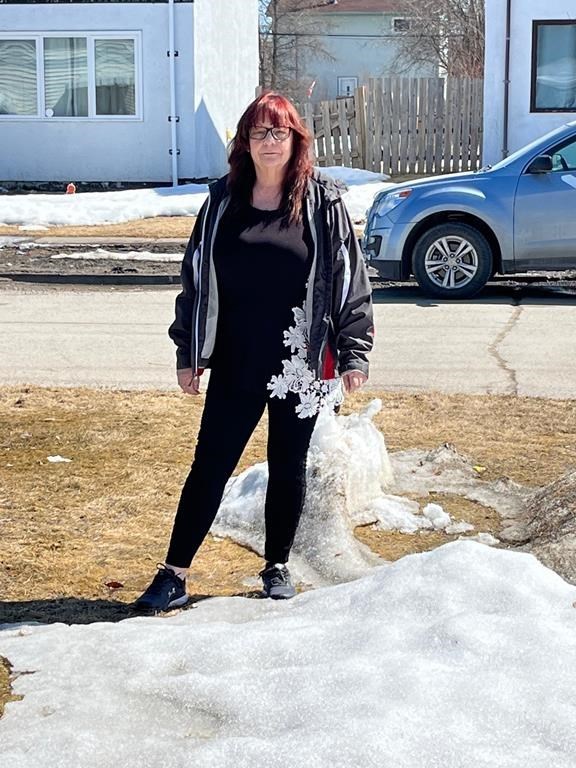
Michelle Logeot refers to the biggest health scare of her life as “the event,” the type she does not want other women to experience when doctors misdiagnose them or dismiss symptoms of a potentially deadly heart attack.
Logeot said she spent six months seeking help from her doctor and at emergency departments for sweating, fainting and extreme fatigue that made it tough for her to walk across a street.
At one emergency room near her home in Thompson, Man., she was given medication for kidney stones, at another she was told she had shingles. A doctor at a third ER told her she had anxiety and depression. She was also advised to see a gynecologist.
About a week before the actual event, she started getting really sick — at one point she was having trouble breathing and went to emergency again.
“They didn’t even examine me or anything. They told me I had the flu.”
On June 26, 2017, her husband drove her home from a grocery store where she’d nearly fainted. A few minutes later, he found her unconscious on their bed.
A heart attack at home triggered cardiac arrest soon after Logeot, now 56, was taken by ambulance to the hospital, about two minutes away. She later learned nurses rushed to do CPR and restart her heart with a defibrillator before she was transferred to a hospital in Winnipeg, where she had surgery to open three blocked arteries with stents.
If she had been properly diagnosed with having blockages to her arteries, she would not have suffered long-term damage that led to heart failure, Logeot said.
“They would have repaired those arteries and then I wouldn’t have had the heart attack.”
Logeot and 16 other women are set to share their health-care journeys at the two-day Canadian Women’s Heart Health Summit in Vancouver, starting Friday.
She said women need to be more aware of the different heart disease symptoms they’re likely to have compared with men. But that also extends to health-care professionals who seemed to disregard her family history of heart issues, she added.
Dr. Thais Coutinho, a cardiologist who is co-chairing the conference, wants health-care professionals to look past gender biases when they focus on women’s heart health.
“Very often, in the eyes of laypeople, policymakers, when you talk about women’s health, people think often about what we call ‘bikini medicine.’ So anything that is covered by a bikini is what most people equate with women’s health.”
Gender bias is a known issue when it comes to women’s health care despite evidence that biological differences can influence the risk of developing certain diseases.
Since 2009, the Canadian Institute for Heath Research (CIHR) mandated that more women be included in clinical studies it funds as part of its Sex and Gender-Based Analysis policy, but Coutinho said there still aren’t enough women participants overall compared with men.
Misdiagnosis of heart issues among women is common because they don’t have the “Hollywood heart attack,” where an older man may be seen clenching his chest, she said.
There is no way to accurately estimate how often women are misdiagnosed even though they are more likely to have heart failure compared with men, often with multiple additional symptoms including fainting, she said.
Women themselves may dismiss their own serious discomfort as everyday indigestion, for example, even though they may never have had any such prolonged symptoms. And while most women believe breast cancer is their biggest health threat, heart and stroke are the number 1 causes of premature death in women worldwide, she said.
The scientific knowledge about heart disease and stroke affecting women has lagged behind that of men because many studies have excluded women, Coutinho said.
The Canadian Women’s Heart Health Centre, which she chairs at the University of Ottawa Heart Institute, hopes to raise more awareness around those unique issues raised by its 150 members, including doctors, nurses, physical therapists and patient advocates.
“Awareness is what’s lacking in standard education, still today,” Coutinho said. “It’s not part of anyone’s core curriculum. Even a lecture alone, on the specific aspects of cardiovascular disease or heart attack in women, the far, far, far, far majority of people say, ‘No, I’ve never had that.’ “
The need to address that gap has prompted the Canadian Women’s Heart Health Centre to ask medical and nursing schools to include women’s heart health in their curriculums.
However, some schools have said that would mean something else would have to be removed from the curriculum to accommodate that request, Coutinho said.
“Honestly, what Canada really needs right now, and I have been saying this repeatedly so hopefully people will listen, is a national strategy that will address the education piece, that will address the research piece, and will address the care and recovery piece,” she said of women’s heart health.
Compared with men, women are much more likely to experience particular heart issues.
That includes a type of heart attack called spontaneous coronary artery dissection, or SCAD, which involves bleeding into the wall of the heart arteries, sometimes causing a tear. An estimated 90 per cent of those who have the disease are women.
Some pregnancy-related issues, including gestational diabetes and high blood pressure, also put those women at an increased risk of heart disease in the future.
But not everyone in the medical field or beyond is aware of those factors.
“I gotta admit, I was shocked when I came out of the cardiac arrest and was told that I had a massive heart attack,” Logeot said. “Because I didn’t have typical symptoms. I had trouble breathing, my arm was aching, but I didn’t have any pain in my chest. I had pressure.”
Those are the types of symptoms, along with extreme fatigue and indigestion, that are often overlooked in women, who don’t always have chest pain.
Women may need to advocate for themselves, Logeot said, adding that’s a “fine line you have to walk.”
“You have to be aggressive enough to have them hear you but you can’t be too aggressive because then you’re being difficult and they’ll shut you down. You have to leave the angry emotions out of it when you’re trying to deal with the system.”
This report by The Canadian Press was first published April 26, 2022.
Canadian Press health coverage receives support through a partnership with the Canadian Medical Association. CP is solely responsible for this content