Indigenous men diagnosed with more advanced prostate cancer, Canadian study says
Advertisement
Read this article for free:
or
Already have an account? Log in here »
To continue reading, please subscribe:

Digital Subscription
One year of digital access for only $205*
- Enjoy unlimited reading on winnipegfreepress.com
- Read the E-Edition, our digital replica newspaper
- Access News Break, our award-winning app
- Play interactive puzzles
*First annual payment billed as $205.00 + GST for one year. This annual subscription will automatically renew at $233.00 + GST every 52 weeks (10% off the regular annual price of $259.35). Offer available to new and qualified returning subscribers only. Cancel any time.
To continue reading, please subscribe:
Add Free Press access to your Brandon Sun subscription for only an additional
$1 for the first 4 weeks*
- Enjoy unlimited reading on winnipegfreepress.com
- Read the E-Edition, our digital replica newspaper
- Access News Break, our award-winning app
- Play interactive puzzles
*Your next Brandon Sun subscription payment will increase by $1.00 and you will be charged $17.95 plus GST for four weeks. After four weeks, your payment will increase to $24.95 plus GST every four weeks.
Read unlimited articles for free today:
or
Already have an account? Log in here »
Hey there, time traveller!
This article was published 10/07/2023 (1150 days ago), so information in it may no longer be current.
Indigenous men have more serious and later-stage prostate cancer when they’re diagnosed than non-Indigenous men, a new Canadian study says.
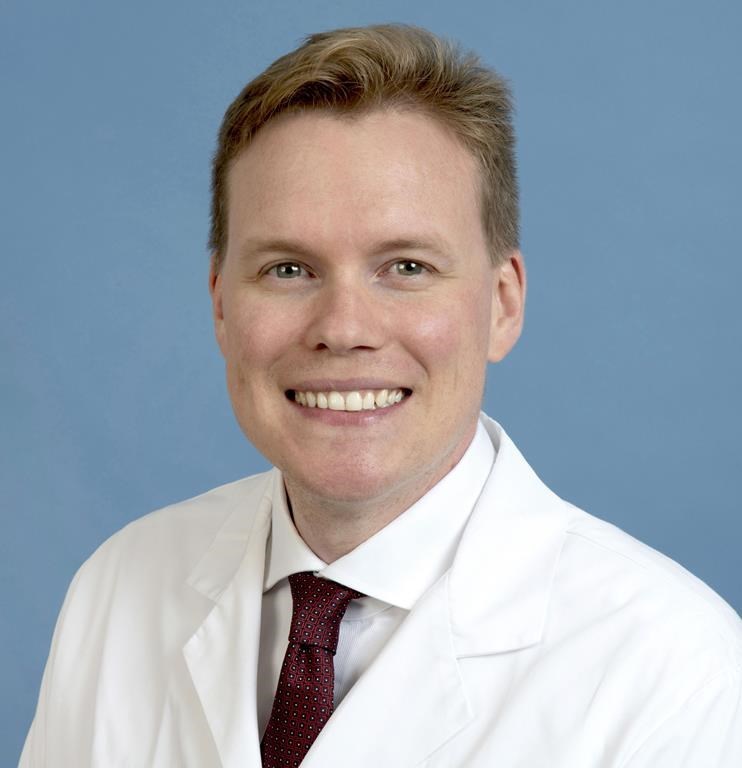
“It is very clear from this data that Indigenous men are at higher risk of developing aggressive prostate cancer than non-Indigenous men,” said Dr. Adam Kinnaird, senior author of the study and the Frank and Carla Sojonky Chair in Prostate Cancer Research at the University of Alberta.
The study, published Monday in the journal Cancer, looked at prostate cancer screening data among almost 1.5 million men in Alberta between 2014 and 2022. They were all between 50 and 70 years old.
Using postal codes, the researchers found that men in First Nations and Métis communities were much less likely to have had a prostate-specific antigen (PSA) test — the method used to screen for prostate cancer — than men living outside of Indigenous communities.
“Non-Indigenous men are having their PSA test done 50 per cent more often than Indigenous men are. And that’s a pretty big difference,” Kinnaird said.
The lack of screening, he said, could be a contributing factor to the study’s other major finding — that at the time of diagnosis, prostate cancer in Indigenous men was more advanced and more aggressive than in non-Indigenous men.
That finding was based on the tumour characteristics of 6,049 men diagnosed with prostate cancer who were seen at urology referral centres at the University of Alberta in Edmonton and at the University of Calgary.
Dr. Jason Pennington, a surgeon at the Scarborough Health Network and the Indigenous lead for the Central East Regional Cancer Program in Ontario, said the results are “not surprising.”
“(They are) actually supporting findings that we’ve been getting from Ontario,” said Pennington, who was not involved in the study and is a member of the Huron-Wendat Nation.
“This is what we see across Canada and across Indigenous populations around the world.”
One weakness of the study, Kinnaird said, is that because it relied on postal codes, it couldn’t compare the rate of PSA testing between Indigenous and non-Indigenous men living in cities.
About half of the Indigenous population lives in cities, he said, and researchers will be looking at data in another Alberta study to try to find testing rates for urban Indigenous men.
Kinnaird’s team also plans additional research to determine whether or not there might be a genetic factor that could make Indigenous men more prone to aggressive prostate cancer, he said.
That’s something that occurs in the Ashkenazi Jewish population, he said.
The study did not look at whether or not prostate cancer was more or less prevalent overall among Indigenous men — just at screening rates and severity at diagnosis.
There are many possible reasons Indigenous men are both tested less and suffer more advanced prostate cancer, Pennington said.
Lack of access to a primary-care provider to get screened is a likely factor, he said, along with social determinants of health, such as poverty, which could make it difficult for someone to take time off work to get a PSA test.
Kinnaird said it’s critical that health-care providers are aware of the inequity of prostate cancer screening.
“It’s something that’s important for Indigenous men, for family physicians, for nurse practitioners and for urologists to bear in mind that when you are seeing an Indigenous man in your clinic that you are really thinking about whether you need to screen for prostate cancer,” he said.
Indigenous distrust of the health-care system is another potential factor behind lower screening rates, Pennington said.
“Every Indigenous person I know, every Indigenous family I know, has had negative experiences in our health-care system,” he said.
One promising solution is holding community screening days, Pennington said, where Indigenous “patient navigators” and Indigenous nursing staff are present to answer questions and provide a culturally safe environment. Families can go together to help them feel more comfortable, he said.
That approach also works in remote Indigenous communities with mobile screening buses, he said.

Pennington said the time has come to implement more of these types of culturally safe Indigenous strategies and measure their success.
“We’re starting to have quite a bit of evidence now regarding the lower screening, the higher stages (of cancer), the poor outcomes,” he said.
“It’s about time we start doing something about it.”
This report by The Canadian Press was first published July 10, 2023.
Canadian Press health coverage receives support through a partnership with the Canadian Medical Association. CP is solely responsible for this content.