Birth of the modern: Canadian site nominated as “Golden Spike” to mark Anthropocene

Advertisement

Advertise with us

A team of geologists has concluded, after a studying sites around the globe, that a tiny, deep lake in southern Ontario should mark the birth of the modern world.

Read this article for free:


or

Already have an account? Log in here »

To continue reading, please subscribe:

Subscribe and receive a limited-edition Free Press branded hat or tote.

Digital Subscription

One year of digital access for only $205*

  • Enjoy unlimited reading on winnipegfreepress.com
  • Read the E-Edition, our digital replica newspaper
  • Access News Break, our award-winning app
  • Play interactive puzzles

*First annual payment billed as $205.00 + GST for one year. This annual subscription will automatically renew at $233.00 + GST every 52 weeks (10% off the regular annual price of $259.35). Offer available to new and qualified returning subscribers only. Cancel any time.

To continue reading, please subscribe:

Add Free Press access to your Brandon Sun subscription for only an additional

$1 for the first 4 weeks*

  • Enjoy unlimited reading on winnipegfreepress.com
  • Read the E-Edition, our digital replica newspaper
  • Access News Break, our award-winning app
  • Play interactive puzzles
Start now

*Your next Brandon Sun subscription payment will increase by $1.00 and you will be charged $17.95 plus GST for four weeks. After four weeks, your payment will increase to $24.95 plus GST every four weeks.

Hey there, time traveller!
This article was published 11/07/2023 (1181 days ago), so information in it may no longer be current.

A team of geologists has concluded, after a studying sites around the globe, that a tiny, deep lake in southern Ontario should mark the birth of the modern world.

A few layers of sediment from around 1950 at the bottom of Crawford Lake, they say, show more clearly than anywhere else how human activities have changed the planet’s functioning to the extent that a new geological epoch should be declared: the Anthropocene, or the age of people.

“It’s a bit sobering,” said Francine McCarthy, a Brock University geologist who was on the research team for the Anthropocene Working Group of the International Union of Geological Sciences.
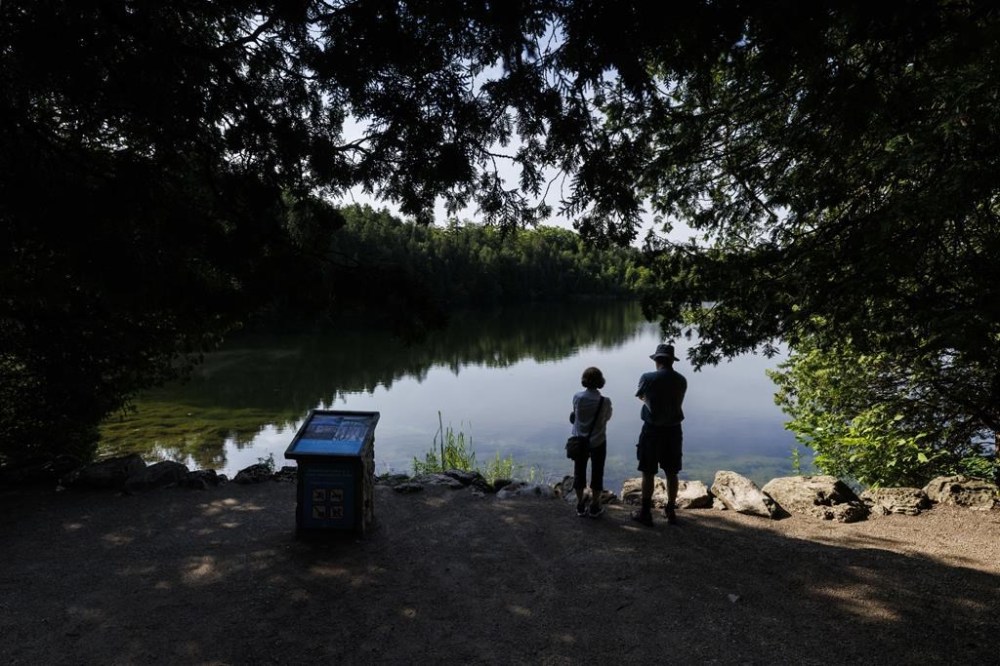
People look out on the water from the shore of Crawford Lake in Milton, Ont., on Friday, July 7, 2023. THE CANADIAN PRESS/Cole Burston

“Within that short span of time, the system flipped and can’t go back to the way it used to be.”

Her group says the lake along the Niagara Escarpment should be considered the location for the so-called “Golden Spike” marking the start of the Anthropocene. The recommendation was announced Tuesday at the International Congress on Stratigraphy in Lille, France.

Geologists are to debate the issue, including whether the Anthropocene should be declared at all, in the fall. The matter is to come to a final vote at the International Union of Geological Sciences in August 2024.

That will bring to a close a debate geologists have been having since 2009: have humans altered the planet’s functioning profoundly enough to change its geology, and if so, should a new geological epoch be declared?

Some geologists initially suggested a new epoch should begin with the Industrial Revolution, when fossil-fuel combustion began in earnest.

But many currently prefer the year 1950.

That’s when plutonium-239 begins to show up in geological strata. The element does not occur in nature and is the result of widespread nuclear weapons testing.

The year also coincides with the beginning of the so-called “Great Acceleration,” a time when everything seemed to suddenly take off.

A 2015 paper in the journal Anthropocene Review produced 12 graphs on everything from population to GDP to fertilizer use to dam construction to energy consumption to international travel. They all spike dramatically right around 1950.

Many of these accelerations show up in the geological record.

Fertilizer use changes which nitrogen compounds are deposited. Atmospheric changes alter what filters down from the sky.

“Anything that came out of smokestacks or tailpipes, that’s what we see,” McCarthy said.

All of the 12 candidates considered for the Golden Spike showed the same signals, said McCarthy.

“It’s a tipping point. It flips on a dime, everywhere.”

The scientists chose Crawford Lake because of the remarkable clarity and depth of its sedimentary record. Because of its significant depth — 24 metres — and narrow surface of a few hectares, Crawford’s deeps never mix and are essentially cut off from the world.

That leaves pure layers of sediment drifting from the surface, leaving a climatic and atmospheric record so undisturbed that large parts of it can be read year by year, going back to Indigenous users of the area in the 13th century.

Markers of the Great Acceleration are clear in Crawford, McCarthy said.

“Tests done in independent labs confirm that each of these things like dominoes changes very, very quickly right around 1950,” she said in a press briefing last week.

“So I think that’s why the Anthropocene Working Group chose our site in the end.”

McCarthy acknowledged some geologists remain unconvinced by the need for a new epoch.

“It’s never been done before for anything this recent and such a short interval. It’s meeting with some resistance because it’s outside the norm.”

Others argue that at most, 1950 could mark the start of a new age of our current epoch, the now 12,000-year-old Holocene. It would be called the Crawfordian Age.

Either way, McCarthy said the concept unites geology with the humanities.

“Historians and earth scientists don’t usually have a lot to do with each other. But in the case of the Anthropocene, they do.”

The idea has also caught on in popular culture.

“It resonates with people,” she said.

If nothing else, MCarthy said the selection of Crawford Lake as the Anthropocene’s Golden Spike would finally define what we mean by the term.

“When we say the word Anthropocene and have the word epoch after it, we mean precisely what is defined on the basis of Crawford Lake. That’s what the Golden Spike would do.”

This report by The Canadian Press was first published July 11, 2023.

Report Error Submit a Tip

More Stories

Living the dream

Ken Wiebe 7 minute read Preview

Living the dream

Ken Wiebe 7 minute read Yesterday at 4:48 PM CDT

DETROIT – As Tyrel Bauer took a left turn out of the tunnel from the Winnipeg Jets dressing room and into the stands, he was met with a hearty round of applause from the 25 friends and family members who had made the trek from various points around North America.

Bauer had just realized a childhood dream and the significance of the moment was not lost on some of his biggest supporters.

“It was a special walk, for sure. A special walk,” Bauer said on Saturday afternoon before the Jets departed for a two-game road trip that begins on Sunday in Detroit against the Red Wings. “Those people who came – and many more that weren’t there and were cheering on from afar – they’ve always been there.

“I wanted that for my family, maybe even more than I wanted it for me. They’ve been through thick and thin. I’ve stressed mom out quite a bit over the years doing my job. That meant a lot for them and I’m really happy they could be there for it.”

Read
Yesterday at 4:48 PM CDT

Letters, Oct. 3

7 minute read Yesterday at 2:01 AM CDT

A morning in the life …

My very first lesson does not start when I walk into that lecture hall, oh no — it starts long before. It begins when I walk to my car, check the estimated arrival time to the University of Manitoba and hope that Winnipeg traffic agrees with it.

A drive that appears completely manageable changes almost immediately when I’m greeted by a tsunami of orange pylons and a line of cars that appears to go on forever. Traffic moves by the inch, lanes magically disappear and the detour I took yesterday now has a detour of its own. These factors make me do a calculation that I have become all too familiar with. How late can I arrive and still find parking, run to my class across campus and get to class with enough time left to make it worth it?

I have grown used to people saying, “Why not just leave earlier?” I do. But when I’m already leaving for my 8:30 a.m. class at 7 a.m., there’s only so much I can do. This drive that some would think is relaxing is one that feels like an assignment that I didn’t know I had to complete and is due at 8:30 a.m.

Creative powerhouse Perry Rosemond never lost Winnipeg roots

Ben Waldman 7 minute read Preview

Creative powerhouse Perry Rosemond never lost Winnipeg roots

Ben Waldman 7 minute read Yesterday at 6:00 AM CDT

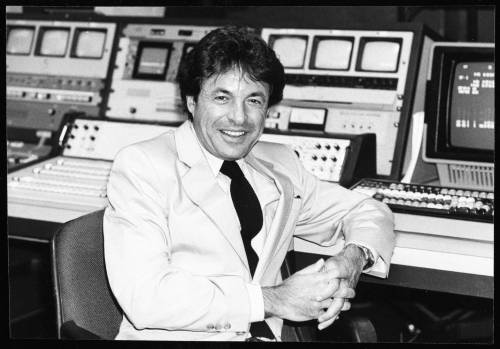
He created King of Kensington, directed the troops in the Royal Canadian Air Farce, and his creative eye was behind the lens for television shows starring Johnny Cash, Tom Jones, Mr. Dress-Up and the Friendly Giant.

He also wrote and developed the Canadian version of Sesame Street during his time as the head of school and preschool programming for CBC in Toronto, and directed a televised special in 2002 for Winnipeg sketch comedy troupe Royal Liechtenstein Theatre Company.

But before his name featured in the credits of some of the most iconic and influential pieces of the Cancon canon, Perry Rosemond was an only child living in a crammed, multi-generational home in Winnipeg’s North End, racing each day to beat the morning bell next door at William Whyte School.

In memoirs that have yet to be published, the late television producer recalled his childhood. “(T)here were 14 of us in the house at 193 Andrews St., and it wasn’t that big of a house,” he writes.

Read
Yesterday at 6:00 AM CDT

Mayoral candidate Vogiatzakis criticized for living outside Winnipeg

Malak Abas 4 minute read Preview

Mayoral candidate Vogiatzakis criticized for living outside Winnipeg

Malak Abas 4 minute read Friday, Oct. 2, 2026

A mayoral hopeful took heat from other candidates Friday for living outside Winnipeg while running in the civic election.

Mike Vogiatzakis’s primary residence is in the Rural Municipality of St. Andrews, about 25 kilometres north of Winnipeg — a community with its own mayor and councillors.

But the funeral director said he owns a home in Winnipeg where he divides his time, and he would move to the city full-time if elected mayor.

“It doesn’t matter where a person lives. Why are we dividing St. Andrews and Manitoba and Winnipeg? I’ve met the criteria to run for mayor,” Vogiatzakis said Friday morning.

Read
Friday, Oct. 2, 2026

Winnipeggers witness unveiling of Japanese Canadian monument in B.C.

Morgan Modjeski 6 minute read Preview

Winnipeggers witness unveiling of Japanese Canadian monument in B.C.

Morgan Modjeski 6 minute read Yesterday at 8:39 PM CDT

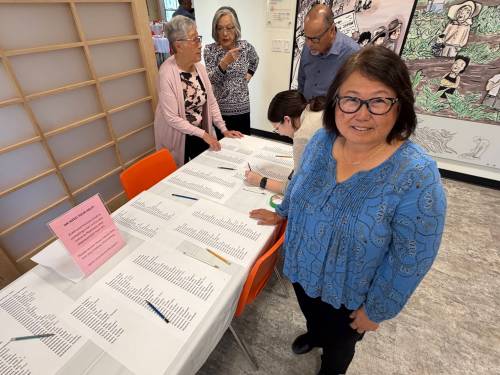
As Miki Stewart gathered with her family at the Japanese Cultural Association of Manitoba on Saturday afternoon, she was thinking of her parents, Yoshimaru and Yoshi Abe.

Both Stewart, 80, and her sister Yumi Falk, 81, alongside an older brother, were born in the Tashme internment camp in British Columbia. They were among more than 2,600 Japanese Canadians who were forcefully removed and interred at the camp following the bombing of Pearl Harbour and Canada’s declaration of war on Japan in 1941.

“They didn’t talk much about how they suffered,” Stewart said of her parents. “But they did.”

She was amongst a group of more than 150 people who gathered at the association’s McPhillips headquarters on Saturday afternoon to watch the unveiling of the Japanese Canadian Monument in Victoria B.C.

Read
Yesterday at 8:39 PM CDT

Brandonmeat packer thriving on its own

Abiola Odutola 3 minute read Preview

Brandonmeat packer thriving on its own

Abiola Odutola 3 minute read Yesterday at 2:01 AM CDT

BRANDON — Canada Packers has strengthened its business and laid the foundation for future growth during its first year as an independent company, its president says.

The Brandon-based pork producer, separated from Maple Leaf Foods in October 2025, established its own leadership, strategy, systems, culture and identity while continuing operations across its hog production farms and regional hog barns in southern and eastern Manitoba.

The company’s first year was focused on building a successful standalone business while continuing to serve customers, communities and shareholders, president Dennis Organ said.

“Market conditions over the past year have been more challenging than we anticipated when we became a separate entity,” he said in an email. “Despite that, we continued to execute against our priorities, including increasing processing volumes, maintaining disciplined operations and strengthening the business.”

Read
Yesterday at 2:01 AM CDT