Poverty is killing the Amazon rainforest. Treating soil and farmers better can help save what’s left
Advertisement
Read this article for free:
or
Already have an account? Log in here »
To continue reading, please subscribe:

Digital Subscription
One year of digital access for only $205*
- Enjoy unlimited reading on winnipegfreepress.com
- Read the E-Edition, our digital replica newspaper
- Access News Break, our award-winning app
- Play interactive puzzles
*First annual payment billed as $205.00 + GST for one year. This annual subscription will automatically renew at $233.00 + GST every 52 weeks (10% off the regular annual price of $259.35). Offer available to new and qualified returning subscribers only. Cancel any time.
To continue reading, please subscribe:
Add Free Press access to your Brandon Sun subscription for only an additional
$1 for the first 4 weeks*
- Enjoy unlimited reading on winnipegfreepress.com
- Read the E-Edition, our digital replica newspaper
- Access News Break, our award-winning app
- Play interactive puzzles
*Your next Brandon Sun subscription payment will increase by $1.00 and you will be charged $17.95 plus GST for four weeks. After four weeks, your payment will increase to $24.95 plus GST every four weeks.
Read unlimited articles for free today:
or
Already have an account? Log in here »
Hey there, time traveller!
This article was published 16/11/2023 (1035 days ago), so information in it may no longer be current.
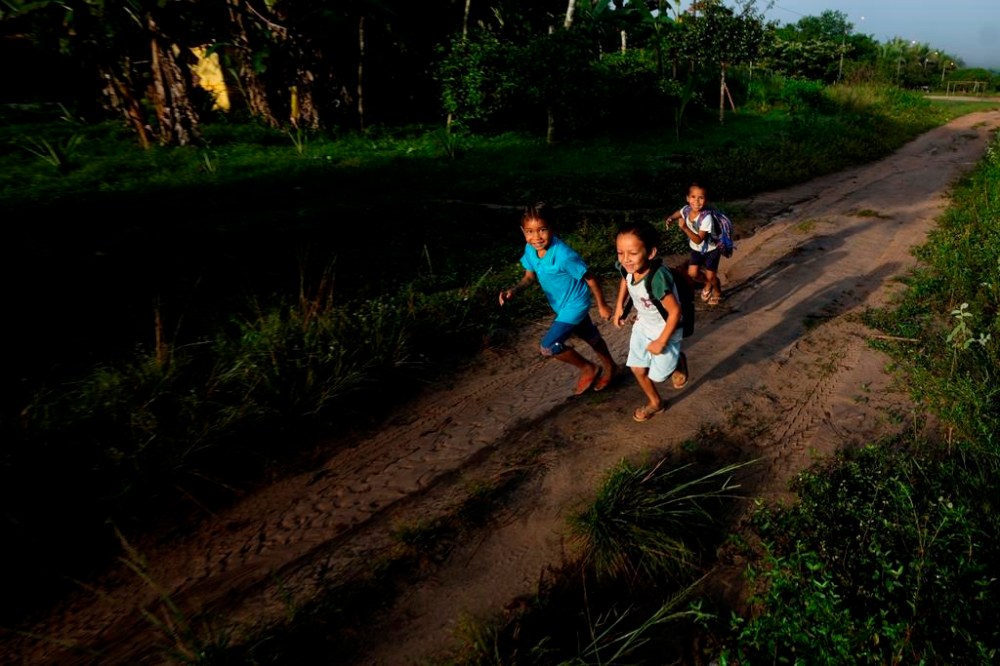
TEKOHAW, Brazil (AP) — At dawn in this small Amazonian village in Brazil’s Para state, flocks of noisy green parrots soar overhead as children run and play between wooden homes, kicking up sandy soil — in places white and bare as a beach.
The ground reveals one of the paradoxes of the rainforest. Renowned for its beauty and biodiversity, the life-giving nutrients of the forest are mostly stored in the trees and other plants, not the soil.
When the forest is cleared — for a cattle ranch, soybean field or even a small cluster of village homes — the combination of scorching Amazonian sun and intense rainfall combine to leach scarce nutrients from the soil in just a few years, leaving behind surprisingly barren ground.
This impoverished dirt makes it difficult to sustain agriculture in one place.
And in a region with some of the highest poverty levels in Brazil, people with few options have often just abandoned degraded fields and cleared more forest — hastening the cycle of deforestation that threatens the planet’s climate and the millions of species unique to the Amazon.
“The biodiversity is rich, but so many people are very poor,” said Judson Ferreira Valentim, a soil scientist for the government’s agricultural research agency, Embrapa. “We can’t protect the rainforest without addressing the poverty of the Amazon.”
___
EDITORS’ NOTE — This story is part of The Protein Problem, an AP series that examines the question: Can we feed this growing world without starving the planet? To see the full project, visit https://projects.apnews.com/features/2023/the-protein-problem/index.html
___
The only way to meet both goals is to find more paths for people to make a living in the Amazon without further destroying the rainforest, say experts who have long worked in the region. That means using already deforested land more efficiently — to reduce pressure to clear more forest — as well as supporting businesses that sustainably harvest native products such as açaí and cacao.
The scale of abandoned farm and pastureland across the Brazilian Amazon is massive — covering an area larger than Portugal, according to an AP analysis of data derived from satellite imagery by the Brazilian research collaboration Mapbiomas.
Other researchers estimate that ranching, which accounts for between 60% and 80% of deforestation in the Brazilian Amazon, is only a third as productive as it should be, and that increasing the efficiency on the same land area would more than meet increasing demands for meat through 2040. Brazil is a major exporter of beef to global markets, and currently 43% of Brazil’s cattle are raised within the Amazon region, according to an AP analysis of government data.
“You have to enforce laws against deforestation, but that’s only part of the solution. You also have to give people alternatives” to improve their livelihoods, said Rachael Garrett, a researcher at Cambridge University who’s conducted fieldwork in the Amazon since 2006.
There are 28 million people living in just Brazil’s portion of the Amazon — including Indigenous farmers, ranchers who migrated from other parts of the country, and settlers forcibly relocated decades ago when the government took their old land for infrastructure projects like the Itaipú Dam.
SUPERCHARGING THE SOIL
Dairy farmer Edson Cesar de Oliveira has been experimenting with planting a native legume called forage peanuts alongside grass in his pastures in Acre state. This plant attracts bacteria to its roots that can pull nitrogen from the air into the ground, essentially acting as a low-cost natural fertilizer.
While grass-only pastures may degrade in just two or three years, adding legumes may extend the soil’s fertility to ten or more years. It’s also higher in protein than grass alone, which helps livestock grow faster.
De Oliveria, who said he can’t afford chemical fertilizers, has noticed that pastures with forage peanuts don’t turn as yellow during the dry season. And cows that graze there for at least two nights produce about 20% more milk, he said.
TASTES OF THE RAINFOREST: AÇAÍ AND CACAO
César De Mendes is trying to grow a business in the rainforest without cutting any trees at all.
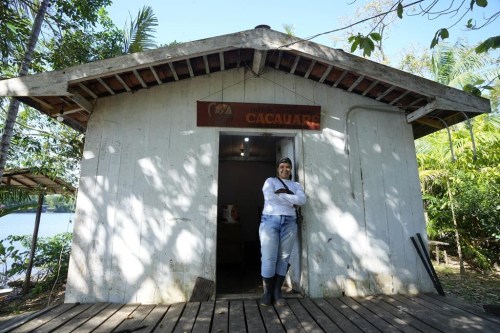
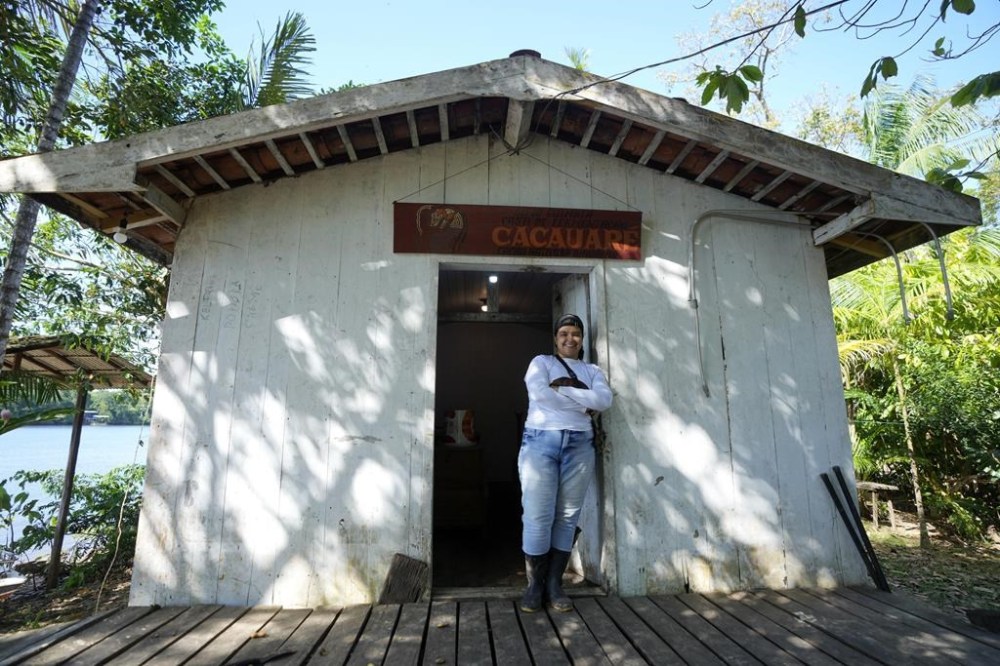
Walking through the forest along a tributary of the Amazon in Pará, he points out bright yellow fruits that sprout, sometimes in pairs, from the middle of tree trunks. It’s cacao, the plant responsible for one of the world’s great joys: chocolate.
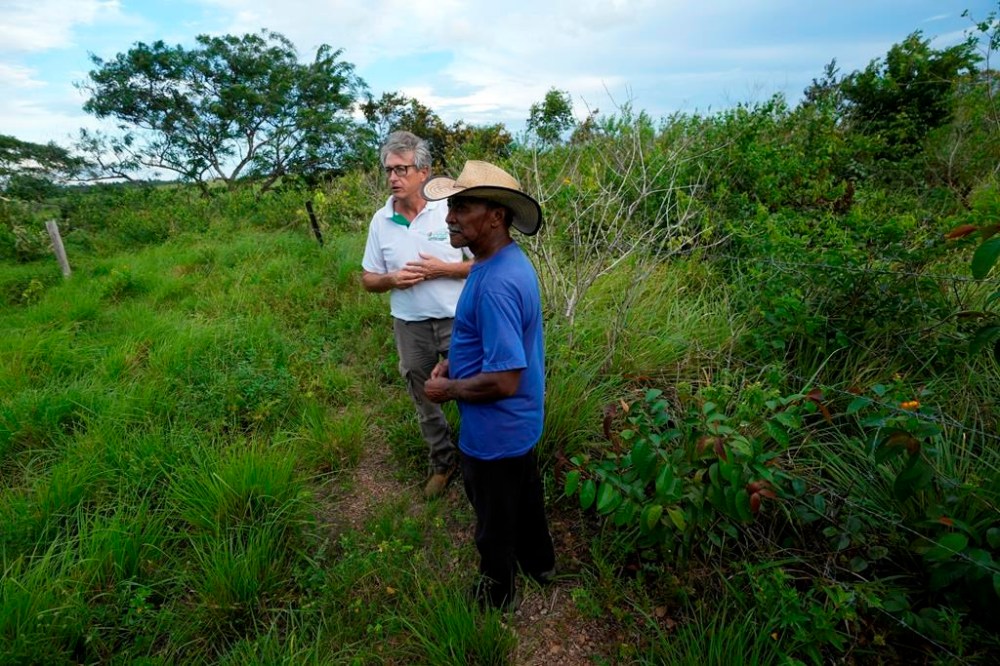
His company, De Mendes Chocolates, uses cacao harvested from virgin rainforest. He’s hoping customers will appreciate how different microclimates and soil conditions across the region subtly impact the flavor of the chocolate.
The idea of harvesting rainforest fruits is simple, but scaling up a sustainable business isn’t always easy. Just getting fruit to market before it spoils can be a huge challenge. Last year during the rainy season, one road was closed for 90 days.
One solution is to build small processing factories near the forest, as the longstanding agricultural collective Projeto RECA has done in Brazil’s northern state of Rondônia.
Workers collect açaí berries from local pickers, then haul them back to Projeto RECA’s campus on the back of a motorcycle so they can quickly be transformed into jams, syrups and frozen fruit pulp before they go bad.
‘THE FOREST SUSTAINS US’
The impacts of climate change are already being felt locally in the Amazon region, forcing other adaptations.
For as long as their stories tell, the Indigenous Tembé people of Tekohaw village have used fire to clear small plots of land to grow cassava, beans and other subsistence crops. After farming for three years, they’d clear new land.
Because their plots were small, the overall impact on the forest was minimal. But now the village chief wants to find other ways to manage the soil’s fertility.
“We want to improve agriculture here, in one specific place, not keep burning fields and pushing nature back,” said Kaparaí Tembé, setting his hoe on the ground and mopping the sweat from his brow. “We need to nurture the soil.”
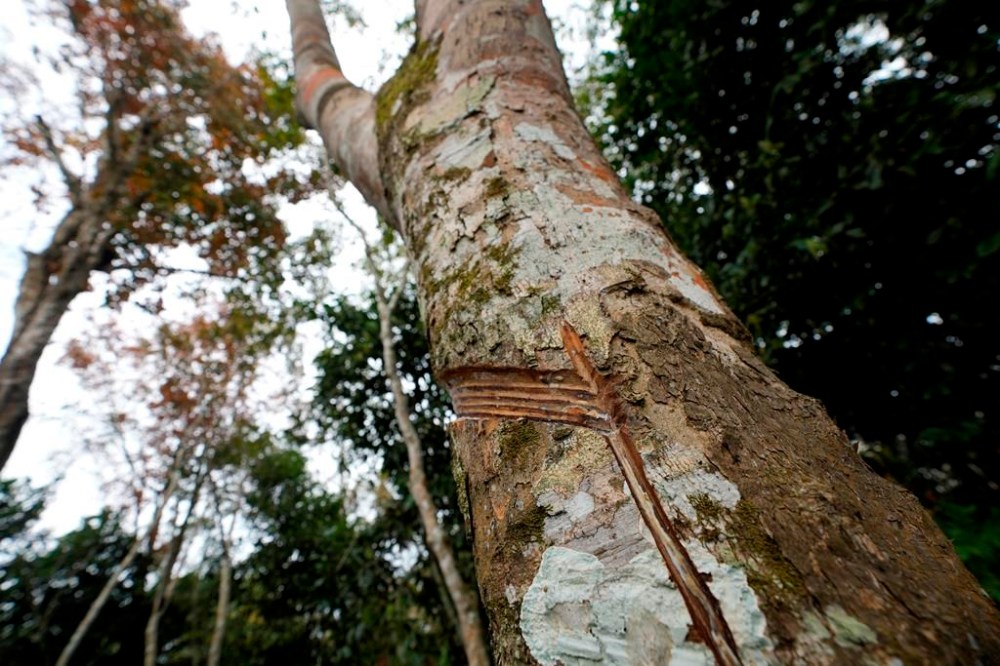

Earlier this year, the villagers treated the field with a powder made from grinding up limestone. It’s a technique to reduce the natural acidity of the Amazonian soil. Tembé has also begun planting another legume, called the pigeon pea, to add nitrogen to the soil.
As he walked back to the village, Tembé heard the raucous shriek of a scarlet macaw.
“It’s a reminder of where I am,” he said. “The forest sustains us, the animals, the plants — we want to protect it.”
___
The Associated Press Health and Science Department receives support from the Howard Hughes Medical Institute’s Science and Educational Media Group. The AP is solely responsible for all content.