Many Canadians have had long COVID for almost 4 years. Researchers say there’s hope
Advertisement
Read this article for free:
or
Already have an account? Log in here »
To continue reading, please subscribe:

Digital Subscription
One year of digital access for only $205*
- Enjoy unlimited reading on winnipegfreepress.com
- Read the E-Edition, our digital replica newspaper
- Access News Break, our award-winning app
- Play interactive puzzles
*First annual payment billed as $205.00 + GST for one year. This annual subscription will automatically renew at $233.00 + GST every 52 weeks (10% off the regular annual price of $259.35). Offer available to new and qualified returning subscribers only. Cancel any time.
To continue reading, please subscribe:
Add Free Press access to your Brandon Sun subscription for only an additional
$1 for the first 4 weeks*
- Enjoy unlimited reading on winnipegfreepress.com
- Read the E-Edition, our digital replica newspaper
- Access News Break, our award-winning app
- Play interactive puzzles
*Your next Brandon Sun subscription payment will increase by $1.00 and you will be charged $17.95 plus GST for four weeks. After four weeks, your payment will increase to $24.95 plus GST every four weeks.
Read unlimited articles for free today:
or
Already have an account? Log in here »
Hey there, time traveller!
This article was published 15/12/2023 (1025 days ago), so information in it may no longer be current.
TORONTO – Four years ago, Sonja Mally was a busy tattoo artist witha photographic memory and penchant forlong hikes.
Now, the 38-year-old Toronto woman considers it a good day if she can do a small drawing, muster the energy to walk around the block or “perform very basic tasks.”
“It’s a hard thing to have to explain to people why maybe one day you might be doing fine and the next day you can’t find the words to complete a sentence,” Mally said.
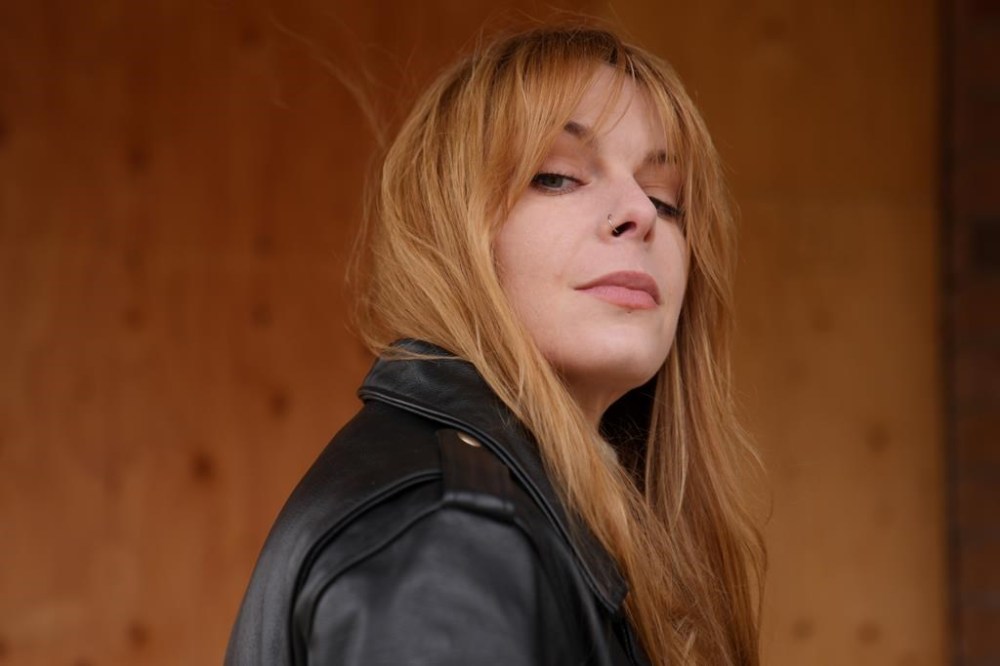
Debilitating long-COVID symptoms ended the career she loved and forced her to go on Ontario government disability payments, which she supplements with some part-time administrative work.
Mally’s world changed in March 2020, when she got what she thought was a mild cold — “nothing that I thought was going to slow me down.”
“It was what happened afterwards that was devastating for me.”
That COVID-19 infection led to respiratory problems and extreme fatigue. Then came more terrifying symptoms, including brain fog so severe that the artist couldn’t draw a clock during a neurology exam, as well as “excruciating pain” that “felt like my veins were on fire.”
The biggest difference between now and then, Mally said, is that the health-care community now recognizes long COVID is real.
“I don’t have to have that battle with medical practitioners (anymore) trying to convince them that this condition that I have exists.”
A recent Statistics Canada report estimated 3.5 million people in Canada, or 11.7 per cent of the adult population, reported “long-term symptoms” lasting at least three months after COVID-19 infection as of June 2023.
Many of those meet the World Health Organization’s definition of long COVID — also called post COVID-19 condition — which is “the continuation or development of new symptoms three months after the initial SARS-CoV-2 infection, with these symptoms lasting for at least two months with no other explanation.”
Forty-two per cent of the people in Canada reporting lasting symptoms had them for a year or more — and for many, they haven’t resolved, StatCan’s report said.
But Canadian doctors and scientists want long COVID patients to know that research is accelerating.
Long COVID Web, a research network of close to 600 health-care practitioners, scientists and patients across Canada, aims to not only help manage symptoms, but also find “solutions to get rid of long COVID,” said Dr. Angela Cheung, the network’s lead and a senior physician-scientist at University Health Network in Toronto.
Long COVID affects many different systems in the body, Cheung said, with the most common symptoms including fatigue, brain fog, cardiovascular problems and shortness of breath.
Cheung has seen many patients improve, and “quite a few” have even returned to their “baseline” functioning before COVID.
“Why some can return to baseline and others cannot, I’m not sure. But certainly it’s something that we need to better understand,” she said.
Susie Goulding of Cambridge, Ont., got infected around the same time as Mally back in 2020 and said she could barely function with similarly life-changing symptoms.
She gradually improved enough to run her flower shop and care for her 15-year-old son, but she still struggles with lingering brain fog.
“I think I’ve healed to a plateau,” said Goulding, 56.
“I have a lot of issues with word-finding and with the stamina of my brain. I can only do so much.”
A few months into her illness, Goulding started a Facebook group called COVID Long-Haulers Support Group Canada. Three and a half years later, there are close to 20,000 members, she said.
“It just kills me when people join our group and they said they had no idea (this could happen to them). You know, it’s sad,” she said.
Many long COVID patients live in fear of getting reinfected with COVID-19, or any other virus, because it can wipe out any recovery gains they’ve made, said Goulding.
“It’s really like the world has forgotten about COVID and has moved on and all of the safety precautions that were meant to keep people safe are no longer there,” she said.
“And so we have to navigate through the world as best as we can with our safety parameters in mind.”
Mally had a glimpse of hope last year, when she was “finally able to walk, go for little hikes again … I was just functioning on a much more normal kind of level.”
But she was only able to enjoy it for a couple of months before she caught a cold, despite taking precautions such as masking.
“I lost all that progress. I was in bed again for months and unable to do anything,” she said. “I’m still trying to work my way back from that.”
One dangerous misconception is that long COVID only happened to people who were infected earlier in the pandemic, said researchers.
Cheung saidit’s possible the Omicron variant carries a smaller risk of long COVID than the previous Alpha or Delta variants did, but the risk is still significant becauseso many more people are infected with Omicron.
“This variant can and does cause long COVID,” said Dr. Jim Russell, a professor of medicine at the University of British Columbia and another researcher for Long COVID Web.
There’s growing evidence that vaccinations not only protectagainst dying and hospitalizations but against long COVID too,Russell said.
Like Cheung, Russell is hopeful they will find ways to treat long COVID by getting at the root of what causes it.
“I can’t help but believe that between Europe, U.S., Australia, Canada, we’re going to start seeing breakthroughs within the next year,” he said.
One of the main theories Russell is studying is overactive or sustained inflammation.
“When you get infected, your body turns on an inflammatory response to kill the virus … and you need that inflammatory response to recover,” Russell said.
“(But) this inflammation, unfortunately, doesn’t turn off in some people, and it keeps going for months,” likely damaging organs including the lungs and the brain that lead to long COVID symptoms, he said.
Researchers are also looking at immune system dysregulation, disruption of the microbiome in the gut, damage to endothelial cells in organs and unusual persistence of the virus in the body as other plausible theories for causes of long COVID.
Goulding, who joined the patient advisory group for Long COVID Web, said these are encouraging developments for long COVID sufferers.
“Don’t give up hope yet,” she said.
“When the research is just getting rolling, you know, there are going to be interventions that are going to help people.”
This report by The Canadian Press was first published Dec.15, 2023.
Canadian Press health coverage receives support through a partnership with the Canadian Medical Association. CP is solely responsible for this content.
Note to readers: This is a corrected story. An earlier version used an incorrect placeline for the story.