As investors pile into psychedelics, idealism gives way to pharma economics
Advertisement
Read this article for free:
or
Already have an account? Log in here »
To continue reading, please subscribe:

Digital Subscription
One year of digital access for only $205*
- Enjoy unlimited reading on winnipegfreepress.com
- Read the E-Edition, our digital replica newspaper
- Access News Break, our award-winning app
- Play interactive puzzles
*First annual payment billed as $205.00 + GST for one year. This annual subscription will automatically renew at $233.00 + GST every 52 weeks (10% off the regular annual price of $259.35). Offer available to new and qualified returning subscribers only. Cancel any time.
To continue reading, please subscribe:
Add Free Press access to your Brandon Sun subscription for only an additional
$1 for the first 4 weeks*
- Enjoy unlimited reading on winnipegfreepress.com
- Read the E-Edition, our digital replica newspaper
- Access News Break, our award-winning app
- Play interactive puzzles
*Your next Brandon Sun subscription payment will increase by $1.00 and you will be charged $17.95 plus GST for four weeks. After four weeks, your payment will increase to $24.95 plus GST every four weeks.
Read unlimited articles for free today:
or
Already have an account? Log in here »
Hey there, time traveller!
This article was published 03/02/2024 (975 days ago), so information in it may no longer be current.
Money is pouring into the fledgling psychedelic medicine industry, with dozens of startup companies vying to be among the first to sell mind-expanding drugs for depression, addiction and other mental health conditions.
While psychedelics are still illegal under federal law, companies are jostling to try and patent key ingredients found in magic mushrooms, ayahuasca and other substances that have been used underground for decades or — in some cases — for millennia by indigenous cultures.
Wall Street’s sudden exuberance for hallucinogens has rankled longtime advocates and philanthropists, who dreamed of making low-cost psychedelics widely available for mental health and personal growth. Instead, many now see a very different future for drugs like psilocybin and LSD: as expensive, specialty medications controlled by a handful of biotech companies.
“It’s disappointing,” said Carey Turnbull, an investor and philanthropist who sits on the board of several psychedelic nonprofits. “All the air is getting sucked out of the room by these for-profit companies who say, ‘Wow, this stuff is awesome, if I could patent it I’d make a fortune.’”
Since 2010, Turnbull and his wife have donated millions to fund psychedelic research at New York University, Yale and other top academic centers.
Promising results from those studies have sparked a wave of popular interest in psychedelics, amplified by books, documentaries and articles touting their potential to reshape care for mental illness, trauma and end-of-life care.
But in recent years, Turnbull has pivoted to challenging what he and other advocates consider frivolous patents filed by companies entering the field.
Most psychedelic startups are backed by venture capitalists or tech investors looking for the next industry “disruptor.” Behind one of the biggest companies, Atai Life Sciences, is PayPal billionaire Peter Thiel, whose enthusiasm for psychedelics is shared by many in Silicon Valley.
About 50 such companies now trade on public stock exchanges, including developers of psychedelic drugs, retreats and training programs. Some analysts project the industry could grow to over $10 billion within the decade.
But recently investors have pulled back, amid reminders of the stark challenges of converting illegal drugs into money-making medicines.
Atai laid off 30% of its staff last March after its depression treatment failed in a key study. Stocks are down 80% to 90% from their highs across the industry with several smaller companies restructuring or declaring bankruptcy.
“They’re in this hype cycle, but then the reality of running a biotech company catches up with you,” said Chris Yetter of Dumont Global, which trades in cannabis and psychedelic companies. “You do drug trials and some of them succeed and some fail and every quarter your cash drains away.”
The cash crunch recently forced fundamental changes at the field’s leading nonprofit, the Multidisciplinary Association for Psychedelic Studies.
For more than 30 years, MAPS’ efforts have been funded almost entirely by donations from wealthy individuals and foundations — including Republican political donor Rebekah Mercer and the Steven and Alexandra Cohen Foundation, created by the hedge fund manager and New York Mets owner with his wife.
The group’s pharmaceutical arm, the MAPS Public Benefit Corp., is expected to win U.S. approval this year for the first psychedelic medicine accepted for review by the Food and Drug Administration: MDMA, or ecstasy, to help treat post-traumatic stress disorder.
But as investment opportunities have multiplied, charitable donations have dried up. The group was recently forced to take on private investors to continue funding the drug company, which changed its name to Lykos Therapeutics.

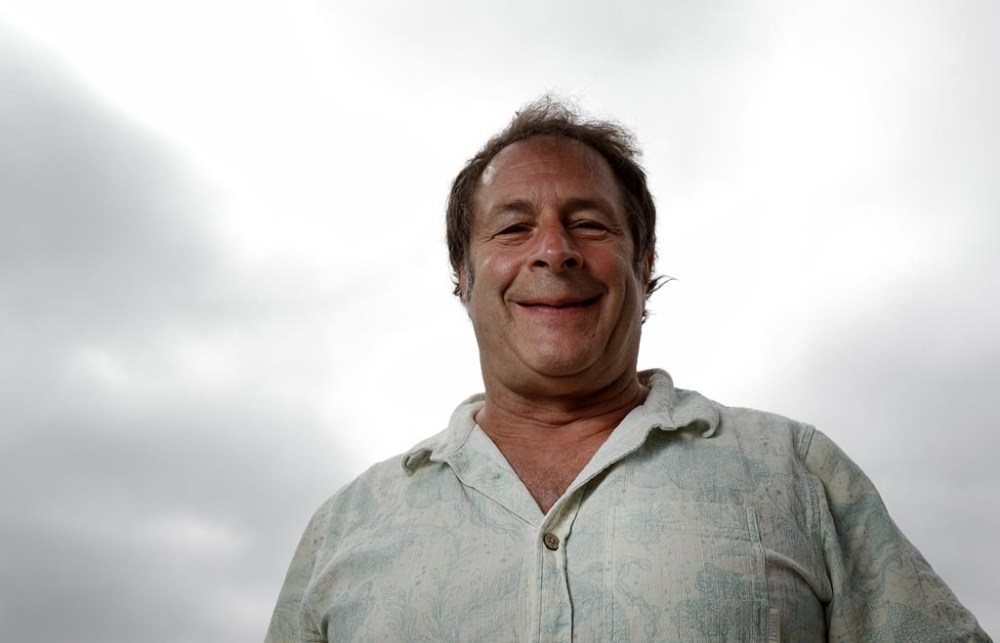
“We’re a victim of our own success,” said MAPS founder Rick Doblin. “It’s heartbreaking because I had hoped to go the whole way with philanthropy, but I was unable to raise the mega millions to do that.”
Psychedelics never fit the business model of the traditional blockbuster drug: an exclusive, patent-protected medicine that patients take regularly for years.
None of the psychedelics currently being studied are new. Synthetic drugs like LSD and ecstasy have been off patent for decades. Naturally occurring substances like psilocybin, found in certain mushrooms, can’t be patented by themselves.
And then there’s the challenge of administering drugs that bring about intense, disorienting visions and experiences. All the drugs vying for FDA approval will have to be given under professional supervision, typically during several therapy sessions lasting about six to eight hours each.
All those hours and professional fees will drive up costs, which many analysts say could range from $5,000 to $10,000 for one course of treatment.
Psychedelic executives say the only way to defer those costs is to conduct large, rigorous clinical studies needed for FDA approval, which could compel insurers to pay for psychedelics. But funding those studies requires raising tens of millions from investors, who typically only back drugmakers with strong patents.
“The only way you’re going to bring about that broad and equitable access is with robust intellectual property,” said Kabir Nath, CEO of Compass Pathways, which is studying laboratory-made psilocybin for depression, anorexia and other disorders.
Compass is among the most aggressive companies in terms of trying to patent its technology, with dozens of applications filed with the U.S. Patent and Trademark Office.
One submission describes the “soft furniture” and “muted colors” that would decorate rooms where patients take psilocybin. Another patent lays claim to a specific, microscopic structure found in Compass’ synthetic psilocybin, which the company claims is uniquely suited for mass production.
The company’s efforts have drawn ridicule from some researchers, who note that as early as the 1970s, psychedelic therapists had codified the settings and techniques described in Compass patents.
“It just seems like a blatant power grab,” said Frederick Barrett, a neuroscientist who directs Johns Hopkins University’s psychedelic center.
But attempts to challenge the patents on Compass’ synthetic psilocybin have been unsuccessful, despite years of work by Turnbull’s patent watchdog group, Freedom to Operate.

Other companies are taking more creative approaches to patenting psychedelics, such as reformulating them as dissolvable lozenges or films — or combining LSD and ecstasy into a combination pill. Skeptics note that that approach, dubbed “candyflipping,” has been used recreationally for decades.
One of the more intriguing reformulation efforts involves trying to shorten the duration of the psychedelic experience, or even do away with it entirely, while retaining the psychological benefits for patients.
The rush to innovate worries some psychiatrists who point to the many fundamental questions about psychedelics that remain unanswered, including exactly how they affect the brain and how long their benefits might last.
As companies develop more psychedelic derivatives and combinations, deciphering their strengths and weaknesses will become more challenging, says Dr. Jeffrey Lieberman of Columbia University. Unless researchers can clearly demonstrate their benefits, they risk another backlash like the 1970 federal ban that wiped out psychedelic research for decades.

“Psychedelics could have tremendous benefit for treating a number of illnesses,” Lieberman said. “But if we mess it up and rush the process, these drugs are going to get banned again and you lose that opportunity.”
___
In a story published February 3, 2023, The Associated Press reported that hedge fund manager and New York Mets owner Steven Cohen had donated money to fund psychedelic research. The story has been updated to include the full name of the philanthropy created by Cohen and his wife: the Steven and Alexandra Cohen Foundation.
___
The Associated Press Health and Science Department receives support from the Howard Hughes Medical Institute’s Science and Educational Media Group. The AP is solely responsible for all content.