What is the breast cancer risk calculator recommended by Olivia Munn?

Advertisement

Advertise with us

When Olivia Munn revealed this week that she was diagnosed with breast cancer and had a double mastectomy, she urged people to ask their doctors to figure out their score on a breast cancer risk calculator.

Read this article for free:


or

Already have an account? Log in here »

To continue reading, please subscribe:

Subscribe and receive a limited-edition Free Press branded hat or tote.

Digital Subscription

One year of digital access for only $205*

  • Enjoy unlimited reading on winnipegfreepress.com
  • Read the E-Edition, our digital replica newspaper
  • Access News Break, our award-winning app
  • Play interactive puzzles

*First annual payment billed as $205.00 + GST for one year. This annual subscription will automatically renew at $233.00 + GST every 52 weeks (10% off the regular annual price of $259.35). Offer available to new and qualified returning subscribers only. Cancel any time.

To continue reading, please subscribe:

Add Free Press access to your Brandon Sun subscription for only an additional

$1 for the first 4 weeks*

  • Enjoy unlimited reading on winnipegfreepress.com
  • Read the E-Edition, our digital replica newspaper
  • Access News Break, our award-winning app
  • Play interactive puzzles
Start now

*Your next Brandon Sun subscription payment will increase by $1.00 and you will be charged $17.95 plus GST for four weeks. After four weeks, your payment will increase to $24.95 plus GST every four weeks.

Hey there, time traveller!
This article was published 14/03/2024 (934 days ago), so information in it may no longer be current.

When Olivia Munn revealed this week that she was diagnosed with breast cancer and had a double mastectomy, she urged people to ask their doctors to figure out their score on a breast cancer risk calculator.

Munn said her score prompted further tests and the discovery of an aggressive form of the disease.

“I’m lucky. We caught it with enough time that I had options,” the 43-year-old actor posted on Instagram. “I want the same for any woman who might have to face this one day.”
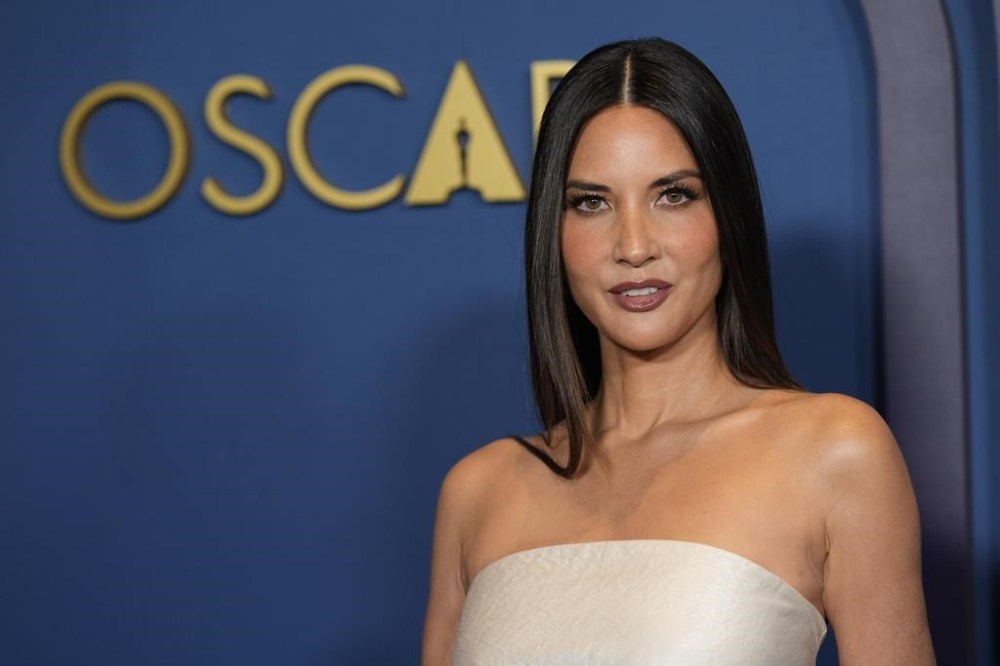
FILE - Olivia Munn arrives at the Governors Awards on Tuesday, Jan. 9, 2024, at the Dolby Ballroom in Los Angeles. When Munn revealed in March 2024 that she was diagnosed with breast cancer and had a double mastectomy, she urged people to ask their doctors to figure out their score on a breast cancer risk calculator, a questionnaire on the National Cancer Institute’s website that is designed for health care providers to use with patients. (AP Photo/Chris Pizzello, File)

A look at the calculator, the Breast Cancer Risk Assessment Tool:

What is the Breast Cancer Risk Assessment Tool?

It’s a questionnaire on the National Cancer Institute’s website that is designed for health care providers to use with patients. The tool received a “dramatic increase in visits” since Munn’s post, according to an NCI spokesperson.

First developed in 1989, it was originally based on data from only white women. Updates have made it more accurate for Black, Hispanic and Asian and Pacific Islander women.

It doesn’t take everything into account and can’t actually predict whether any one person will get breast cancer.

It asks about age, age at first menstrual period, age when the woman’s first child was born or if the woman has not given birth, family history of breast cancer, past breast biopsies, results of past biopsies, race and ethnicity.

The result is a lifetime risk and a five-year risk based on factors that have been tied to a higher risk of breast cancer. For comparison, it also gives an average risk for U.S. women of the same age, race and ethnicity.

Dr. Elizabeth Comen, who treats breast cancer at Memorial Sloan Kettering Cancer Center in New York, said women should do the assessment with their doctors, not by themselves.

“It’s very important to talk to your doctor about doing that together, and then making decisions about what imaging techniques are appropriate” based on the results, Comen said. Munn’s high score prompted additional imaging tests that aren’t recommended for women of average risk.

Should everyone use the tool?

It’s not the best risk calculator for some women. If you have a certain gene mutation or a previous history of breast cancer, it’s not for you. It also doesn’t take into account dense breast tissue, which can make cancer harder to spot.

The National Cancer Institute says the tool may underestimate risk in Black women with previous biopsies and Hispanic women born outside the U.S.

“The model needs further validation for Hispanic women and other subgroups,” the institute’s website says. “Researchers are conducting additional studies to gather more data to test and improve the model.”

There are dozens of similar tools, said Ashley Johnson, a nurse practitioner at Vanderbilt University Medical Center, who has studied them. Many health groups recommend that women over age 25 have such an assessment, she said, but there’s not enough evidence to say which tool is best.

What do the scores mean?

A five-year risk score of 2%, for example, means a woman’s estimated risk of developing breast cancer over the next five years is 2%.

A lifetime risk score of 7% means a woman’s estimated risk of developing breast cancer through age 90 is 7%.

Mammogram guidelines are for women at average risk, said Dr. Arif Kamal, chief patient officer at the American Cancer Society. Guidelines vary but the society says women can choose to start annual mammograms at age 40.

“Knowing your risk starts even before the age of 40,” Kamal said. That’s where a risk calculator can help.

How can I lower my risk of breast cancer?

Everyone has some risk of cancer, Comen said, but some lifestyle changes can reduce the chances.

She suggests avoiding processed foods, adding exercise and strength training to your routine, limiting alcohol and not smoking.

___

The Associated Press Health and Science Department receives support from the Howard Hughes Medical Institute’s Science and Educational Media Group. The AP is solely responsible for all content.

Report Error Submit a Tip

More Stories

’Disgusting’ posters being investigated by police

Morgan Modjeski 4 minute read Yesterday at 2:22 PM CDT

The Winnipeg Police Service major crimes unit is investigating what some have labelled offensive and hateful posters on full-display at a Winnipeg home.

One of the people irked by the display is Gracie Garrett. She’s has lived on Ashburn Street in Winnipeg’s Minto neighbourhood for almost ten years. She’s never felt unsafe in the neighbourhood before, but now, a set of posters plastered on a nearby house are making her feel uneasy.

The five signs, posted facing the street prominently on a front window, contain a slur, refer to Nazis as “heroes” and call Muslims, Christians and other groups “evil.”

Learning of the signs Friday, Garrett said she’ll be reporting the posters to police, as she worries they incite and promote violence.

Gordon Bell rings in a century

Maggie Macintosh 13 minute read Preview

Gordon Bell rings in a century

Maggie Macintosh 13 minute read Friday, Oct. 2, 2026

Mischka Valencia had gotten used to the hum of heavy machinery at Gordon Bell High School.

“Ever since I’ve been here, it’s all been under construction,” the Grade 12 student said, standing on the sidelines of the brightly painted revamped outdoor basketball court. “I had no idea this was a court.”

The Filipina teenager landed in Winnipeg several months after the inner-city campus had transformed into a construction site.

It was the fall of 2023 and Mischka’s priorities were fitting in, befriending classmates and learning a third language via first-period French.

Read
Friday, Oct. 2, 2026

Six high school hockey programs ceased operations following new Hockey Manitoba policy

Joshua Frey-Sam 7 minute read Preview

Six high school hockey programs ceased operations following new Hockey Manitoba policy

Joshua Frey-Sam 7 minute read Friday, Oct. 2, 2026

She lived the best of both worlds.

For the last three years, the 17-year-old wore a sweater for two different hockey programs — her high school team and AAA club in the Manitoba Female Hockey League — and was preparing to flourish in both colours again this winter.

Recently, however, the blue-liner was disappointed to learn she is no longer eligible to play her Grade 12 season with her school owing to a new policy imposed by Hockey Manitoba that bans players from participating in the Manitoba Women’s High School Hockey League if they are rostered on a U18 AAA team.

The rule applies to all athletes who play for both Winnipeg-based and rural AAA teams.

Read
Friday, Oct. 2, 2026

Winnipeggers witness unveiling of Japanese Canadian monument in B.C.

Morgan Modjeski 6 minute read Preview

Winnipeggers witness unveiling of Japanese Canadian monument in B.C.

Morgan Modjeski 6 minute read Yesterday at 8:39 PM CDT

As Miki Stewart gathered with her family at the Japanese Cultural Association of Manitoba on Saturday afternoon, she was thinking of her parents, Yoshimaru and Yoshi Abe.

Both Stewart, 80, and her sister Yumi Falk, 81, alongside an older brother, were born in the Tashme internment camp in British Columbia. They were among more than 2,600 Japanese Canadians who were forcefully removed and interred at the camp following the bombing of Pearl Harbour and Canada’s declaration of war on Japan in 1941.

“They didn’t talk much about how they suffered,” Stewart said of her parents. “But they did.”

She was amongst a group of more than 150 people who gathered at the association’s McPhillips headquarters on Saturday afternoon to watch the unveiling of the Japanese Canadian Monument in Victoria B.C.

Read
Yesterday at 8:39 PM CDT

Broadening prediction-market gambling a bad idea

Editorial 4 minute read Preview

Broadening prediction-market gambling a bad idea

Editorial 4 minute read Yesterday at 2:01 AM CDT

Let’s make a prediction: sooner or later, when Canadian governments find a way to take their own cut of the action, prediction-contract gambling on everything from sports to entertainment to political decisions is going to come to Canada.

And that’s a horrible, dangerous, pernicious idea.

Unless you have particular access to information — either inside information or strategic information based on skills or education — you’re not likely to make money at it. In fact, structurally, you’re likely to lose. In prediction markets, you basically pay an amount, plus fees from the company involved, to bet on whether something will or will not happen within a certain time frame. The amount you pay for your contract depends on how other people are also betting.

As Wealthsimple describes it, “You buy whichever side you think is right. Prices move with demand, so if the market leans towards one outcome, the more that side costs. If a lot of people are backing the TSX to finish above 38,000, yes gets more expensive and no gets cheaper.”

Read
Yesterday at 2:01 AM CDT

Volunteer pop-up library axed from Manitoba Youth Centre

Matthew Frank 4 minute read Preview

Volunteer pop-up library axed from Manitoba Youth Centre

Matthew Frank 4 minute read Updated: Yesterday at 11:25 AM CDT

Manitoba Corrections has cancelled a pop-up library program at the Manitoba Youth Centre, leaving inmates without librarian services and fewer options to borrow certain books.

The Prison Libraries Committee, part of the non-profit Manitoba Library Association, operated and funded the volunteer program since 2024 before it was shut down by the province last month. The group previously partnered with the province to offer the service because the facility has no dedicated library of its own.

“It is concerning that community members who are incarcerated, especially youth, are losing out on meaningful programming, access to information and rehabilitation efforts, which are offered at no cost to (Manitoba) Corrections. We urge Manitoba Justice to promote more library services and programming, not less,” said a Sept. 24 letter from the non-profit addressed to the justice minister.

Ashley Huot, chair of the Prison Libraries Committee, said she was puzzled when she received an email last month from Manitoba Corrections stating that the pop-up library was no longer needed.

Read
Updated: Yesterday at 11:25 AM CDT